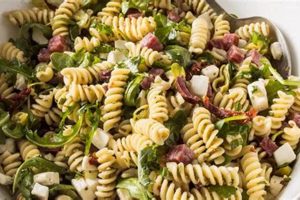
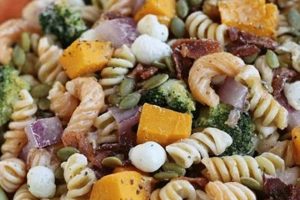
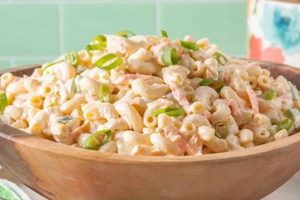
Dishes featuring chilled pasta combined with crab meat, often complemented by vegetables, herbs, and a flavorful dressing, constitute a popular category of summer cuisine. These preparations can range from simple, using imitation crab and mayonnaise-based dressings, to more elaborate versions featuring fresh lump crab meat, gourmet cheeses, and vinaigrette-based dressings. A typical example might include shell pasta, flaked crab, celery, red onion, bell pepper, and a creamy dill dressing.
The appeal of such dishes lies in their refreshing nature, making them ideal for warm weather. They are relatively quick and easy to prepare, adaptable to various tastes and dietary needs, and can be served as a light main course, a side dish, or part of a buffet. Historically, pasta salads gained popularity in the mid-20th century with the rise of convenience foods and casual dining, while the incorporation of seafood reflects culinary traditions in coastal regions. Their versatility contributes to their enduring presence in modern cookbooks and on restaurant menus.
Exploration of specific ingredient combinations, preparation techniques, and variations on classic dressings will further illuminate the breadth and appeal of these chilled pasta dishes. Additional considerations include nutritional information, tips for ingredient selection, and strategies for presentation and serving.
Tips for Exceptional Chilled Crab Pasta Salad
Achieving optimal flavor and texture requires attention to several key elements. The following tips offer guidance for creating a superior dish.
Tip 1: Crab Selection: Opting for high-quality crab meat significantly impacts the final result. Fresh lump or jumbo lump crab meat provides the best flavor and texture. While imitation crab offers a budget-friendly alternative, its flavor profile differs considerably.
Tip 2: Pasta Choice: Short, sturdy pasta shapes hold up well in salads. Consider rotini, fusilli, farfalle, or shells. Cook pasta al dente to prevent a mushy texture.
Tip 3: Vegetable Incorporation: Crisp vegetables add texture and flavor complexity. Common choices include celery, red onion, bell peppers, and chopped fresh herbs like dill or parsley. Blanching certain vegetables, such as peas or green beans, can enhance their color and tenderness while maintaining a crisp texture.
Tip 4: Dressing Considerations: The dressing serves as a unifying element. Mayonnaise-based dressings offer a creamy richness, while vinaigrette-based dressings provide a lighter, brighter flavor. Incorporating fresh lemon juice or a touch of Dijon mustard enhances the dressing’s complexity.
Tip 5: Chilling Time: Allowing the salad to chill for at least an hour before serving allows the flavors to meld and the pasta to absorb the dressing. This enhances the overall taste and texture.
Tip 6: Seasoning Adjustments: Taste and adjust seasoning throughout the preparation process. A pinch of sea salt, freshly ground black pepper, or a dash of cayenne pepper can elevate the flavor profile.
Tip 7: Presentation: Consider the visual appeal when serving. A garnish of fresh herbs, a sprinkle of paprika, or a wedge of lemon elevates the presentation.
Attention to these details ensures a well-balanced and flavorful dish. From ingredient selection to chilling time, each step contributes to the final outcome.
By understanding the interplay of ingredients and techniques, one can create a truly memorable culinary experience.
1. Fresh, High-Quality Crab
Fresh, high-quality crab significantly elevates crab pasta salad recipes. The delicate, sweet flavor of fresh crab meat provides a nuanced foundation that contrasts beautifully with the other components. Using premium crab meat enhances the overall sensory experience, contributing a richness and depth of flavor often absent when using imitation or lower-quality crab. For instance, a pasta salad featuring fresh jumbo lump crab meat offers a luxurious textural and flavor contrast against the backdrop of al dente pasta and crisp vegetables. Conversely, using canned or imitation crab can result in a blander, less satisfying dish. This distinction underscores the crucial role of premium ingredients in achieving culinary excellence.
The impact of fresh crab extends beyond flavor. Its delicate texture contributes to the overall composition of the salad. Fresh crab meat maintains its integrity when gently tossed with other ingredients, providing a pleasing mouthfeel. Overly processed or imitation crab, on the other hand, tends to break down, resulting in a less appealing, mushy texture. This textural difference can significantly impact the enjoyment of the dish. Furthermore, the visual appeal of fresh crab meat, with its bright white color and distinct flakes, enhances the presentation of the salad, making it more appetizing.
Investing in fresh, high-quality crab demonstrably elevates crab pasta salad from a simple dish to a culinary highlight. While cost considerations may tempt some toward less expensive alternatives, the difference in flavor, texture, and overall enjoyment justifies the investment. Prioritizing quality ingredients allows for a more nuanced and satisfying dining experience, showcasing the potential of this versatile dish.
2. Complementary Pasta Shapes

Pasta shape selection significantly influences the success of crab pasta salad. The chosen shape should complement the other ingredients, both aesthetically and functionally. Optimal shapes effectively hold the dressing, capture small ingredients within their curves or crevices, and provide a pleasing textural contrast against the crab meat and vegetables. Shapes like rotini, fusilli, and farfalle, with their twists and folds, readily capture the dressing and smaller ingredients, ensuring each bite delivers a balanced flavor profile. Conversely, long, thin pasta shapes, such as spaghetti or linguine, are less suitable, as they tend to clump together, making it difficult to achieve an even distribution of ingredients and dressing. This can result in a less satisfying, unevenly flavored salad.
Furthermore, the pasta’s structural integrity contributes to the overall texture of the salad. Sturdy shapes, like shells or orecchiette, maintain their shape when combined with the other ingredients and hold up well to refrigeration. Delicate pasta shapes, on the other hand, may become mushy or break down when mixed with the dressing and chilled, detracting from the desired textural experience. For example, small, delicate pasta shapes like orzo, while visually appealing, might absorb too much dressing and lose their distinct shape, resulting in a less appealing texture. Consideration of these factors contributes to a well-balanced and enjoyable crab pasta salad.
Selecting complementary pasta shapes demonstrates an understanding of the interplay between ingredients and the desired outcome. It elevates the dish beyond a simple combination of ingredients to a carefully constructed culinary creation. The choice reflects an attention to detail that significantly contributes to the overall enjoyment of the crab pasta salad, ensuring a harmonious balance of flavors, textures, and visual appeal. Careful selection enhances the dining experience, highlighting the importance of this often-overlooked element.
3. Flavorful, Balanced Dressings

Flavorful, balanced dressings are essential for successful crab pasta salad recipes. The dressing serves as a unifying element, binding the ingredients together and imparting a cohesive flavor profile. It should complement the delicate flavor of the crab meat without overpowering it, while also enhancing the other components of the salad. A well-crafted dressing elevates the dish from a simple combination of ingredients to a harmonious culinary experience.
- Acidity:
Acidity plays a crucial role in balancing the richness of the crab and other ingredients. A touch of lemon juice or vinegar brightens the flavors, preventing the salad from becoming heavy or overly rich. The acidity also helps to cut through the fattiness of mayonnaise-based dressings, creating a more refreshing taste. For example, a lemon-dill vinaigrette adds a vibrant tang that complements the sweetness of the crab. Without sufficient acidity, the salad may taste flat or one-dimensional.
- Creaminess vs. Lightness:
The choice between a creamy or light dressing depends on the desired outcome and other ingredients. Mayonnaise-based dressings offer a rich, creamy texture that coats the pasta and other components, creating a luxurious mouthfeel. Vinaigrettes, on the other hand, provide a lighter, brighter alternative, allowing the individual flavors of the ingredients to shine through. A classic creamy dressing might incorporate mayonnaise, sour cream, and herbs, while a lighter vinaigrette could combine olive oil, lemon juice, and Dijon mustard. The choice depends on personal preference and the overall flavor profile desired.
- Herbs and Spices:
Fresh herbs and spices add depth and complexity to the dressing. Dill, parsley, chives, and tarragon are popular choices that complement the flavor of crab. A pinch of cayenne pepper or paprika can add a subtle kick. The careful selection and balance of herbs and spices contribute to a more nuanced and interesting flavor profile. For example, a dressing featuring fresh dill and a hint of lemon zest enhances the natural sweetness of the crab, while a touch of Old Bay seasoning adds a savory, slightly spicy note. The specific herbs and spices used can significantly influence the overall character of the salad.
- Seasoning:
Proper seasoning is crucial for a well-balanced dressing. Salt enhances the flavors of the other ingredients, while black pepper adds a touch of complexity. It’s essential to taste and adjust the seasoning throughout the preparation process to ensure the dressing is perfectly balanced. Over-seasoning can mask the delicate flavor of the crab, while under-seasoning can result in a bland and uninspired salad. Careful attention to seasoning ensures that all the flavors harmonize and contribute to a delicious final product.
The interplay of these elements acidity, creaminess/lightness, herbs and spices, and seasoning determines the overall success of the dressing and, consequently, the crab pasta salad itself. A well-crafted dressing elevates the dish, transforming it from a simple combination of ingredients into a cohesive and flavorful culinary creation. By carefully considering these factors, one can create a dressing that perfectly complements the crab and other components, resulting in a truly exceptional pasta salad.
4. Crisp, Vibrant Vegetables
Crisp, vibrant vegetables play a crucial role in crab pasta salad recipes, contributing textural and flavor complexity. Their inclusion elevates the dish beyond a simple combination of crab and pasta, offering a refreshing counterpoint to the richness of the crab and the heartiness of the pasta. The textural contrast between tender crab, al dente pasta, and crisp vegetables creates a more dynamic and satisfying sensory experience. Furthermore, the vegetables vibrant colors enhance the visual appeal of the salad, making it more appetizing. Consider, for example, the interplay of bright red bell peppers, verdant celery, and deep green parsley against the backdrop of white crab meat and pale yellow pasta. This visual contrast stimulates the appetite and adds to the overall enjoyment of the dish. Beyond aesthetics, specific vegetable choices can further enhance the flavor profile. Sweet corn kernels offer a burst of natural sweetness, while thinly sliced red onion provides a subtle sharpness that cuts through the richness of the crab and dressing.
The selection and preparation of vegetables significantly impact the overall quality of the salad. Opting for fresh, seasonal produce ensures optimal flavor and texture. Proper preparation techniques, such as blanching or quick-pickling, further enhance the vegetables’ vibrancy and maintain their crispness. Blanching green beans or asparagus preserves their bright green color and tender-crisp texture, while quick-pickling red onions mellows their sharpness and imparts a vibrant pink hue. Conversely, using limp or overcooked vegetables detracts from both the flavor and texture of the salad. Overcooked vegetables not only lose their vibrant color but also become mushy, negatively impacting the overall textural experience. Limp lettuce or wilted herbs introduce an unpleasant texture and detract from the salad’s freshness.
Careful consideration of vegetable selection and preparation techniques demonstrates an understanding of the crucial role these ingredients play in crab pasta salad. This attention to detail elevates the dish from a simple combination of ingredients to a thoughtfully composed culinary creation. Prioritizing fresh, vibrant vegetables not only enhances the flavor and texture but also contributes to the overall visual appeal. By balancing flavors, textures, and colors, a well-composed crab pasta salad offers a more satisfying and enjoyable dining experience. The thoughtful incorporation of crisp, vibrant vegetables underscores the importance of each component in creating a truly exceptional dish.
5. Proper Chilling and Seasoning

Proper chilling and seasoning are essential final steps in preparing exceptional crab pasta salad. These techniques significantly influence the final flavor profile and overall enjoyment of the dish. Chilling allows the flavors to meld and deepen, while precise seasoning enhances the inherent flavors of the ingredients. Neglecting these steps can result in a bland or unbalanced salad, diminishing the impact of high-quality ingredients and careful preparation.
- Chilling Time and Temperature:
Adequate chilling time allows the flavors of the various componentscrab, pasta, vegetables, and dressingto harmonize. A minimum of one hour in the refrigerator allows the pasta to absorb the dressing and the flavors to meld, resulting in a more cohesive and flavorful salad. However, excessive chilling can negatively impact the texture of certain ingredients, particularly delicate vegetables. Maintaining a refrigerator temperature between 35-40F (2-4C) prevents bacterial growth while preserving the desired texture of the salad components.
- Seasoning Balance and Layering:
Seasoning is not merely an afterthought but a crucial element that enhances the inherent flavors of the ingredients. Salt, pepper, and other seasonings should be added gradually throughout the preparation process, starting with the pasta cooking water and continuing through the dressing preparation and final mixing of the salad. This layered approach builds flavor complexity and prevents over-seasoning. The delicate flavor of the crab meat should be considered when adjusting seasoning levels, ensuring the seasonings enhance rather than mask the crab’s natural sweetness.
- Flavor Enhancement Techniques:
Beyond basic salt and pepper, additional seasonings can further elevate the flavor profile of the salad. A squeeze of fresh lemon juice brightens the flavors, while a touch of Dijon mustard adds a subtle tang. Fresh herbs, such as dill or parsley, contribute a fresh, aromatic element, while a pinch of red pepper flakes adds a hint of heat. These additions should be used judiciously to complement the other flavors and create a balanced, harmonious profile.
- Tasting and Adjustment:
Tasting the salad at various stages of preparation, particularly after chilling, allows for necessary seasoning adjustments. The chilling process can dull certain flavors, necessitating additional seasoning to achieve the desired balance. This final tasting and adjustment ensures that the salad is perfectly seasoned before serving, maximizing its flavor potential.
Proper chilling and seasoning are integral to maximizing the potential of crab pasta salad recipes. These final steps, though seemingly simple, significantly impact the final dish. By allowing sufficient chilling time and employing a thoughtful approach to seasoning, one ensures a harmonious blend of flavors and textures, elevating the salad from a simple dish to a culinary delight. The careful attention to these details underscores the importance of each step in the preparation process, highlighting the interconnectedness of technique and flavor development.
Frequently Asked Questions
This section addresses common inquiries regarding the preparation and enjoyment of crab pasta salad.
Question 1: What type of crab meat is best suited for pasta salad?
While imitation crab offers a budget-friendly option, fresh lump or jumbo lump crab meat provides superior flavor and texture. The choice depends on individual preferences and budget constraints.
Question 2: Can crab pasta salad be prepared in advance?
Advance preparation is possible, but certain considerations apply. The salad benefits from chilling, allowing flavors to meld. However, adding the dressing too early can lead to the pasta absorbing excessive moisture. It’s generally advisable to prepare components separately and combine them shortly before serving.
Question 3: How long can crab pasta salad be stored safely?
Properly stored, crab pasta salad typically remains safe for consumption for three to five days in a refrigerator maintained at 40F (4C) or below. However, the quality may degrade over time.
Question 4: What are suitable pasta shapes for crab pasta salad?
Sturdy, short pasta shapes hold up well in salads. Rotini, fusilli, farfalle, and shells are recommended choices. Long, thin pasta shapes are generally less suitable.
Question 5: What vegetables complement crab pasta salad?
A variety of vegetables enhance crab pasta salad. Common choices include celery, bell peppers, red onion, and chopped fresh herbs. Blanching certain vegetables before adding them to the salad can enhance their color and tenderness while maintaining a crisp texture.
Question 6: Can different dressings be used?
Dressings significantly influence the flavor profile. Mayonnaise-based dressings offer a creamy richness, while vinaigrette-based dressings provide a lighter alternative. The choice depends on individual preferences and desired flavor outcomes.
Understanding these key aspects of preparation and storage contributes to a more enjoyable and successful culinary experience.
For further exploration, consider consulting reputable culinary resources or experimenting with different flavor combinations to discover preferred variations.
Crab Pasta Salad Recipes
Exploration of crab pasta salad recipes reveals the multifaceted nature of this seemingly simple dish. From the selection of premium crab meat to the careful consideration of pasta shapes, vegetables, and dressings, each element contributes to the final culinary outcome. Proper chilling and seasoning techniques further enhance the flavor profile, demonstrating the importance of attention to detail throughout the preparation process. The versatility of this dish allows for a wide range of interpretations, accommodating diverse palates and dietary preferences.
Culinary innovation thrives on an understanding of fundamental principles and a willingness to experiment. Continued exploration of ingredient combinations and preparation techniques offers opportunities to refine and personalize crab pasta salad recipes. This pursuit of culinary excellence elevates the dish beyond mere sustenance, transforming it into a celebration of flavor, texture, and aesthetic presentation. The potential for creative expression within this culinary framework remains vast, inviting further exploration and refinement.