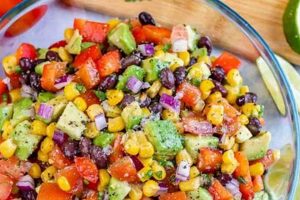
A stale bread salad gains a distinctly Southern twist when cornbread replaces the traditional Tuscan loaf. This variation incorporates crumbled cornbread, typically alongside fresh summer vegetables like tomatoes, cucumbers, and onions. A vibrant vinaigrette, often featuring a touch of sweetness and tang, binds the ingredients together. Variations can include additions such as bell peppers, fresh herbs, black-eyed peas, or grilled corn, offering a wide range of flavor profiles.
This dish offers a resourceful way to utilize leftover cornbread, transforming it into a refreshing and flavorful salad. The contrasting textures of the crisp cornbread and juicy vegetables create a delightful culinary experience. Its adaptability to seasonal ingredients allows for customization throughout the year, making it a versatile and appealing option for casual meals or potlucks. The inherent sweetness of the cornbread complements the acidity of the vinaigrette and the savory notes of the accompanying vegetables, achieving a balanced and satisfying flavor profile.
The following sections will delve deeper into specific ingredient recommendations, variations on the classic preparation, and tips for achieving optimal flavor and texture. Guidance on vinaigrette options and suggestions for complementary dishes will also be provided.
Tips for Crafting an Exceptional Cornbread Salad
Achieving optimal flavor and texture requires attention to detail throughout the preparation process. These tips offer guidance for creating a truly memorable dish.
Tip 1: Stale Cornbread is Key: Freshly baked cornbread possesses excessive moisture, resulting in a soggy salad. Allow the cornbread to stale for at least a day, or lightly toast it in the oven to achieve the desired texture.
Tip 2: Vegetable Selection Matters: Choose ripe, flavorful vegetables. Consider a mix of textures and colors for visual appeal and a complex flavor profile.
Tip 3: Balance is Paramount: The vinaigrette should complement both the cornbread and vegetables. A balance of sweet, acidic, and savory elements is essential.
Tip 4: Proper Cornbread Crumbling: Avoid overly small crumbs, which can become mushy. Aim for varied sizes to create textural interest.
Tip 5: Resting Period Enhances Flavor: Allowing the salad to rest for at least 30 minutes after combining the ingredients allows the flavors to meld and the cornbread to absorb the vinaigrette.
Tip 6: Herb Integration: Fresh herbs add brightness and complexity. Consider basil, parsley, or chives, incorporating them just before serving.
Tip 7: Mindful Ingredient Incorporation: Delicate ingredients like herbs and softer vegetables should be added closer to serving time to prevent wilting or bruising.
By following these guidelines, one can elevate a simple cornbread salad to a culinary masterpiece. Attention to these details ensures a harmonious balance of flavors and textures, creating a truly satisfying dish.
The following section offers concluding thoughts and inspiration for incorporating this versatile salad into various meal plans.
1. Stale Cornbread
Stale cornbread forms the foundation of a successful cornbread panzanella salad. Freshly baked cornbread, due to its inherent moisture content, results in a soggy, unappealing salad. The staleness, achieved through air drying or light toasting, transforms the cornbread’s texture. This drying process creates a firmer structure capable of absorbing the vinaigrette without disintegrating, ensuring a pleasant textural contrast against the other salad components. Consider a scenario where fresh cornbread is used: the salad quickly becomes heavy and loses its vibrant appeal. Conversely, stale cornbread maintains its integrity, offering a desirable chewiness. This textural distinction elevates the dish from a simple salad to a more complex and satisfying culinary experience.
This textural transformation achieved through staling also impacts flavor absorption. As the cornbread dries, its porous nature becomes more pronounced, allowing it to readily absorb the vinaigrette’s flavors. This absorption ensures that the cornbread is not merely a bland component but an integral part of the overall flavor profile. Imagine a vinaigrette with bright citrus notes and fresh herbs: stale cornbread absorbs these flavors, enhancing its own inherent sweetness and creating a harmonious blend. This dynamic interplay of textures and flavors is central to the appeal of cornbread panzanella salad. Using stale cornbread also prevents the dish from becoming overly sweet, as the drier texture balances the inherent sweetness of the cornbread itself.
Utilizing stale cornbread demonstrates resourcefulness, transforming what might be considered a leftover ingredient into the star of a dish. This practice aligns with minimizing food waste, a significant concern in contemporary culinary practices. Furthermore, understanding the importance of stale cornbread emphasizes the attention to detail required for successful culinary endeavors. The seemingly small choice between fresh and stale cornbread significantly impacts the final product, highlighting the interconnectedness of ingredients and techniques in achieving culinary excellence.
2. Fresh Vegetables

Fresh vegetables provide a crucial counterpoint to the textural and flavor profile of stale cornbread in a panzanella salad. Their crispness and juiciness contrast with the dry, slightly crumbly texture of the cornbread, creating a dynamic interplay that elevates the dish beyond a simple combination of ingredients. Beyond texture, fresh vegetables introduce a spectrum of flavors, from the sweetness of ripe tomatoes to the subtle bitterness of cucumbers and the sharpness of red onion. These diverse flavors balance the inherent sweetness of the cornbread, preventing the salad from becoming cloying and adding depth of flavor. Imagine a summer iteration featuring ripe tomatoes, bursting with sweetness and acidity, alongside crisp cucumbers and peppery arugula. These elements create a balanced, refreshing, and complex flavor profile that complements the cornbreads subtle sweetness.
The selection of vegetables significantly influences the overall character of the salad. Summer variations might incorporate ripe tomatoes, cucumbers, bell peppers, and fresh herbs like basil or parsley. Autumnal versions could feature roasted butternut squash, Brussels sprouts, or kale. This adaptability allows for year-round enjoyment, capitalizing on seasonal produce at its peak flavor. Consider the difference between a salad featuring vibrant summer tomatoes versus one with roasted winter squash; the former offers a light and refreshing experience, while the latter provides a heartier, more robust flavor profile. This flexibility underscores the versatility of the cornbread panzanella salad, allowing it to adapt to different seasons and culinary preferences. Choosing high-quality, in-season vegetables maximizes flavor and nutritional value.
Integrating fresh vegetables into the cornbread panzanella salad underscores the importance of balance within the dish. The interplay of textures and flavorsthe dry cornbread against the juicy vegetables, the sweetness against the savory and acidic notescreates a harmonious whole. This balance ensures that no single ingredient dominates, resulting in a dish that is both complex and satisfying. Furthermore, the inclusion of fresh vegetables contributes to the nutritional value of the salad, enriching it with vitamins, minerals, and fiber. The cornbread panzanella salad becomes more than just a culinary creation; it transforms into a celebration of fresh, seasonal ingredients, offering a nutritious and flavorful meal.
3. Balanced Vinaigrette
A balanced vinaigrette is essential to a successful cornbread panzanella salad, serving as the unifying element that binds the disparate ingredients and elevates the dish beyond a mere assembly of components. The vinaigrette’s role extends beyond simply adding moisture; it provides a crucial layer of flavor and contributes significantly to the overall balance of textures and tastes.
- Acidity
Acidity, often derived from vinegar or citrus juice, provides brightness and cuts through the richness of the cornbread and any creamy cheeses or proteins that might be included. Lemon juice offers a clean, citrusy tang, while red wine vinegar contributes a deeper, more complex acidity. This acidic component balances the inherent sweetness of the cornbread, preventing the salad from becoming cloying. A vinaigrette lacking sufficient acidity can result in a bland, one-dimensional salad.
- Sweetness
A touch of sweetness complements the savory elements of the salad and balances the acidity of the vinaigrette. Honey, maple syrup, or a small amount of sugar can be incorporated to achieve this balance. The sweetness should be subtle, enhancing the overall flavor profile without overpowering the other components. For example, a honey-mustard vinaigrette complements roasted vegetables and adds depth to the salad.
- Oil
Oil provides richness and helps to distribute the flavors of the vinaigrette throughout the salad. Extra virgin olive oil offers a robust flavor, while lighter oils like avocado or grapeseed oil provide a more neutral base. The oil also contributes to the salad’s mouthfeel, adding a desirable richness and coating the ingredients. Using too much oil can result in a greasy salad, while too little can leave the ingredients feeling dry.
- Seasoning
Proper seasoning is crucial for a well-rounded vinaigrette. Salt enhances the other flavors and balances the acidity and sweetness. Freshly cracked black pepper adds a touch of complexity. Other seasonings, such as garlic powder, onion powder, or dried herbs, can be incorporated to further enhance the flavor profile, but should be used judiciously to avoid overpowering the other ingredients. A properly seasoned vinaigrette elevates the entire salad, while inadequate seasoning can leave the dish tasting flat.
The harmonious interplay of acidity, sweetness, oil, and seasoning within the vinaigrette directly impacts the overall success of the cornbread panzanella salad. A well-balanced vinaigrette enhances the flavors of the individual components, creating a cohesive and satisfying culinary experience. A vinaigrette lacking balance, on the other hand, can detract from the dish, resulting in a less enjoyable and potentially unbalanced flavor profile.
4. Complementary Herbs

Complementary herbs contribute a vital layer of freshness and complexity to cornbread panzanella salad, elevating it from a simple combination of ingredients to a more nuanced and flavorful dish. Herbs provide aromatic complexity and enhance the overall sensory experience. Their inclusion introduces a vibrant, fresh element that balances the richness of the cornbread and the earthiness of the vegetables. Consider basil, with its peppery, slightly sweet notes. It pairs exceptionally well with ripe tomatoes and a lemon vinaigrette, amplifying the salad’s summery character. Alternatively, chives offer a subtle onion flavor that complements cucumbers and feta cheese, adding a delicate savory dimension.
The selection of herbs should be guided by the other ingredients in the salad and the desired overall flavor profile. Robust herbs like rosemary or thyme may overpower delicate vegetables, while milder herbs like parsley, mint, or dill provide a refreshing counterpoint to richer components. For a salad featuring roasted vegetables, sage or oregano can complement the earthy flavors. Similarly, cilantro adds a bright, citrusy note to salads with Southwestern influences. Matching herbs to other flavor profiles creates a cohesive and harmonious dish, demonstrating an understanding of flavor pairings and culinary balance.
Incorporating fresh herbs effectively requires careful consideration of timing and technique. Delicate herbs, such as basil and parsley, are best added just before serving to prevent wilting and preserve their vibrant flavors. Heartier herbs like rosemary or thyme can be added during the initial preparation, allowing their flavors to infuse the other ingredients. Understanding these nuances ensures optimal flavor integration and maximizes the impact of the herbs on the overall dish. Chopping herbs finely releases their aromatic oils and promotes even distribution throughout the salad, preventing pockets of intense flavor and ensuring a balanced sensory experience.
5. Proper Seasoning

Proper seasoning is paramount in achieving a balanced and flavorful cornbread panzanella salad. Salt, the cornerstone of seasoning, not only enhances the inherent flavors of the individual ingredientsthe sweetness of the cornbread, the tang of the vinaigrette, the freshness of the vegetablesbut also plays a critical role in overall flavor cohesion. Salt acts as a binding agent, harmonizing disparate flavors and creating a unified palate experience. Insufficient seasoning results in a flat, underwhelming salad, where individual components fail to meld into a cohesive whole. Conversely, over-salting can obscure the delicate interplay of flavors, rendering the dish unbalanced and unpalatable. A properly seasoned salad, however, allows each ingredient to shine while contributing to a harmonious overall flavor profile. Consider a scenario where the vinaigrette lacks sufficient salt. The acidity might overpower the other flavors, creating a sharp, disjointed taste. Adequate seasoning would temper the acidity, allowing the sweetness of the cornbread and the freshness of the vegetables to emerge, creating a balanced and more complex flavor profile.
Beyond salt, black pepper contributes another layer of complexity to the salad, adding a subtle spice and depth. Freshly ground black pepper offers a more pronounced and nuanced flavor compared to pre-ground pepper, which can often taste dull and stale. The amount of pepper used should complement the other flavors, enhancing the overall profile without overpowering the delicate balance. Further complexity can be achieved through the judicious use of other seasonings, such as garlic powder, onion powder, or a pinch of red pepper flakes for a hint of heat. These additions should be used sparingly, however, as the goal is to enhance, not mask, the primary flavors of the salad. Imagine a salad featuring roasted vegetables. A touch of smoked paprika in the vinaigrette could complement the smoky notes of the vegetables, adding depth and complexity to the overall flavor profile.
Achieving proper seasoning requires continuous tasting and adjustment throughout the preparation process. Initial seasoning of the vinaigrette provides a foundation, but further adjustments may be necessary after the cornbread and vegetables are added. The cornbread, in particular, absorbs a significant amount of the vinaigrette, which can impact the overall salt balance. Tasting and adjusting the seasoning at various stages ensures a consistently flavorful and balanced final product. This attention to detail, while seemingly minor, significantly impacts the overall success of the dish. A properly seasoned cornbread panzanella salad demonstrates a mastery of flavor balance and elevates the dish from simple to exceptional.
6. Resting Time

Resting time is a crucial, often overlooked, element in preparing cornbread panzanella salad. This interval, after combining all ingredients, allows for flavor melding and textural development, significantly impacting the final dish’s quality. A sufficient resting period ensures a more cohesive and enjoyable culinary experience.
- Flavor Infusion
The resting period allows the vinaigrette to fully permeate the cornbread and vegetables. This infusion process deepens the flavor profile, ensuring that each component contributes to the overall taste experience rather than remaining isolated elements. The vinaigrette’s acidity softens the cornbread, creating a desirable textural contrast while simultaneously infusing it with flavor. Similarly, the vegetables absorb the vinaigrette, intensifying their own flavors and creating a harmonious blend.
- Texture Optimization
Resting allows the cornbread to absorb moisture from the vinaigrette and the vegetables, preventing it from becoming overly dry or crumbly. This absorption process also softens the cornbread’s edges, creating a more palatable texture. The vegetables, in turn, release some of their moisture, contributing to the overall balance of the salad. This interplay of texturesthe slightly softened cornbread against the crisp vegetablesis essential for a satisfying sensory experience.
- Flavor Melding
As the ingredients rest together, their individual flavors meld, creating a more complex and nuanced overall taste. The sweetness of the cornbread, the acidity of the vinaigrette, and the savory notes of the vegetables harmonize during this period, resulting in a more balanced and cohesive flavor profile. This melding process transforms individual ingredients into a unified dish, where the whole is greater than the sum of its parts.
- Temperature Equilibrium
If some components are at different temperatures initially, such as roasted vegetables or chilled ingredients, the resting period allows them to reach a consistent temperature. This equilibrium creates a more pleasant and harmonious dining experience. Serving a salad with disparate temperatures can be jarring, detracting from the overall enjoyment of the dish. A consistent temperature ensures a more balanced and pleasurable sensory experience.
The significance of resting time underscores the importance of patience and attention to detail in culinary pursuits. While seemingly a passive step, this waiting period facilitates crucial flavor development and textural changes, transforming individual ingredients into a cohesive and delightful cornbread panzanella salad. Failing to allow sufficient resting time compromises the dish’s potential, resulting in a less balanced and flavorful outcome. The impact of resting time, therefore, should not be underestimated; it is an essential step in achieving culinary excellence.
Frequently Asked Questions
This section addresses common inquiries regarding cornbread panzanella salad preparation, offering clarity and guidance for optimal results.
Question 1: Can fresh cornbread be used?
While tempting, fresh cornbread is not recommended. Its soft texture becomes excessively soggy when combined with the vinaigrette and vegetables. Stale cornbread, either air-dried or lightly toasted, offers the ideal texture, absorbing the dressing without disintegrating.
Question 2: What vegetables are most suitable?
A variety of vegetables complement cornbread panzanella salad. Tomatoes, cucumbers, bell peppers, and red onion are classic choices. Seasonal variations can incorporate roasted butternut squash, Brussels sprouts, or other vegetables depending on availability and preference. The key is to select fresh, high-quality produce.
Question 3: Can the vinaigrette be made in advance?
Preparing the vinaigrette in advance is recommended. This allows the flavors to meld and intensify. Store the vinaigrette in an airtight container in the refrigerator and bring to room temperature before tossing with the salad ingredients.
Question 4: How long should the salad rest before serving?
A resting period of at least 30 minutes allows the cornbread to absorb the vinaigrette and the flavors to meld. This step is crucial for achieving the desired texture and flavor balance.
Question 5: Can this salad be served as a main course?
Absolutely. Adding grilled chicken, shrimp, or chickpeas elevates the salad to a satisfying main course. Consider incorporating a protein source that complements the chosen vegetables and vinaigrette.
Question 6: How should leftover salad be stored?
Store leftover salad in an airtight container in the refrigerator for up to two days. However, the texture may soften slightly upon storage. Consume within 48 hours for optimal quality.
Understanding these key aspects of preparation ensures a successful and enjoyable cornbread panzanella salad experience. Attention to detail, from ingredient selection to resting time, contributes to the final dish’s overall quality.
The following section will provide a sample recipe to guide preparation.
Conclusion
Exploration of cornbread panzanella salad recipes reveals a dish offering both culinary versatility and resourceful utilization of ingredients. Emphasis on using stale cornbread highlights the importance of texture and flavor absorption. Careful consideration of fresh vegetable pairings, balanced vinaigrette composition, complementary herbs, proper seasoning, and adequate resting time contributes significantly to the final product’s quality. These elements, when thoughtfully combined, elevate the dish beyond a simple salad, transforming it into a complex and satisfying culinary experience.
Culinary traditions often reflect a balance of resourcefulness and creativity. The cornbread panzanella salad embodies this principle, transforming a staple ingredient into a versatile and flavorful dish. Continued exploration of variations, incorporating seasonal ingredients and diverse flavor profiles, promises further culinary innovation and enjoyment. This adaptability ensures the dish remains a relevant and appealing option for both casual meals and more formal gatherings.