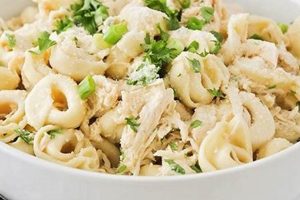
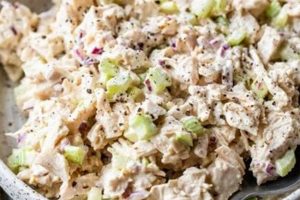
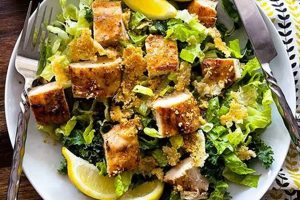
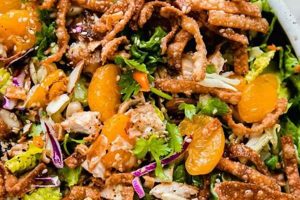
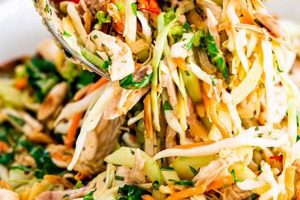
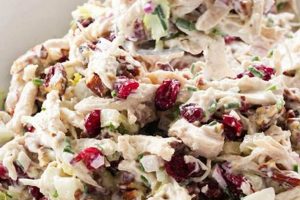
A mayonnaise-free chicken salad offers a lighter, often healthier, alternative to the traditional version. This style of salad typically features chicken as the primary ingredient, combined with various vegetables, fruits, and a different binding agent. For example, a common approach uses Greek yogurt or avocado to create a creamy texture, while others might opt for a vinaigrette dressing or simply a squeeze of lemon juice.
This preparation appeals to individuals seeking to reduce fat and calorie intake, those with dietary restrictions related to eggs or oil (common mayonnaise ingredients), and those who simply prefer a different flavor profile. Historically, salads existed long before the invention of mayonnaise; therefore, mayonnaise-less chicken salads can be considered a return to a simpler form of the dish, emphasizing the flavors of the other ingredients. This approach opens up opportunities for increased creativity and customization, catering to individual tastes and dietary needs.
Further exploration will delve into specific ingredient combinations, preparation methods, and nutritional information for creating delectable, mayonnaise-free chicken salads.
Tips for Crafting Delicious Mayonnaise-Free Chicken Salad
Creating a flavorful and satisfying chicken salad without mayonnaise requires careful consideration of ingredient combinations and preparation techniques. The following tips offer guidance for achieving optimal results.
Tip 1: Choose a Suitable Binding Agent: Greek yogurt, avocado, hummus, or even a small amount of mashed sweet potato can effectively bind the salad ingredients while contributing flavor and creaminess.
Tip 2: Incorporate Varied Textures: Combine diced chicken with crunchy elements such as celery, grapes, apples, or walnuts for a more engaging culinary experience.
Tip 3: Enhance the Flavor Profile: Fresh herbs, spices, and citrus zest can elevate the taste of the salad. Consider incorporating ingredients like dill, tarragon, chives, curry powder, or lemon zest.
Tip 4: Adjust the Consistency: If the salad appears too dry, add a small amount of extra virgin olive oil, plain yogurt, or chicken broth. Conversely, if the mixture is too wet, incorporate additional shredded chicken or finely chopped vegetables.
Tip 5: Season Judiciously: Salt and pepper are essential, but other seasonings like garlic powder, onion powder, or paprika can further enhance the flavor. Taste and adjust seasonings as needed.
Tip 6: Chill Before Serving: Allowing the salad to chill in the refrigerator for at least 30 minutes allows the flavors to meld and the salad to firm up.
Tip 7: Explore Different Serving Options: Mayonnaise-free chicken salad can be enjoyed in a variety of ways, including on bread, crackers, lettuce wraps, or as a filling for bell peppers or tomatoes.
By following these tips, one can create flavorful and satisfying chicken salads that cater to dietary restrictions or preferences while offering a lighter, healthier alternative to traditional mayonnaise-based versions.
These guidelines provide a foundation for creating a variety of personalized chicken salad recipes. Experimentation with different ingredients and flavors is encouraged.
1. Healthy Alternative

The “healthy alternative” aspect of chicken salad made without mayonnaise stems primarily from the reduction in fat and calories compared to traditional recipes. Mayonnaise, being emulsion of oil and egg yolks, contributes significantly to the overall fat and calorie content of the dish. Eliminating mayonnaise and substituting it with lower-fat alternatives like Greek yogurt, avocado, or a vinaigrette drastically reduces these values. This reduction can be particularly beneficial for individuals managing weight, cholesterol levels, or adhering to specific dietary guidelines that restrict fat intake. For example, a typical mayonnaise-based chicken salad might contain upwards of 300 calories and 20 grams of fat per serving, whereas a version using Greek yogurt could contain closer to 200 calories and 10 grams of fat, representing a substantial decrease.
The health benefits extend beyond fat and calorie reduction. Alternatives like Greek yogurt contribute protein and probiotics, supporting gut health and satiety. Avocado provides healthy fats, fiber, and various vitamins and minerals. Utilizing fresh herbs, vegetables, and fruits further enhances the nutritional profile by adding vitamins, minerals, and antioxidants. This focus on whole, unprocessed ingredients contributes to a more nutrient-dense meal, offering greater nutritional value compared to processed alternatives. This approach aligns with dietary trends emphasizing whole foods and reduced consumption of processed ingredients for improved overall health.
Understanding the “healthy alternative” aspect of mayonnaise-free chicken salad provides a framework for making informed dietary choices. While taste and preference remain paramount, recognizing the potential health benefits empowers individuals to tailor their food choices to meet specific health goals. Furthermore, it encourages creativity in the kitchen by exploring diverse ingredients and flavor combinations while prioritizing nutritional value. The shift away from mayonnaise opens doors to creating flavorful and satisfying dishes that contribute to a healthier lifestyle.
2. Flavor Exploration

Flavor exploration represents a significant advantage when crafting chicken salad without mayonnaise. The absence of mayonnaise, with its distinct and often overpowering flavor profile, creates a neutral canvas for a wider range of flavor combinations. This neutrality allows the inherent flavors of the chicken and other ingredients to shine. The opportunity arises to experiment with diverse ingredients and seasonings, resulting in unique and personalized taste experiences. For instance, incorporating ingredients like grapes and tarragon creates a sweet and slightly herbaceous profile, while curry powder and mango offer a savory and tropical twist. The absence of mayonnaise’s dominant flavor allows such combinations to take center stage.
The practical significance of this flavor exploration extends beyond simple culinary experimentation. It enables the creation of chicken salads tailored to specific dietary needs and preferences. Individuals sensitive to strong flavors can appreciate the subtle nuances achieved through careful ingredient selection. Those seeking specific regional flavor profiles can incorporate ingredients and spices reflective of those cuisines. The adaptability of a mayonnaise-free base facilitates the development of recipes aligning with diverse palates and cultural backgrounds. For example, a Mediterranean-inspired version might include Kalamata olives, feta cheese, and oregano, while a South Asian influenced recipe could incorporate ginger, cilantro, and garam masala.
In summary, flavor exploration in the context of chicken salad without mayonnaise unlocks culinary potential often masked by traditional recipes. It empowers individuals to move beyond standard flavor profiles, fostering creativity and personalization in the kitchen. This aspect contributes not only to a more diverse and exciting culinary experience but also allows for greater dietary flexibility and cultural expression within the realm of a seemingly simple dish. This potential elevates the creation of chicken salad from a routine task to an opportunity for culinary discovery.
3. Versatile Ingredients
The versatility of ingredients in mayonnaise-free chicken salad recipes contributes significantly to the dish’s adaptability and appeal. Absence of mayonnaise, a dominant flavor and textural component in traditional preparations, allows other ingredients to assume more prominent roles. This shift creates opportunities to incorporate a broader range of flavors and textures, catering to diverse dietary needs and preferences. The binding agent itself exemplifies this versatility. Greek yogurt, avocado, hummus, or even cottage cheese can replace mayonnaise, each contributing a unique flavor profile and nutritional value. This flexibility extends beyond the binding agent to encompass various fruits, vegetables, nuts, and spices. For instance, grapes and walnuts provide sweetness and crunch, while celery and red onion offer savory notes and contrasting textures. Spices such as curry powder, paprika, or cumin introduce distinct flavor dimensions.
This ingredient versatility has practical implications for recipe development and dietary customization. Individuals seeking to reduce fat intake might opt for Greek yogurt or a light vinaigrette, while those following a vegan diet could utilize mashed avocado or a plant-based yogurt alternative. Specific flavor profiles, such as Mediterranean or Asian-inspired, can be achieved through the incorporation of region-specific herbs, spices, and vegetables. This adaptability allows for the creation of chicken salads tailored to individual preferences and dietary restrictions, expanding the dish’s appeal beyond traditional limitations. Examples include incorporating roasted red peppers and Kalamata olives for a Mediterranean flair, or using shredded carrots, edamame, and a ginger-soy dressing for an Asian-inspired variation. The possibilities are extensive, limited only by culinary imagination and dietary considerations.
In conclusion, the versatility of ingredients in mayonnaise-free chicken salad represents a crucial aspect of the dish’s contemporary appeal. It allows for greater customization, caters to a wider range of dietary needs, and encourages culinary creativity. This adaptability transforms a classic dish into a platform for flavor exploration and personalized nutrition, demonstrating the significant impact ingredient versatility has on culinary innovation and dietary flexibility.
4. Texture Enhancement
Texture enhancement plays a crucial role in crafting appealing mayonnaise-free chicken salads. The absence of mayonnaise, which traditionally contributes a creamy, homogenous texture, necessitates a more deliberate approach to achieving textural complexity. This involves considering the interplay of various ingredients and preparation techniques to create a balanced and satisfying sensory experience. The choice of binding agent influences the base texture. Greek yogurt provides a creamy, slightly tangy foundation, while mashed avocado offers a smoother, richer texture. A vinaigrette-based dressing results in a lighter, less cohesive salad. Building upon this foundation, the incorporation of diverse ingredients contributes layers of texture.
Diced celery and apples introduce crispness, while toasted nuts, such as almonds or walnuts, provide satisfying crunch. Dried cranberries or chopped grapes offer a chewy counterpoint. Even the preparation of the chicken itself influences texture. Shredded chicken creates a finer, more integrated texture, while diced or cubed chicken provides more substantial, distinct pieces. The interplay of these textural elements elevates the eating experience beyond simple flavor considerations. A salad with solely soft textures can feel monotonous, while one with excessive crunch can be jarring. Achieving a balance requires careful consideration of ingredient proportions and preparation methods. For example, a salad featuring shredded chicken, finely diced celery, and grapes might benefit from the added crunch of toasted walnuts. Conversely, a salad with large chunks of chicken and coarsely chopped vegetables might require a softer element like dried cranberries to balance the textures.
Understanding the importance of texture enhancement in mayonnaise-free chicken salad allows for a more thoughtful and creative approach to recipe development. It encourages experimentation with diverse ingredients and preparation techniques to achieve a balanced and satisfying textural profile. This awareness ultimately elevates the dish beyond a simple combination of ingredients to a more complex and engaging culinary experience. It transforms the act of preparing chicken salad from a routine task into an opportunity for culinary exploration and innovation.
5. Dietary Flexibility
Dietary flexibility represents a significant advantage of chicken salad without mayonnaise. Eliminating mayonnaise, a common allergen due to its egg content, immediately broadens the recipe’s suitability for individuals with egg allergies or sensitivities. Furthermore, the absence of mayonnaise simplifies adaptation for other dietary restrictions. For example, individuals following a vegan diet can substitute the traditional binding agent with mashed avocado, plant-based yogurt, or hummus. Those seeking to reduce fat or calorie intake benefit from the lower fat content of these alternatives compared to mayonnaise. Gluten-free diets are easily accommodated by selecting gluten-free bread, crackers, or lettuce wraps for serving. This inherent adaptability allows the recipe to cater to a wider range of dietary needs without compromising flavor or satisfaction.
This dietary flexibility extends beyond simple ingredient substitutions. It fosters culinary creativity by encouraging exploration of diverse ingredients and flavor profiles. Substituting mayonnaise with Greek yogurt, for example, introduces a tangy element that complements the addition of fresh herbs like dill or mint. Using avocado as a base creates a richer, creamier texture that pairs well with ingredients like cilantro and lime juice, opening doors to globally inspired flavor combinations. This adaptability empowers individuals to personalize the recipe while adhering to specific dietary guidelines, promoting inclusivity and enjoyment across a spectrum of dietary needs. Consider a scenario where a family gathering includes individuals with varying dietary requirements. A single batch of mayonnaise-free chicken salad can be adapted to satisfy multiple needs, fostering a sense of inclusion and shared culinary experience.
In conclusion, dietary flexibility serves as a cornerstone of the appeal of chicken salad without mayonnaise. It transcends mere ingredient substitution and represents a broader shift towards inclusivity and personalized nutrition. This characteristic allows the recipe to adapt to various dietary restrictions, fostering culinary creativity and shared enjoyment across diverse dietary needs. The understanding of this flexibility empowers individuals to embrace healthier eating habits without sacrificing flavor or satisfaction, ultimately promoting a more positive and inclusive approach to food and dining.
6. Creative Customization

Creative customization represents a defining characteristic of the mayonnaise-free chicken salad. The absence of mayonnaise, a dominant ingredient in traditional recipes, liberates the dish from a fixed flavor profile and texture, opening a realm of possibilities for personalized variations. This inherent adaptability stems from the neutral base provided by alternative binding agents like Greek yogurt, avocado, or hummus. These alternatives, while providing the necessary creaminess and cohesion, possess milder flavors that readily accommodate a wider range of complementary ingredients. This foundational neutrality empowers experimentation with diverse flavor combinations and textural elements, reflecting individual preferences and dietary considerations. For instance, a preference for Mediterranean flavors might lead to the incorporation of Kalamata olives, feta cheese, and oregano, while a desire for a spicier profile could inspire the addition of jalapeos, cilantro, and a chipotle-lime dressing. The practical implication is a shift from a standardized recipe to a personalized culinary creation.
The practical significance of this creative customization extends beyond simple flavor variations. It allows for seamless integration of dietary restrictions and preferences. Individuals seeking to reduce fat intake can opt for lower-fat binding agents and incorporate a greater proportion of vegetables. Vegan diets are readily accommodated through the use of plant-based yogurts, avocado, or hummus. Gluten-free versions are achieved by selecting appropriate serving vessels like lettuce cups or gluten-free bread. This adaptability ensures that the dish remains accessible and enjoyable across a spectrum of dietary needs. For example, a family gathering with diverse dietary requirements can be catered to with a single base recipe customized with various additions to satisfy individual needs, fostering a sense of inclusion and shared culinary experience. This customization extends to texture as well. The addition of chopped nuts, dried fruit, or crunchy vegetables like water chestnuts provides contrasting textures, further enhancing the sensory experience and personalizing the dish.
In summary, creative customization distinguishes the mayonnaise-free chicken salad from its traditional counterpart. This adaptability fosters culinary exploration, accommodating individual preferences, dietary needs, and creative impulses. The result is not merely a dish but a platform for personal expression within the culinary realm. Challenges may arise in balancing flavors and textures, but the potential for personalized culinary creations outweighs these complexities. This aspect elevates the mayonnaise-free chicken salad from a simple meal to a versatile and adaptable culinary canvas, reflective of the increasing emphasis on personalized nutrition and dietary flexibility in contemporary culinary practices.
7. Simple Preparation

The simplicity of preparation contributes significantly to the appeal of chicken salad without mayonnaise. This ease of assembly stems from the reduced number of steps and ingredients compared to traditional mayonnaise-based recipes, making it a practical and convenient meal option. This aspect is particularly relevant for busy individuals or those new to cooking, offering a quick and healthy meal solution without requiring extensive culinary expertise. The following facets further explore the components and implications of this simplified preparation process.
- Reduced Ingredient List
Mayonnaise-free variations often require fewer ingredients than traditional recipes. Eliminating mayonnaise simplifies the process, as homemade mayonnaise involves multiple steps and ingredients. Using alternative binding agents like Greek yogurt or avocado streamlines the preparation, requiring only readily available ingredients. This reduced ingredient list simplifies shopping and reduces preparation time. For example, a simple recipe might only require cooked chicken, celery, grapes, Greek yogurt, and seasonings, offering a complete meal with minimal ingredient procurement.
- Quick Assembly
The assembly process is significantly quicker without the need to prepare mayonnaise or other complex sauces. Most mayonnaise-free chicken salads involve simply combining pre-cooked chicken with chopped vegetables, fruits, and the chosen binding agent. This straightforward assembly allows for rapid meal preparation, ideal for weeknight dinners or quick lunches. A complete chicken salad can often be assembled in under 15 minutes, offering a convenient and time-efficient meal solution.
- Minimal Equipment Required
Preparing chicken salad without mayonnaise requires minimal kitchen equipment. A cutting board, knife, and mixing bowl are typically sufficient. This simplicity contrasts with more complex recipes that may require specialized equipment like food processors or blenders. The minimal equipment requirement contributes to the ease and accessibility of the recipe, making it suitable for various kitchen settings, including those with limited resources or space. This aspect also simplifies cleanup, further enhancing the convenience factor.
- Adaptable to Batch Cooking
Mayonnaise-free chicken salad adapts well to batch cooking, further enhancing its convenience. Larger quantities can be prepared in advance and stored in the refrigerator for several days, providing readily available meals or snacks throughout the week. This adaptability simplifies meal planning and reduces daily cooking time, aligning with contemporary trends prioritizing efficient meal preparation strategies. This also makes it ideal for meal prepping, a popular practice for maintaining healthy eating habits throughout busy weeks.
These facets of simple preparation collectively contribute to the increasing popularity of chicken salad without mayonnaise. The ease of assembly, reduced ingredient list, minimal equipment requirements, and adaptability to batch cooking make it a practical and convenient meal option for various lifestyles and dietary preferences. This simplicity, coupled with the previously discussed health benefits, flavor exploration, and dietary flexibility, positions mayonnaise-free chicken salad as a versatile and appealing alternative to traditional recipes. This shift towards simplified cooking aligns with broader culinary trends emphasizing efficiency and accessibility without compromising flavor or nutritional value.
Frequently Asked Questions
This section addresses common inquiries regarding chicken salad prepared without mayonnaise, offering concise and informative responses to clarify potential uncertainties and misconceptions.
Question 1: What are the primary benefits of omitting mayonnaise from chicken salad?
Omitting mayonnaise reduces fat and calorie content, accommodates egg allergies and sensitivities, and expands opportunities for flavor exploration with alternative ingredients.
Question 2: What can be used as a substitute for mayonnaise to bind the salad ingredients?
Suitable alternatives include Greek yogurt, avocado, hummus, cottage cheese, or even a small amount of mashed sweet potato. These options offer varying textures and flavor profiles.
Question 3: How can one prevent the salad from becoming too dry without mayonnaise?
A small amount of extra virgin olive oil, plain yogurt, or chicken broth can be added to achieve the desired consistency. Mashed avocado also contributes moisture and creaminess.
Question 4: What flavor combinations work well in a mayonnaise-free chicken salad?
Flavor combinations are highly adaptable. Popular options include grapes and tarragon, curry powder and mango, or cranberries and pecans. Fresh herbs, spices, and citrus zest can further enhance the flavor profile.
Question 5: How long can chicken salad made without mayonnaise be stored in the refrigerator?
Properly stored in an airtight container, it typically lasts for 3-5 days in the refrigerator. Factors such as ingredient freshness and storage temperature can influence shelf life.
Question 6: Can this type of chicken salad be frozen?
While freezing is possible, it is generally not recommended. Freezing can alter the texture of the ingredients, particularly the binding agent, resulting in a less desirable consistency upon thawing.
These responses provide a foundational understanding of preparing and enjoying chicken salad without mayonnaise. Further exploration of individual preferences and dietary needs will enhance the culinary experience.
The following section provides specific recipe examples demonstrating the principles discussed throughout this article.
Chicken Salad Without Mayo Recipe
Exploration of chicken salad prepared without mayonnaise reveals a versatile and adaptable dish. Analysis demonstrates significant advantages, including reduced fat and calorie content, expanded dietary flexibility, and enhanced opportunities for flavor exploration and creative customization. The simplicity of preparation further contributes to the dish’s appeal, making it a practical and convenient option for various lifestyles and dietary needs. Ingredient versatility allows for personalized variations catering to individual preferences, ranging from classic combinations to globally inspired flavor profiles. The absence of mayonnaise, rather than a limitation, serves as a catalyst for culinary innovation, transforming a traditional dish into a platform for creative expression.
Chicken salad without mayonnaise represents a shift from standardized recipes toward personalized nutrition and culinary exploration. This evolution reflects broader dietary trends emphasizing whole foods, reduced processed ingredient consumption, and increased dietary awareness. Further exploration and experimentation promise continued innovation within this culinary space, offering a path toward healthier and more personalized meal choices. The potential for continued evolution and adaptation underscores the enduring relevance of this culinary concept within the evolving landscape of food and nutrition.