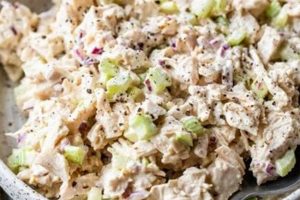
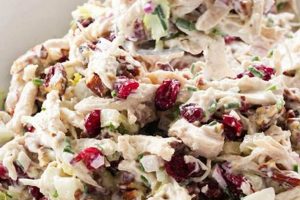
A dish composed of cooked chicken, typically shredded or diced, combined with mayonnaise and often celery, onion, and seasonings. The addition of grapes introduces a sweet and slightly tart element that complements the savory flavors. Variations may include different types of grapes, nuts, dried fruits, or herbs.
This combination offers a refreshing and flavorful meal, suitable for picnics, lunches, or light dinners. Its versatility allows for easy customization to individual preferences. The dish provides a good source of protein and can incorporate various fruits and vegetables for added nutritional value. Historically, chicken salad emerged as a popular dish in the mid-19th century, with variations incorporating fruits like grapes gaining traction as palates evolved.
Further exploration of this culinary creation might include examining different grape varieties and their impact on the dish’s flavor profile, exploring regional variations in preparation methods, or delving into the nutritional aspects of the ingredients.
Tips for Preparing Chicken Salad with Grapes
Several considerations can elevate this simple dish to a culinary delight. Attention to ingredient selection, preparation techniques, and flavor balancing ensures a satisfying result.
Tip 1: Chicken Selection: Opting for high-quality, cooked chicken, whether roasted, poached, or grilled, significantly impacts the final flavor. Avoid pre-cooked or processed chicken for optimal results.
Tip 2: Grape Variety: Seedless grapes, such as red, green, or black varieties, offer a pleasant sweetness and texture. Consider the sweetness level of the chosen grapes when balancing other ingredients.
Tip 3: Mayonnaise Base: A good quality mayonnaise serves as the foundation of the salad. Experimenting with different types, such as olive oil-based mayonnaise, can add depth of flavor.
Tip 4: Enhancing Flavors: Incorporating finely diced celery, red onion, and fresh herbs, such as dill or chives, adds complexity and freshness.
Tip 5: Balancing Sweetness and Acidity: A touch of acidity, such as a squeeze of lemon juice or a splash of apple cider vinegar, can balance the sweetness of the grapes and enhance the overall flavor profile.
Tip 6: Texture Considerations: Dicing the chicken and other ingredients into uniform, bite-sized pieces ensures a pleasant texture and even distribution of flavors.
Tip 7: Chilling and Serving: Chilling the prepared salad for at least 30 minutes allows the flavors to meld. Serve on bread, crackers, lettuce cups, or as a filling for sandwiches or wraps.
By following these suggestions, one can achieve a balanced and delicious chicken salad with grapes that offers a satisfying combination of flavors and textures.
These tips provide a foundation for creating a personalized version of this classic dish, demonstrating the adaptability and enduring appeal of chicken salad with grapes.
1. High-quality Chicken

High-quality chicken plays a crucial role in the overall success of a chicken salad with grapes. The chicken provides the primary protein source and significantly influences the final flavor profile. Tender, flavorful chicken elevates the dish, while dry, bland chicken can detract from the other ingredients. The quality of the chicken impacts not only the taste but also the texture of the salad. Overly processed or low-quality chicken can result in a mushy or unappetizing consistency. For instance, using freshly roasted or poached chicken, as opposed to pre-cooked or canned options, results in a noticeably superior taste and texture.
Selecting high-quality chicken ensures a pleasant culinary experience. The flavor of the chicken interacts with the sweetness of the grapes and the other components, creating a harmonious blend. Using free-range or organic chicken, known for their richer flavor profiles, can further enhance the dish. Furthermore, the texture of the chicken contributes to the overall mouthfeel of the salad. Firm, yet tender chicken pieces create a more enjoyable eating experience. Consider the specific recipe requirements when selecting the chicken; some recipes may benefit from shredded chicken, while others might call for diced or cubed pieces. Practical applications include selecting chicken breasts for a leaner salad or utilizing rotisserie chicken for convenience without sacrificing quality.
Prioritizing high-quality chicken represents a fundamental step in crafting exceptional chicken salad with grapes. This choice directly impacts the overall flavor, texture, and enjoyment of the final product. While convenience often dictates ingredient selection, the difference in quality between fresh, properly cooked chicken and processed alternatives is readily apparent. Investing in higher-quality chicken ultimately contributes to a more satisfying and flavorful culinary result. This principle applies not only to chicken salad but also to a wide range of culinary endeavors where the quality of core ingredients significantly influences the final outcome.
2. Seedless Grapes

Seedless grapes represent a crucial element within chicken salad incorporating grapes. Their presence contributes significantly to both the textural and flavor profiles of the dish. The absence of seeds offers a smoother, more enjoyable eating experience, eliminating the interruption and potential bitterness that seeds can introduce. This characteristic proves particularly advantageous in a salad setting, where a consistent texture is desirable. Furthermore, the sweetness inherent in seedless grapes complements the savory notes of the chicken and mayonnaise, creating a balanced flavor profile. Different varieties of seedless grapes, such as red, green, or black, offer nuanced flavor variations, allowing for customization based on individual preferences. For example, red grapes impart a slightly tart sweetness, while green grapes offer a crisper, more refreshing taste.
The practical implications of utilizing seedless grapes extend beyond mere convenience. Seedless grapes streamline the preparation process, eliminating the need for tedious seed removal. This efficiency allows for quicker assembly and reduces the overall preparation time. Moreover, the uniform size and shape of seedless grapes contribute to a more aesthetically pleasing presentation. The consistent size also ensures even distribution of sweetness throughout the salad, preventing pockets of excessive sweetness or tartness. Consider a scenario where seeded grapes are used: the varying sizes and the presence of seeds could disrupt the balance of flavors and textures. The potential for bitterness from the seeds introduces an unpredictable element that could detract from the overall enjoyment of the dish.
In summary, the inclusion of seedless grapes in chicken salad serves a multifaceted purpose. Beyond their practical advantages of ease of preparation and aesthetic appeal, seedless grapes enhance the sensory experience. The consistent texture, balanced sweetness, and varietal flavor nuances contribute significantly to the overall success and enjoyment of the dish. The choice between seeded and seedless grapes directly impacts the final product, highlighting the importance of careful ingredient selection in achieving a desired culinary outcome. Understanding this connection allows for informed decision-making in recipe development and execution.
3. Balanced Mayonnaise
Balanced mayonnaise plays a pivotal role in a successful chicken salad with grapes. Mayonnaise serves as the unifying element, binding the ingredients and providing a creamy texture. However, the concept of “balance” is crucial. An overabundance of mayonnaise can result in a heavy, overly rich salad, while too little can lead to a dry, crumbly texture. The ideal mayonnaise provides sufficient moisture and richness without overpowering the other flavors. Furthermore, the flavor profile of the mayonnaise itself contributes to the overall balance. A neutral-flavored mayonnaise allows the flavors of the chicken and grapes to shine, while a more assertive mayonnaise, such as one flavored with Dijon mustard or herbs, can add complexity. For example, a chicken salad featuring delicate herbs and green grapes might benefit from a lighter, less tangy mayonnaise, whereas a salad with bolder flavors, like roasted chicken and red grapes, could support a more robust mayonnaise incorporating Dijon or roasted garlic.
Achieving this balance requires careful consideration of the other ingredients. The sweetness of the grapes, the savory notes of the chicken, and any additional ingredients, such as celery or nuts, influence the ideal mayonnaise choice. A sweeter salad might require a slightly tangier mayonnaise to offset the sweetness, while a salad with more savory elements might benefit from a richer, creamier base. Practical application of this understanding involves tasting and adjusting the mayonnaise as needed. Starting with a smaller amount of mayonnaise and gradually adding more allows for better control over the final consistency and flavor. Over-dressing can be difficult to rectify, while adding more mayonnaise is a simple solution to an under-dressed salad. Observing the emulsion’s stability is also important; a broken mayonnaise will result in a less appealing texture.
In summary, the role of balanced mayonnaise extends beyond simply binding ingredients. It acts as a critical component in the overall flavor profile and textural experience of the chicken salad with grapes. Understanding the interplay between the mayonnaise and other ingredients allows for informed choices regarding mayonnaise type, quantity, and flavor additions. This attention to detail ultimately contributes to a more harmonious and satisfying culinary creation. Challenges arise when pre-made mayonnaise options lack the flexibility required for customization. Preparing mayonnaise from scratch offers greater control over flavor and consistency, aligning with the broader theme of crafting a balanced and flavorful dish.
4. Complementary Seasonings

Complementary seasonings represent a crucial aspect of a well-executed chicken salad with grapes. These seasonings enhance and elevate the inherent flavors of the core ingredients, transforming a simple mixture into a nuanced culinary experience. The interplay between seasonings and the existing flavors of chicken, grapes, and mayonnaise creates a synergistic effect, where the whole becomes greater than the sum of its parts. Consider the impact of fresh herbs, such as dill, tarragon, or chives. Dill, with its bright, slightly tangy notes, complements the sweetness of the grapes and provides a refreshing counterpoint to the richness of the mayonnaise. Tarragon offers a subtle anise flavor that enhances the savory aspects of the chicken. Chives contribute a mild onion flavor that adds depth without overpowering the other ingredients. The strategic use of seasonings allows for a layered flavor profile, moving beyond basic sweetness and savoriness.
Understanding the flavor profiles of various seasonings allows for informed choices based on the specific ingredients used. For instance, a chicken salad featuring roasted chicken and red grapes might benefit from the warmth of smoked paprika or the earthiness of dried thyme. A salad with poached chicken and green grapes might be enhanced by the brightness of lemon zest or the peppery bite of fresh cracked black pepper. Beyond herbs and spices, seasonings also encompass elements like salt and acid. A touch of salt enhances the sweetness of the grapes and balances the richness of the mayonnaise. A squeeze of lemon juice or a splash of vinegar introduces acidity that brightens the overall flavor profile and prevents the salad from becoming overly sweet. Practical applications of this understanding involve experimenting with different seasoning combinations to discover personalized flavor profiles. Starting with small amounts allows for adjustments and prevents over-seasoning, which can mask the delicate flavors of the chicken and grapes.
In conclusion, complementary seasonings function as more than mere additions to a chicken salad with grapes. They represent essential components that elevate the dish from simple to sophisticated. The careful selection and application of seasonings contribute significantly to the overall flavor complexity and balance. Challenges may arise when attempting to balance pre-existing flavor profiles in store-bought mayonnaise or pre-seasoned chicken. Opting for simpler base ingredients allows for greater control over the final flavor profile, aligning with the broader culinary principle of building flavors through intentional seasoning choices. Mastering the art of complementary seasoning unlocks the full potential of chicken salad with grapes, transforming it into a truly satisfying and flavorful dish.
5. Proper Chilling

Proper chilling constitutes a critical step in preparing chicken salad with grapes, significantly impacting both food safety and flavor development. Chilling allows the flavors of the various componentschicken, grapes, mayonnaise, and seasoningsto meld and harmonize, resulting in a more cohesive and complex flavor profile. Moreover, adequate chilling is essential for maintaining food safety by inhibiting bacterial growth and preserving the freshness of the ingredients.
- Food Safety
Chilling inhibits the growth of microorganisms that can cause foodborne illness. Chicken salad, containing perishable ingredients like chicken and mayonnaise, is particularly susceptible to bacterial growth at room temperature. Prompt and adequate chilling after preparation is paramount for ensuring food safety. Guidelines generally recommend maintaining a refrigerator temperature of 40F (4C) or below to effectively control bacterial proliferation. Failure to adhere to proper chilling practices can pose significant health risks.
- Flavor Development
Chilling allows the flavors of the various ingredients to meld and mature. The time spent in the refrigerator allows the flavors of the chicken, grapes, mayonnaise, and seasonings to permeate the mixture, creating a more balanced and nuanced flavor profile. This melding process is particularly noticeable with seasonings; their flavors become more integrated and less pronounced after chilling. For instance, freshly added herbs may initially taste sharp, but after chilling, their flavors mellow and harmonize with the other ingredients.
- Texture Enhancement
Chilling influences the texture of the chicken salad, particularly when using mayonnaise-based dressings. The cold temperature firms the mayonnaise, contributing to a more desirable consistency. This firming effect also helps prevent the salad from becoming watery or overly soft, especially if it contains ingredients with high water content, like grapes. A chilled salad maintains its structural integrity better, whether served on bread, crackers, or lettuce cups.
- Optimal Serving Temperature
Serving chicken salad chilled enhances the overall sensory experience. The cool temperature provides a refreshing contrast to the richness of the mayonnaise and the sweetness of the grapes. A chilled salad offers a more palatable experience, especially during warmer months. Furthermore, serving the salad at the correct temperature preserves the integrity of the ingredients, preventing the mayonnaise from becoming oily or the grapes from becoming overly soft.
In conclusion, proper chilling is an integral aspect of preparing chicken salad with grapes, affecting not only food safety but also flavor development, texture, and overall enjoyment. Neglecting this crucial step can compromise the quality and safety of the dish. The multifaceted benefits of chilling highlight its essential role in achieving a successful and satisfying culinary outcome.
Frequently Asked Questions
This section addresses common inquiries regarding chicken salad incorporating grapes, offering concise and informative responses.
Question 1: What type of grapes is best suited for chicken salad?
Seedless varieties, such as red, green, or black grapes, are generally preferred for their convenience and consistent texture. The choice of grape variety can influence the sweetness and tartness of the salad.
Question 2: Can canned chicken be used in this recipe?
While canned chicken offers convenience, using freshly cooked chicken, whether roasted, poached, or grilled, yields significantly better flavor and texture.
Question 3: How long can chicken salad with grapes be stored safely?
Properly stored in an airtight container in the refrigerator, this salad should be consumed within 3-4 days to maintain optimal quality and safety.
Question 4: What can be substituted for mayonnaise?
Plain Greek yogurt or a mixture of Greek yogurt and mayonnaise can offer a lighter alternative while retaining a creamy texture. Avocado can also provide a healthy, creamy substitute.
Question 5: How can one prevent the salad from becoming watery?
Ensuring the grapes are dry before adding them to the salad helps prevent excess moisture. Additionally, chilling the salad allows the mayonnaise to firm up, further reducing wateriness.
Question 6: Can other fruits be added to chicken salad with grapes?
Apples, pears, or dried cranberries can complement the grapes and add textural and flavor complexity. However, consider the overall sweetness and moisture content when adding other fruits.
Careful consideration of these points ensures a successful and enjoyable culinary experience with chicken salad incorporating grapes.
This information provides a foundational understanding for preparing this dish. Further exploration of recipe variations and serving suggestions can enhance culinary expertise.
Chicken Salad with Grape Recipe
Exploration of this recipe reveals a dish offering nuanced flavor profiles and adaptable preparation methods. Careful ingredient selection, specifically regarding chicken quality, grape variety, and mayonnaise balance, significantly impacts the final product. Complementary seasonings and proper chilling techniques further enhance the culinary experience, contributing to both flavor development and food safety. Understanding these elements allows for informed choices, transforming a simple combination of ingredients into a well-balanced and satisfying meal.
Culinary exploration often lies in understanding fundamental principles and applying them creatively. Chicken salad with grape recipes exemplify this concept, offering a platform for personalized interpretations while adhering to core principles of flavor balance, texture, and food safety. Continued experimentation with ingredient variations and seasoning combinations promises further culinary discoveries, solidifying the enduring appeal of this adaptable dish.