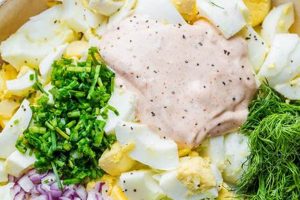
A dish consisting of chopped hard-cooked eggs combined with mayonnaise and various other ingredients creates a simple yet versatile meal or snack. Common additions include mustard, celery, onion, relish, and seasonings such as salt, pepper, and paprika. Variations can incorporate ingredients like avocado, bacon, or different herbs. This mixture is typically served chilled on bread, crackers, lettuce cups, or as a filling for sandwiches and wraps.
This classic preparation offers a readily available source of protein and nutrients. Its adaptable nature allows for customization to individual dietary preferences and palates, making it suitable for picnics, potlucks, quick lunches, or light dinners. Economical to prepare, it utilizes readily available ingredients and minimizes food waste by repurposing leftover cooked eggs. Its long history as a staple dish speaks to its enduring appeal and practicality.
The following sections will explore variations on this culinary staple, providing detailed guidance on ingredient selection, preparation techniques, and serving suggestions. Whether a novice cook or a seasoned chef, readers will find inspiration and practical advice for creating a delicious and satisfying culinary experience.
Tips for Perfect Egg Salad
Achieving optimal flavor and texture requires attention to detail throughout the preparation process. The following tips offer guidance for creating a superior culinary experience.
Tip 1: Perfect Hard-Boiled Eggs: Avoid overcooking, which can lead to a rubbery texture and a green ring around the yolk. Gently lower eggs into boiling water, cook for 8-10 minutes, then immediately transfer to an ice bath to stop the cooking process.
Tip 2: Chopping Consistency: Uniformly chopped eggs ensure a pleasing texture and even distribution of flavors. A sharp knife or an egg slicer facilitates consistent results.
Tip 3: Mayonnaise Matters: High-quality mayonnaise significantly impacts the overall flavor profile. Experiment with different brands or consider making homemade mayonnaise for a richer taste.
Tip 4: Flavorful Enhancements: Fresh herbs, such as dill, chives, or parsley, elevate the flavor profile. Consider adding a dash of hot sauce or a sprinkle of smoked paprika for an extra dimension.
Tip 5: Seasoning Strategically: Seasoning should be done gradually, tasting and adjusting throughout the process. Over-salting can easily overpower the delicate egg flavor.
Tip 6: Chilling Time: Allowing the mixture to chill for at least 30 minutes allows the flavors to meld and enhances the overall experience. Cover and refrigerate until ready to serve.
Tip 7: Creative Serving Options: Explore serving options beyond traditional bread. Consider lettuce wraps, avocado halves, or bell pepper boats for a lighter, healthier presentation.
By following these tips, one can elevate this simple dish to a truly exceptional culinary creation. Attention to detail in each step, from egg preparation to ingredient selection, ensures a delightful and satisfying dining experience.
These guidelines provide a foundation for crafting a truly exceptional egg salad. The concluding section will offer further inspiration and ideas for incorporating this versatile dish into a variety of meal plans.
1. Ingredient Quality

Ingredient quality significantly impacts the overall success of this seemingly simple dish. Subpar components can result in a bland or unappetizing final product, while fresh, high-quality ingredients elevate the flavor profile and create a truly satisfying culinary experience. Understanding the role of each ingredient and selecting thoughtfully contributes to a superior result.
- Fresh Eggs:
Fresh eggs are paramount. They contribute a richer flavor and a firmer, more pleasing texture. Older eggs can result in a watery, less desirable consistency and a diminished flavor profile. Farm-fresh or organic options often provide a noticeable difference in taste and quality.
- Mayonnaise Selection:
Mayonnaise serves as the binding agent and contributes significantly to the overall flavor. High-quality mayonnaise, whether store-bought or homemade, offers a richer, creamier texture and a more complex flavor profile. Different varieties, such as olive oil-based or Dijon-infused mayonnaise, can further enhance the taste.
- Fresh Produce:
If incorporating vegetables like celery or onion, freshness is key. Crisp, flavorful produce adds textural and flavor complexity, while wilted or older vegetables can detract from the overall quality. Opting for organic produce can further enhance the flavor profile.
- Seasoning and Spices:
Even seemingly minor ingredients like salt, pepper, and other spices contribute significantly. Freshly ground pepper offers a more robust aroma and flavor than pre-ground options. High-quality spices and seasonings enhance the overall taste and elevate the final dish.
The cumulative effect of these ingredient choices directly correlates to the final quality of the dish. Investing in quality ingredients transforms a simple combination of eggs and mayonnaise into a truly exceptional culinary experience. Careful selection elevates the taste, texture, and overall enjoyment of this classic dish.
2. Proper Egg Cooking
Proper egg cooking forms the cornerstone of a successful boiled egg salad recipe. The final texture and flavor of the salad depend heavily on how the eggs are cooked. Overcooked eggs become rubbery and dry, resulting in a chalky, unpleasant texture in the salad. Undercooked eggs, on the other hand, can be difficult to peel and may present food safety concerns. The ideal hard-boiled egg for salad preparation has a firm, yet tender white and a fully cooked, creamy yolk, free from any green discoloration. This perfect balance ensures a pleasant eating experience and maximizes the egg’s contribution to the overall flavor profile of the salad. For instance, using properly cooked eggs allows the other ingredients, such as mayonnaise and seasonings, to bind effectively, creating a cohesive and flavorful mixture. Conversely, poorly cooked eggs can hinder this process, leading to a salad that lacks texture and has a watery consistency.
Achieving perfectly cooked eggs involves several key steps. Starting with cold water and bringing the eggs to a rolling boil ensures even cooking. Maintaining a consistent boil for the correct duration, typically 8-10 minutes, prevents overcooking. Immediately transferring the cooked eggs to an ice bath halts the cooking process and helps prevent the formation of a green ring around the yolk. Peeling the eggs while still warm, under cold running water, can make the process easier. Attention to these details significantly impacts the final quality of the egg salad. Examples of variations in cooking time include cooking for a shorter duration (6-7 minutes) for a softer yolk, suitable for deviled eggs, or a slightly longer duration (11-12 minutes) for firmer yolks, ideal for slicing and adding to salads as a standalone component.
Mastering the art of cooking eggs properly is essential for anyone seeking to create a high-quality egg salad. It ensures optimal texture, enhances flavor, and contributes to the overall success of the dish. While seemingly a minor detail, proper egg cooking plays a major role in elevating this simple dish from mediocre to exceptional. Challenges can arise from variations in stovetop temperatures and egg sizes; however, consistent practice and adherence to recommended cooking times minimize these issues and contribute to consistently desirable results.
3. Consistent Chopping
Consistent chopping plays a crucial role in the overall quality and enjoyment of boiled egg salad. Uniformly sized egg pieces ensure even distribution of flavor and contribute to a pleasing texture. A haphazard mixture of large and small pieces creates an inconsistent experience, with some bites dominated by egg and others lacking its presence entirely. This lack of uniformity detracts from the overall balance and can negatively impact palatability. For instance, a salad with large, uneven chunks may be difficult to spread on bread or crackers, while overly finely chopped eggs can result in a mushy texture. Achieving consistent size ensures that each bite delivers a harmonious blend of all ingredients, creating a more satisfying culinary experience.
Several methods facilitate consistent chopping. Using an egg slicer offers a rapid and efficient means of achieving uniformity, producing even slices ideal for egg salad. Alternatively, a sharp knife and a methodical approach can yield similar results. First, halve the eggs lengthwise, then slice each half crosswise into uniform pieces. The desired size can vary based on personal preference, but aiming for pieces roughly to inch in size generally provides a desirable balance. Regardless of the chosen method, maintaining consistency throughout the chopping process ensures a visually appealing and texturally satisfying final product. This uniformity enhances the overall aesthetic of the salad and contributes to a more pleasurable eating experience.
Consistent chopping, while seemingly a minor detail, significantly contributes to the overall success of a boiled egg salad. It ensures even flavor distribution, enhances textural consistency, and improves the overall aesthetic appeal. Achieving this uniformity elevates the dish from a simple combination of ingredients to a carefully crafted culinary creation. Challenges in maintaining consistent chopping can arise from dull knives or rushing the process; however, prioritizing this step and employing appropriate tools ensures a superior final product.
4. Flavorful Additions
Flavorful additions transform boiled egg salad from a simple base to a complex and nuanced dish. These additions, ranging from classic ingredients like Dijon mustard and sweet pickle relish to more adventurous options such as curry powder or sriracha, introduce layers of flavor and textural complexity. The interplay of these additions with the creamy base creates a balanced and satisfying culinary experience. For example, the tangy acidity of mustard complements the richness of mayonnaise, while the crunch of celery or red onion provides textural contrast to the soft eggs. Understanding the impact of various additions allows for customization based on individual preferences and desired flavor profiles.
The judicious use of flavorful additions can elevate a basic boiled egg salad to gourmet status. Fresh herbs, such as dill, chives, or parsley, contribute a bright, herbaceous note that balances the richness of the eggs and mayonnaise. Spices like smoked paprika or cayenne pepper introduce subtle heat and depth of flavor. The incorporation of ingredients like chopped bacon or crumbled blue cheese adds savory umami notes and textural complexity. Examples include a classic combination of Dijon mustard, celery, and onion for a traditional flavor profile, or a more adventurous approach with curry powder, chopped apples, and golden raisins for an Indian-inspired twist. The possibilities are virtually limitless, allowing for endless creativity and customization.
Flavorful additions represent a crucial element in any boiled egg salad recipe. They provide depth, complexity, and textural nuance, transforming a simple dish into a culinary delight. Careful consideration of these additions allows for personalized flavor profiles tailored to individual preferences. Challenges may arise in balancing flavors and avoiding overpowering the delicate taste of the eggs; however, thoughtful experimentation and a focus on complementary flavor combinations ensure a successful and satisfying outcome. The strategic incorporation of these elements elevates the dish, demonstrating the profound impact of thoughtful ingredient selection on the overall culinary experience.
5. Balanced Seasoning
Balanced seasoning plays a pivotal role in a successful boiled egg salad recipe. It elevates the inherent flavors of the ingredients without overpowering the delicate taste of the eggs. Over-seasoning can mask the subtle nuances of the other components, resulting in a one-dimensional, salty final product. Conversely, under-seasoning can lead to a bland and uninspiring dish, failing to capitalize on the potential for a complex flavor profile. The goal is to achieve a harmonious blend where each ingredient contributes to the overall taste experience without any single element dominating. For example, a pinch of salt enhances the natural sweetness of the eggs, while a touch of black pepper adds a subtle bite. The careful calibration of these seasonings creates a balanced flavor profile that allows the individual components to shine.
Seasoning should be approached strategically, starting with a small amount and gradually adding more to taste. This iterative process allows for precise control, preventing over-seasoning and ensuring the desired balance is achieved. Different seasonings contribute unique characteristics to the final product. A dash of paprika adds a smoky warmth, while a sprinkle of garlic powder introduces a savory depth. Fresh herbs, such as dill or chives, offer a bright, herbaceous counterpoint to the richness of the mayonnaise and eggs. Consideration should also be given to the inherent saltiness of certain additions, such as pickles or olives, to avoid over-salting the final dish. A practical example involves starting with a base of salt and pepper, then adding small increments of other seasonings, tasting after each addition, until the desired flavor profile is reached. This method allows for adjustments based on specific ingredient combinations and personal preferences.
Balanced seasoning distinguishes a truly exceptional egg salad from a mediocre one. It demonstrates culinary expertise and a nuanced understanding of flavor interactions. Achieving this balance requires careful attention and a willingness to experiment, but the resulting enhancement in taste is significant. Challenges can arise from variations in ingredient salinity and personal palate preferences; however, a methodical approach to seasoning, emphasizing gradual additions and frequent tasting, allows for consistent and desirable results. This meticulous attention to detail elevates the dish, demonstrating the profound impact of balanced seasoning on the overall culinary experience.
6. Adequate Chilling

Adequate chilling is essential for maximizing the flavor and texture of boiled egg salad. Chilling allows the flavors of the various ingredients, including mayonnaise, mustard, seasonings, and any additions, to meld and mature. This fusion of flavors creates a more cohesive and complex taste profile compared to a freshly made, unchilled salad. The temperature reduction also firms the egg whites and solidifies the mayonnaise, contributing to a more desirable texture and preventing the salad from becoming watery or runny. Without sufficient chilling, the individual flavors remain distinct and the texture may be less appealing. For example, a freshly made egg salad might taste predominantly of mayonnaise, with the other ingredients playing a secondary role. After chilling, however, the flavors harmonize, creating a balanced and unified taste experience.
The practical significance of adequate chilling extends beyond flavor enhancement. Lowering the temperature inhibits bacterial growth, a crucial aspect of food safety, particularly with mayonnaise-based dishes. Chilling also improves the structural integrity of the salad, making it easier to handle and serve. A well-chilled egg salad holds its shape better when scooped onto bread, crackers, or used as a filling for sandwiches and wraps. Furthermore, the cool temperature of a chilled salad provides a refreshing contrast on a warm day, enhancing the overall enjoyment of the dish. Insufficient chilling can lead to a less satisfying sensory experience and potential food safety risks. For instance, a warm egg salad may have a less appealing, greasy mouthfeel, while a salad left at room temperature for an extended period could harbor harmful bacteria.
In conclusion, adequate chilling is not merely a suggested step but a crucial element in creating a high-quality boiled egg salad. It optimizes flavor development, improves texture, enhances food safety, and contributes to a more pleasurable dining experience. While the specific chilling time can vary depending on the surrounding temperature and the quantity of salad, a minimum of 30 minutes is generally recommended for optimal results. Challenges in achieving adequate chilling can arise in situations like picnics or outdoor events; however, the use of insulated containers and ice packs can effectively maintain a safe and desirable temperature. Understanding the importance of this step underscores the attention to detail required for crafting a truly exceptional egg salad, demonstrating that even seemingly simple culinary endeavors benefit from careful consideration of all contributing factors.
7. Creative presentation
Creative presentation elevates boiled egg salad from a simple staple to a visually appealing and engaging culinary experience. Moving beyond the standard sandwich filling or scoop on lettuce, innovative presentation techniques enhance the perceived value and enjoyment of this versatile dish. Thoughtful plating and creative serving vessels transform the eating experience, encouraging greater appreciation for the flavors and textures. This aspect, while often overlooked, significantly contributes to the overall satisfaction derived from consuming boiled egg salad.
- Serving Vessels:
Utilizing unique serving vessels adds visual interest and elevates the dining experience. Moving beyond traditional bowls or plates, consider options like hollowed-out avocados, bell pepper halves, endive leaves, or small ramekins. These unexpected choices add an element of sophistication and playfulness, transforming a simple salad into an eye-catching culinary creation. For example, serving egg salad in crisp lettuce cups offers a light and refreshing alternative to bread, while using colorful bell pepper halves creates a visually striking presentation.
- Garnishing Techniques:
Strategic garnishing enhances both visual appeal and flavor. A sprinkle of paprika adds a pop of color and a hint of smokiness, while fresh herbs like chives or dill contribute a vibrant green hue and a fresh, aromatic element. Consider using edible flowers, microgreens, or a drizzle of high-quality olive oil for a touch of elegance. A simple garnish can transform a plain-looking salad into a visually stunning dish, stimulating appetite and enhancing the overall sensory experience. For instance, a sprinkle of chopped fresh parsley not only adds visual appeal but also contributes a fresh, herbaceous note that complements the other flavors.
- Plating Styles:
Thoughtful plating elevates the presentation and creates a more engaging dining experience. Instead of simply piling the salad onto a plate, consider creating a more structured presentation. Using a ring mold to shape the salad adds height and visual interest. Alternatively, arranging the salad alongside complementary elements like crusty bread, crackers, or a small salad creates a balanced and visually appealing plate. For example, a scoop of egg salad presented on a bed of mixed greens with a side of toasted baguette slices offers a more refined and appealing presentation than a simple mound of salad on a plate.
- Contextual Adaptations:
Adapting the presentation to the specific context enhances the overall experience. For a picnic, individual portions in small jars or reusable containers offer convenience and portability. For a formal luncheon, a more elaborate plating style, incorporating elegant garnishes and serving vessels, adds a touch of sophistication. The presentation should reflect the occasion and the dining environment, enhancing the perceived value of the dish. For example, serving egg salad as a filling for deviled eggs at a cocktail party offers a sophisticated and bite-sized presentation, while incorporating it into a layered salad for a potluck provides a visually appealing and shareable option.
By focusing on creative presentation, boiled egg salad transcends its humble origins and becomes a culinary canvas for artistic expression. These techniques enhance visual appeal, stimulate appetite, and elevate the overall dining experience, demonstrating that even simple dishes can benefit from thoughtful presentation. From casual lunches to elegant gatherings, creative presentation adds value and enjoyment to this versatile and timeless classic.
Frequently Asked Questions
This section addresses common inquiries regarding the preparation and enjoyment of this classic dish. Clarity on these points ensures consistent and successful results.
Question 1: How long can boiled egg salad be safely stored?
Refrigerated egg salad should be consumed within 3-5 days. Storage in airtight containers minimizes exposure to air and helps maintain freshness.
Question 2: Can other ingredients be substituted for mayonnaise?
Plain Greek yogurt or avocado can provide a healthier alternative to mayonnaise, offering a lighter texture and different flavor profile. These substitutions may alter the overall consistency and taste.
Question 3: How can one prevent the yolks from becoming dry and crumbly?
Avoiding overcooking the eggs is crucial. An ice bath immediately after boiling helps prevent the yolks from drying out. Gentle handling during chopping further minimizes crumbling.
Question 4: What are common signs of spoiled egg salad?
A sour odor, slimy texture, or discoloration indicates spoilage. Discard any egg salad exhibiting these characteristics immediately.
Question 5: Can boiled egg salad be frozen?
Freezing is not recommended. Freezing negatively impacts the texture and consistency of the mayonnaise, resulting in a watery and less palatable final product upon thawing.
Question 6: How can one adjust the flavor profile to accommodate dietary restrictions?
Substituting ingredients and adjusting seasonings allow for customization. Reduced-sodium condiments, dairy-free mayonnaise alternatives, and specific spice blends accommodate various dietary needs without compromising flavor.
Understanding these aspects ensures a safe and enjoyable culinary experience. Proper storage, ingredient selection, and attention to detail optimize the flavor and texture of this versatile dish.
The following section provides a collection of recipe variations, offering inspiration for customizing this classic dish.
Boiled Egg Salad Recipe
This exploration of boiled egg salad recipes has delved into the nuances of this seemingly simple dish, highlighting the crucial elements that contribute to its success. From the importance of perfectly cooked eggs and consistent chopping to the strategic use of flavorful additions and balanced seasoning, each step plays a vital role in the final outcome. Proper chilling techniques ensure food safety and optimal flavor development, while creative presentation elevates the dish from a humble staple to a visually appealing culinary creation. Addressing frequently asked questions provides further clarity and guidance for achieving consistent and desirable results.
The boiled egg salad recipe, though classic and straightforward, offers significant potential for culinary creativity and personal expression. Mastery of these fundamental principles empowers individuals to craft a dish that transcends its basic components, offering a satisfying and enjoyable culinary experience. Further exploration and experimentation with ingredient combinations and presentation techniques promise continued evolution and enjoyment of this timeless classic.