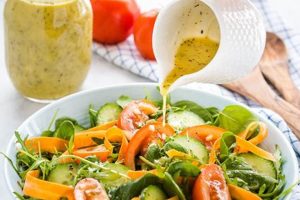
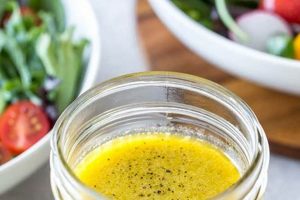
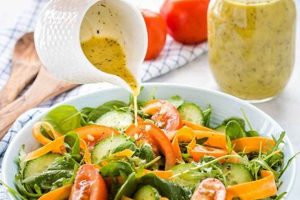
A fundamental vinaigrette, typically composed of a dark, aged vinegar renowned for its sweet, slightly tangy flavor, combined with a fruit-based oil prized for its health benefits and distinct taste. A simple emulsion is created by whisking these two ingredients together, often with the addition of seasonings like salt, pepper, Dijon mustard, or herbs.
This classic combination offers a versatile and flavorful foundation for a wide array of salads. Its simplicity allows for easy customization, while the balance of acidity and richness enhances the flavors of fresh vegetables, fruits, and cheeses. Historically, both components have been appreciated for their culinary and medicinal properties, with their combined use tracing back to Mediterranean traditions. The ease of preparation and readily available ingredients contribute to its enduring popularity.
This exploration will delve into variations on the basic formula, offering insights into ingredient selection, emulsion techniques, and complementary flavor pairings. Furthermore, the nutritional aspects and potential health advantages will be examined.
Tips for Crafting the Perfect Vinaigrette
Achieving a well-balanced and flavorful vinaigrette requires attention to detail and an understanding of the interplay between ingredients. The following tips offer guidance for elevating this simple dressing.
Tip 1: Quality Ingredients Matter: Opt for high-quality extra virgin olive oil, preferably cold-pressed, and authentic balsamic vinegar from Modena, Italy, for the best flavor profile.
Tip 2: Emulsification is Key: A stable emulsion prevents separation and ensures a smooth, cohesive dressing. Whisk the vinegar and oil vigorously or use a blender for a more consistent texture.
Tip 3: Balancing Flavors: The ideal ratio of oil to vinegar is generally 3:1. However, personal preferences may dictate adjustments to achieve the desired balance of tartness and richness.
Tip 4: Seasoning Enhances Flavor: Freshly cracked black pepper and sea salt are essential seasonings. A pinch of Dijon mustard can aid emulsification and add complexity.
Tip 5: Fresh Herbs Elevate the Profile: Incorporating finely chopped fresh herbs, such as basil, oregano, or thyme, can impart vibrant aromatic notes.
Tip 6: Experiment with Sweeteners: A touch of honey, maple syrup, or a pinch of sugar can balance acidity and add depth of flavor.
Tip 7: Storage and Serving: Store leftover dressing in an airtight container in the refrigerator for up to a week. Allow the dressing to come to room temperature before serving to enhance its flavor.
By following these guidelines, one can consistently create a vinaigrette that complements a wide variety of salads and enhances the overall dining experience.
With an understanding of these fundamental techniques, the following section will explore variations on this classic dressing, showcasing its versatility and adaptability.
1. Ingredients

The foundation of a successful balsamic vinaigrette lies in the careful selection and combination of its ingredients. Each component contributes distinct characteristics that, when harmonized, create a balanced and flavorful dressing. Understanding the role of each ingredient is crucial for achieving optimal results.
- Oils
The choice of oil significantly impacts the dressing’s flavor, texture, and health benefits. Extra virgin olive oil, with its robust flavor profile and high antioxidant content, is the traditional choice. However, other oils, such as avocado or grapeseed oil, can offer lighter, more neutral flavors suitable for delicate greens or specific flavor pairings. Selecting high-quality oil is paramount for achieving the desired outcome.
- Vinegars
Balsamic vinegar, derived from cooked grape must, adds a characteristic sweetness and tanginess. The age and origin of the balsamic vinegar influence its flavor profile. Authentic balsamic vinegar from Modena, Italy, carries a protected designation of origin and offers a complex, nuanced flavor. Experimenting with different balsamic vinegars allows for customization and discovery of preferred flavor profiles.
- Emulsifiers
Emulsifiers aid in combining the oil and vinegar, creating a stable and homogenous mixture. Dijon mustard, honey, or even egg yolk can act as emulsifiers, binding the two immiscible liquids and preventing separation. The choice of emulsifier can also contribute subtly to the overall flavor profile.
- Seasonings and Flavor Enhancers
Seasonings elevate the dressing beyond its basic components. Salt and freshly cracked black pepper are fundamental additions. Fresh or dried herbs, such as oregano, basil, or thyme, can impart complex aromatic notes. Garlic, shallots, or a pinch of red pepper flakes can introduce pungent accents. A touch of sweetness, from honey or maple syrup, can balance acidity and add depth.
The interplay of these ingredients determines the final character of the balsamic vinaigrette. Careful consideration of each element, from the quality of the oil to the choice of seasonings, allows for a nuanced and personalized dressing tailored to individual preferences and culinary creations.
2. Proportions
Proportions play a crucial role in determining the balance and overall character of a balsamic vinaigrette. The ratio of oil to vinegar dictates the dressing’s flavor profile, its mouthfeel, and its ability to complement the ingredients of a salad. While a classic starting point is a 3:1 ratio of oil to vinegar, achieving the perfect balance depends on individual preferences and the specific balsamic vinegar used. A more acidic vinegar might require a higher oil ratio, while a sweeter, aged balsamic might allow for a lower ratio. Understanding the interplay between these two key components allows for precise control over the final product. For example, a 2:1 ratio yields a sharper, more acidic dressing, suitable for robust greens or salads featuring strong cheeses. Conversely, a 4:1 ratio creates a milder, richer vinaigrette, ideal for delicate lettuces or salads with subtle flavors.
Beyond the basic oil-to-vinegar ratio, proportions also influence the integration of other ingredients. The amount of emulsifier used, whether Dijon mustard, honey, or another agent, impacts the dressing’s texture and stability. Too much emulsifier can create a thick, heavy dressing, while too little can lead to separation. Similarly, the quantity of seasonings, herbs, and flavor enhancers must be carefully considered to avoid overpowering the delicate balance of the vinaigrette. Adjusting these proportions allows for customization and tailoring the dressing to specific flavor profiles and salad compositions. Practical experimentation is often the best approach, allowing for gradual adjustments until the desired balance is achieved. Starting with a basic recipe and gradually adjusting proportions based on taste preferences is a reliable method for developing a personalized vinaigrette.
Mastery of proportions is essential for crafting a successful balsamic vinaigrette. This understanding empowers culinary exploration and the creation of dressings perfectly suited to individual palates and diverse salad ingredients. The ability to manipulate proportions allows one to not only replicate classic recipes but also to innovate and develop unique flavor combinations, transforming a simple dressing into a culinary statement.
3. Emulsification

Emulsification is crucial for creating a harmonious and palatable balsamic vinaigrette. Oil and vinegar are immiscible liquids; they naturally separate. Emulsification temporarily suspends microscopic droplets of one liquid (the dispersed phase) within another (the continuous phase), preventing separation and yielding a homogenous mixture. This process directly impacts the dressing’s texture, flavor, and visual appeal. A stable emulsion ensures a smooth, creamy consistency, evenly distributing the flavors of both oil and vinegar throughout the dressing. Without emulsification, the diner experiences alternating pockets of oil and vinegar, compromising the intended balance and diminishing the sensory experience.
Several factors influence the stability of a vinaigrette emulsion. Vigorous whisking provides the mechanical energy needed to break down the oil into smaller droplets and disperse them throughout the vinegar. Adding an emulsifying agent further enhances stability. Common emulsifiers include Dijon mustard, honey, or egg yolk. These substances contain molecules with both hydrophilic (water-loving) and lipophilic (fat-loving) ends. These molecules position themselves at the oil-vinegar interface, reducing surface tension and preventing the droplets from coalescing back into larger, separate layers. The choice of emulsifier can also subtly influence the flavor profile of the dressing. Dijon mustard adds a tangy complexity, while honey contributes a subtle sweetness. The quantity of emulsifier used also plays a role; an excessive amount can create a thick, overly viscous dressing.
Achieving a stable emulsion is essential for both the sensory experience and the visual presentation of a balsamic vinaigrette. A properly emulsified dressing clings evenly to salad ingredients, ensuring that each bite receives the intended balance of flavors. Furthermore, a stable emulsion presents a visually appealing, creamy texture, enhancing the overall dining experience. Understanding the principles of emulsification allows for greater control over the final product, enabling the creation of a dressing that is not only flavorful but also aesthetically pleasing and texturally satisfying. Challenges can arise when using highly acidic vinegars or when temperature fluctuations occur, potentially destabilizing the emulsion. Addressing these challenges often involves adjusting the ratio of oil to vinegar or incorporating a more effective emulsifying agent. Emulsification, therefore, represents a fundamental step in crafting a successful balsamic vinaigrette, linking the scientific principles of chemistry with the art of culinary creation.
4. Seasoning
Seasoning is integral to a successful balsamic vinaigrette, elevating its fundamental components. Salt and freshly ground black pepper are essential additions, enhancing the inherent sweetness of the balsamic vinegar and the fruity notes of the olive oil. Salt, in particular, plays a critical role, not only enhancing flavors but also influencing the perception of other tastes. It amplifies sweetness and mitigates bitterness, contributing to a balanced flavor profile. The type of salt used can also introduce subtle nuances; sea salt, for example, offers a briny complexity compared to standard table salt. Pepper provides a contrasting pungency, adding depth and complexity to the vinaigrette. The freshness of the pepper significantly impacts its aromatic intensity; freshly ground peppercorns release volatile oils, resulting in a more pronounced flavor.
Beyond the foundational salt and pepper, additional seasonings offer opportunities for customization and creativity. Fresh or dried herbs, such as oregano, thyme, basil, or rosemary, introduce distinct aromatic profiles, complementing specific salad ingredients. Garlic and shallots, whether minced, crushed, or roasted, contribute pungent, savory notes, enriching the vinaigrette’s complexity. A pinch of red pepper flakes adds a touch of heat, while a small amount of sugar or honey can balance acidity and further enhance sweetness. The selection and combination of these seasonings allows for a tailored flavor profile, enhancing the overall dining experience. For instance, a vinaigrette destined for a Caprese salad might benefit from fresh basil and a pinch of oregano, while a dressing for a heartier salad with roasted vegetables could be enhanced by rosemary and minced garlic.
Careful consideration of seasoning is paramount in achieving a well-balanced and flavorful balsamic vinaigrette. It is not merely an afterthought but an essential step that elevates the dressing from simple to sophisticated. The interplay of salt, pepper, herbs, and other flavor enhancers transforms the basic oil and vinegar emulsion into a complex and nuanced culinary creation. Over-seasoning can easily mask the delicate flavors of the core ingredients, while under-seasoning results in a bland and uninspired dressing. A judicious approach, starting with small amounts and adjusting to taste, ensures a harmonious balance and a dressing that complements, rather than overwhelms, the other components of the salad. The ultimate goal is to create a symphony of flavors, where each element contributes to a harmonious and satisfying whole.
5. Flavor Pairings

Flavor pairings significantly impact the effectiveness of a balsamic vinaigrette. The inherent sweet acidity of balsamic vinegar and the fruity richness of olive oil provide a versatile foundation, allowing for a broad range of complementary flavors. Understanding these pairings unlocks the potential of this simple dressing, transforming it from a basic condiment to a nuanced culinary element. Consideration must be given to the specific ingredients within the salad itself. A Caprese salad, with its fresh mozzarella, tomatoes, and basil, benefits from a balsamic vinaigrette with a lighter, sweeter profile, perhaps enhanced with a touch of fresh oregano. The herbal notes complement the basil, while the sweetness harmonizes with the tomatoes. Conversely, a salad featuring roasted vegetables and bolder cheeses, such as gorgonzola, requires a more robust vinaigrette, potentially incorporating Dijon mustard, roasted garlic, or a hint of smoked paprika. These stronger flavors complement the earthy notes of the vegetables and the pungent cheese.
Successful flavor pairings rely on the principles of balance and contrast. The sweetness of the balsamic can be balanced by the bitterness of certain greens, such as arugula, or the saltiness of cured meats. The richness of the olive oil can be offset by the acidity of the vinegar or the sharpness of other ingredients, such as pickled onions or capers. Specific ingredients within the vinaigrette can also be strategically paired with elements in the salad. For example, a balsamic vinaigrette infused with thyme complements a salad containing roasted root vegetables, while a vinaigrette with lemon zest harmonizes with a salad featuring citrus segments. These pairings create a cohesive flavor profile, where each component complements and enhances the others.
Understanding the interplay of flavors is essential for optimizing the culinary experience. A well-paired balsamic vinaigrette elevates a salad beyond a simple combination of ingredients, transforming it into a cohesive and harmonious dish. The vinaigrette acts as a bridge, uniting the diverse flavors of the salad components. Careful consideration of flavor pairings allows for a nuanced and sophisticated culinary expression, demonstrating a mastery of balance and an appreciation for the complex interplay of tastes. Challenges arise when disparate flavors clash or when the vinaigrette overwhelms the delicate flavors of the salad ingredients. Addressing these challenges requires an understanding of flavor profiles and the ability to adjust ingredients and proportions to achieve a balanced and harmonious outcome. Flavor pairings, therefore, represent a critical aspect of crafting a successful balsamic vinaigrette, requiring both culinary knowledge and an intuitive understanding of taste interactions.
6. Variations
The fundamental balsamic vinaigrette recipe provides a versatile springboard for numerous variations. Adapting the core ingredients and incorporating additional flavor components allows for customization to suit individual preferences and complement specific culinary creations. Exploring these variations unlocks the full potential of this classic dressing, demonstrating its adaptability and culinary range.
- Infused Oils
Infusing olive oil with herbs, spices, or aromatics adds depth and complexity. Steeping rosemary sprigs, crushed garlic cloves, or dried chili flakes in warm olive oil imparts subtle yet distinct flavors that enhance the overall character of the vinaigrette. For example, a rosemary-infused olive oil complements grilled vegetables and meats, while a chili-infused oil adds a spicy kick to a simple green salad.
- Fruit-Infused Balsamic
Macerating fruits, such as raspberries, figs, or cherries, in balsamic vinegar creates a sweeter, more complex flavor profile. The fruit’s natural sugars infuse the vinegar, adding depth and nuance. A raspberry-infused balsamic vinaigrette pairs well with salads containing goat cheese and walnuts, while a fig-infused balsamic complements roasted poultry and autumnal vegetables.
- Citrus Additions
Incorporating citrus zest or juice introduces a bright, acidic note that balances the richness of the olive oil and the sweetness of the balsamic. Lemon, lime, or orange zest adds a refreshing zing, while a splash of juice intensifies the citrusy aroma. A lemon-infused balsamic vinaigrette enhances seafood salads, while an orange-infused version complements salads with fennel and oranges.
- Creamy Variations
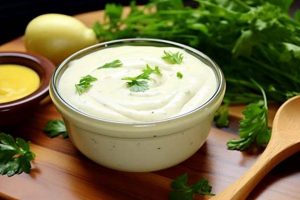
Adding a creamy element, such as Greek yogurt, crme frache, or avocado, transforms the vinaigrette into a richer, more substantial dressing. These additions contribute a smooth texture and a tangy or buttery flavor that complements heartier salads. A creamy balsamic vinaigrette with avocado pairs well with salads containing grilled chicken or roasted vegetables. Using Greek Yogurt creates a lighter alternative while still providing a creamy texture.
These variations demonstrate the adaptability of the balsamic vinaigrette, allowing it to transcend its basic form and become a truly versatile culinary tool. By understanding the interplay of flavors and textures, one can create a customized dressing that perfectly complements any salad or culinary creation. Experimentation with different ingredients and proportions encourages culinary creativity and allows for the development of unique and personalized flavor profiles, showcasing the endless possibilities of this classic dressing.
7. Storage
Proper storage is essential for maintaining the quality and flavor of balsamic vinaigrette. Improper storage can lead to oxidation of the oil, degradation of the vinegar, and loss of flavor intensity. Understanding appropriate storage methods ensures the longevity and continued enjoyment of this versatile dressing.
- Container
An airtight container is crucial for preventing oxidation and preserving the delicate balance of flavors. Glass or high-quality plastic containers are suitable options. Exposure to air accelerates the degradation of both oil and vinegar, leading to off-flavors and a diminished sensory experience. A tightly sealed container minimizes air contact, preserving the dressing’s freshness.
- Temperature
Refrigeration is recommended for storing balsamic vinaigrette. Cool temperatures slow down the oxidation process and help maintain the emulsion’s stability. While room temperature storage might be acceptable for short periods, prolonged exposure to warmer temperatures can lead to flavor degradation and emulsion separation. Consistent refrigeration ensures optimal quality and extends shelf life.
- Shelf Life
Even with proper storage, balsamic vinaigrette has a limited shelf life. Generally, homemade vinaigrette lasts for up to one week in the refrigerator. Commercially produced dressings may have a longer shelf life due to added preservatives. Observing any changes in color, texture, or aroma is crucial. Any signs of spoilage, such as cloudiness, mold growth, or rancid odors, indicate that the dressing should be discarded.
- Separation
Separation of the oil and vinegar components is a common occurrence during storage, even with proper emulsification. Gentle shaking or whisking before use typically restores the emulsion. Excessive separation, however, might indicate emulsion breakdown due to temperature fluctuations or ingredient incompatibility. Understanding the factors that influence emulsion stability aids in troubleshooting storage-related issues.
Adherence to appropriate storage practices ensures the lasting quality and enjoyment of balsamic vinaigrette. Proper storage preserves the delicate balance of flavors, maintains the emulsion’s stability, and maximizes shelf life. These practices contribute to a consistently satisfying culinary experience, allowing for the full enjoyment of this versatile and flavorful dressing.
Frequently Asked Questions
This section addresses common inquiries regarding the preparation, storage, and utilization of balsamic vinaigrette.
Question 1: What is the ideal ratio of balsamic vinegar to olive oil?
While a 3:1 ratio of oil to vinegar is a standard starting point, the optimal balance depends on the specific balsamic vinegar used and individual taste preferences. A sweeter balsamic may require less oil, while a more acidic vinegar may benefit from a higher oil ratio. Experimentation is encouraged to achieve the desired balance.
Question 2: How can separation of the vinaigrette be prevented?
Vigorous whisking or blending creates a more stable emulsion. Incorporating an emulsifying agent, such as Dijon mustard, honey, or egg yolk, further enhances stability by binding the oil and vinegar. Storing the vinaigrette in a consistently cool environment also helps maintain emulsion integrity.
Question 3: What is the best way to store balsamic vinaigrette?
Storing the vinaigrette in an airtight container in the refrigerator is essential for preserving its quality. This minimizes oxidation and maintains the emulsion’s stability. Refrigeration also slows down the degradation of the vinegar and helps retain its flavor profile.
Question 4: How long does balsamic vinaigrette last?
Homemade balsamic vinaigrette typically lasts for up to one week when stored properly in the refrigerator. Changes in color, texture, or aroma indicate spoilage. Commercially produced dressings may have a longer shelf life due to added preservatives, but it is essential to adhere to the manufacturer’s recommendations.
Question 5: Can balsamic vinaigrette be used for marinades?
The acidity of balsamic vinegar makes it an effective marinade tenderizer for meats, poultry, and fish. Its complex flavor profile also imparts desirable notes to the marinated ingredients. However, prolonged marinating in highly acidic solutions can toughen proteins; marinating times should be adjusted accordingly.
Question 6: What are some common flavor pairings for balsamic vinaigrette?
Balsamic vinaigrette complements a wide array of flavors. It pairs well with fresh vegetables, such as tomatoes, cucumbers, and bell peppers, as well as fruits like strawberries and berries. It also enhances the flavors of cheeses, particularly mozzarella, feta, and goat cheese. Additionally, it complements grilled meats, roasted vegetables, and various nuts and seeds.
These responses address frequently raised points, providing a deeper understanding of balsamic vinaigrette preparation, utilization, and storage. Adhering to these guidelines enhances the culinary experience and ensures optimal enjoyment of this versatile dressing.
The following section delves further into specific recipe variations, expanding upon the foundational principles outlined above.
Conclusion
This exploration of balsamic vinegar and olive oil salad dressing recipes has highlighted the versatility and adaptability of this culinary staple. From the selection of high-quality ingredients to the mastery of emulsification techniques and the nuanced art of seasoning, each step contributes to the creation of a truly exceptional vinaigrette. The exploration of flavor pairings and variations further underscores the potential of this simple dressing to elevate a wide array of dishes. Proper storage techniques ensure the longevity and continued enjoyment of this versatile condiment.
The seemingly simple combination of balsamic vinegar and olive oil offers a remarkable depth of flavor and culinary potential. An understanding of the underlying principles allows for a nuanced approach to vinaigrette creation, transforming a basic dressing into a culinary expression. Continued exploration and experimentation promise further discoveries and innovations within this timeless culinary tradition.