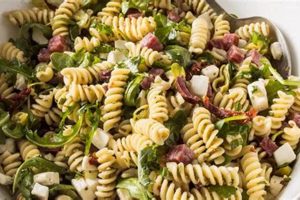
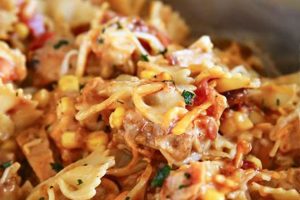
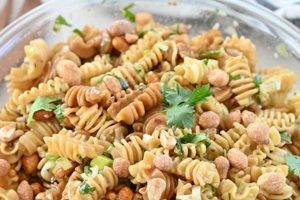
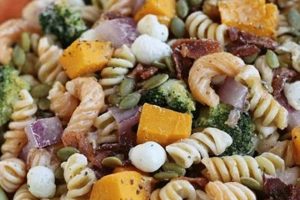
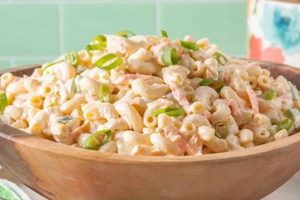
A small, tube-shaped pasta variety, ditalini, lends itself well to salads due to its ability to hold dressings and mix easily with other ingredients. These salads typically incorporate vegetables, proteins, cheeses, and a flavorful dressing, offering a refreshing and customizable dish ideal for picnics, potlucks, or light meals. A classic example might include ditalini, chopped bell peppers, cucumbers, tomatoes, black olives, cubed mozzarella, and a vinaigrette.
The versatility of this pasta shape contributes to its popularity in cold salads. Its small size ensures even distribution throughout the dish and allows it to absorb flavors effectively. Furthermore, the quick cooking time of ditalini makes it a convenient option for preparing a satisfying meal. Historically, ditalini’s compact shape made it practical for travel and storage, furthering its appeal in various culinary traditions.
The following sections will explore various aspects of crafting a delicious and visually appealing salad using this particular pasta, covering topics such as ingredient selection, dressing variations, and helpful tips for achieving optimal results.
Tips for Ditalini Pasta Salad
Achieving a well-balanced and flavorful ditalini pasta salad requires attention to detail. These tips offer guidance for optimizing ingredient selection, preparation methods, and overall presentation.
Tip 1: Cook the Pasta Properly: Ditalini should be cooked al dente for optimal texture in a salad. Overcooked pasta becomes mushy and less appealing. Rinse cooked pasta under cold water to stop the cooking process and maintain firmness.
Tip 2: Choose Fresh, High-Quality Ingredients: The success of any pasta salad relies heavily on the freshness of its components. Select ripe, vibrant vegetables and high-quality cheeses and proteins.
Tip 3: Balance Flavors and Textures: A variety of ingredients contributes complexity to the salad. Consider incorporating crunchy vegetables, creamy cheeses, savory proteins, and a balanced dressing.
Tip 4: Dress the Salad Strategically: Add the dressing shortly before serving to prevent the pasta and vegetables from becoming soggy. Toss gently to ensure even coating.
Tip 5: Enhance Visual Appeal: A visually appealing salad is more enticing. Consider the color and shape of ingredients, arranging them thoughtfully for an attractive presentation. Garnishing with fresh herbs can also elevate the visual appeal.
Tip 6: Chill Thoroughly: Allow the salad to chill in the refrigerator for at least 30 minutes before serving. This allows the flavors to meld and enhances the refreshing quality of the dish.
Tip 7: Tailor to Dietary Needs: Ditalini pasta salad offers excellent adaptability for various dietary requirements. Gluten-free ditalini can be substituted, and vegetarian or vegan options are easily achievable with appropriate ingredient choices.
By following these tips, one can create a ditalini pasta salad that is both delicious and visually appealing. The combination of quality ingredients, proper cooking techniques, and thoughtful preparation ensures a satisfying culinary experience.
These guidelines provide a solid foundation for crafting successful ditalini pasta salads. Experimentation with different ingredients and dressings allows for personalized variations and the discovery of individual preferences.
1. Ditalini Pasta

Ditalini pasta’s unique characteristics make it a particularly suitable choice for pasta salads. Its small, tubular shape allows it to readily absorb dressings and mingle seamlessly with other ingredients. This absorption ensures that each piece of pasta carries the flavor profile of the salad, contributing to a cohesive and satisfying culinary experience. Furthermore, the compact size of ditalini facilitates even distribution throughout the salad, preventing pockets of undressed pasta or an uneven ratio of components. This uniform distribution enhances both the visual appeal and the palatable balance of flavors and textures.
A clear cause-and-effect relationship exists between the choice of ditalini and the success of a pasta salad recipe. For instance, a classic Italian pasta salad featuring ditalini, fresh mozzarella, cherry tomatoes, basil, and a light vinaigrette benefits directly from the pasta’s ability to absorb the vinaigrette’s herbaceous and acidic notes. The small pasta pieces ensure every bite incorporates all the flavors, offering a balanced taste experience. Conversely, using a larger pasta shape might result in uneven flavor distribution and a less cohesive final product. The practicality of ditalini extends to its quick cooking time, further solidifying its place as a convenient and efficient choice for pasta salads.
Understanding the significance of ditalini in pasta salad recipes allows for informed ingredient choices and optimized preparation methods. The pasta’s structural properties and ability to capture flavors contribute significantly to the overall success of the dish. Choosing ditalini offers practical advantages and enhances the sensory experience of the final product, showcasing the importance of ingredient selection in culinary endeavors. Its compatibility with diverse flavor profiles makes it a versatile option for a range of culinary creations, from simple picnic fare to more complex composed salads.
2. Fresh Vegetables

Fresh vegetables play a crucial role in ditalini pasta salad recipes, contributing not only essential nutrients but also vibrant colors, varied textures, and nuanced flavors. Their presence elevates the dish from simple sustenance to a multi-sensory culinary experience. Careful selection and preparation of these vegetables significantly influence the overall appeal and success of the salad.
- Textural Contrast
Fresh vegetables introduce a range of textures that complement the smooth, tubular ditalini. Crisp cucumbers, crunchy bell peppers, and juicy tomatoes create a dynamic interplay of textures within each bite, enhancing the eating experience. This contrast prevents a monotonous texture and elevates the perceived freshness of the salad. The snap of a blanched green bean or the subtle crunch of chopped celery adds further complexity, engaging multiple sensory dimensions.
- Flavor Enhancement
The inherent flavors of fresh vegetables contribute depth and complexity to ditalini pasta salads. The sweetness of ripe cherry tomatoes, the peppery bite of radishes, or the subtle bitterness of arugula introduce diverse flavor notes that harmonize with the pasta and dressing. The selection of vegetables can be tailored to complement specific dressings, creating a cohesive and balanced flavor profile. Roasted vegetables, such as bell peppers or zucchini, offer a deeper, caramelized flavor that enriches the overall taste.
- Visual Appeal
The vibrant colors of fresh vegetables transform a ditalini pasta salad into a visually appealing dish. The deep red of tomatoes, the bright green of spinach, the vibrant orange of carrots, and the rich purple of red onion create a visually dynamic and enticing presentation. This aesthetic appeal increases the perceived freshness and palatability of the salad, stimulating appetite and enhancing the dining experience. Thoughtful arrangement of these colorful elements further elevates the visual presentation.
- Nutritional Value
Beyond their sensory contributions, fresh vegetables provide essential vitamins, minerals, and dietary fiber. Incorporating a diverse range of vegetables maximizes the nutritional value of the ditalini pasta salad, transforming it into a wholesome and balanced meal option. This nutritional density makes the salad a healthier alternative to less nutrient-rich dishes. Leafy greens like spinach or kale contribute vitamins A and C, while bell peppers offer vitamin C and antioxidants.
The synergy between fresh vegetables and ditalini pasta in a salad context is undeniable. Their combined contributions of texture, flavor, visual appeal, and nutritional value create a dish that is not only satisfying but also healthful and aesthetically pleasing. The versatility of ditalini pasta allows it to harmonize with a wide array of fresh vegetables, offering endless possibilities for customization and culinary exploration. The thoughtful incorporation of these elements results in a well-rounded and enjoyable dish.
3. Flavorful Dressing

Flavorful dressing forms an integral component of successful ditalini pasta salad recipes. Its function extends beyond simply adding moisture; it serves as the unifying element, binding the individual ingredients and creating a cohesive flavor profile. The dressing’s characteristics significantly impact the overall sensory experience, influencing the taste, texture, and aroma of the final dish. A well-chosen dressing elevates the salad from a collection of disparate components to a harmonious and flavorful whole.
A direct cause-and-effect relationship exists between the dressing and the perceived quality of a ditalini pasta salad. For instance, a light and tangy vinaigrette complements the subtle flavor of ditalini and fresh vegetables, allowing their individual characteristics to shine through. Conversely, a heavy, creamy dressing might overwhelm the delicate flavors of the other ingredients, resulting in a less balanced and nuanced taste experience. The choice of dressing should consider the specific ingredients included in the salad, aiming for a complementary relationship that enhances, rather than masks, their individual contributions. A lemon-herb vinaigrette, for example, harmonizes with Mediterranean-inspired ingredients like olives, feta, and cucumbers, while a creamy pesto dressing complements sun-dried tomatoes and artichoke hearts.
Practical application of this understanding involves careful consideration of the desired flavor profile. A classic Italian ditalini pasta salad benefits from a simple vinaigrette, highlighting the fresh flavors of tomatoes, mozzarella, and basil. A bolder, more complex salad featuring roasted vegetables and grilled chicken might benefit from a creamy dressing with herbs and spices. The viscosity of the dressing also impacts the overall texture; a thinner dressing coats the ditalini evenly, while a thicker dressing clings more intensely, adding a creamy element. Understanding these nuances allows for informed decision-making, optimizing the flavor and texture of the final product. Successful flavor combinations depend on a thorough understanding of individual ingredient profiles and their interaction within the dressing matrix. The emulsification, acidity, and aromatic components of the dressing contribute to the overall sensory perception and dictate the salad’s ultimate success.
4. Complementary Proteins
Complementary proteins represent a significant consideration in ditalini pasta salad recipes, contributing nutritional value and enhancing satiety. While not mandatory, their inclusion elevates the salad from a side dish to a more complete and satisfying meal. Careful selection and preparation of these protein components contribute to the overall balance and appeal of the final product.
- Nutritional Enhancement
Proteins provide essential amino acids necessary for tissue repair and maintenance. Including complementary proteins in a ditalini pasta salad enhances its nutritional value, offering a more balanced meal option. This addition transforms a potentially carbohydrate-heavy dish into a source of both energy and essential nutrients. Examples include combining legumes like chickpeas or lentils with grains like whole wheat ditalini, or pairing animal-based proteins like grilled chicken or shrimp with plant-based proteins. This combination ensures a broader spectrum of amino acids, contributing to a more complete protein profile.
- Increased Satiety
Protein-rich foods promote satiety, contributing to a feeling of fullness and satisfaction after consumption. Adding complementary proteins to a ditalini pasta salad increases its satiating power, making it a more substantial and fulfilling meal. This effect is beneficial for those seeking to manage appetite and maintain stable energy levels. Examples include adding grilled chicken or fish, canned tuna or salmon, or plant-based options like tofu or tempeh. The protein content helps regulate blood sugar levels, preventing energy crashes and promoting a feeling of fullness.
- Flavor and Texture Enrichment
Complementary proteins introduce diverse flavors and textures to ditalini pasta salads. Grilled chicken or fish offer a savory, slightly smoky flavor, while beans and lentils contribute an earthy note and a slightly firm texture. These additions create a more complex and interesting sensory experience. The choice of protein can also influence the overall flavor profile of the salad; for instance, spicy chorizo adds a kick, while roasted chickpeas provide a nutty flavor and satisfying crunch.
- Versatility and Adaptability
Ditalini pasta salad readily adapts to various protein additions, accommodating diverse dietary preferences and culinary traditions. Vegetarian or vegan options can incorporate beans, lentils, tofu, or tempeh, while those consuming animal products can include chicken, fish, or shellfish. This versatility makes ditalini pasta salad a suitable option for a wide range of individuals and occasions. For example, a Greek-inspired salad might include feta cheese and grilled chicken or lamb, while a South American-inspired version could feature black beans and grilled steak.
The strategic incorporation of complementary proteins elevates the ditalini pasta salad from a simple side dish to a nutritionally complete and satisfying meal. This addition enhances not only the protein content but also the overall flavor profile, textural complexity, and satiating power of the dish. The adaptability of ditalini pasta salads to various protein components ensures compatibility with a wide range of dietary preferences and culinary traditions, making it a versatile and appealing choice for various occasions. Proper selection and preparation of these protein components contribute significantly to the overall success of the ditalini pasta salad, maximizing both its nutritional and sensory qualities.
5. Optional Cheese
Cheese, while optional, presents a significant opportunity to enhance the flavor profile, textural complexity, and overall appeal of ditalini pasta salad. Its inclusion introduces a creamy, savory element that complements the other components, creating a more balanced and satisfying dish. Careful selection of cheese type and consideration of its interaction with other ingredients contribute significantly to the overall culinary experience.
- Flavor Enhancement
Cheese contributes a range of flavors, from sharp and tangy to mild and creamy, depending on the variety chosen. Feta, for example, adds a salty, briny note that complements Mediterranean-inspired salads, while mozzarella offers a milky sweetness. Parmesan, with its nutty and umami notes, enhances salads featuring Italian flavors. The chosen cheese should complement the other ingredients and the dressing, creating a harmonious flavor profile.
- Textural Contrast
Cheese introduces textural variation, contrasting with the firm ditalini and crisp vegetables. Crumbled feta or goat cheese provides a creamy counterpoint to the other ingredients, while cubed cheddar or provolone adds a more substantial chew. The texture of the cheese should be considered in relation to the other components, aiming for a balance that enhances the overall sensory experience. Shredded mozzarella, for instance, distributes evenly throughout the salad, while larger cubes of cheese offer a more pronounced textural presence.
- Nutritional Considerations
Cheese contributes calcium, protein, and other essential nutrients. While beneficial, its inclusion also adds calories and fat. The nutritional profile of the chosen cheese should be considered in relation to dietary goals. Lower-fat options, such as part-skim mozzarella or ricotta, can be utilized to reduce overall fat content without sacrificing flavor or texture.
- Visual Appeal
Cheese enhances the visual appeal of the salad, adding color and shape. The white of feta or mozzarella provides a visual contrast against the colorful vegetables, while the orange of cheddar adds a vibrant pop. The form of the cheese, whether crumbled, cubed, or shredded, also contributes to the overall presentation. Grated parmesan, for instance, adds a dusting of visual texture, while chunks of blue cheese offer a more pronounced visual element.
The inclusion of cheese in a ditalini pasta salad offers multiple avenues for culinary exploration. Its diverse range of flavors, textures, and visual characteristics allows for customization and creativity. The careful consideration of these factors ensures that the chosen cheese complements the other ingredients and contributes positively to the overall sensory experience. The optional nature of cheese in these salads provides flexibility for dietary preferences and culinary goals, offering a versatile path to crafting a delicious and visually appealing dish. Selecting the appropriate cheese type and quantity elevates the ditalini pasta salad from simple to sophisticated, demonstrating the impact of thoughtful ingredient selection on the final product.
6. Proper Chilling

Proper chilling constitutes a crucial step in preparing ditalini pasta salad, significantly impacting food safety, flavor development, and overall textural quality. Chilling allows the flavors of the various componentspasta, vegetables, protein, cheese, and dressingto meld and harmonize, creating a more cohesive and nuanced flavor profile. Furthermore, chilling enhances the refreshing quality of the salad, making it particularly appealing in warmer weather. Failing to chill adequately can lead to bacterial growth, compromising food safety and potentially causing illness. Conversely, over-chilling can negatively impact the texture of certain vegetables, making them mushy or less palatable.
The relationship between proper chilling and a successful ditalini pasta salad is evident in the interplay of flavors. A freshly made salad, while palatable, often lacks the depth of flavor achieved through chilling. The chilling process allows the dressing to permeate the pasta and vegetables, distributing flavors evenly and creating a more unified taste experience. For instance, a ditalini pasta salad with a vinaigrette dressing benefits from chilling as it allows the acidic notes of the vinaigrette to mellow and integrate with the other ingredients, resulting in a more balanced and complex flavor profile. Additionally, chilling firms the pasta, maintaining its desirable al dente texture and preventing it from becoming soggy or mushy. A chilled salad also offers a more refreshing sensory experience, especially appreciated during hot weather or as a light meal option.
Practical application of this understanding requires attention to temperature and duration. Ideal chilling occurs at temperatures between 35-40F (2-4C) for a duration of at least 30 minutes, allowing sufficient time for flavor development and optimal food safety. However, chilling should not exceed two hours to prevent undesirable textural changes in delicate vegetables. Employing appropriate storage containers and ensuring even distribution of the salad within the container promotes consistent cooling. Adhering to these guidelines optimizes both the flavor and safety of the ditalini pasta salad, demonstrating the crucial role of proper chilling in achieving a successful and enjoyable culinary outcome. This attention to detail reflects a broader culinary principle: thoughtful preparation and attention to seemingly minor steps significantly impact the final result.
Frequently Asked Questions
This section addresses common inquiries regarding ditalini pasta salad preparation, offering practical guidance and clarifying potential points of confusion.
Question 1: What is the ideal cooking time for ditalini intended for pasta salad?
Ditalini should be cooked al dente, slightly firm to the bite, for optimal texture in a pasta salad. Refer to package directions for specific cooking times, typically 8-10 minutes, and test for doneness frequently to avoid overcooking.
Question 2: Can gluten-free ditalini be used in these recipes?
Gluten-free ditalini offers a suitable alternative for those with dietary restrictions. Ensure the pasta is cooked according to package directions, as cooking times may vary from traditional durum wheat ditalini.
Question 3: How can sogginess in a ditalini pasta salad be prevented?
Sogginess can be avoided by adding the dressing shortly before serving. Thoroughly drain the cooked ditalini and ensure vegetables are dry before combining. Overcooked pasta also contributes to sogginess; cook ditalini al dente for optimal results.
Question 4: What are suitable protein additions for a more substantial salad?
Grilled chicken, shrimp, chickpeas, cannellini beans, and cubed tofu all provide excellent protein complements to ditalini pasta salad. Consider flavor compatibility with the chosen vegetables and dressing.
Question 5: How long can ditalini pasta salad be stored safely in the refrigerator?
Properly stored in an airtight container, ditalini pasta salad typically remains safe for consumption up to 3-5 days in the refrigerator. However, monitor for any signs of spoilage, such as off-odors or discoloration.
Question 6: Can frozen vegetables be used in ditalini pasta salad?
While fresh vegetables are generally preferred, frozen vegetables can be substituted. Thaw and thoroughly drain them before incorporating to prevent excess moisture and potential sogginess.
Addressing these common queries clarifies key aspects of ditalini pasta salad preparation, ensuring optimal results and promoting food safety. Consideration of these factors contributes to a successful and enjoyable culinary experience.
This concludes the frequently asked questions section. The following segment will delve into [mention the next section of your article, e.g., recipe variations or reader-submitted recipes].
Ditalini Pasta Salad Recipe
This exploration of ditalini pasta salad recipes has highlighted the critical elements contributing to a successful dish. From the selection of ditalini, its unique properties ideal for absorbing flavors and maintaining texture, to the careful consideration of complementary ingredients such as fresh vegetables, proteins, and cheeses, each component plays a vital role. The importance of a well-balanced dressing, its function as a unifying element, and the necessity of proper chilling for both food safety and flavor enhancement have been thoroughly examined. Practical tips for preventing common pitfalls, such as sogginess, and achieving optimal results, such as maximizing flavor and textural complexity, have been provided.
Culinary success hinges on informed ingredient selection and meticulous preparation. Ditalini pasta salad, while seemingly simple, exemplifies this principle. Thoughtful consideration of each element, from the pasta itself to the final chilling period, elevates this dish beyond mere sustenance. The potential for customization, adapting ingredients and flavors to individual preferences and dietary needs, positions ditalini pasta salad as a versatile and enduring culinary staple. Its adaptability and capacity for creative expression invite further exploration and innovation within the culinary landscape.