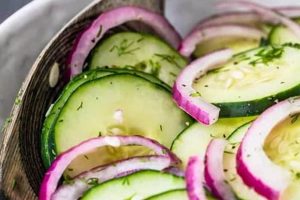
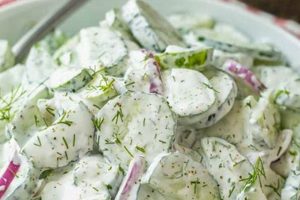
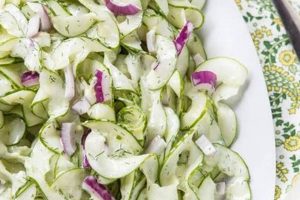
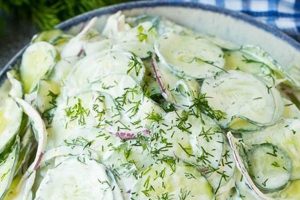
A guide to combining cucumbers and sour cream involves selecting fresh ingredients and understanding flavor profiles. A basic version often includes thinly sliced cucumbers, sour cream, and seasonings such as dill, salt, and pepper. Variations can incorporate ingredients like onions, garlic, vinegar, or sugar for added complexity.
Cool and refreshing, this dish offers a simple yet satisfying culinary experience. Its versatility allows it to serve as a light lunch, a side dish complementing richer meals, or a component in more complex salads. Historically, cucumbers and dairy-based dressings have been paired in various cuisines, highlighting the enduring appeal of this combination.
The following sections will delve into specific ingredient selection, preparation techniques, and variations, offering a complete understanding of this classic dish.
Tips for a Perfect Cucumber and Sour Cream Salad
Achieving optimal flavor and texture requires attention to detail throughout the preparation process. The following tips offer guidance for creating a superior salad.
Tip 1: Cucumber Selection and Preparation: Opt for firm cucumbers with smooth skin. English cucumbers, known for their thin skin and fewer seeds, are ideal. Thorough chilling enhances the refreshing quality. For a crisper texture, thinly slice cucumbers and lightly salt them to draw out excess moisture before combining with other ingredients.
Tip 2: Sour Cream Selection: Full-fat sour cream provides a richer, creamier texture and flavor. Low-fat versions can be used, but may result in a slightly thinner dressing.
Tip 3: Fresh Herbs: Fresh dill is a classic pairing, offering a bright, herbaceous note. Other herbs like parsley, chives, or mint can also be incorporated to create unique flavor profiles.
Tip 4: Seasoning: Salt and freshly ground black pepper are essential for enhancing the flavors. A touch of granulated sugar or a splash of vinegar can balance the richness of the sour cream and add complexity.
Tip 5: Garlic and Onion: Finely minced garlic or thinly sliced red onion can provide a pungent counterpoint to the cool cucumbers and creamy dressing. Use these ingredients sparingly, as their flavors can easily overpower the delicate cucumber.
Tip 6: Chilling Time: Allowing the salad to chill for at least 30 minutes before serving allows the flavors to meld and enhances the refreshing quality. Avoid chilling for extended periods, as this can cause the cucumbers to become watery.
Tip 7: Serving Suggestions: This salad pairs well with grilled meats, fish, or roasted vegetables. It can also be enjoyed as a light lunch or a refreshing side dish.
By following these tips, one can elevate a simple cucumber and sour cream salad to a truly exceptional dish, maximizing flavor and achieving the desired texture and freshness.
The following section will offer variations on this classic recipe, demonstrating its versatility and adaptability to diverse palates and culinary preferences.
1. Fresh Cucumbers

Fresh cucumbers are fundamental to a successful cucumber and sour cream salad, contributing significantly to the dish’s flavor, texture, and overall appeal. Their quality and preparation directly impact the final result.
- Variety Selection:
Different cucumber varieties offer distinct characteristics. English cucumbers, known for their thin skin and minimal seeds, are often preferred for salads due to their delicate flavor and crisp texture. Garden cucumbers, with thicker skins and more seeds, can also be used, but may require peeling and seeding for optimal results. Persian cucumbers offer a middle ground, possessing thinner skin than garden cucumbers but a slightly more pronounced flavor than English cucumbers. Selecting the appropriate variety contributes to the desired textural and flavor profile of the salad.
- Indicators of Freshness:
Choosing fresh cucumbers is crucial for both flavor and texture. Indicators of freshness include firm texture, vibrant green color, and absence of blemishes or soft spots. Avoiding cucumbers with wrinkled or yellowed skin ensures optimal quality. The freshness of the cucumber directly impacts the crispness and overall appeal of the salad.
- Preparation Techniques:
Proper preparation enhances the cucumber’s contribution to the salad. Thinly slicing the cucumbers ensures even distribution of flavor and allows the dressing to coat them effectively. Lightly salting sliced cucumbers and allowing them to sit for a short period draws out excess moisture, contributing to a crisper texture in the final dish. These techniques maximize the cucumber’s textural and flavor contribution.
- Flavor Profile:
The mild, refreshing flavor of fresh cucumbers provides a delicate base for the sour cream dressing. This subtle flavor allows the other ingredients, such as herbs and seasonings, to shine without being overpowered. The cucumber’s inherent coolness complements the richness of the sour cream, creating a balanced and refreshing flavor profile.
The selection, freshness, and preparation of cucumbers directly influence the overall quality of the cucumber and sour cream salad. By understanding these factors, one can ensure a delightful culinary experience with optimal flavor, texture, and visual appeal.
2. Quality Sour Cream

Sour cream constitutes a foundational element in cucumber and sour cream salads, significantly influencing the final dish’s overall quality. The sour cream’s texture, flavor profile, and fat content contribute directly to the salad’s palatability and sensory experience. Utilizing high-quality sour cream elevates the dish from simple to exceptional.
The texture of sour cream plays a crucial role in the salad’s composition. A thick, creamy sour cream clings effectively to the cucumber slices, ensuring each bite delivers a balanced combination of flavors. This also contributes to the salad’s visual appeal. Conversely, a thin or watery sour cream creates a less desirable, diluted dressing that compromises both flavor and presentation. The difference between a premium, thick sour cream and a generic, thinner version is readily apparent in the final product’s consistency and mouthfeel. For example, a European-style sour cream, known for its higher fat content and denser texture, will yield a more luxurious and flavorful salad compared to a low-fat or non-fat alternative.
Beyond texture, the flavor profile of the sour cream contributes significantly. High-quality sour cream offers a balanced tanginess that complements the cucumber’s fresh, mild flavor. This tang provides depth and complexity, preventing the salad from tasting bland. Inferior sour creams may possess off-flavors or lack the characteristic tang, detracting from the overall sensory experience. Furthermore, the fat content in sour cream directly impacts the salad’s richness and flavor delivery. Full-fat sour creams provide a more satisfying, flavorful experience, while low-fat versions can result in a thinner, less flavorful dressing. This distinction becomes particularly noticeable when paired with the delicate flavor of cucumbers. The choice of sour cream, therefore, represents a crucial decision in crafting a well-balanced and flavorful cucumber and sour cream salad. Opting for quality ensures a richer, more satisfying culinary experience.
The impact of sour cream quality on the final dish underscores the importance of ingredient selection. Prioritizing high-quality sour cream ensures the desired texture, flavor profile, and overall culinary experience. While variations in sour cream may appear subtle in isolation, their effects become amplified when combined with other ingredients. Therefore, careful consideration of sour cream quality is essential for achieving a truly exceptional cucumber and sour cream salad. This principle extends to all culinary endeavors; understanding the impact of individual ingredient quality significantly contributes to the overall success of any dish.
3. Flavorful Herbs (Dill)

Fresh herbs play a crucial role in elevating cucumber and sour cream salads from simple to exceptional. Dill, with its distinct aroma and flavor profile, holds a prominent position in this culinary context, offering a bright, herbaceous counterpoint to the richness of the sour cream and the mildness of the cucumber. Understanding dill’s characteristics and its impact on the overall flavor composition is essential for creating a well-balanced and flavorful salad.
- Dill’s Flavor Profile:
Dill possesses a unique flavor profile often described as bright, tangy, and slightly sweet, with subtle hints of anise or licorice. This complexity allows it to complement a range of ingredients, particularly in cool, refreshing dishes like cucumber and sour cream salad. The dill’s herbaceous notes contrast beautifully with the creamy richness of the sour cream, adding depth and preventing the salad from tasting bland.
- Synergy with Cucumber and Sour Cream:
The combination of dill, cucumber, and sour cream represents a classic culinary pairing, highlighting the synergistic relationship between these ingredients. Dill’s bright, herbaceous notes enhance the refreshing qualities of the cucumber, while its subtle tanginess balances the richness of the sour cream. This creates a harmonious flavor profile where each ingredient complements and enhances the others.
- Forms and Applications:
Dill can be incorporated into the salad in various forms, each offering subtle nuances to the final dish. Fresh dill sprigs, finely chopped, provide the most vibrant flavor and visual appeal. Dried dill, while less potent, offers a convenient alternative. Dill seeds can also be used, imparting a slightly earthier, more robust flavor. The choice depends on the desired intensity and overall flavor profile of the salad.
- Alternative Herbs:
While dill remains a classic choice, other fresh herbs can be incorporated to create unique flavor variations. Parsley, chives, and mint offer distinct flavor profiles that can complement cucumber and sour cream. Experimenting with different herb combinations allows for customization and exploration of diverse flavor palates.
The judicious use of dill significantly enhances the complexity and overall enjoyment of cucumber and sour cream salad. Understanding its flavor profile, its synergistic relationship with the other ingredients, and the various forms in which it can be incorporated allows for a nuanced and informed approach to creating a truly exceptional dish. The exploration of alternative herbs further expands the possibilities, offering a range of flavor profiles to suit diverse culinary preferences.
4. Precise Seasoning
Precise seasoning significantly impacts the final flavor profile of a cucumber and sour cream salad. The delicate nature of cucumbers and the richness of sour cream necessitate careful balancing of salt, pepper, and other seasonings. Insufficient seasoning results in a bland, uninspired dish, while excessive seasoning can overpower the subtle flavors of the core ingredients. The goal is to enhance, not mask, the inherent flavors of the cucumbers and sour cream.
Salt plays a crucial role beyond simple flavor enhancement. It draws out excess moisture from the cucumbers, contributing to a crisper texture and preventing a watery salad. Furthermore, salt interacts with the other ingredients, amplifying their flavors and creating a more complex taste experience. The type of salt used can also influence the final result. For instance, coarse kosher salt provides a subtle crunch and distributes evenly, while flaky sea salt offers a burst of salinity. Pepper, typically freshly ground black pepper, adds a subtle heat and complexity that complements the cool cucumbers and creamy sour cream. The amount used should be carefully calibrated to avoid overpowering the other flavors. Other seasonings, such as a pinch of sugar or a splash of vinegar, can further balance the flavors and add depth. Sugar tempers the tanginess of the sour cream, while vinegar provides a contrasting acidity.
Achieving precise seasoning requires an iterative approach, tasting and adjusting throughout the preparation process. Start with a small amount of salt and pepper, then gradually add more until the desired balance is achieved. Factors such as the cucumber variety, the sour cream’s tanginess, and personal preferences influence the ideal seasoning levels. Understanding the interplay of these factors and the impact of each seasoning element allows for informed adjustments, resulting in a cucumber and sour cream salad with a well-balanced and nuanced flavor profile.
5. Proper Chilling
Proper chilling is integral to a successful cucumber and sour cream salad, significantly influencing the final dish’s sensory experience. Temperature affects both flavor perception and textural qualities. Chilling enhances the crispness of the cucumbers and allows the flavors of the various componentscucumbers, sour cream, herbs, and seasoningsto meld harmoniously. A well-chilled salad offers a refreshing contrast, particularly appealing in warmer weather. Conversely, inadequate chilling or serving the salad at room temperature diminishes the refreshing qualities and may result in a less vibrant flavor profile. The temperature of the individual components also matters. Using chilled cucumbers and sour cream from the outset ensures the salad reaches the optimal serving temperature efficiently and maintains its textural integrity. For example, adding room-temperature cucumbers to chilled sour cream will raise the overall temperature, potentially compromising the desired coolness.
The duration of chilling also requires consideration. Insufficient chilling prevents optimal flavor development, while excessive chilling can negatively impact the cucumbers’ texture, causing them to become watery or lose their crispness. A general guideline of 30 minutes to an hour allows for sufficient flavor melding without compromising textural qualities. However, this can be adjusted based on the specific recipe and ambient temperature. For instance, a salad with thinly sliced cucumbers may require less chilling time than one with thicker slices, as thinner slices chill more rapidly. Practical applications demonstrate this principle; a salad prepared and chilled the night before may exhibit textural differences compared to one chilled for the optimal duration immediately prior to serving.
Chilling, therefore, represents a critical step that should not be overlooked. It directly influences the cucumber and sour cream salad’s overall quality, impacting both flavor and texture. Understanding the effects of temperature and chilling duration allows for informed adjustments and ensures a consistently refreshing and flavorful culinary experience. Careful attention to this detail elevates the dish, demonstrating an understanding of the subtle yet significant factors that contribute to culinary excellence.
6. Optional additions (onions, garlic)

While cucumbers and sour cream form the foundation of the salad, optional additions such as onions and garlic introduce complexity and depth, transforming a simple dish into a more nuanced culinary experience. These additions, used judiciously, contribute distinct flavor profiles and textural elements that complement the core ingredients. Understanding their roles and potential impact allows for informed decisions regarding their inclusion and quantity.
- Flavor Enhancement:
Onions and garlic, members of the allium family, possess pungent and savory flavors that contrast with the mild cucumber and creamy sour cream. Their sharp notes add depth and prevent the salad from tasting bland. The specific type of onionred, white, or yellowinfluences the intensity and nuance of the flavor. Similarly, the form in which garlic is usedminced, pressed, or roastedaffects its pungency and overall contribution to the salad’s flavor profile.
- Textural Variation:
Beyond flavor, onions and garlic introduce textural variations. Thinly sliced red onions add a crisp, slightly crunchy element, while finely minced garlic provides a subtle textural contrast to the smooth sour cream and tender cucumbers. Roasting garlic mellows its flavor and creates a softer texture, offering a different sensory experience.
- Balancing Flavors:
Onions and garlic can help balance the overall flavor profile of the salad. Their pungency can cut through the richness of the sour cream, preventing the dish from feeling too heavy. The slight sweetness of some onion varieties can also complement the tanginess of the sour cream, creating a more harmonious flavor balance. The quantity used plays a crucial role in achieving this balance.
- Cultural Influences:
The use of onions and garlic in cucumber and sour cream salads reflects cultural influences. In some cuisines, these ingredients are considered essential components, contributing to a characteristic flavor profile. For instance, Eastern European variations often incorporate both onions and garlic, while some Scandinavian versions favor dill as the primary aromatic element. Understanding these cultural nuances provides context and inspiration for recipe development.
The inclusion of optional ingredients like onions and garlic exemplifies the adaptability of the cucumber and sour cream salad. These additions, while not essential, offer opportunities to personalize the dish, creating variations that cater to individual preferences and culinary traditions. The key lies in understanding their individual characteristics and using them judiciously to enhance, not overpower, the fundamental flavors of the cucumber and sour cream.
7. Thin slicing technique
Thin slicing of cucumbers significantly influences the overall quality of a cucumber and sour cream salad. This technique impacts several key aspects of the dish, including flavor absorption, texture, and visual appeal. Thinner cucumber slices offer a greater surface area for the sour cream dressing to adhere to, ensuring a more even distribution of flavor and preventing pockets of undressed cucumber. This maximizes the interaction between the cucumber’s subtle flavor and the creamy tang of the sour cream, resulting in a more balanced and harmonious flavor profile. Conversely, thicker slices limit this interaction, leading to a less flavorful and potentially less satisfying experience. Consider a salad with thick cucumber slices; the center of each slice may remain relatively untouched by the dressing, resulting in an uneven flavor distribution and a less enjoyable textural experience.
Beyond flavor, thin slicing contributes to a more delicate and pleasing texture. Thin slices offer a tender, almost melt-in-the-mouth quality, contrasting pleasantly with the creamy richness of the sour cream. Thicker slices, on the other hand, can be perceived as dense or unwieldy, potentially detracting from the overall sensory experience. Imagine biting into a salad with thick cucumber slices; the texture may be perceived as more akin to a crudit platter than a delicate salad. Furthermore, thin slicing enhances the visual appeal of the salad. Uniformly thin slices create a more elegant and refined presentation, whereas thick, uneven slices can appear rustic or less carefully prepared. This visual element contributes to the overall dining experience, influencing perceptions of quality and attention to detail.
Thin slicing, therefore, represents a crucial technique in preparing a cucumber and sour cream salad. Its impact extends beyond mere aesthetics, significantly influencing flavor absorption, texture, and overall enjoyment. While seemingly a minor detail, the slicing technique exemplifies the importance of precision and attention to detail in culinary pursuits. Understanding the connection between technique and outcome allows for informed choices that elevate a simple dish to a more refined and satisfying culinary experience. This principle applies broadly to culinary practices, highlighting the significant impact seemingly small adjustments can have on the final product.
Frequently Asked Questions
This section addresses common inquiries regarding cucumber and sour cream salad preparation, offering clarity and guidance for optimal results.
Question 1: What type of cucumber is best suited for this salad?
English cucumbers, with their thin skin and minimal seeds, are generally preferred for their delicate flavor and crisp texture. However, other varieties like Persian or garden cucumbers can be used, though peeling and seeding might be necessary.
Question 2: Can low-fat sour cream be used?
While low-fat sour cream can be substituted, it may result in a thinner dressing and a slightly less rich flavor. Full-fat sour cream is recommended for optimal texture and flavor.
Question 3: How long should the salad be chilled before serving?
Chilling for 30 minutes to an hour allows the flavors to meld and enhances the refreshing quality. Excessive chilling, however, can make the cucumbers watery.
Question 4: What can be used as a substitute for fresh dill?
While fresh dill is traditional, dried dill can be used as a substitute. Other fresh herbs like parsley, chives, or mint can also offer interesting flavor variations.
Question 5: How can one prevent the salad from becoming watery?
Lightly salting the sliced cucumbers and allowing them to sit for about 15 minutes before combining with the other ingredients helps draw out excess moisture.
Question 6: Can this salad be made ahead of time?
While it’s best served fresh, it can be prepared a few hours in advance. Store it in an airtight container in the refrigerator, ensuring the cucumbers remain submerged in the dressing to prevent them from drying out.
Addressing these common questions provides a comprehensive understanding of the key elements contributing to a successful cucumber and sour cream salad. Attention to detail in each step ensures optimal flavor, texture, and overall enjoyment.
Further exploration of variations and serving suggestions follows in the next section.
Cucumber and Sour Cream Salad
This exploration of cucumber and sour cream salad has highlighted the critical elements that contribute to its success. From the selection of fresh, crisp cucumbers and high-quality sour cream to the precise application of seasonings and the importance of proper chilling, each step plays a vital role in achieving optimal flavor and texture. The potential for customization through the incorporation of additional ingredients like onions, garlic, and various herbs further underscores the dish’s versatility. The technique of thin slicing, often overlooked, significantly impacts both flavor absorption and textural enjoyment.
Cucumber and sour cream salad, though simple in its composition, offers a canvas for culinary expression. An understanding of the underlying principles discussed herein empowers one to create a dish that transcends mere sustenance, becoming a testament to the transformative potential of fresh ingredients and thoughtful preparation. This exploration serves as a foundation for continued experimentation and enjoyment of this classic culinary combination.