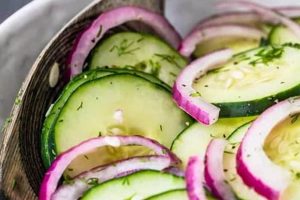
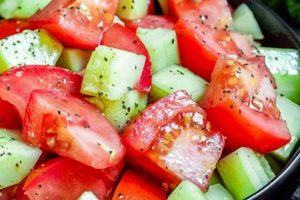
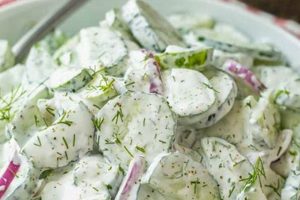
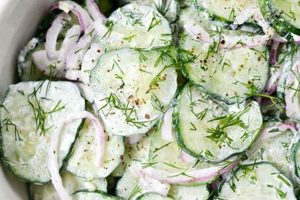
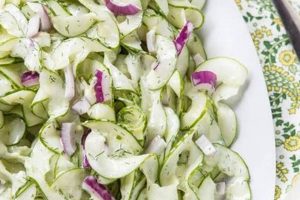
A simple dish of combined sliced cucumbers, onions, and tomatoes, dressed with a vinaigrette or other complementary dressing, offers a refreshing and nutritious side or light meal. Variations can include additions like herbs, spices, or other vegetables, allowing for diverse flavor profiles and customization. This basic combination of ingredients serves as a versatile foundation for numerous culinary interpretations.
This type of salad provides several nutritional benefits due to the inherent vitamins and minerals present in the core ingredients. The high water content contributes to hydration, while the diverse flavors stimulate the palate. Historically, such salads, relying on readily available fresh produce, have been a dietary staple across numerous cultures, showcasing regional adaptations and preferences. This culinary heritage underscores the salad’s continued popularity today as a healthy and versatile dish.
The following sections will explore various aspects of creating this refreshing salad, including selecting optimal ingredients, exploring diverse dressing options, and offering creative serving suggestions to enhance the dining experience.
Tips for a Perfect Cucumber, Onion, and Tomato Salad
Creating a truly exceptional salad involves attention to detail and an understanding of how each ingredient contributes to the final dish. The following tips offer guidance for achieving optimal flavor and texture.
Tip 1: Selecting Ingredients Choose ripe, firm tomatoes, crisp cucumbers, and pungent onions. Consider varieties like English cucumbers for less water content or red onions for a milder flavor.
Tip 2: Proper Slicing Uniformly thin slices ensure even flavor distribution and a pleasant texture. A sharp knife is crucial for clean cuts and prevents bruising of delicate vegetables.
Tip 3: Salting and Draining Salting cucumbers and tomatoes before combining them draws out excess moisture, preventing a watery salad. This step enhances the flavors and creates a crisper texture. Allow the vegetables to drain for at least 15 minutes before assembling the salad.
Tip 4: Dressing Choices A simple vinaigrette of olive oil, vinegar, salt, and pepper is a classic choice. Experiment with different vinegars, herbs, and spices to create unique flavor profiles. Lemon juice or a yogurt-based dressing also provide refreshing alternatives.
Tip 5: Timing is Key Dress the salad just before serving to maintain the crispness of the vegetables and prevent them from becoming soggy.
Tip 6: Chilling for Optimal Flavor Chilling the salad for a short period before serving enhances the flavors and provides a refreshing culinary experience. Avoid over-chilling, as it can dull the flavors.
Tip 7: Garnishing and Serving Fresh herbs like dill, parsley, or mint can elevate the salad’s visual appeal and add another layer of flavor. Feta cheese or crumbled bacon can also provide complementary textures and tastes.
By following these tips, one can consistently create a flavorful and refreshing salad that highlights the natural flavors of the core ingredients.
These simple yet effective techniques contribute significantly to a more enjoyable dining experience.
1. Fresh, High-Quality Ingredients

The foundation of a successful cucumber, onion, and tomato salad rests upon the selection of fresh, high-quality ingredients. Ingredient quality directly impacts the final flavor, texture, and overall enjoyment of the dish. Utilizing subpar produce results in a bland and potentially unpleasant culinary experience, highlighting the critical role ingredient selection plays in this deceptively simple salad.
- Tomatoes:
Ripe, flavorful tomatoes are paramount. Locally sourced, in-season tomatoes generally offer superior flavor compared to out-of-season alternatives. Look for tomatoes with vibrant color, a firm yet yielding texture, and a pleasant aroma. Heirloom varieties, while sometimes more delicate, often present complex flavors that enhance the salad. Bland, mealy tomatoes detract significantly from the overall dish.
- Cucumbers:
Crisp, firm cucumbers provide a refreshing counterpoint to the tomatoes. Select cucumbers that are firm to the touch, with smooth skin and vibrant green color. Avoid cucumbers that are yellowing, soft, or have wrinkled skin, as these indicate age and reduced quality. Different cucumber varieties offer varying levels of water content; English cucumbers, for example, have a denser flesh and fewer seeds, contributing to a less watery salad.
- Onions:
The onion adds a pungent bite that balances the other flavors. Sweet varieties like Vidalia or red onions offer a milder flavor profile compared to standard yellow or white onions. Choose onions that are firm and heavy for their size, with no signs of sprouting or bruising. Properly stored onions maintain their quality and contribute significantly to the salad’s overall flavor balance.
- Herbs and Seasoning:
Fresh herbs like dill, parsley, or mint can elevate the salad. Select vibrant, fragrant herbs that are free from wilting or discoloration. High-quality sea salt and freshly ground black pepper enhance the natural flavors of the vegetables. Dried herbs can be substituted when fresh herbs are unavailable, but they should be used sparingly as their flavor is more concentrated.
The interplay of these fresh, high-quality components determines the overall success of the cucumber, onion, and tomato salad. Careful selection and proper handling of each ingredient ensures a vibrant, flavorful, and texturally appealing dish. The attention paid to sourcing and utilizing the best ingredients directly translates to a more enjoyable and satisfying culinary experience.
2. Precise Slicing Techniques
Precise slicing techniques contribute significantly to the overall quality of a cucumber, onion, and tomato salad. Uniformity in slicing affects not only the aesthetic presentation but also the texture, flavor distribution, and even the dressing absorption. Consistent size and shape ensure that each bite delivers a balanced combination of flavors and textures, elevating the simple salad from ordinary to exceptional.
- Uniformity of Size:
Uniformly sized pieces ensure even marinating and dressing distribution. Inconsistently sized pieces can lead to some pieces being over-dressed while others remain under-dressed, resulting in an unbalanced flavor experience. Consistent sizing also contributes to a more pleasing visual presentation, enhancing the dining experience.
- Thickness Considerations:
The thickness of the slices impacts both texture and flavor release. Thinly sliced vegetables offer a delicate texture and release their flavors more readily, while thicker slices provide more crunch and a slightly more subdued flavor profile. The desired thickness depends on personal preference and the overall balance of flavors being sought.
- Knife Skills and Sharpness:
Employing proper knife skills and using a sharp knife are essential for achieving clean cuts and preventing bruising or crushing of the delicate vegetables. Clean cuts maximize surface area, promoting flavor release and enhancing dressing absorption. A dull knife can crush the vegetable cells, leading to a less appealing texture and potentially affecting flavor.
- Specific Techniques for Each Vegetable:
Cucumbers benefit from even, thin slices, often achieved using a mandoline or a sharp chef’s knife. Onions, depending on the variety, can be thinly sliced or diced, with consideration given to their pungency. Tomatoes, given their delicate nature, require a sharp knife and a gentle hand to prevent crushing. Different slicing techniques can also be employed to create visual interest, such as slicing cucumbers on a bias or creating onion rings.
The considered application of precise slicing techniques significantly influences the overall success of a cucumber, onion, and tomato salad. Attention to detail in this seemingly simple step ensures optimal flavor development, even dressing distribution, and a pleasing textural experience, transforming the salad into a more refined and enjoyable culinary creation.
3. Effective Moisture Control
Effective moisture control is crucial for a successful cucumber, onion, and tomato salad. Excess moisture dilutes the dressing, leading to a bland, watery salad with compromised texture and flavor. Implementing appropriate techniques to manage moisture content ensures a crisp, flavorful, and visually appealing dish. Understanding the sources of excess moisture and employing strategies to mitigate its impact are fundamental to achieving the desired outcome.
- Salting and Draining:
Osmosis plays a key role in drawing out excess moisture from vegetables. Salting the sliced cucumbers and tomatoes and allowing them to rest in a colander draws out water through osmosis. This process significantly reduces the water content in the final salad, preventing a diluted dressing and maintaining a crisp texture. The duration of salting and draining depends on the vegetables’ water content and the desired final texture.
- Ingredient Selection:
Certain varieties of cucumbers and tomatoes naturally contain higher water content. Opting for varieties like English cucumbers, which have denser flesh, or using specific tomato types known for lower water content, can inherently minimize excess moisture. Careful selection of ingredients contributes proactively to moisture control from the outset of recipe preparation.
- Dressing Timing:
Adding the dressing immediately before serving prevents the vegetables from sitting in the dressing for extended periods, which can lead to moisture release. Delayed dressing application preserves the crispness of the vegetables and prevents the salad from becoming soggy, ensuring a more enjoyable textural experience.
- Proper Storage:
Storing the prepared salad components separately and combining them just before serving minimizes the potential for moisture accumulation. This practice helps maintain the individual integrity of the ingredients and prevents premature moisture release, ensuring optimal freshness and texture upon serving.
By addressing these aspects of moisture control, the final cucumber, onion, and tomato salad achieves a balanced flavor profile, crisp texture, and appealing presentation. The proactive management of moisture underscores the attention to detail required to elevate this seemingly simple dish to its full culinary potential. Ignoring moisture control can significantly detract from the overall dining experience, highlighting its importance in achieving a successful and satisfying outcome.
4. Complementary Dressing Selection
Dressing selection significantly impacts the overall balance and flavor profile of a cucumber, onion, and tomato salad. A complementary dressing enhances the natural flavors of the vegetables without overpowering them. The wrong dressing can mask the delicate flavors or create an unbalanced taste profile, highlighting the importance of careful consideration in dressing selection.
- Acidity Level:
The acidity of the dressing plays a crucial role in balancing the sweetness of the tomatoes and the sharpness of the onions. Vinegars, such as red wine vinegar, white wine vinegar, or apple cider vinegar, provide the necessary acidity. The level of acidity should complement the other flavors, providing a bright, tangy counterpoint without being overly sour. Lemon juice or a combination of lemon juice and vinegar offer alternative acidic components with distinct flavor profiles.
- Oil Choice:
The oil component contributes to the dressing’s texture, mouthfeel, and flavor. Extra virgin olive oil provides a robust flavor that complements the vegetables, while lighter oils like grapeseed or avocado oil offer a more neutral base. The oil should be of good quality and complement the other dressing ingredients without introducing competing flavors. The ratio of oil to vinegar impacts the richness and intensity of the dressing.
- Flavor Enhancements:
Herbs, spices, and other flavor enhancers can elevate the dressing and complement the salad’s core ingredients. Fresh herbs like dill, parsley, mint, or oregano add brightness and complexity. Spices like black pepper, red pepper flakes, or garlic powder provide subtle heat or pungent notes. Other additions, such as a touch of Dijon mustard or a small amount of honey or maple syrup, can add depth and complexity to the dressing’s overall flavor profile.
- Emulsification and Texture:
A stable emulsion ensures that the dressing coats the vegetables evenly and provides a pleasant mouthfeel. Proper emulsification prevents the oil and vinegar from separating, creating a cohesive and visually appealing dressing. A whisk, blender, or immersion blender can be used to create a stable emulsion. The texture of the dressing, whether smooth or slightly chunky, also contributes to the overall sensory experience.
The careful selection of a complementary dressing elevates the cucumber, onion, and tomato salad from a simple combination of ingredients to a well-balanced and flavorful dish. Each component of the dressing plays a vital role in enhancing the natural flavors of the vegetables and creating a harmonious and satisfying culinary experience. The interplay of acidity, oil, flavor enhancers, and texture ultimately determines the dressing’s success in complementing the salad.
5. Optimal Seasoning Balance
Optimal seasoning balance is paramount in a cucumber, onion, and tomato salad. It elevates the inherent flavors of the fresh ingredients without masking their delicate nuances. Achieving this balance requires careful consideration of salt, pepper, and other potential seasonings, understanding their impact on the overall flavor profile.
- Salt’s Role:
Salt enhances the natural sweetness of the tomatoes and cucumbers while tempering the onion’s sharpness. It also draws out excess moisture from the vegetables, contributing to a crisper texture. However, excessive salt can overpower the delicate flavors, highlighting the importance of precise measurement and gradual incorporation.
- Pepper’s Contribution:
Freshly ground black pepper adds a subtle layer of complexity and spice. It complements the other flavors without dominating the palate. The amount of pepper used depends on personal preference and the desired level of spiciness, but moderation ensures the pepper enhances rather than overwhelms the salad.
- Balancing Acidity and Seasoning:
The acidity of the dressing interacts with the seasoning. A more acidic dressing may require less salt, as the acidity itself provides a certain level of sharpness. Balancing these elements is crucial for achieving a harmonious flavor profile. Consider the interplay between the dressing and seasoning when adjusting salt and pepper levels.
- Herbs and Additional Seasonings:
Fresh herbs, such as dill, mint, or parsley, contribute additional layers of flavor. Garlic or onion powder can also enhance the existing flavors. However, these additions should be used judiciously to avoid overpowering the delicate balance of the core ingredients. The goal is to complement, not compete with, the existing flavors.
A well-seasoned cucumber, onion, and tomato salad allows the freshness of the ingredients to shine through while enhancing their individual characteristics. Achieving this optimal balance elevates the dish from simple to sophisticated, demonstrating an understanding of flavor dynamics and a commitment to culinary excellence. Careful attention to seasoning transforms the salad into a more complex and satisfying culinary experience.
6. Appropriate Serving Temperature
Serving temperature significantly influences the sensory experience of a cucumber, onion, and tomato salad. Temperature affects flavor perception, texture, and the overall refreshing quality of the dish. Proper temperature enhances the crispness of the vegetables and the brightness of the dressing, while an inappropriate temperature can result in a less enjoyable culinary experience. Understanding the impact of temperature is essential for maximizing the salad’s potential.
- Chilled, Not Cold:
Chilling the salad enhances the refreshing qualities of the cucumbers and tomatoes. A temperature slightly above refrigeration temperature, around 4-6C (39-43F), is ideal. Over-chilling dulls the delicate flavors of the vegetables and can make the dressing overly thick. The aim is to enhance, not mask, the natural flavors.
- Flavor Volatility and Temperature:
The volatile aromatic compounds responsible for the characteristic flavors of cucumbers, onions, and tomatoes are affected by temperature. Serving the salad too warm can cause these compounds to dissipate too quickly, resulting in a less flavorful experience. Conversely, excessive chilling can suppress the release of these compounds, also diminishing the flavor profile. The ideal temperature allows for optimal release and perception of these aromatic compounds.
- Texture Preservation:
Temperature influences the texture of the vegetables. Chilling helps maintain the crispness of cucumbers and prevents the tomatoes from becoming overly soft. However, freezing temperatures can damage the cell walls of the vegetables, leading to a mushy texture upon thawing. Careful temperature management preserves the desired textural qualities of the salad components.
- Dressing Viscosity:
The viscosity of the dressing is affected by temperature. Chilling can thicken the dressing, potentially hindering its ability to coat the vegetables evenly. An overly thick dressing can also mask the flavors of the salad components. Serving the salad at the appropriate temperature ensures the dressing maintains the correct consistency for optimal flavor delivery and texture.
Serving a cucumber, onion, and tomato salad at the appropriate temperature maximizes its refreshing qualities and allows the flavors of the fresh ingredients to shine. Careful consideration of temperature ensures a balanced sensory experience, highlighting the crispness of the vegetables, the brightness of the dressing, and the delicate nuances of each component. Attention to this detail elevates the simple salad into a truly enjoyable culinary creation.
Frequently Asked Questions
This section addresses common inquiries regarding cucumber, onion, and tomato salads, providing concise and informative responses to clarify potential uncertainties and enhance understanding of optimal preparation techniques.
Question 1: How can one prevent a watery salad?
Salting the cucumbers and tomatoes before combining them with the other ingredients draws out excess moisture. Allowing the salted vegetables to rest in a colander for approximately 15-20 minutes facilitates drainage. This process is crucial for maintaining a crisp texture and preventing a diluted dressing.
Question 2: What are the best tomato varieties for this salad?
Ripe, flavorful tomatoes are ideal. In-season, locally sourced tomatoes generally offer superior flavor. Heirloom varieties, while sometimes more delicate, frequently contribute complex flavor profiles. The choice ultimately depends on individual preferences and availability.
Question 3: Can this salad be prepared in advance?
While the individual components can be prepared ahead of time, it is recommended to combine and dress the salad just before serving to maintain optimal texture and prevent the vegetables from becoming soggy. Storing the sliced vegetables and dressing separately allows for convenient assembly at the last minute.
Question 4: What type of onion works best?
Sweet onion varieties, such as Vidalia or red onion, offer a milder flavor that complements the other ingredients. However, the choice of onion depends on individual taste preferences. Standard yellow or white onions can be used, but their more pungent flavor may require careful balancing with the other components.
Question 5: What dressings work well beyond a basic vinaigrette?
A variety of dressings complement this salad. Yogurt-based dressings offer a creamy alternative, while lemon juice provides a bright, citrusy counterpoint. Experimenting with different herbs, spices, and flavor combinations within the dressing allows for customized flavor profiles.
Question 6: How can one enhance the flavor profile of the salad?
Fresh herbs, such as dill, parsley, mint, or chives, enhance the salad’s flavor and visual appeal. Crumbled feta cheese, Kalamata olives, or a sprinkle of toasted nuts can provide complementary textures and tastes. Consider adding a pinch of sugar to balance the acidity of the dressing and enhance the sweetness of the tomatoes.
Careful consideration of these frequently asked questions ensures the successful preparation of a flavorful and refreshing cucumber, onion, and tomato salad. Attention to detail in ingredient selection, preparation techniques, and dressing choice results in a satisfying culinary experience.
For further exploration of variations and serving suggestions, consult the following section.
Conclusion
Preparation of a cucumber, onion, and tomato salad, while seemingly simple, benefits from careful consideration of several key factors. Ingredient quality, precise slicing techniques, effective moisture control, complementary dressing selection, optimal seasoning, and appropriate serving temperature all contribute significantly to the final dish’s success. Each element plays a vital role in creating a salad that is not only refreshing and flavorful but also visually appealing and texturally satisfying. Attention to these details elevates this classic combination of ingredients into a truly enjoyable culinary experience.
This exploration provides a foundation for creating a consistently delicious and satisfying cucumber, onion, and tomato salad. Application of these principles allows for adaptation and customization based on individual preferences and ingredient availability. Continued experimentation with flavor combinations and presentation styles further enhances appreciation for this versatile and refreshing culinary staple. The potential for variation within this simple framework offers endless opportunities for culinary creativity and enjoyment.