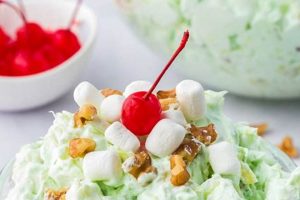
A classic dessert salad, typically featuring a base of whipped topping or cream cheese, combined with canned cherries, fruit cocktail, and often miniature marshmallows or nuts. Variations may include the use of different fruits, such as pineapple or mandarin oranges, and the addition of other ingredients like chopped pecans or coconut. This dessert offers a sweet and creamy texture, with a burst of fruity flavor.
This type of dessert salad gained popularity in mid-20th century America, often appearing at potlucks, holiday gatherings, and other social events. Its simple preparation and readily available ingredients made it a convenient and appealing option for home cooks. The enduring appeal likely stems from its nostalgic association with these gatherings and its balance of sweetness and refreshing fruit flavors. It remains a popular choice for those seeking a light and easy-to-make dessert.
The following sections will explore various aspects of this classic dessert, including common variations, ingredient substitutions, tips for achieving the perfect texture, and suggestions for presentation. Furthermore, historical context and modern adaptations will be examined to provide a complete understanding of its enduring place in culinary tradition.
Tips for a Perfect Cherry Fluff Salad
Achieving the ideal texture and flavor balance requires attention to detail. The following tips will ensure a successful outcome.
Tip 1: Drain the fruit thoroughly. Excess liquid will make the salad watery and dilute the flavor. Canned fruit should be drained completely in a colander before being added to the mixture.
Tip 2: Use high-quality ingredients. Selecting a name-brand whipped topping and fresh, flavorful cherries (if using fresh) contributes significantly to the overall quality of the dish.
Tip 3: Chill thoroughly before serving. Chilling allows the flavors to meld and the salad to firm up, resulting in a more pleasant texture and taste experience.
Tip 4: Consider the sweetness level. If using sweetened whipped topping and canned fruit, additional sugar may not be necessary. Taste the mixture before adding any extra sweetener.
Tip 5: Add nuts for textural contrast. Chopped pecans, walnuts, or almonds provide a satisfying crunch and complement the sweetness of the fruit and cream.
Tip 6: Don’t overmix. Gentle folding preserves the integrity of the ingredients and prevents the salad from becoming overly dense.
Tip 7: Garnish thoughtfully. A few reserved cherries, a sprinkle of nuts, or a sprig of mint can elevate the presentation.
By following these suggestions, one can create a visually appealing and flavorful dessert salad. Careful preparation and attention to detail elevate this simple dish to a truly enjoyable treat.
These tips provide a solid foundation for preparing this classic dessert. The following section offers concluding thoughts and encourages culinary exploration.
1. Ingredients

Ingredient selection significantly impacts the final flavor and texture of a classic cherry fluff salad. Understanding the role of each component allows for informed substitutions and adjustments based on individual preferences and dietary needs. The following facets explore key ingredients and their contributions to the overall dish.
- Whipped Topping
Whipped topping provides the creamy base of the salad. Traditional recipes often call for commercially available whipped topping, but homemade whipped cream or a stabilized whipped cream alternative, such as coconut cream, can be substituted. The choice affects the overall sweetness and richness of the final product. For instance, homemade whipped cream offers a lighter, less sweet option compared to commercial varieties.
- Cherries
Canned, pitted sweet cherries are the defining ingredient. Maraschino cherries, while sometimes used, can introduce an artificial sweetness that some find overpowering. Fresh cherries can also be incorporated, though they may require pitting and potentially sweetening or thickening to achieve the desired consistency. The choice of cherry influences the overall tartness and sweetness balance.
- Additional Fruits
While cherries provide the primary fruit flavor, other fruits are frequently included to add complexity and textural variation. Crushed pineapple, mandarin orange segments, or chopped apple offer complementary sweetness and acidity. The selection of supplementary fruits should consider how their flavors and textures interact with the cherries and the whipped topping.
- Nuts and Other Additions
Nuts, such as chopped pecans or walnuts, contribute textural contrast and a subtle nuttiness. Mini marshmallows add sweetness and a distinct soft texture. Other additions, such as shredded coconut or chopped dates, can further customize the flavor profile. These ingredients are typically added in smaller quantities to complement the primary flavors without overpowering them.
Careful consideration of these ingredients and their interplay within the recipe allows for customization while retaining the essential characteristics of a classic cherry fluff salad. The balance of sweetness, tartness, and texture derived from these components contributes to the enduring appeal of this dessert. Adapting ingredients to suit personal preferences or dietary restrictions opens possibilities for creative variations while preserving the fundamental character of this traditional dish.
2. Preparation

Proper preparation is crucial for a successful old fashioned cherry fluff salad. While the recipe is generally straightforward, attention to detail ensures the desired texture and flavor balance. The following facets outline key preparatory steps:
- Draining Excess Liquid
Thoroughly draining canned fruit, particularly cherries and pineapple, prevents a watery salad. Excess liquid dilutes the flavor and compromises the creamy texture of the whipped topping base. This step, while seemingly simple, significantly impacts the overall quality of the finished product.
- Gentle Mixing
The whipped topping base provides the airy texture characteristic of this dessert. Overmixing deflates the whipped topping, resulting in a dense, heavy salad. Ingredients should be folded together gently until just combined. This preserves the lightness of the whipped topping and the integrity of the added fruits and nuts.
- Chilling Time
Chilling allows the flavors to meld and the salad to set. A minimum of two hours, preferably longer, enhances the overall taste and texture. The chilling process allows the sweetness of the fruit and the creaminess of the whipped topping to harmonize, creating a more cohesive flavor profile.
- Order of Addition
While some variations exist, a general guideline involves starting with the whipped topping base and gently folding in the drained fruit, followed by any additional ingredients such as nuts or marshmallows. This order ensures even distribution and prevents the heavier ingredients from sinking to the bottom.
Careful execution of these preparatory steps contributes significantly to the success of the recipe. Attention to detail, from draining excess liquid to gentle mixing and adequate chilling time, ensures a light, flavorful, and visually appealing dessert. These steps, while simple, are essential for achieving the desired outcome and exemplify the importance of proper preparation in even the most straightforward recipes. Overlooking these details can compromise the texture and flavor balance, demonstrating that careful preparation is key to achieving a truly enjoyable old fashioned cherry fluff salad.
3. Texture

Texture plays a crucial role in the overall sensory experience of a classic cherry fluff salad. The desired texture is typically light, airy, and fluffy, derived primarily from the whipped topping base. This lightness contrasts with the burst of juicy sweetness from the cherries and any additional fruits. The interplay of these textures creates a multi-faceted mouthfeel that contributes significantly to the dish’s appeal. A dense or watery salad, resulting from overmixing or insufficient draining of canned fruit, diminishes this textural contrast and detracts from the overall enjoyment. For instance, imagine biting into a salad where the whipped topping is dense and heavy, rather than light and airy. The experience lacks the refreshing contrast that makes this dessert so appealing.
Achieving the ideal texture relies on careful ingredient selection and preparation techniques. Using a high-quality whipped topping and ensuring it is not over-mixed preserves its lightness. Thoroughly draining canned fruit prevents excess liquid from compromising the airy texture of the base. Incorporating nuts or other textural elements, like mini marshmallows or shredded coconut, introduces contrasting textures that enhance the overall sensory experience. Consider a variation with chopped pecans; the crunch of the nuts complements the soft, fluffy base and the juicy cherries. This textural diversity elevates the dish beyond simple sweetness, creating a more complex and engaging culinary experience.
Understanding the interplay of textures within a classic cherry fluff salad allows for informed choices in ingredient selection and preparation techniques. The balance between the airy lightness of the whipped topping and the contrasting textures of the fruit and other additions contributes significantly to its appeal. Achieving this balance elevates the dish from a simple combination of ingredients to a more sophisticated and enjoyable dessert experience. Failure to consider textural elements can result in a dish that lacks the characteristic lightness and refreshing contrast that define a successful cherry fluff salad.
4. Flavor Profile
The flavor profile of a classic cherry fluff salad is characterized by a balance of sweetness and tartness, derived primarily from the interplay between the whipped topping and the cherries. The sweetness of the whipped topping, whether commercially produced or homemade, forms the foundation of the flavor profile. This sweetness is tempered by the tartness of the cherries, creating a balanced, refreshing taste. The type of cherry used significantly influences the overall tartness; for example, maraschino cherries offer a more intense sweetness compared to standard canned sweet cherries. This interplay is crucial; an overly sweet salad can be cloying, while excessive tartness can be unpleasantly sharp. The balance achieved through this combination is key to the dessert’s broad appeal.
Additional ingredients contribute nuanced layers to the core flavor profile. Incorporating crushed pineapple introduces a tropical sweetness and tang, while mandarin orange segments provide a citrusy brightness. Nuts, such as pecans or walnuts, offer a subtle earthy note and a contrasting textural element that enhances the flavor experience. The judicious use of these supplementary ingredients allows for customization while maintaining the fundamental balance of sweet and tart flavors. Consider a variation incorporating both pineapple and pecans; the pineapple amplifies the tropical sweetness, while the pecans provide a grounding earthiness, demonstrating how complementary flavors create a more complex and satisfying profile.
Understanding the flavor profile of this classic dessert allows for informed ingredient selection and substitution to cater to individual preferences. Adjusting the sweetness of the whipped topping, choosing different cherry varieties, or incorporating complementary fruits and nuts allows for endless variations while preserving the essential characteristics of the dish. This flexibility contributes to its enduring popularity, enabling adaptation to diverse palates and dietary needs. Mastery of this balance allows for creative exploration within a familiar framework, ensuring a consistently enjoyable and personalized dessert experience. Ignoring the interplay of these flavors can lead to an unbalanced and less satisfying outcome, highlighting the importance of a well-considered flavor profile in achieving a successful cherry fluff salad.
5. Cultural Context

The old fashioned cherry fluff salad recipe is deeply intertwined with the cultural landscape of mid-20th century America. Its rise in popularity coincides with the post-World War II era, a period marked by increased prosperity, suburban growth, and a burgeoning emphasis on convenience in home cooking. The recipe’s reliance on readily available, shelf-stable ingredients like canned fruit and whipped topping reflects this trend. Furthermore, its simple preparation made it an ideal dish for potlucks, church socials, and family gatherings, solidifying its place in the social fabric of the time. These gatherings frequently featured dishes that could be prepared easily and transported conveniently, aligning perfectly with the characteristics of this dessert salad. This association with communal events contributes to the nostalgic appeal often associated with the dish today, evoking memories of shared meals and celebrations.
The salad’s popularity also reflects the culinary trends of the era. The mid-20th century saw a rise in “congealed salads,” sweet and often colorful dishes that combined fruit, gelatin, and whipped cream. While not a true congealed salad, the cherry fluff salad shares some characteristics, such as the emphasis on sweetness, creamy texture, and the incorporation of fruit. This placement within a broader culinary trend further contextualizes its prevalence during this period. The emphasis on presentation, often involving decorative molds and garnishes, further reflects the aesthetic values of the time. Examining period cookbooks and magazines reveals numerous variations on these types of desserts, highlighting their widespread acceptance and integration into the American culinary repertoire.
Understanding the cultural context of the old fashioned cherry fluff salad recipe provides valuable insights into its enduring appeal. It represents more than just a simple dessert; it serves as a culinary time capsule, reflecting the social, economic, and aesthetic values of a specific era. This understanding enriches appreciation for the dish, connecting it to a broader historical narrative. Recognizing this historical significance transforms the act of preparing or consuming the salad into an engagement with culinary history, allowing individuals to connect with past traditions and appreciate the evolution of culinary practices. This connection fosters a deeper understanding of how food reflects and shapes cultural identity across generations.
Frequently Asked Questions
This section addresses common inquiries regarding the preparation and variations of a classic cherry fluff salad.
Question 1: Can frozen cherries be used in this recipe?
Frozen cherries can be substituted, but they must be thawed and thoroughly drained to prevent excess liquid from thinning the salad.
Question 2: What can be used as a substitute for whipped topping?
Homemade whipped cream or stabilized whipped coconut cream offer suitable alternatives, impacting the overall sweetness and richness.
Question 3: How long can the salad be stored in the refrigerator?
It is best consumed within 2-3 days. The texture may change slightly over time as the whipped topping softens.
Question 4: Can this salad be frozen?
Freezing is not recommended. The whipped topping will separate and lose its desired texture upon thawing.
Question 5: How can the sweetness be adjusted?
The sweetness can be modified by using a less sweet whipped topping or reducing the amount of added sugar, if any.
Question 6: What are some common variations on this recipe?
Common variations include the addition of different fruits, such as pineapple or mandarin oranges, nuts like pecans or walnuts, and mini marshmallows.
Addressing these common questions provides clarity regarding preparation methods and ingredient selection, enabling a more informed approach to creating a successful and enjoyable cherry fluff salad.
The following sections will explore further variations and modern adaptations of this classic dessert.
Old Fashioned Cherry Fluff Salad Recipe
This exploration of the old fashioned cherry fluff salad recipe has delved into its various facets, from core ingredients and preparation techniques to its textural and flavor complexities and cultural significance. The examination revealed the importance of ingredient selection, highlighting how choices impact the final product’s balance of sweetness and tartness. Proper preparation methods, particularly gentle mixing and thorough draining of canned fruit, proved crucial for achieving the desired light and airy texture. The historical context provided insights into the recipe’s emergence and enduring popularity, linking it to mid-20th century social gatherings and culinary trends. Addressing common questions further clarified optimal preparation techniques and potential adaptations.
The old fashioned cherry fluff salad recipe stands as a testament to the enduring appeal of simple, yet satisfying, desserts. Its continued presence in contemporary kitchens underscores the power of nostalgia and the adaptability of classic recipes. Further exploration of individual ingredient variations and presentation styles offers a pathway to personalized interpretations, ensuring this classic dessert remains a vibrant and evolving culinary tradition. Ultimately, appreciation for this dish extends beyond its simple preparation; it represents a connection to past generations and a celebration of enduring culinary traditions.