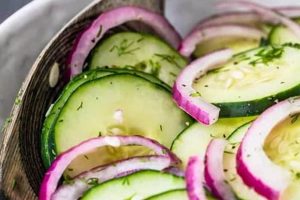
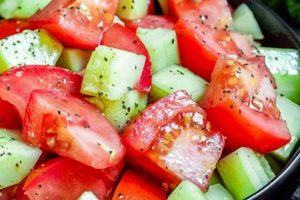
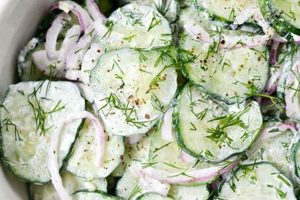
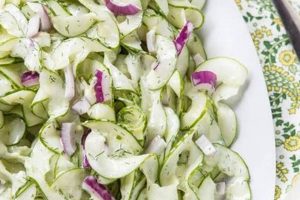
A simple salad combining sliced cucumbers, onions, and tomatoes is a refreshing and nutritious dish. Variations exist using different types of these core vegetables, such as English cucumbers, red onions, or heirloom tomatoes. The preparation typically involves thinly slicing the vegetables and tossing them with a dressing, often a vinaigrette. This dish can be served as a light lunch, a side dish accompanying a main course, or an element within a larger salad composition.
Such salads offer a range of nutritional benefits due to the vitamin and mineral content of the ingredients. Cucumbers provide hydration and electrolytes, while onions offer antioxidant properties. Tomatoes are a source of vitamins C and K. The combination creates a flavorful and healthful dish, suitable for warm weather and adaptable to diverse dietary needs. Historically, similar combinations of these ingredients have appeared in cuisines globally, reflecting their widespread availability and compatibility.
Further exploration of this culinary subject might include specific recipes, regional variations, nutritional analyses, or the integration of this salad type into broader dietary plans. The versatility of the dish provides numerous avenues for detailed examination.
Tips for a Superior Cucumber, Onion, and Tomato Salad
Optimizing ingredient selection and preparation techniques elevates this simple salad to a culinary delight. Attention to detail ensures a crisp, flavorful, and visually appealing dish.
Tip 1: Salt the cucumbers and onions. Salting draws out excess moisture, preventing a watery salad. Place the sliced cucumbers and onions in a colander, sprinkle with salt, and let them sit for 15-20 minutes before rinsing and drying thoroughly.
Tip 2: Choose ripe, flavorful tomatoes. The tomato variety significantly impacts the overall taste. Consider heirloom tomatoes for rich flavor profiles or cherry tomatoes for sweetness and burst.
Tip 3: Balance the flavors with acidity. A vinaigrette with a good balance of acidity enhances the vegetables’ natural sweetness. Lemon juice, red wine vinegar, or a combination work well. Experiment with different vinegars for unique flavor notes.
Tip 4: Consider adding herbs. Fresh herbs elevate the salad’s complexity. Dill, mint, parsley, or chives complement the vegetables beautifully. Add herbs just before serving to maintain their vibrancy.
Tip 5: Use high-quality olive oil. Olive oil forms the base of most vinaigrettes. A high-quality extra virgin olive oil enhances the salad’s flavor and provides health benefits.
Tip 6: Chill the ingredients before serving. Serving the salad chilled enhances its refreshing qualities, particularly during warmer months.
Tip 7: Don’t overdress the salad. Too much dressing can overwhelm the delicate flavors of the vegetables. Start with a small amount and add more if needed.
Implementing these tips enhances the flavor, texture, and overall enjoyment derived from this versatile and nutritious salad.
By focusing on quality ingredients and proper technique, one can transform a simple cucumber, onion, and tomato salad into a memorable culinary experience.
1. Fresh, High-Quality Ingredients
The success of a cucumber, onion, and tomato salad hinges directly on the quality of its ingredients. Freshness significantly impacts flavor, texture, and overall enjoyment. A tomato picked at peak ripeness offers a sweetness and depth of flavor unmatched by one harvested prematurely. Similarly, a crisp, recently picked cucumber provides a refreshing crunch absent in older produce. The pungency of the onion, whether red, white, or yellow, should be sharp and clean, not dull or musty. Utilizing high-quality ingredients elevates this simple salad from ordinary to extraordinary.
Consider the difference between a salad made with supermarket tomatoes shipped long distances and one made with locally sourced, vine-ripened tomatoes. The latter offers a burst of flavor that exemplifies the importance of ingredient quality. Similarly, using a freshly picked cucumber from a local farmer’s market, still firm and vibrant, contrasts sharply with a pre-sliced, packaged cucumber, often lacking in both texture and taste. The onion, too, plays a vital role. A sweet, crisp onion adds a delightful sharpness, while a stale or softened onion detracts from the salad’s overall appeal. These examples illustrate the direct correlation between ingredient quality and the final result.
Prioritizing fresh, high-quality ingredients is crucial for optimizing the sensory experience of this seemingly simple salad. The selection process becomes an investment in flavor and enjoyment. Sourcing the best possible produce, whether from local markets, personal gardens, or discerning grocers, ensures a superior culinary outcome. While the preparation remains straightforward, the emphasis on quality ingredients transforms the dish, highlighting the profound impact of sourcing on the final product.
2. Precise slicing techniques
Precise slicing techniques contribute significantly to the overall success of a cucumber, onion, and tomato salad. Uniformly sliced vegetables ensure even marinating in the vinaigrette, allowing flavors to meld consistently. Thinly sliced pieces offer a delicate texture, enhancing the eating experience. Conversely, unevenly cut vegetables can lead to disparate flavor distribution, with some pieces absorbing more dressing than others. Thickly sliced components might create an unpleasant, unwieldy texture, detracting from the salad’s overall appeal.
Consider the impact of slice thickness on onion flavor. A thinly sliced onion offers a mild, subtle pungency, blending harmoniously with the other ingredients. However, a thickly sliced onion can overpower the salad with its sharp flavor, dominating the delicate cucumber and tomato notes. Similarly, thinly sliced cucumbers offer a pleasant crunch, while thicker slices might prove cumbersome and watery. The consistency of tomato slices affects both visual appeal and flavor distribution. Uniformly sliced tomatoes create an aesthetically pleasing presentation and ensure even contact with the dressing. These examples illustrate the direct influence of precise slicing techniques on the final product.
Mastery of knife skills elevates this simple salad. Precision facilitates even flavor distribution, optimal texture, and an appealing presentation. While the inherent simplicity of the recipe remains, attention to slicing techniques significantly impacts the ultimate sensory experience. The difference between a haphazardly chopped salad and one prepared with carefully considered cuts highlights the importance of precise techniques. This attention to detail transforms the salad from a basic combination of ingredients into a carefully constructed dish, showcasing the impact of technique on even the simplest of recipes.
3. Balanced Vinaigrette

A balanced vinaigrette serves as the cornerstone of a successful cucumber, onion, and tomato salad. The dressing’s role extends beyond simply adding flavor; it harmonizes the individual ingredients, creating a cohesive and refreshing culinary experience. A well-executed vinaigrette enhances the vegetables’ natural flavors without overpowering their delicate profiles. Understanding the components of a balanced vinaigrette and their interaction is crucial for achieving optimal results.
- Acidity
Acidity provides the necessary brightness to cut through the richness of the olive oil and complement the vegetables’ sweetness. Common acidic components include lemon juice, vinegar (red wine, white wine, apple cider), or a combination thereof. The choice of acid influences the overall flavor profile of the vinaigrette. For example, lemon juice offers a clean, citrusy tang, while red wine vinegar contributes a more robust, slightly fruity character. The level of acidity should be carefully calibrated to avoid overpowering the delicate flavors of the vegetables. Too much acid can make the salad taste sharp and unpleasant, while too little can result in a bland, oily dish.
- Oil
Oil provides the richness and body of the vinaigrette. Extra virgin olive oil is the preferred choice due to its flavor complexity and health benefits. The quality of the olive oil significantly impacts the final taste. A robust, peppery olive oil can add depth to the vinaigrette, while a milder olive oil provides a subtle backdrop for the other ingredients. The ratio of oil to acid determines the vinaigrette’s texture and richness. A higher oil content results in a creamier dressing, while a higher acid content creates a thinner, more tart vinaigrette. The proper balance depends on personal preference and the specific salad composition.
- Seasoning
Seasoning enhances the overall flavor profile of the vinaigrette and the salad as a whole. Salt and freshly ground black pepper are essential seasonings. Salt balances the acidity and enhances the sweetness of the vegetables, while pepper adds a subtle hint of spice. Additional seasonings, such as garlic powder, onion powder, or dried herbs, can further complement the flavors. However, restraint is crucial; over-seasoning can mask the delicate flavors of the fresh vegetables. The goal is to enhance, not overwhelm, the natural tastes.
- Emulsification
Emulsification refers to the process of combining oil and acid into a stable mixture. A properly emulsified vinaigrette clings lightly to the vegetables, ensuring even flavor distribution. Whisking the oil and acid together vigorously creates a temporary emulsion. Adding an emulsifying agent, such as Dijon mustard or honey, helps create a more stable emulsion that prevents the vinaigrette from separating. This stability ensures a consistent flavor experience with each bite and prevents the salad from becoming oily.
A balanced vinaigrette is paramount to a successful cucumber, onion, and tomato salad. The careful consideration of acidity, oil, seasoning, and emulsification ensures a dressing that complements the fresh vegetables, creating a harmonious and refreshing dish. The interplay of these components transforms a simple combination of ingredients into a flavorful and satisfying culinary experience.
4. Optimal Seasoning
Optimal seasoning elevates a cucumber, onion, and tomato salad from simple to exceptional. It amplifies the natural flavors of the fresh vegetables, creating a harmonious balance between sweet, savory, and acidic notes. Salt, a fundamental seasoning, plays a crucial role by drawing out excess moisture from the vegetables, enhancing their crispness while simultaneously intensifying their inherent sweetness. Furthermore, salt tempers the acidity of the vinaigrette, preventing the salad from becoming overly tart. Freshly ground black pepper adds a subtle layer of complexity, providing a gentle warmth that complements the cool, refreshing nature of the salad. The interplay of these seasonings creates a symphony of flavors, where each element enhances the others, resulting in a more complete and satisfying sensory experience.
Consider a scenario where a cucumber, onion, and tomato salad is under-seasoned. The flavors of the individual vegetables might remain distinct and somewhat muted, lacking the vibrancy and depth achieved through proper seasoning. The inherent sweetness of the tomatoes and cucumbers might not be fully realized, and the onion’s pungency might dominate the flavor profile. Conversely, over-seasoning can mask the delicate nuances of the fresh produce. Too much salt can render the salad unpleasantly salty, overshadowing the natural flavors. An excessive amount of pepper can introduce an overpowering heat that clashes with the refreshing nature of the salad. These examples demonstrate the importance of achieving a delicate balance through optimal seasoning.
Understanding the impact of seasoning allows one to create a cucumber, onion, and tomato salad that maximizes flavor and textural appeal. The judicious use of salt and pepper enhances the inherent qualities of the fresh ingredients, creating a harmonious blend of flavors. Optimal seasoning transforms this simple salad into a more complex and satisfying culinary experience. This attention to detail, while seemingly minor, demonstrates a sophisticated understanding of flavor dynamics and elevates the dish from basic to refined.
5. Proper Chilling
Proper chilling significantly impacts the sensory experience of a cucumber, onion, and tomato salad. Temperature affects flavor perception and textural qualities. Chilling enhances the crispness of the vegetables and amplifies their refreshing nature, particularly beneficial in warmer climates. A chilled salad offers a welcome contrast to high temperatures, providing a revitalizing culinary experience. Conversely, serving the salad at room temperature, or worse, warm, diminishes the crispness of the cucumbers and tomatoes, potentially rendering the onion’s flavor more pungent and less palatable. The overall impression shifts from refreshing to limp and less appealing.
Consider the difference between biting into a chilled cucumber slice and one that has been sitting at room temperature. The chilled cucumber offers a satisfying crunch and a burst of refreshing coolness. The flavors are brighter and more pronounced. On the other hand, a room-temperature cucumber might feel slightly soft and less invigorating. Its flavor might seem muted. Similar principles apply to the tomatoes and onions. A chilled tomato offers a burst of juicy sweetness, while a warm tomato can taste overly acidic and mealy. A chilled onion provides a pleasant sharpness, while a warm onion can have an overpowering, almost sulfurous taste. These examples demonstrate the significant impact of temperature on the overall enjoyment of the salad.
Chilling is not merely a matter of convenience but a crucial step that elevates the cucumber, onion, and tomato salad. Proper chilling enhances the crispness, brightness, and overall refreshment of the dish, creating a more satisfying culinary experience. Failing to chill the salad compromises its textural and flavor integrity, diminishing its appeal, particularly during warmer months. Understanding the impact of temperature allows one to optimize the sensory qualities of this simple yet versatile salad, ensuring a truly refreshing and enjoyable culinary experience.
6. Attractive Presentation
Attractive presentation elevates a cucumber, onion, and tomato salad from a simple dish to a visually appealing culinary creation. While flavor remains paramount, visual appeal significantly enhances the dining experience, stimulating appetite and creating a sense of anticipation. Thoughtful presentation transforms the salad from a mere combination of ingredients into an aesthetically pleasing composition that engages multiple senses.
- Color Contrast and Harmony
Strategic use of color enhances visual appeal. The vibrant red of tomatoes, the deep green of cucumbers, and the white or purple hues of onions offer inherent color contrast. Arranging these elements thoughtfully creates visual interest. Consider alternating slices of red and yellow tomatoes with rings of red onion and wedges of cucumber, creating a visually dynamic pattern. Alternatively, a monochromatic presentation using varying shades of green, such as combining English cucumbers with pale green bell peppers, can offer a subtle yet elegant aesthetic. The interplay of colors significantly impacts the overall presentation.
- Cutting Techniques and Shapes
Varying cutting techniques adds visual texture and dimension. Instead of uniformly slicing all ingredients, consider incorporating different shapes. Dicing the tomatoes, slicing the cucumbers into ribbons, and thinly slicing the onions into half-moons adds visual complexity. The interplay of shapes creates a more dynamic and engaging presentation. Furthermore, attention to knife skills ensures clean cuts, contributing to a more polished and professional appearance. Uniformity in slicing, when employed, conveys precision and care.
- Plating and Garnishing
The choice of serving vessel and the use of garnishes further enhance presentation. A simple white plate provides a neutral backdrop that allows the vibrant colors of the salad to stand out. Alternatively, a rustic wooden bowl adds a touch of earthiness and complements the natural ingredients. Garnishes, used sparingly, add a final flourish. A sprinkle of fresh herbs, such as chopped chives or dill, adds a pop of color and enhances the aroma. A drizzle of high-quality olive oil or a scattering of toasted sesame seeds adds textural and visual interest.
- Arrangement and Composition
Thoughtful arrangement transforms the salad from a collection of ingredients into a cohesive composition. Consider the principles of visual balance and symmetry. Arranging the salad components in a circular pattern or creating a layered effect adds visual depth. Avoid overcrowding the plate or bowl, allowing negative space to enhance the visual appeal. The arrangement should showcase the individual ingredients while simultaneously creating a unified whole. A well-composed salad conveys a sense of artistry and attention to detail.
Attractive presentation elevates the cucumber, onion, and tomato salad from a simple side dish to a visually appealing culinary experience. The interplay of color, cutting techniques, plating, and arrangement enhances the overall dining experience. By considering these elements, one transforms this straightforward salad into a visually captivating dish that delights the eye as much as the palate. This attention to visual detail underscores a commitment to culinary excellence, demonstrating that even simple dishes can benefit from thoughtful presentation.
7. Versatile Serving Options

The versatility of cucumber, onion, and tomato salad lends itself to a wide array of serving options, enhancing its suitability for diverse culinary contexts. This adaptability stems from the salad’s refreshing nature, simple composition, and compatibility with various flavor profiles. It functions effectively as a standalone light meal, a side dish complementing heavier entres, or a component within more complex salads or sandwiches. This inherent flexibility expands its culinary applications, increasing its value in meal planning and preparation.
As a standalone dish, this salad offers a light and refreshing option for lunches or warm-weather meals. Its hydrating qualities and nutritional value make it a healthy and satisfying choice. Paired with a protein source, such as grilled chicken or fish, it becomes a complete and balanced meal. As a side dish, it provides a refreshing counterpoint to richer, heavier dishes, cleansing the palate and adding a bright element to the meal. Consider its role alongside grilled meats or roasted vegetables. The salad’s acidity and crispness cut through the richness of these dishes, creating a harmonious balance of flavors. Furthermore, it can be incorporated into sandwiches or wraps, adding texture, flavor, and nutritional value. Imagine a Mediterranean-inspired wrap with hummus, feta cheese, and cucumber, onion, and tomato salad. The salad contributes a refreshing crunch and a burst of flavor that complements the other ingredients.
Understanding the versatile serving options of cucumber, onion, and tomato salad allows for greater culinary creativity and adaptability. Its simplicity belies its potential to enhance a wide range of meals, from light lunches to elaborate dinners. This versatility positions the salad as a valuable component within a diverse culinary repertoire, highlighting its practical significance in both everyday meals and more elaborate culinary creations. The ability to seamlessly integrate this salad into various culinary contexts underscores its value and reinforces its position as a versatile and adaptable culinary staple.
Frequently Asked Questions
This section addresses common inquiries regarding cucumber, onion, and tomato salads, providing concise and informative responses to clarify potential uncertainties and enhance understanding of this versatile dish.
Question 1: How can one prevent a watery salad?
Salting the cucumbers and onions prior to combining them with the other ingredients draws out excess moisture. Place the sliced cucumbers and onions in a colander, sprinkle generously with salt, and allow them to rest for approximately 15-20 minutes. Rinse thoroughly and pat dry before adding to the salad.
Question 2: What are the best tomato varieties for this salad?
The optimal tomato variety depends on individual preferences. Heirloom tomatoes offer complex flavor profiles, while cherry or grape tomatoes provide sweetness and a pleasant burst when bitten. Standard globe tomatoes offer a balanced flavor and texture.
Question 3: Can this salad be prepared in advance?
While the salad is best consumed fresh, it can be prepared a few hours in advance. Store the vegetables and dressing separately and combine just before serving to maintain optimal texture and prevent the salad from becoming soggy.
Question 4: What dressings can be used besides vinaigrette?
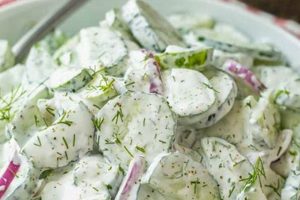
While vinaigrette is traditional, other dressings, such as a light lemon-herb dressing or a creamy yogurt-based dressing, can complement the salad. The key is to choose a dressing that balances the flavors of the vegetables without overpowering them.
Question 5: How should the salad be stored if there are leftovers?
Store leftover salad in an airtight container in the refrigerator. Consume within one to two days for optimal quality. Note that the texture may soften slightly upon storage.
Question 6: How can one enhance the nutritional value of the salad?
Adding other vegetables, such as bell peppers, avocado, or spinach, enhances nutritional value. Incorporating protein, such as grilled chicken, chickpeas, or feta cheese, creates a more complete and balanced meal.
Addressing these frequently asked questions clarifies common concerns and misconceptions, equipping individuals with the knowledge to create and enjoy a superior cucumber, onion, and tomato salad.
This concludes the FAQ section. Further exploration of specific recipe variations and culinary techniques can enhance understanding and practical application.
Recipe Cucumber Onion Tomato Salad
This exploration has highlighted the multifaceted nature of the seemingly simple cucumber, onion, and tomato salad. From ingredient selection and precise slicing techniques to the art of crafting a balanced vinaigrette and the importance of proper chilling, each element contributes significantly to the final culinary outcome. Attractive presentation elevates the dish from basic sustenance to a visually appealing culinary experience, while the salad’s inherent versatility allows for seamless integration into diverse meal contexts. Understanding these key aspects transforms the perception of this dish, revealing the potential for culinary refinement within its inherent simplicity.
The cucumber, onion, and tomato salad stands as a testament to the power of culinary fundamentals. While seemingly basic, its potential for refinement and nuanced flavor profiles underscores the significance of technique and ingredient quality. Further exploration of regional variations, ingredient pairings, and innovative presentation styles promises continued culinary discovery within this classic combination. This exploration serves as a starting point for continued appreciation and experimentation within the realm of culinary arts.