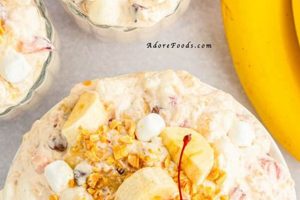
This creamy, sweet, and savory side dish features elbow macaroni, shredded chicken or ham, and a variety of vegetables like carrots, potatoes, and raisins, all bound together with a rich, mayonnaise-based dressing. Often, fruit cocktail is added, contributing a characteristic sweetness. Distinguishing this variation from other macaroni salads are the inclusion of condensed milk and cheese, creating a uniquely Filipino flavor profile.
A staple at Filipino gatherings and celebrations, this dish represents a blend of cultural influences, incorporating Western ingredients with a distinctly Filipino twist. Its popularity stems from its affordability, ease of preparation, and adaptable nature. It’s often served during holidays, birthdays, and potlucks, embodying a sense of community and shared enjoyment. The dish also showcases resourcefulness, as variations allow cooks to utilize readily available ingredients and adjust sweetness and savoriness to preference.
Further exploration will delve into variations, ingredient selection, preparation techniques, and cultural significance, providing a comprehensive understanding of this beloved culinary tradition.
Tips for Perfect Macaroni Salad
Achieving the ideal balance of flavors and textures in macaroni salad requires attention to detail. The following tips offer guidance for creating a successful dish.
Tip 1: Cook the pasta al dente. Slightly firm pasta holds its shape better and prevents a mushy texture. Rinse the cooked pasta under cold water to stop the cooking process and maintain firmness.
Tip 2: Use high-quality mayonnaise. The mayonnaise serves as the foundation of the dressing, so its flavor significantly impacts the overall taste. Opting for a high-quality mayonnaise enhances the richness and creaminess.
Tip 3: Balance sweetness and savoriness. The interplay of sweet and savory elements defines this dish. Adjust the amount of condensed milk and cheese to achieve the desired balance according to personal preference.
Tip 4: Incorporate a variety of textures. The combination of soft potatoes, crunchy carrots, chewy raisins, and firm pasta provides a pleasing textural contrast. Consider adding other vegetables like bell peppers or celery for additional crunch.
Tip 5: Chill thoroughly before serving. Chilling allows the flavors to meld and enhances the overall experience. Refrigerate the salad for at least two hours before serving.
Tip 6: Adjust ingredient ratios to taste. While recipes offer guidance, adjusting ingredient quantities based on personal preference is encouraged. Experiment to find the ideal balance.
Tip 7: Consider using pre-cooked ingredients for convenience. Canned fruit cocktail, pre-shredded cheese, and pre-cooked chicken or ham streamline the preparation process.
By following these guidelines, one can ensure a delicious and satisfying macaroni salad experience.
These tips provide a solid foundation for crafting a memorable dish. The following section will explore variations and adaptations to further personalize this versatile recipe.
1. Sweetness

Sweetness is a defining characteristic of Filipino macaroni salad, setting it apart from other variations. This prominent sweetness is not merely an afterthought but a deliberate component integral to the overall flavor profile, reflecting cultural preferences and historical influences.
- Condensed Milk
Condensed milk serves as the primary source of sweetness, contributing a rich, creamy texture and a distinct caramel-like flavor. Its use reflects the historical availability and affordability of canned goods in the Philippines. The amount used can be adjusted to achieve the desired level of sweetness.
- Fruit Cocktail
The addition of fruit cocktail, typically containing a mix of tropical fruits like pineapple, papaya, and cherries, further enhances the sweetness and adds a textural complexity. The syrupy liquid from the fruit cocktail also contributes to the overall sweetness and moisture of the salad.
- Balance with Savory Elements
The sweetness is balanced by savory elements, such as ham, chicken, or cheese, preventing the dish from becoming overly cloying. This balance is crucial in creating the distinctive Filipino flavor profile, where sweet and savory notes harmonize.
- Regional Variations
Regional variations may incorporate additional sweet elements, such as raisins or sweetened dried cranberries, further emphasizing the preference for sweetness. These variations showcase the diverse culinary landscape within the Philippines and demonstrate the adaptability of the recipe.
The strategic use of sweet ingredients in Filipino macaroni salad demonstrates a cultural preference for balanced flavors and resourcefulness in utilizing available ingredients. This characteristic sweetness contributes significantly to the dish’s widespread popularity and enduring presence in Filipino cuisine.
2. Creaminess
Creaminess is a defining textural element of Filipino macaroni salad, contributing significantly to its appeal and differentiating it from other macaroni salad variations. This creaminess isn’t merely a byproduct of the ingredients but a carefully orchestrated component achieved through specific ingredient choices and preparation techniques.
Mayonnaise serves as the primary source of creaminess, binding the ingredients and providing a rich, smooth mouthfeel. The quality of mayonnaise used directly impacts the overall creaminess; higher-quality mayonnaise typically yields a richer, more luxurious texture. In addition to mayonnaise, some recipes incorporate condensed milk, further enhancing the creamy texture and contributing a subtle sweetness. The addition of cheese, often cheddar or quick-melt varieties, adds another layer of creaminess while also contributing a savory note that complements the sweetness of the condensed milk.
The balance of creaminess with other textural elements is crucial. The slight firmness of al dente pasta, the crunch of vegetables like carrots and celery, and the chewiness of raisins create a dynamic textural interplay that prevents the salad from becoming overly heavy or monotonous. This contrast in textures enhances the overall sensory experience, making each bite more enjoyable. Achieving the desired level of creaminess requires careful consideration of ingredient ratios. Too much mayonnaise can result in a salad that is overly rich and heavy, while too little can leave it dry and lacking in cohesion. The chilling process also plays a role in the final texture. Chilling allows the mayonnaise and other ingredients to meld, resulting in a more cohesive and uniformly creamy consistency.
Understanding the role of creaminess in Filipino macaroni salad allows for a more nuanced appreciation of its construction and appeal. It highlights the importance of ingredient selection, preparation techniques, and the interplay of textures in creating a balanced and satisfying dish. This insight allows for more informed decisions when preparing the salad, enabling cooks to achieve the desired level of creaminess and overall textural balance.
3. Ingredients (Local)

The utilization of local ingredients significantly shapes the flavor profile of Filipino macaroni salad, distinguishing it from other variations and connecting it to the unique culinary landscape of the Philippines. This connection goes beyond mere substitution; it reflects cultural preferences, historical influences, and economic considerations. Local brands of mayonnaise, often sweeter and tangier than international counterparts, contribute a distinctive flavor that many Filipinos associate with the dish. Similarly, the choice of cheese, often processed cheddar or quick-melt varieties readily available in local markets, influences the overall taste and texture.
Beyond branded ingredients, access to fresh produce shapes regional variations. In areas where calamansi, a small citrus fruit, is abundant, its juice might be added to the dressing, providing a bright, citrusy note. Similarly, the inclusion of local vegetables, such as green papaya or heart of palm, reflects the adaptability of the recipe and the utilization of readily available resources. These variations highlight the resourcefulness and creativity inherent in Filipino cooking, adapting recipes based on local availability and regional preferences. For example, using locally produced banana ketchup instead of tomato ketchup adds a unique sweetness and tanginess characteristic of Filipino cuisine.
Understanding the role of local ingredients provides a deeper appreciation for the nuanced flavors of Filipino macaroni salad. It underscores the connection between food and culture, demonstrating how readily available ingredients shape culinary traditions. This awareness allows for a more informed approach to preparing the dish, whether adhering to traditional recipes or exploring regional variations. It also highlights the importance of supporting local producers and appreciating the diverse flavors that local ingredients bring to this beloved dish.
4. Preparation Methods
Preparation methods significantly influence the final outcome of Filipino macaroni salad, affecting not only its taste and texture but also its cultural significance. While seemingly simple, the techniques employed in creating this dish contribute to its unique characteristics and reflect traditional practices.
A key element is the cooking of the pasta. Cooking macaroni al dente is crucial for maintaining texture and preventing a mushy salad. Rinsing the cooked pasta under cold water stops the cooking process and firms the noodles, further enhancing the textural integrity of the salad. The mixing process, while straightforward, requires attention. Gently folding the ingredients together ensures even distribution of the dressing and prevents the delicate ingredients, such as the fruit cocktail, from breaking down. Overmixing can lead to a less appealing, homogenous texture.
The chilling process is essential for allowing the flavors to meld. Refrigerating the salad for at least two hours, or preferably longer, allows the mayonnaise, condensed milk, and other ingredients to fully integrate, creating a more cohesive and flavorful dish. Furthermore, the chilling process firms the salad, improving its presentation and making it easier to serve. For instance, some families prepare the salad the day before an event, allowing ample chilling time and simplifying the hosting process. This practice also highlights the role of macaroni salad as a make-ahead dish, contributing to its popularity in large gatherings and celebrations.
Understanding these preparation methods allows for greater control over the final product. It empowers cooks to achieve the desired texture, flavor, and presentation, ensuring a successful and enjoyable Filipino macaroni salad experience. These seemingly simple steps, passed down through generations, contribute to the dish’s enduring popularity and cultural significance, solidifying its place as a staple in Filipino cuisine.
5. Cultural Context

Filipino macaroni salad occupies a significant space within Filipino culture, extending beyond its role as a mere side dish. Its presence at nearly every Filipino gathering, from casual potlucks to grand celebrations like weddings and Christmas feasts, signifies its integral role in communal dining and celebratory traditions. This consistent presence reflects deeper cultural values of hospitality, sharing, and resourcefulness.
The adaptability of the recipe further underscores its cultural significance. The ability to adjust sweetness, incorporate available ingredients, and scale the recipe to accommodate large groups makes it a practical and versatile dish suited to a wide range of social contexts. For example, families with limited resources can still participate in communal feasts by contributing a generously sized macaroni salad made with readily available ingredients. This adaptability reinforces the communal spirit inherent in Filipino culture, emphasizing inclusivity and shared enjoyment regardless of socioeconomic status.
Furthermore, Filipino macaroni salad often carries a strong emotional resonance, evoking memories of family gatherings and shared meals. Its familiar flavors and textures can trigger nostalgic associations, connecting individuals to their cultural heritage and personal histories. This emotional connection elevates the dish beyond mere sustenance, transforming it into a symbol of family, tradition, and cultural identity. The passing down of recipes through generations reinforces this cultural significance, solidifying the dish’s place as a culinary heirloom and a tangible link to ancestral traditions.
6. Variations (Regional)

Regional variations in Filipino macaroni salad demonstrate the dish’s adaptability and the diverse culinary landscape of the Philippines. These variations, influenced by local ingredient availability, cultural preferences, and family traditions, offer a glimpse into the rich tapestry of Filipino regional cuisines. They often incorporate locally sourced ingredients, reflecting the resourcefulness and creativity inherent in Filipino cooking.
In some regions, the addition of shredded green papaya adds a refreshing crunch and a slightly bitter counterpoint to the sweetness. In areas where heart of palm is readily available, it might be incorporated, lending a subtle vegetal flavor and a firmer texture. The use of local condiments, such as banana ketchup, offers a distinctly Filipino twist, adding a sweet and tangy dimension to the dressing. Coastal regions might incorporate flaked tuna or other seafood, reflecting the proximity to marine resources. Even the type of cheese used can vary, with some regions preferring queso de bola, a traditional Filipino edam cheese, for its salty, nutty flavor.
These regional variations underscore the dynamic nature of Filipino cuisine. They demonstrate how a seemingly simple dish can evolve and adapt across different regions, reflecting the unique characteristics of each locale. Understanding these variations provides a deeper appreciation for the complexity and diversity of Filipino food culture. It also allows for greater flexibility in preparing the dish, encouraging experimentation and personalization while still maintaining the core elements that define Filipino macaroni salad.
Frequently Asked Questions
This section addresses common inquiries regarding Filipino macaroni salad, providing clarification and guidance for both novice and experienced cooks.
Question 1: What makes Filipino macaroni salad different from other macaroni salads?
Filipino macaroni salad distinguishes itself through its characteristic sweetness derived from condensed milk and the addition of fruit cocktail. The incorporation of cheese and sometimes raisins further contributes to its unique flavor profile.
Question 2: Can different types of pasta be used?
While elbow macaroni is traditional, other small pasta shapes like shells or rotini can be substituted. However, using elbow macaroni maintains the authentic texture and presentation.
Question 3: How long can Filipino macaroni salad be stored in the refrigerator?
Properly stored in an airtight container, it can be refrigerated for up to three to five days. However, its quality may degrade over time.
Question 4: Is it necessary to use condensed milk?
Condensed milk is a key ingredient contributing to the distinctive sweetness of Filipino macaroni salad. Omitting it would significantly alter the authentic flavor.
Question 5: Can the recipe be adapted for dietary restrictions?
Adaptations are possible. For lower-fat versions, reduced-fat mayonnaise and low-fat condensed milk can be substituted. Vegan versions require replacing mayonnaise with plant-based alternatives and omitting the cheese. However, these substitutions will alter the traditional flavor and texture.
Question 6: Why is Filipino macaroni salad so popular in Filipino culture?
Its affordability, ease of preparation, adaptability to various ingredients, and suitability for large gatherings make it a practical and beloved dish in Filipino celebrations and everyday meals.
These responses provide a concise overview of key aspects of Filipino macaroni salad. Understanding these elements allows for a more informed approach to preparing and appreciating this culturally significant dish.
This concludes the FAQ section. The following section will offer a complete recipe to guide preparation.
Filipino Macaroni Salad
This exploration of Filipino macaroni salad has illuminated its unique characteristics, from the defining sweetness imparted by condensed milk and fruit cocktail to the creamy texture derived from mayonnaise and cheese. The examination of local ingredient variations, traditional preparation methods, and the dish’s profound cultural significance reveals a culinary tradition deeply embedded in Filipino identity. The adaptability of the recipe, allowing for regional variations and personalized adjustments, further underscores its enduring appeal.
Filipino macaroni salad represents more than a simple side dish; it embodies cultural values of community, resourcefulness, and celebration. Its continued presence at Filipino gatherings signifies its enduring importance and its capacity to evoke cherished memories of shared meals and familial connections. Further exploration of regional adaptations and individual family recipes promises a deeper understanding of this beloved dish and its evolving role in Filipino culinary heritage.