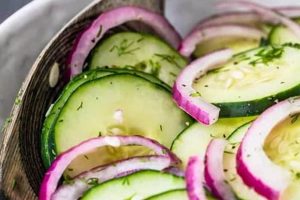
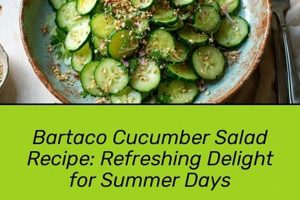
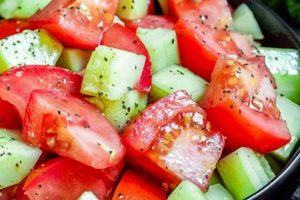
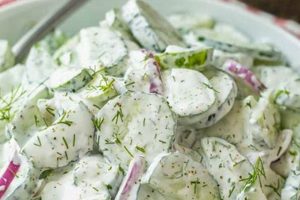
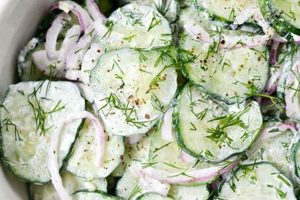
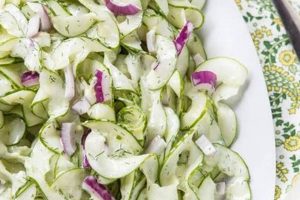
This classic side dish features thinly sliced cucumbers marinated in a sweet and tangy vinegar-based dressing, often with the addition of onions and sometimes fresh dill or other herbs. Variations exist, but the core elements remain consistent: cucumbers, a vinegar dressing, and a balance of sweet and sour flavors. This preparation creates a refreshing and light accompaniment to heavier entrees, particularly in warmer weather.
The dish’s popularity stems from its simplicity, affordability, and refreshing qualities. It offers a cool contrast to rich or spicy foods, aiding in palate cleansing and enhancing the overall dining experience. Historically, cucumbers preserved in vinegar have been a staple in various cultures for their ability to extend shelf life and provide essential nutrients. This culinary tradition likely influenced the development of dishes like this vinegar-based cucumber salad, cementing its place as a beloved side item.
Further exploration will delve into specific ingredient variations, detailed preparation methods, and nutritional information pertaining to this refreshing salad. Discussions regarding its role in different cuisines and potential health benefits will also be addressed.
Tips for a Perfect Cucumber Salad
Achieving optimal flavor and texture requires attention to detail throughout the preparation process. The following tips offer guidance for creating a superior cucumber salad.
Tip 1: Cucumber Selection: Opt for firm, unwaxed cucumbers. English or Persian cucumbers are ideal due to their thinner skins and fewer seeds. Avoid overly ripe cucumbers as they tend to be watery.
Tip 2: Slicing Technique: Uniformly thin slices ensure even marinating. A mandoline slicer produces consistent results, but a sharp knife can also be used effectively.
Tip 3: Salt and Drain: Salting the sliced cucumbers and allowing them to drain for 15-20 minutes removes excess moisture, preventing a watery salad. This step is crucial for achieving a crisp and flavorful final product.
Tip 4: Vinegar Selection: While white vinegar is traditional, apple cider vinegar or rice vinegar can add nuanced flavor profiles. Experimentation is encouraged.
Tip 5: Sweetener Balance: Granulated sugar is commonly used, but honey or agave nectar can offer subtle sweetness variations. Adjust the amount according to personal preference.
Tip 6: Flavor Enhancements: Fresh dill, thinly sliced red onion, or a pinch of black pepper can elevate the flavor profile. Consider adding a small amount of minced garlic for a bolder taste.
Tip 7: Chilling Time: Allowing the salad to chill for at least 30 minutes before serving enhances the flavors and provides optimal refreshment.
By adhering to these tips, one can consistently produce a crisp, flavorful, and refreshing cucumber salad that complements a wide variety of dishes.
Following these recommendations will ensure a successful culinary experience. The concluding section will offer additional resources and variations for further exploration.
1. Thinly sliced cucumbers

Thinly sliced cucumbers are fundamental to a successful rendition of this salad. The thinness facilitates optimal marinade absorption, ensuring each bite delivers the characteristic sweet and tangy flavor profile. Beyond flavor, thin slices contribute to the desired textural experience, offering a delicate crispness that complements the overall dish. Several key aspects highlight the importance of this specific preparation.
- Surface Area Maximization
Thin slicing dramatically increases the surface area of the cucumbers exposed to the marinade. This increased surface area allows for greater absorption of the vinegar-based dressing, resulting in a more pronounced and evenly distributed flavor throughout the salad. Thicker slices would limit marinade penetration, leading to a blander, less flavorful experience.
- Texture Enhancement
Thinly sliced cucumbers provide a delicate, crisp texture that contrasts pleasantly with other elements in the dish. Thicker slices, conversely, might offer a less desirable, almost crunchy texture that detracts from the overall balance and delicacy of the salad.
- Visual Appeal
The translucent, delicate appearance of thinly sliced cucumbers enhances the visual presentation of the salad. This visual lightness contributes to the perception of the salad as refreshing and palatable, particularly during warmer months.
- Ease of Consumption
Thin slices are easier to eat, blending seamlessly with other ingredients and contributing to a harmonious culinary experience. Larger, thicker pieces would disrupt this balance, potentially overwhelming other flavors and textures within the salad.
The practice of thinly slicing cucumbers is thus not merely a culinary technique, but a critical component that directly influences the flavor, texture, appearance, and overall enjoyment. The thin slices ensure that the cucumbers readily absorb the marinade, contributing to a refreshing, flavorful, and visually appealing salad. This meticulous preparation ultimately distinguishes this simple cucumber salad from other variations.
2. Sweet Vinegar Dressing

The sweet vinegar dressing is the defining characteristic of this cucumber salad, distinguishing it from other cucumber preparations. This dressing provides the essential balance of sweet and tangy flavors that complement the cool, crisp cucumbers. Understanding its components and their interplay is crucial to replicating the authentic flavor profile.
- Vinegar Selection
The choice of vinegar significantly influences the dressing’s overall character. Traditionally, white vinegar is used for its clean, sharp acidity. However, apple cider vinegar offers a slightly mellower, fruitier alternative, while rice vinegar introduces subtle sweetness and a milder tang. The specific vinegar chosen contributes distinct nuances to the final flavor profile.
- Sweetener Balance
Granulated sugar is the most common sweetener, providing a clean, straightforward sweetness. However, alternative sweeteners like honey or agave nectar can be used to introduce subtle flavor variations. The crucial aspect is achieving the right balance between the sweetness and the acidity of the vinegar. This balance prevents the dressing from being overly sweet or excessively tart.
- Flavor Enhancements
While the vinegar and sweetener form the foundation, additional ingredients can enhance the dressing’s complexity. Fresh dill, a common addition, provides a bright, herbaceous note. A pinch of black pepper introduces a subtle warmth, while a small amount of minced garlic adds a pungent depth. These additions, used judiciously, elevate the flavor profile without overpowering the core sweet-tangy balance.
- Marinating Time
The marinating time, though often overlooked, plays a critical role in flavor development. Allowing the cucumbers to marinate in the dressing for at least 30 minutes, and preferably longer, allows the flavors to meld and the cucumbers to absorb the dressing fully. This absorption process is essential for achieving the desired flavor saturation and textural softening.
The interplay of these elementsvinegar, sweetener, flavor enhancers, and marinating timecreates a harmonious balance that defines this distinctive cucumber salad. The resulting sweet and tangy dressing, combined with the crisp cucumbers, delivers a refreshing culinary experience that has established this dish as a classic.
3. White or Apple Cider Vinegar
Vinegar selection is a pivotal element in achieving the characteristic flavor profile of this cucumber salad. While variations exist, white and apple cider vinegar are the most commonly used, each contributing distinct nuances to the final dish. Understanding their individual properties and impact on the overall flavor balance is essential.
- Acidity Level
Both white and apple cider vinegars possess sufficient acidity to pickle and preserve the cucumbers while adding the necessary tang. White vinegar, derived from grain alcohol, typically has a slightly higher acidity level than apple cider vinegar. This higher acidity contributes to a sharper, more pronounced tang in the salad. Apple cider vinegar, fermented from apple juice, offers a milder acidity, resulting in a slightly mellower tang.
- Flavor Profile
White vinegar has a clean, neutral flavor that allows the sweetness of the sugar and the freshness of the cucumbers to shine through. It provides a blank canvas for other flavor additions like dill or onion. Apple cider vinegar, on the other hand, introduces a subtle fruity sweetness and a slightly more complex flavor profile. This inherent sweetness can complement the overall balance of the salad, particularly if less sugar is used.
- Color Influence
White vinegar is colorless and does not affect the appearance of the cucumbers, maintaining their vibrant green hue. Apple cider vinegar has a light amber color that can impart a slight tint to the cucumbers, potentially altering their visual presentation, although the effect is typically subtle.
- Interaction with Other Ingredients
The choice of vinegar can influence how other ingredients in the salad interact. For example, the sharpness of white vinegar can cut through the richness of added ingredients like onions, creating a balanced flavor. The milder acidity of apple cider vinegar might allow the flavors of other ingredients, such as fresh herbs, to be more pronounced.
The selection of either white or apple cider vinegar ultimately depends on personal preference and the desired balance of flavors. White vinegar offers a clean, crisp tang, while apple cider vinegar contributes a subtle fruitiness. Both options effectively preserve and flavor the cucumbers, creating a refreshing salad, but the nuanced differences in their acidity and flavor profiles allow for customization and variation within this classic dish.
4. Sugar or Sweetener

The sweetener in this cucumber salad plays a crucial role in balancing the acidity of the vinegar, creating the characteristic sweet-and-tangy flavor profile. The choice and amount of sweetener significantly influence the overall taste and can be adjusted to individual preferences. Several facets illuminate the importance of this ingredient.
- Balance and Contrast
The primary function of the sweetener is to counterbalance the tartness of the vinegar. This interplay creates a dynamic flavor profile that is neither overly sweet nor excessively sour. The sweetness also enhances the inherent freshness of the cucumbers, allowing their delicate flavor to shine through. A proper balance is essential for a harmonious and palatable salad.
- Sweetener Options
Granulated sugar is the traditional choice, offering a clean, neutral sweetness that allows other flavors to emerge. However, alternative sweeteners such as honey, agave nectar, or even simple syrup can be employed. Honey introduces subtle floral notes, while agave nectar imparts a slightly earthy sweetness. The choice of sweetener can add nuanced complexity to the overall flavor profile.
- Quantity Considerations
The amount of sweetener used directly impacts the final taste. Recipes typically call for a moderate amount, enough to balance the vinegar but not to create an overly sweet salad. Individual preferences vary, and adjustments can be made to suit personal tastes. Careful consideration of the sweetness level is crucial for achieving the desired balance.
- Dissolution and Distribution
Proper dissolution of the sweetener in the vinegar is essential for even flavor distribution throughout the salad. Undissolved sugar can lead to inconsistent sweetness and a less pleasant textural experience. Ensuring the sweetener is fully dissolved before adding the cucumbers is key to a successful preparation.
The sweetener, therefore, is not merely an optional addition but a fundamental component that shapes the overall flavor profile. Careful selection and precise measurement of the sweetener are crucial for achieving the desired balance and creating a truly satisfying culinary experience.
5. Optional

Thinly sliced onions represent an optional yet impactful addition to this cucumber salad. While not a mandatory component, their presence introduces a pungent, savory dimension that complements the sweetness of the dressing and the coolness of the cucumbers. Understanding their role and impact on the overall flavor profile offers valuable insight into the nuances of this dish.
- Flavor Enhancement
Onions contribute a sharp, pungent flavor that contrasts with and enhances the sweetness of the vinegar-based dressing. This contrast creates a more complex and dynamic flavor profile, preventing the salad from being one-dimensional. The intensity of the onion flavor can be adjusted by varying the type of onion and the thickness of the slices.
- Textural Variation
Thinly sliced onions add a subtle crispness and a slight textural contrast to the predominantly soft cucumbers. This textural variation enhances the overall sensory experience of the salad, making it more interesting and enjoyable. The thinness of the slices ensures they integrate seamlessly with the other ingredients.
- Aromatic Complexity
Onions release volatile compounds that contribute to the aromatic complexity of the salad. These aromatic compounds interact with the other ingredients, creating a more nuanced and layered olfactory experience. The type of onion chosenred, white, or yellowinfluences the specific aromatic notes imparted.
- Visual Interest
The addition of thinly sliced onions, particularly red onions with their vibrant color, enhances the visual appeal of the salad. The color contrast adds interest and makes the salad more visually appealing, further increasing its overall palatability.
While optional, the inclusion of thinly sliced onions elevates this simple cucumber salad by introducing layers of flavor, texture, and aroma. Their presence enhances the complexity and enjoyment of the dish, demonstrating how seemingly minor additions can significantly impact the overall culinary experience. The decision to include onions offers an opportunity for customization, allowing individuals to tailor the salad to their specific preferences.
6. Optional

Fresh dill, while optional, represents a significant flavor component capable of transforming this cucumber salad. Its presence introduces an herbaceous, slightly anise-like flavor that complements the existing sweet and tangy notes. Analysis of its contribution reveals a complex interplay with other ingredients, impacting not only taste but also aroma and overall sensory experience.
- Aromatic Enhancement
Dill’s volatile oils contribute a distinctive aroma that elevates the sensory experience. This aroma, often described as bright and slightly tangy, complements the vinegar’s sharpness and the cucumber’s freshness. The aromatic contribution significantly differentiates a salad with dill from one without, adding a layer of complexity often associated with more elaborate culinary creations.
- Flavor Complexity
Beyond aroma, dill’s flavor profile adds depth to the salad. The subtle anise-like notes and herbaceous undertones create a counterpoint to the sweetness of the dressing and the mildness of the cucumbers. This interplay of flavors results in a more nuanced and balanced taste, moving beyond simple sweet and sour to encompass a broader spectrum of flavor sensations.
- Visual Appeal
Dill’s delicate, feathery fronds contribute a visual lightness and freshness. Its bright green color enhances the overall presentation, creating a more appealing and appetizing dish. This visual element plays a significant role in the perception of the salad, reinforcing its refreshing qualities.
- Culinary Tradition
Dill’s use in cucumber salads has roots in various culinary traditions, particularly in Eastern European and Scandinavian cuisines. Its inclusion often signifies freshness and seasonality, aligning with broader culinary trends that emphasize natural, unprocessed ingredients. This historical context adds depth and cultural significance to what might otherwise be considered a simple ingredient choice.
The inclusion of fresh dill, therefore, transcends mere garnish. It represents a deliberate choice that elevates the cucumber salad from simple to sophisticated, introducing layers of aroma, flavor, and visual appeal. This seemingly minor addition demonstrates how thoughtful ingredient selection can significantly impact the overall sensory experience and culinary satisfaction, aligning with a broader appreciation for fresh, flavorful ingredients.
7. Chilling is essential
Chilling is a crucial step in preparing this cucumber salad; it significantly impacts the final dish’s flavor, texture, and overall appeal. Lowering the temperature enhances specific sensory qualities, creating a more refreshing and enjoyable culinary experience. The following facets explore the importance of chilling within the context of this specific recipe.
- Enhanced Crispness
Chilling firms the cucumber slices, enhancing their crispness. The lower temperature slows down the enzymatic breakdown of cell walls, preserving the structural integrity of the cucumbers. This results in a more satisfying textural contrast against the softer elements of the dressing, a key characteristic of a well-made cucumber salad. Room-temperature cucumbers, conversely, tend to become softer and less appealing over time.
- Flavor Intensification
Chilling allows the flavors of the dressing and the cucumbers to meld and intensify. The cooler temperature slows down the volatilization of aromatic compounds, concentrating the flavors and creating a more pronounced taste experience. This intensified flavor profile contributes significantly to the overall enjoyment of the salad.
- Refreshing Sensation
A chilled salad provides a refreshing contrast, particularly when served alongside richer or spicier dishes. The cool temperature stimulates sensory receptors, enhancing the perception of freshness and creating a more enjoyable dining experience, especially during warmer weather. This cooling effect is a defining characteristic of the dish.
- Food Safety
Chilling inhibits microbial growth, extending the salad’s shelf life and enhancing food safety. While vinegar provides some inherent preservative qualities, chilling further reduces the risk of spoilage, ensuring the salad remains safe and enjoyable for a longer period. Proper refrigeration is crucial for maintaining quality and preventing bacterial proliferation.
Chilling, therefore, is not merely a final step but an integral part of the preparation process that elevates this cucumber salad from simple to exceptional. The enhanced crispness, intensified flavors, and refreshing sensation derived from chilling contribute significantly to the overall sensory experience. Furthermore, chilling promotes food safety, ensuring the salad remains enjoyable and safe for consumption. This attention to temperature underscores the meticulous approach necessary for crafting a truly superior culinary creation.
Frequently Asked Questions
This section addresses common inquiries regarding this classic cucumber salad, providing concise and informative responses to clarify potential uncertainties and enhance overall understanding.
Question 1: What type of cucumber is best suited for this salad?
While any cucumber variety can be used, English or Persian cucumbers are generally preferred due to their thinner skins, fewer seeds, and less watery texture. These characteristics contribute to a crisper, more flavorful salad.
Question 2: Can the sugar be omitted or substituted?
Sugar plays a crucial role in balancing the vinegar’s acidity. Omitting it results in an overly tart salad. Substitutions like honey or agave nectar can be used, but they may introduce subtle flavor variations. Adjust quantities according to the chosen sweetener’s sweetness profile.
Question 3: How long should the cucumbers marinate?
A minimum of 30 minutes is recommended for adequate flavor absorption. Longer marinating times, up to several hours, intensify the flavors and further soften the cucumbers. Avoid excessive marinating, as it can compromise the cucumbers’ texture.
Question 4: What can be done to prevent a watery salad?
Salting the sliced cucumbers and allowing them to drain in a colander for 15-20 minutes before adding the dressing helps remove excess moisture. This step is crucial for maintaining the salad’s crispness.
Question 5: Can other herbs be used besides dill?
Fresh mint, parsley, or chives can be used as alternatives or additions to dill. Experimentation with different herbs allows for personalized flavor profiles. Consider the herb’s flavor intensity and its potential interaction with the other ingredients.
Question 6: How long can the salad be stored?
Properly stored in an airtight container in the refrigerator, the salad can last for up to 3 days. However, optimal flavor and texture are best enjoyed within the first 24 hours.
Understanding these key aspects ensures consistent preparation and optimal enjoyment of this refreshing and flavorful side dish. Attention to detail, particularly regarding ingredient selection and chilling time, yields the best results.
This concludes the FAQ section. The following section offers additional tips and variations for those interested in further exploration and customization of this classic recipe.
Luby’s Cucumber Salad Recipe
Analysis of this classic dish reveals a deceptively simple preparation yielding a remarkably complex flavor profile. Careful selection of ingredients, precise slicing techniques, and attention to the balance of sweet and tangy elements contribute to the salad’s refreshing qualities. The potential for subtle variations, through alternative vinegars, sweeteners, and the addition of herbs and onions, allows for personalized interpretations while maintaining the dish’s core identity. Emphasis on chilling underscores the importance of temperature in enhancing both flavor and texture.
This exploration underscores the enduring appeal of simple, fresh, and flavorful cuisine. Culinary traditions, often rooted in resourcefulness and a deep understanding of ingredient interactions, continue to inspire and satisfy. Further experimentation and adaptation promise continued enjoyment and a deeper appreciation for the nuanced interplay of flavors within this seemingly straightforward yet ultimately sophisticated dish.