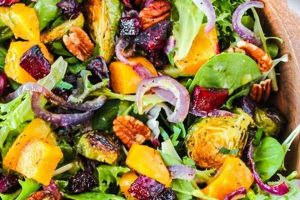
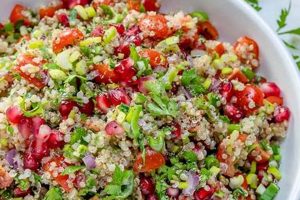
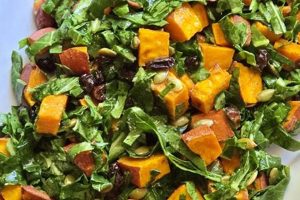
A refreshing, vibrant salad composed primarily of leafy greens often serves as a counterpoint to richer Thanksgiving dishes. Such salads can incorporate a wide variety of ingredients, from crisp lettuces and spinach to seasonal additions like roasted butternut squash, cranberries, pecans, and crumbled cheeses. A simple vinaigrette or a creamy dressing complements the flavors and textures.
Leafy greens offer a healthy, lighter element amidst a table laden with heavier fare. They provide essential vitamins, minerals, and fiber, contributing to a balanced and satisfying meal. The inclusion of fresh produce can also brighten the overall presentation of the Thanksgiving spread. Historically, salads have long held a place at celebratory meals, offering a refreshing contrast to richer dishes. Their presence on the Thanksgiving table reflects this tradition, providing a welcome respite from the heavier elements of the feast.
This article will explore various options for crafting a compelling salad for Thanksgiving, including diverse ingredient combinations, dressing suggestions, and tips for preparation and presentation. Readers will find inspiration for creating a salad that perfectly complements their Thanksgiving menu.
Tips for a Thanksgiving Salad
Creating a successful salad for Thanksgiving involves careful consideration of ingredients, flavors, and presentation. These tips offer guidance for composing a dish that complements the overall meal.
Tip 1: Embrace Seasonal Ingredients: Utilize autumnal produce like roasted butternut squash, cranberries, pomegranate seeds, or thinly sliced pears for a festive touch.
Tip 2: Vary Textures: Combine crisp lettuces with toasted nuts, crumbled cheese, or roasted vegetables for a more interesting and satisfying experience.
Tip 3: Consider the Dressing: A light vinaigrette complements delicate greens, while a creamy dressing pairs well with heartier ingredients. Match the dressing to the overall flavor profile of the salad.
Tip 4: Prepare Components in Advance: Wash and dry greens, roast vegetables, and make the dressing a day or two ahead to streamline Thanksgiving Day preparations.
Tip 5: Dress the Salad Just Before Serving: To prevent the greens from wilting, toss the salad with the dressing immediately before serving.
Tip 6: Arrange for an Appealing Presentation: Consider the visual appeal of the salad. Arrange the components thoughtfully on a platter or in individual bowls for an attractive presentation.
Tip 7: Offer a Variety of Toppings: Provide a selection of toppings, such as toasted nuts, dried cranberries, or crumbled cheese, allowing guests to customize their salads.
By following these tips, one can create a salad that not only provides a healthy counterpoint to richer dishes but also enhances the overall Thanksgiving dining experience.
These guidelines offer a solid foundation for crafting a memorable Thanksgiving salad. The following section will delve into specific recipe ideas, offering practical examples of how to implement these tips.
1. Fresh, Seasonal Greens

Fresh, seasonal greens form the foundation of a compelling Thanksgiving salad. Their vibrancy and crispness offer a refreshing counterpoint to the richer, often heavier dishes traditionally served during the holiday. Utilizing seasonal greens enhances both the flavor and visual appeal of the salad. For instance, fall greens like spinach, kale, or red leaf lettuce offer robust flavors and textures that complement autumnal ingredients like roasted butternut squash, cranberries, or pecans. Conversely, using out-of-season greens can result in a bland or less vibrant salad, diminishing the overall dining experience.
The selection of fresh, seasonal greens directly impacts the nutritional value and overall quality of the salad. Greens harvested at their peak offer optimal flavor and nutrient content. Locally sourced, seasonal produce often travels shorter distances, resulting in a smaller environmental footprint. Practical examples include incorporating baby spinach for a tender texture, kale for a hearty and slightly bitter note, or a mix of colorful lettuces for visual appeal. Furthermore, the choice of greens can influence the choice of dressing and other ingredients. A delicate mesclun mix might pair well with a light vinaigrette, while heartier greens like kale can stand up to a richer, creamier dressing.
Prioritizing fresh, seasonal greens ensures a Thanksgiving salad that is not only visually appealing but also nutritionally beneficial and flavorful. This approach contributes to a balanced and satisfying Thanksgiving meal. Incorporating locally sourced greens further supports sustainable agricultural practices. Ultimately, understanding the importance of seasonal greens allows for a more thoughtful and enjoyable culinary experience.
2. Complementary Ingredients
Complementary ingredients elevate a green salad from a simple side dish to a memorable component of a Thanksgiving dinner. Thoughtful ingredient selection enhances flavor, texture, and visual appeal, creating a balanced and satisfying culinary experience. Strategic combinations offer a counterpoint to the richness of traditional Thanksgiving fare, providing a refreshing contrast.
- Fruits and Vegetables:
Seasonal fruits and vegetables contribute sweetness, acidity, and vibrant color. Roasted butternut squash provides earthy sweetness, while cranberries offer tartness and a pop of red. Thinly sliced pears or apples add crispness and a touch of sweetness. These additions not only diversify the flavor profile but also introduce visual interest.
- Nuts and Seeds:
Nuts and seeds introduce textural complexity and healthy fats. Toasted pecans or walnuts provide a satisfying crunch and nutty flavor. Pumpkin seeds or sunflower seeds offer a subtle nuttiness and visual contrast. These additions also contribute essential nutrients and enhance the overall nutritional value of the salad.
- Cheese:
Crumbled cheeses introduce salty, savory notes and creamy textures. Feta cheese provides a tangy, salty bite, while goat cheese offers a creamy, slightly earthy flavor. Blue cheese adds a pungent, bold flavor. The choice of cheese should complement the other ingredients and the overall flavor profile of the salad. Consider sharpness, texture, and how well it pairs with the chosen dressing.
- Proteins:
Adding protein transforms a green salad into a more substantial dish. Grilled chicken or shrimp provide lean protein, while chickpeas or lentils offer plant-based options. These additions enhance satiety and contribute to a more balanced meal. The choice of protein should align with the overall flavor profile of the salad and dietary preferences of the guests.
The interplay of these complementary ingredients creates a dynamic and flavorful salad that enhances the Thanksgiving dining experience. Careful consideration of flavors, textures, and colors ensures a well-balanced and visually appealing dish that complements the traditional Thanksgiving menu. By strategically combining these elements, a simple green salad becomes a memorable and satisfying part of the feast.
3. Balanced Flavor Profile

A balanced flavor profile is crucial for a successful green salad recipe for Thanksgiving dinner. The richness and heaviness of traditional Thanksgiving dishes necessitate a lighter, brighter counterpoint. A well-balanced salad achieves this by incorporating a variety of flavors sweetness, acidity, bitterness, saltiness, and umami in harmonious proportions. This complexity prevents the salad from being overshadowed by the main course and offers a refreshing palate cleanser between bites. For example, the sweetness of roasted butternut squash can be balanced by the tartness of cranberries, the bitterness of kale tempered by a slightly sweet vinaigrette, and the saltiness of feta cheese enhanced by the earthiness of toasted pecans. Without this balance, the salad may taste one-dimensional or fail to complement the overall meal.
Achieving a balanced flavor profile requires careful consideration of each ingredient and its contribution to the overall taste. Sweetness can be derived from fruits like apples or pears, or from roasted vegetables like sweet potatoes. Acidity can be introduced through citrus fruits, vinegar-based dressings, or tart berries. Bitterness often comes from leafy greens like kale or arugula. Saltiness can be added through cheese, nuts, or a seasoned dressing. Umami, the savory fifth taste, can be incorporated through ingredients like mushrooms, parmesan cheese, or a soy-based dressing. The key lies not only in including these elements but also in adjusting their proportions to create a harmonious blend. A salad overly reliant on sweetness, for instance, may feel cloying, while an overly bitter salad may be unappetizing.
Understanding the interplay of these flavors allows for the creation of a salad that not only complements the Thanksgiving meal but also stands on its own as a delicious and complex dish. The practical significance of this understanding lies in the ability to create a salad that is both enjoyable and refreshing, enhancing the overall dining experience. A well-balanced flavor profile ensures the salad contributes positively to the meal, offering a welcome contrast to the richer dishes and satisfying a range of palates. This attention to detail elevates the simple green salad to an integral and memorable part of the Thanksgiving feast.
4. Appropriate Dressing Choice

Dressing selection significantly impacts the overall success of a green salad, particularly within the context of a Thanksgiving dinner. The dressing should complement the chosen greens and other ingredients, enhancing their flavors without overpowering them. An appropriate dressing contributes to a balanced flavor profile, harmonizing with the richness of the Thanksgiving meal. Improper dressing choice can mask the delicate flavors of fresh produce or clash with the overall taste of the meal, diminishing the salad’s contribution to the feast.
- Flavor Compatibility:
The dressing’s flavor profile must harmonize with the other salad components. A light vinaigrette with citrus or herb notes complements delicate greens and lighter ingredients, while a creamy dressing, such as ranch or blue cheese, pairs well with heartier greens and bolder flavors like roasted vegetables or strong cheeses. A mismatch can lead to a disjointed and unbalanced taste experience. For instance, a heavy, creamy dressing might overwhelm a salad featuring delicate spring greens, while a light vinaigrette may not provide sufficient flavor for a salad with robust ingredients like kale or roasted root vegetables.
- Texture Considerations:
Dressing texture contributes to the overall sensory experience of the salad. A creamy dressing adds richness and coats the ingredients, while a vinaigrette offers a lighter, more refreshing feel. The texture of the dressing should complement the textures of the other ingredients. A creamy dressing might enhance a salad with crunchy elements like nuts or seeds, while a vinaigrette might be a better choice for a salad with softer ingredients like roasted vegetables. Consider the interplay of textures to create a balanced and enjoyable mouthfeel.
- Acidity Level:
The acidity of the dressing plays a vital role in balancing the flavors of the salad. Vinegar or citrus-based dressings offer a refreshing tartness that cuts through richness and enhances the flavors of the other ingredients. The level of acidity should be appropriate for the other components. Too much acidity can make the salad unpleasantly sour, while too little can result in a bland flavor profile. For example, a highly acidic vinaigrette might overpower delicate greens, while a mild dressing might not provide enough brightness to balance the richness of roasted vegetables or cheese.
- Dietary Restrictions:
Accommodating dietary restrictions is essential when selecting a dressing. Guests may have allergies or sensitivities to certain ingredients, such as gluten, dairy, or nuts. Offering a variety of dressings, including some that are allergen-free, ensures everyone can enjoy the salad. Clearly labeling dressings with their ingredients allows guests to make informed choices. For example, providing a simple vinaigrette alongside a creamy dairy-based dressing caters to different preferences and dietary needs. This consideration contributes to a more inclusive and enjoyable dining experience for all.
By carefully considering these facets of dressing selection, one can create a salad that truly complements the Thanksgiving meal. The dressing serves as a unifying element, bringing together the diverse flavors and textures of the salad while also providing a refreshing counterpoint to the richer dishes on the table. A well-chosen dressing enhances the overall dining experience, ensuring the green salad contributes positively to the Thanksgiving feast.
5. Attractive Presentation
Attractive presentation elevates a green salad from a simple side dish to a visually appealing component of the Thanksgiving dinner. Visual appeal stimulates appetite and enhances the overall dining experience. Consideration of color, texture, arrangement, and serving vessel contributes to a salad that is as enticing to the eye as it is to the palate. A well-presented salad reflects care and attention to detail, enhancing the perceived value of the dish and contributing to a more festive atmosphere.
- Color Palette:
A vibrant color palette enhances visual appeal. Incorporating a variety of colorful ingredients, such as deep green spinach, bright orange butternut squash, ruby red cranberries, and creamy white goat cheese, creates a visually stimulating dish. A monochromatic salad can appear less appetizing. Intentional use of color adds depth and interest, making the salad more inviting.
- Textural Contrast:
Varying textures create visual interest and enhance the sensory experience. Combining crisp lettuce with crunchy nuts, creamy avocado, and chewy dried cranberries offers a more engaging presentation than a salad with uniform textures. This contrast draws the eye and adds complexity to the dish.
- Strategic Arrangement:
Thoughtful arrangement transforms a simple salad into a visually appealing centerpiece. Instead of simply tossing ingredients together, consider arranging them strategically on a platter or in individual bowls. Creating height and depth adds visual interest. For example, placing taller ingredients like leafy greens in the center and surrounding them with lower-lying elements like roasted vegetables creates a more dynamic presentation.
- Serving Vessel:
The choice of serving vessel contributes to the overall aesthetic. A beautiful wooden bowl or a sleek glass platter elevates the presentation. The size and shape of the vessel should complement the salad and the overall table setting. A large, shallow bowl allows for an attractive arrangement of ingredients, while individual bowls offer a more formal presentation. The vessel should enhance, not detract from, the visual appeal of the salad.
By considering these elements of presentation, one can elevate a simple green salad to a visually stunning and appetizing component of the Thanksgiving meal. The visual appeal enhances the dining experience, contributing to a more festive and memorable occasion. A beautifully presented salad demonstrates attention to detail and enhances the perceived value of the dish, making it a more integral part of the Thanksgiving feast.
6. Make-Ahead Components

Streamlining Thanksgiving Day preparations is essential for a smooth and enjoyable holiday. Utilizing make-ahead components for a green salad contributes significantly to this efficiency. Prepping elements of the salad in advance allows for more focus on other dishes and reduces stress on the day of the feast. This practice ensures a fresh and flavorful salad without last-minute rushing.
- Washing and Drying Greens:
Washing and thoroughly drying greens a day or two in advance prevents last-minute scrambling. Store dried greens in airtight containers lined with paper towels to maintain crispness. This preparation ensures the greens are ready for assembly when needed, saving valuable time on Thanksgiving Day. Pre-washed and dried greens also maintain their quality better than those washed just before serving.
- Roasting Vegetables:
Roasting vegetables, such as butternut squash or sweet potatoes, ahead of time enhances their flavor and streamlines salad assembly. Roasted vegetables can be stored in airtight containers in the refrigerator for several days. This allows for efficient meal preparation and ensures the vegetables are ready to be added to the salad without additional cooking on Thanksgiving Day. Pre-roasting also intensifies the vegetables’ sweetness and adds a depth of flavor.
- Preparing the Dressing:
Making the salad dressing in advance allows flavors to meld and simplifies Thanksgiving Day tasks. Store the dressing in an airtight container in the refrigerator. This ensures the dressing is ready to use, eliminating a step on the day of the celebration. Pre-made dressings also offer the advantage of being easily adaptable; a simple vinaigrette can be adjusted with additional herbs or spices just before serving.
- Chopping Other Ingredients:
Chopping ingredients like nuts, fruits, or cheeses beforehand saves valuable time during Thanksgiving Day preparations. Store chopped ingredients in separate airtight containers in the refrigerator to maintain freshness. This ensures all components are ready for quick and easy salad assembly. Pre-chopped ingredients also contribute to consistent portioning and a more polished final presentation.
By strategically preparing these components in advance, the creation of a Thanksgiving salad becomes a seamless and stress-free process. This efficiency allows for more time to focus on other elements of the meal and ensures a fresh, flavorful, and beautifully presented salad graces the Thanksgiving table. Utilizing make-ahead components contributes to a more relaxed and enjoyable holiday experience, allowing hosts to savor the festivities alongside their guests.
7. Dietary Accommodations

Dietary accommodations are an essential consideration when planning a green salad recipe for Thanksgiving dinner. The diverse dietary needs of guests necessitate careful ingredient selection and preparation to ensure inclusivity and enjoyment for all. Failing to address dietary restrictions can lead to exclusion and discomfort for affected individuals, diminishing the overall celebratory experience. Understanding and accommodating these needs demonstrates consideration and fosters a welcoming environment for everyone.
Common dietary restrictions include gluten sensitivities, dairy intolerances, nut allergies, vegetarianism, and veganism. Accommodating these restrictions in a green salad requires careful planning. For gluten-free diets, avoiding croutons containing wheat and ensuring dressings are gluten-free is critical. Dairy-free options necessitate omitting cheese or using dairy-free alternatives. Nut allergies require careful ingredient selection and awareness of cross-contamination. Vegetarian and vegan diets require plant-based protein sources and the omission of animal products like cheese and honey in dressings. Offering a separate, clearly labeled salad with appropriate substitutions allows guests with dietary restrictions to partake fully in the meal. For example, providing a gluten-free, dairy-free vinaigrette alongside a standard creamy dressing caters to a wider range of needs. Similarly, offering a separate bowl of toasted nuts allows guests to add them according to their preferences, preventing cross-contamination for those with allergies. Providing clear labels indicating ingredients and allergens enables guests to make informed choices.
Addressing dietary needs contributes significantly to a positive and inclusive Thanksgiving experience. It demonstrates respect for individual needs and fosters a sense of belonging for all guests. Thoughtful consideration of dietary accommodations transforms the green salad from a simple side dish into a symbol of inclusivity and care, enhancing the overall celebratory atmosphere. While navigating dietary restrictions may present some challenges, the practical significance of this understanding lies in its ability to create a more welcoming and enjoyable Thanksgiving for everyone. By prioritizing dietary accommodations, hosts demonstrate a commitment to inclusivity and contribute to a more positive and memorable holiday experience for all guests.
Frequently Asked Questions
This section addresses common inquiries regarding the preparation and inclusion of a green salad in a Thanksgiving dinner.
Question 1: Can the salad be prepared entirely in advance?
While certain components, such as roasted vegetables and dressings, benefit from advance preparation, it’s generally recommended to assemble the salad just prior to serving. This preserves the crispness of the greens and prevents them from wilting.
Question 2: What are suitable alternatives to traditional lettuce?
Alternatives like spinach, kale, arugula, or a mesclun mix offer varied textures and flavors. Consider the overall flavor profile of the salad when selecting greens.
Question 3: How can nut allergies be accommodated?
Omit nuts entirely from the main salad and offer them as a separate topping, allowing guests to add them according to their preferences. This prevents cross-contamination and ensures safety for those with allergies.
Question 4: What dressings are suitable for a Thanksgiving salad?
Light vinaigrettes with citrus or herb notes, as well as creamy dressings like ranch or blue cheese, can complement a Thanksgiving salad. The choice depends on the other salad ingredients and the desired flavor profile.
Question 5: How can the salad be made more substantial?
Adding protein, such as grilled chicken, roasted chickpeas, or crumbled cheese, transforms the salad into a more filling dish.
Question 6: What are some seasonal ingredients that complement a Thanksgiving salad?
Roasted butternut squash, cranberries, pomegranate seeds, pecans, and pears are excellent seasonal additions that enhance both flavor and visual appeal.
Careful consideration of these frequently asked questions allows for a more informed approach to crafting a Thanksgiving salad that complements the meal and caters to diverse preferences and dietary needs.
The following section will provide specific recipe ideas for Thanksgiving salads, incorporating the principles and considerations discussed throughout this article.
Conclusion
Exploration of green salad recipes suitable for Thanksgiving dinner reveals the importance of balancing fresh, seasonal ingredients with complementary flavors and textures. Careful consideration of dressing choice, presentation, and dietary accommodations ensures the salad enhances, rather than detracts from, the overall Thanksgiving meal. Advance preparation of components streamlines the cooking process, allowing for a more relaxed and enjoyable holiday experience.
A thoughtfully crafted green salad provides a refreshing counterpoint to richer Thanksgiving dishes, contributing to a more balanced and satisfying meal. Its vibrant colors and fresh flavors symbolize the bounty of the harvest season. Prioritizing these considerations elevates the green salad from a simple side dish to a memorable and integral part of the Thanksgiving feast.