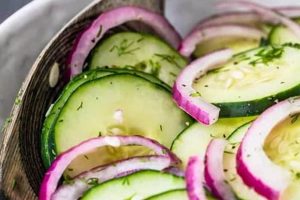
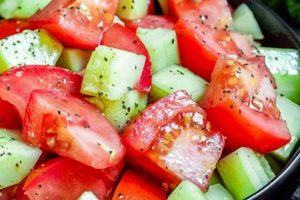
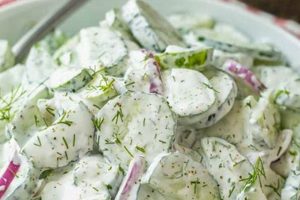
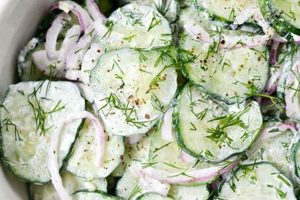
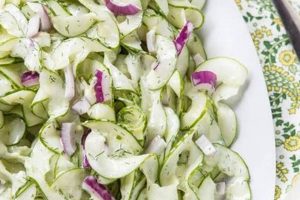
Simple cucumber salad recipes focus on fresh, minimal ingredients and quick preparation. These recipes often highlight the cucumber’s delicate flavor and refreshing qualities, making them ideal for warm weather or as a light side dish. A basic example might involve thinly sliced cucumbers tossed with vinegar, a touch of sweetener, and perhaps some herbs like dill or mint.
The appeal of such straightforward recipes lies in their accessibility and health benefits. Cucumbers are low in calories and rich in hydration, making them a nutritious choice. Furthermore, the speed and ease of preparation make these salads perfect for weeknight meals, picnics, or potlucks. Historically, cucumbers have been cultivated for millennia and incorporated into various cuisines worldwide, demonstrating their enduring culinary value. Quick and easy cucumber salads continue this tradition, offering a refreshing and healthy option with minimal effort.
This exploration of uncomplicated cucumber salads will delve into variations on the basic recipe, including different flavor profiles, ingredient combinations, and serving suggestions. Techniques for enhancing the cucumber’s natural crispness will also be examined.
Tips for Easy Cucumber Salads
Creating a refreshing and flavorful cucumber salad requires minimal effort with a few key techniques. These tips focus on enhancing the natural qualities of cucumbers and achieving optimal texture and taste.
Tip 1: Salt and Drain: Draw out excess moisture by salting sliced cucumbers and letting them sit for 15-20 minutes before rinsing. This prevents a watery salad and improves the cucumber’s texture.
Tip 2: Thin and Uniform Slices: Consistent slicing ensures even flavor distribution and a pleasing presentation. A mandoline slicer or sharp knife can achieve this.
Tip 3: Acid Choice: Vinegar selection impacts the salad’s overall profile. Rice vinegar offers a mild sweetness, while white wine vinegar provides a sharper tang. Experiment to find a preferred balance.
Tip 4: Sweetener Sparingly: A touch of sugar or honey can balance the acidity, but avoid overpowering the cucumber’s delicate flavor. Start with a small amount and adjust to taste.
Tip 5: Herb and Spice Integration: Fresh herbs like dill, mint, or parsley complement cucumbers beautifully. A pinch of red pepper flakes can add a subtle kick.
Tip 6: Chilling Time: Allowing the salad to chill for at least 30 minutes enhances the flavors and provides a more refreshing experience.
Tip 7: Creative Additions: Explore additions like thinly sliced red onion, crumbled feta cheese, or toasted sesame seeds for added texture and flavor complexity.
By following these guidelines, one can consistently produce crisp, flavorful, and easy cucumber salads that complement a variety of meals.
With an understanding of these fundamental techniques, exploration of specific recipe variations and flavor combinations becomes even more rewarding.
1. Fresh Cucumbers

The foundation of any simple cucumber salad rests upon the quality of the cucumbers themselves. Freshness is paramount, directly impacting the final dish’s texture, flavor, and overall appeal. Using subpar cucumbers can result in a watery, bland, or even bitter salad, negating the intended refreshing qualities.
- Crisp Texture:
Fresh cucumbers possess a firm, crisp texture essential for a pleasant culinary experience. This crispness offers a satisfying contrast to other ingredients and contributes to the salad’s refreshing nature. Cucumbers lacking firmness indicate age or improper storage and will result in a less enjoyable salad. The crisp texture holds up well in simple preparations, maintaining its appeal even after chilling.
- Mild, Clean Flavor:
A fresh cucumber exhibits a mild, clean flavor profile, slightly sweet and subtly vegetal. This delicate taste allows the cucumber to harmonize with various other ingredients without being overpowering. As cucumbers age, their flavor can become bitter or develop off-notes, detracting from the overall balance of a simple salad. Freshness ensures the cucumber’s subtle flavor enhances, rather than detracts from, the other components.
- High Water Content:
Cucumbers have a high water content, contributing to their hydrating properties. While this is generally desirable, excessive moisture can make a salad watery. Fresh cucumbers, when properly prepared (e.g., salted and drained), retain optimal moisture levels, contributing to a refreshing, yet not diluted, salad. This inherent hydration is key to the cooling nature of cucumber salads, particularly beneficial in warm weather.
- Visual Appeal:
The vibrant green skin and crisp flesh of a fresh cucumber contribute to the salad’s visual appeal. Bright, unblemished cucumbers enhance the overall presentation, making the salad more enticing. Wilted or dull-looking cucumbers detract from this visual freshness. The aesthetic appeal of fresh cucumbers enhances the dining experience, even in simple preparations.
These interconnected facets of freshness underscore the crucial role cucumber quality plays in creating simple, yet successful, salads. Selecting the freshest cucumbers ensures the final dish is not only flavorful and refreshing, but also visually appealing and texturally satisfying, maximizing enjoyment and delivering a truly rewarding culinary experience.
2. Minimal Ingredients
The concept of “minimal ingredients” is central to the appeal of easy cucumber salad recipes. It directly contributes to both the simplicity of preparation and the emphasis on the cucumber’s fresh, delicate flavor. By limiting the number of components, these recipes achieve a balance of taste, texture, and ease, making them ideal for quick meals and casual dining.
- Simplicity of Preparation:
Fewer ingredients translate directly to less preparation time. Washing, chopping, and measuring are minimized, allowing for a quick and efficient cooking process. This streamlined approach aligns perfectly with the “easy” aspect of these recipes, making them accessible even to those with limited time or culinary experience. A simple salad might require only cucumbers, vinegar, and a sprinkle of salt, exemplifying this minimal approach.
- Highlighting Cucumber Flavor:
With fewer competing flavors, the cucumber’s natural taste takes center stage. The subtle sweetness and refreshing qualities are allowed to shine, creating a clean and palate-cleansing dish. Overly complex recipes risk masking this delicate flavor. This emphasis on the cucumber’s inherent taste is a defining characteristic of these simple salads.
- Balancing Flavor Profiles:
Minimal ingredients necessitate careful selection and balancing of flavors. Each component plays a crucial role, and the interplay between acidity, sweetness, and savory notes must be carefully considered. A simple vinaigrette, for example, might balance vinegar’s sharpness with a touch of sugar or honey, creating a harmonious flavor profile that complements the cucumber.
- Adaptability and Versatility:
While minimal, these ingredients offer a surprising degree of adaptability. Simple swaps, like substituting dill for mint or rice vinegar for white wine vinegar, can create noticeably different flavor profiles. This versatility allows for customization based on personal preferences and available ingredients, further enhancing the appeal of these easy recipes.
The strategic use of minimal ingredients in easy cucumber salads contributes significantly to their appeal. This approach allows for quick preparation, emphasizes the cucumber’s natural flavor, necessitates thoughtful flavor balancing, and offers surprising versatility. The result is a collection of recipes that are not only easy to prepare but also deliver a refreshing and flavorful culinary experience.
3. Simple Preparation
Simple preparation is fundamental to the concept of “cucumber salad recipes easy.” It directly influences accessibility and speed, making these recipes appealing to a wide range of individuals, regardless of culinary skill. This facet emphasizes efficiency and minimizes complex techniques, allowing for quick creation of refreshing dishes with minimal effort.
- Minimal Processing:
Easy cucumber salads often require minimal processing of the primary ingredient. Slicing, rather than dicing or elaborate cutting techniques, is typically sufficient. This reduces preparation time and preserves the cucumber’s natural texture and appearance. A simple slice allows for even coating in dressings and contributes to the refreshing crispness of the final salad.
- Few Cooking Steps:
These recipes typically involve few, if any, actual cooking steps. Chilling is often the primary technique used to enhance flavors and achieve the desired temperature. This absence of elaborate cooking processes contributes significantly to the speed and ease of preparation, making these salads ideal for quick meals or last-minute additions to a menu.
- Basic Equipment:
Easy cucumber salads rarely require specialized equipment. A sharp knife, cutting board, and mixing bowl are usually sufficient. This reliance on common kitchen tools further enhances accessibility and eliminates the need for specialized appliances or gadgets. The simplicity of equipment contributes to the overall ease and convenience of these recipes.
- Short Preparation Time:
The combined effect of minimal processing, few cooking steps, and basic equipment results in a significantly reduced overall preparation time. Many of these salads can be assembled in just a few minutes, making them a convenient and efficient option for busy individuals or those seeking a quick and refreshing dish. This speed of preparation is a key element of their appeal.
The emphasis on simple preparation in easy cucumber salad recipes directly contributes to their widespread appeal. By minimizing processing, cooking steps, and required equipment, these recipes prioritize speed and accessibility, making them an ideal choice for a variety of occasions. This focus on simplicity ultimately allows the fresh, delicate flavors of the cucumber to shine through without unnecessary complexity.
4. Quick Chilling Time
Quick chilling time is integral to the “easy” nature of cucumber salad recipes. It represents a crucial final step that significantly enhances the sensory experience without demanding extensive time investment. Chilling amplifies the cucumber’s inherent refreshing qualities, optimizing its crisp texture and delicate flavor. This rapid cooling process aligns perfectly with the overall objective of minimal effort associated with these recipes. For instance, a simple cucumber and dill salad, chilled for just 30 minutes before serving, gains a noticeable boost in refreshment compared to serving it immediately at room temperature.
The impact of chilling extends beyond mere temperature reduction. It affects both texture and flavor perception. Lower temperatures enhance the cucumber’s crispness, providing a more satisfying textural contrast against other ingredients. Furthermore, chilling allows the flavors to meld and intensify subtly, resulting in a more pronounced and balanced taste profile. Consider a cucumber salad with a vinegar-based dressing. Chilling allows the vinegar’s sharpness to mellow slightly while the cucumber’s subtle sweetness becomes more pronounced, creating a more harmonious and refreshing overall flavor.
The practical significance of quick chilling time lies in its efficiency. It optimizes the sensory qualities of the salad without necessitating prolonged refrigeration. This aligns perfectly with the desire for quick and easy meal preparation, offering a readily achievable step that significantly elevates the final product. Understanding the importance of this brief chilling period empowers individuals to maximize enjoyment and refreshment in their cucumber salads with minimal time and effort. The balance achieved between time investment and sensory enhancement reinforces the core concept of “cucumber salad recipes easy,” making these dishes accessible and appealing for various occasions.
5. Versatile Flavor Profiles
Flavor versatility is a key attribute of easy cucumber salad recipes, contributing significantly to their enduring appeal. This adaptability stems from the cucumber’s mild flavor, which acts as a neutral canvas for a wide range of complementary ingredients and seasonings. Exploration of diverse flavor profiles expands the culinary possibilities of this simple dish, offering options to suit various palates and occasions. This versatility also ensures that these salads can complement diverse cuisines and main courses, further enhancing their practical value.
- Herbaceous Accents:
Fresh herbs offer a simple yet effective method for diversifying cucumber salad flavors. Dill, mint, parsley, and chives each impart distinct aromatic notes and enhance the salad’s refreshing qualities. For example, dill provides a classic pairing, creating a bright, slightly tangy flavor profile, while mint adds a cooling, subtly sweet element. These herbaceous additions contribute layers of complexity without requiring elaborate preparation, aligning perfectly with the “easy” aspect of these recipes.
- Spice Integration:
A touch of spice can transform a basic cucumber salad into a more dynamic culinary experience. Red pepper flakes introduce a subtle heat, while a pinch of black pepper adds depth and complexity. For those seeking bolder flavors, incorporating finely chopped jalapeo or serrano peppers creates a more pronounced spicy kick. The level of spice can be easily adjusted to cater to individual preferences, further demonstrating the versatility of these recipes.
- Acidity Variations:
The choice of acid plays a pivotal role in shaping the overall flavor profile. Different vinegars contribute distinct nuances: rice vinegar offers a mild sweetness, white wine vinegar provides a sharper tang, and apple cider vinegar introduces a subtle fruitiness. Lemon or lime juice can also be used for a brighter, citrusy note. These variations in acidity allow for customization and exploration of contrasting flavor profiles, ensuring that the salad complements a variety of dishes and palates.
- Sweet and Savory Balance:
Balancing sweet and savory elements is essential for achieving a well-rounded flavor profile. A touch of sugar or honey can temper the acidity of the vinegar, while the addition of ingredients like crumbled feta cheese or toasted sesame seeds introduces savory notes and textural contrast. Balancing these elements prevents the salad from becoming overly sweet or sour, creating a harmonious and satisfying culinary experience.
The versatility of flavor profiles in easy cucumber salads contributes significantly to their adaptability and continued popularity. By exploring various combinations of herbs, spices, acids, and sweet or savory elements, individuals can create customized dishes to suit any occasion. This inherent adaptability, combined with the ease of preparation, reinforces the value and appeal of these refreshing and flavorful salads.
6. Healthy and hydrating
The inherent health benefits and hydrating properties of cucumbers are intrinsically linked to the appeal of easy cucumber salad recipes. These qualities contribute significantly to their suitability as a light, refreshing, and nutritious dish, aligning with contemporary dietary preferences that emphasize fresh, minimally processed ingredients. This section explores the various facets of cucumbers’ nutritional profile and their role in promoting hydration, further emphasizing the health-conscious nature of these simple recipes.
- Low Calorie Density:
Cucumbers are remarkably low in calories, primarily composed of water. This characteristic makes them an ideal component of calorie-conscious diets, contributing to satiety without significantly impacting overall caloric intake. In easy cucumber salad recipes, this low calorie density allows individuals to enjoy a flavorful and refreshing dish without compromising dietary goals. For example, a simple cucumber salad with vinegar and herbs can be a guilt-free accompaniment to a larger meal.
- Nutrient Richness:
Despite their low calorie content, cucumbers offer a variety of essential nutrients. They contain vitamins K and C, both important for various bodily functions, as well as potassium, an electrolyte crucial for maintaining fluid balance. While not a primary source of these nutrients, their presence further enhances the nutritional value of easy cucumber salads, contributing to overall dietary health. Including cucumbers regularly, even in simple salad preparations, can contribute to meeting daily nutritional requirements.
- High Water Content:
The high water content of cucumbers plays a significant role in their hydrating properties. Consuming cucumbers contributes to overall fluid intake, aiding in maintaining proper hydration, particularly beneficial during warm weather or after physical activity. In easy cucumber salads, this inherent hydration complements the refreshing qualities of the dish, providing a cooling and revitalizing effect. This hydrating benefit differentiates cucumber salads from other less hydrating side dishes, making them a healthful choice.
- Antioxidant Properties:
Cucumbers contain antioxidants, compounds that help protect cells from damage caused by free radicals. These antioxidants, including flavonoids and lignans, contribute to overall health and well-being. While research on the specific antioxidant benefits of cucumbers is ongoing, their presence adds another layer of nutritional value to easy cucumber salads, further reinforcing their health-conscious appeal. This aligns with broader dietary trends that prioritize antioxidant-rich foods for their potential health benefits.
The combination of low calorie density, nutrient richness, high water content, and antioxidant properties positions easy cucumber salad recipes as a healthful and hydrating dietary choice. These qualities, coupled with the simplicity and versatility of preparation, underscore the appeal of these recipes for individuals seeking both flavorful and nutritious meal options. The emphasis on fresh, minimally processed ingredients further aligns with contemporary dietary trends that prioritize whole foods and their inherent health benefits.
Frequently Asked Questions
This section addresses common inquiries regarding easy cucumber salad recipes, providing concise and informative responses to facilitate optimal preparation and enjoyment.
Question 1: How can excess moisture be prevented in cucumber salads?
Salting sliced cucumbers and allowing them to drain for 15-20 minutes before rinsing effectively removes excess moisture, preventing a watery salad.
Question 2: What type of vinegar is best suited for these recipes?
Rice vinegar offers mild sweetness, while white wine vinegar provides a sharper tang. Selection depends on desired flavor profile; experimentation is encouraged.
Question 3: Can sugar be omitted from the recipes?
While sugar balances acidity, it can be omitted. Adjustments may be necessary depending on the chosen vinegar and personal preference. Taste testing is recommended.
Question 4: How thinly should cucumbers be sliced?
Thin, uniform slices ensure even flavor distribution and optimal texture. A mandoline or sharp knife facilitates consistent slicing.
Question 5: What herbs pair well with cucumbers?
Dill, mint, and parsley are classic pairings. Other herbs like chives or tarragon can also complement cucumber’s flavor depending on the desired profile.
Question 6: How long should the salad be chilled before serving?
Chilling for at least 30 minutes enhances flavors and provides optimal refreshment. Longer chilling times are acceptable but not essential for basic recipes.
Addressing these frequently asked questions clarifies key aspects of easy cucumber salad preparation, promoting successful outcomes and maximizing enjoyment of this simple yet versatile dish.
Further exploration of specific recipe variations can provide additional inspiration and guidance for creating personalized cucumber salads.
Simple Cucumber Salad Recipes
This exploration has highlighted the core elements that define simple cucumber salad recipes: fresh ingredients, minimal preparation, and adaptable flavors. Emphasis on the cucumber’s inherent qualitiesits refreshing taste, crisp texture, and hydrating propertiesunderscores the value of these straightforward preparations. From salting and draining techniques to the strategic selection of herbs, spices, and acids, each step contributes to a final dish that balances simplicity with culinary satisfaction. The versatility of these recipes allows for a wide range of flavor profiles, accommodating diverse palates and dietary preferences. The ease of preparation further enhances their appeal, making them an accessible and convenient option for both casual meals and more formal occasions.
The enduring popularity of simple cucumber salads speaks to their timeless appeal. These recipes offer a refreshing counterpoint to more complex culinary creations, reminding us that sometimes, the simplest dishes are the most satisfying. Continued exploration of flavor combinations and ingredient pairings promises an ongoing evolution of this culinary staple, ensuring its continued presence in kitchens worldwide. The ease, versatility, and inherent health benefits of these salads guarantee their relevance in a constantly evolving culinary landscape.