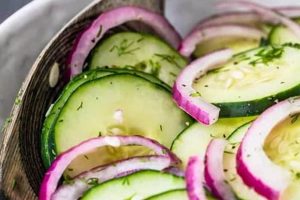
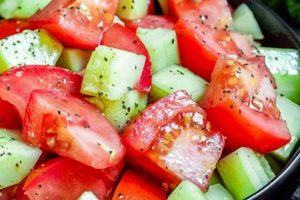
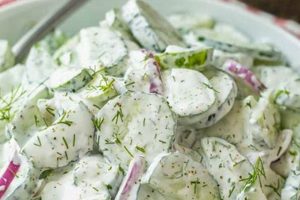
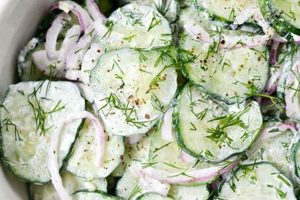
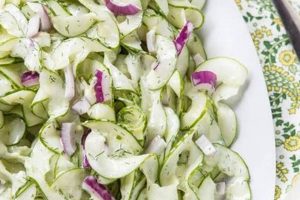
A refreshing and crisp salad featuring cucumbers as the primary ingredient can be prepared without dill. Such recipes typically involve thinly sliced cucumbers combined with other ingredients like onions, vinegar, and various seasonings. A simple version might include thinly sliced cucumbers, red onion, a vinegar-based dressing, salt, and pepper. Variations can incorporate ingredients such as tomatoes, bell peppers, or different herbs like mint or parsley.
Omitting dill allows individuals sensitive to its flavor or those who simply prefer other seasonings to enjoy a cucumber-based salad. This approach opens up culinary possibilities, allowing for exploration of diverse flavor profiles using alternative herbs, spices, and acidic components. Historically, cucumber salads have been appreciated for their cooling properties, particularly in warmer climates. While dill is a traditional accompaniment, the adaptability of the cucumber allows for a broader range of culinary interpretations across different cultures and palates. The absence of dill does not diminish the nutritional value of the salad, which remains a good source of hydration and vitamins.
This discussion will explore various methods for crafting a delicious cucumber salad that excludes dill, considering factors like ingredient selection, dressing variations, and optional additions for enhanced flavor and texture. Recipes showcasing diverse cultural influences and catering to different dietary needs will also be presented.
Tips for Crafting a Dill-Free Cucumber Salad
Optimizing a cucumber salad without dill requires attention to ingredient selection, preparation techniques, and balancing flavors. These tips offer guidance for creating a refreshing and flavorful salad.
Tip 1: Embrace Thin Slices: Thinly slicing cucumbers ensures even coating with the dressing and contributes to a pleasant texture. A mandoline slicer achieves consistent thinness, but a sharp knife can also be effective.
Tip 2: Salt and Drain Excess Moisture: Salting the sliced cucumbers and allowing them to drain reduces excess water, preventing a watery salad and concentrating the cucumber flavor.
Tip 3: Explore Alternative Herbs: Fresh mint, parsley, chives, or tarragon offer refreshing herbaceous notes without the distinct flavor of dill. Experiment to find preferred combinations.
Tip 4: Consider Textural Variety: Incorporating thinly sliced red onion adds a pungent bite, while chopped bell peppers or tomatoes contribute sweetness and color.
Tip 5: Experiment with Acidity: Different vinegars, such as white wine vinegar, apple cider vinegar, or rice vinegar, impart unique flavor profiles. Lemon or lime juice also provide a citrusy brightness.
Tip 6: Balance Sweetness and Acidity: A touch of sugar or a sweetener like honey or maple syrup can balance the acidity of the dressing, enhancing the overall flavor.
Tip 7: Enhance with Spices: A pinch of black pepper, red pepper flakes, or a dash of paprika can add depth and complexity to the salad’s flavor profile.
Tip 8: Chill Before Serving: Chilling the salad allows the flavors to meld and enhances the refreshing qualities, particularly beneficial in warmer weather.
By employing these tips, one can create a flavorful and refreshing cucumber salad that stands on its own without dill, showcasing the versatility of this simple vegetable.
These techniques contribute to a successful cucumber salad preparation, offering a delightful culinary experience. Further exploration of specific recipes will provide practical applications of these concepts.
1. Cucumbers (primary ingredient)

Cucumbers serve as the foundational ingredient in a cucumber salad recipe without dill, defining its character and offering a refreshing, hydrating base. Understanding cucumber varieties and their properties is crucial for optimizing flavor and texture in the final dish. The following facets explore the role of cucumbers in these salads.
- Variety Selection
Different cucumber varieties offer unique flavor profiles and textures. English cucumbers, known for their thin skin and mild flavor, are ideal for salads. Kirby cucumbers, smaller and slightly sweeter, also work well. Avoiding overly mature cucumbers, which tend to be bitter and have large seeds, is important for optimal salad quality. Choosing the right variety significantly impacts the final taste and texture of the salad.
- Preparation Techniques
Thinly slicing cucumbers is essential for even flavor distribution and a pleasant texture. Techniques like using a mandoline, a sharp knife, or even a vegetable peeler can achieve the desired thinness. Additionally, salting and draining sliced cucumbers removes excess moisture, preventing a watery salad and concentrating cucumber flavor. This preparation step enhances the overall culinary experience.
- Flavor Pairing
The mild, refreshing flavor of cucumbers provides a versatile backdrop for various ingredients. It complements the sharpness of vinegar, the pungency of onions, and the herbaceous notes of other herbs like mint or parsley. This compatibility allows for diverse flavor combinations and creative recipe variations.
- Nutritional Contribution
Beyond flavor and texture, cucumbers contribute nutritional value to the salad. They are a good source of hydration and contain vitamins and minerals. Incorporating cucumbers promotes a healthy and refreshing dietary choice.
The interplay between cucumber variety, preparation methods, and complementary ingredients shapes the final character of the cucumber salad. Careful consideration of these factors ensures a delightful culinary experience, highlighting the refreshing simplicity of cucumbers as the star ingredient.
2. Vinegar (essential)
Vinegar plays a crucial role in a cucumber salad recipe without dill, providing the necessary acidity that balances the mild cucumber flavor and creates a vibrant, refreshing taste profile. The type of vinegar selected significantly influences the overall character of the salad, offering diverse flavor dimensions.
- Type and Flavor Profile
Various vinegars, each with unique characteristics, contribute distinct flavors to the salad. White wine vinegar offers a crisp, clean acidity, while apple cider vinegar lends a slightly sweet and fruity note. Rice vinegar contributes a milder, subtly sweet flavor. The choice depends on the desired flavor profile and complements other ingredients.
- Balancing Acidity
The acidity of vinegar counterbalances the subtle sweetness of cucumbers and other potential additions like onions or peppers. This balance prevents the salad from tasting bland and creates a harmonious flavor combination. The correct level of acidity is crucial for a palatable and refreshing salad.
- Preservation and Texture
Beyond flavor, vinegar acts as a mild preservative, extending the shelf life of the salad. It also contributes to the crisp texture of the cucumbers, maintaining their firmness even after being dressed. This dual function enhances both the longevity and sensory experience of the salad.
- Interaction with Other Ingredients
Vinegar interacts with other salad components, influencing their flavors and textures. It can mellow the sharpness of onions and enhance the sweetness of other vegetables. Understanding these interactions allows for precise flavor control and customization of the salad.
The selection and application of vinegar represent a critical aspect of crafting a successful cucumber salad without dill. Its acidic properties not only balance the flavors but also contribute to the preservation and textural integrity of the salad, highlighting its essential role in the overall culinary composition.
3. Salt (enhances flavor)

Salt plays a crucial role in a cucumber salad recipe without dill, extending beyond mere seasoning. It enhances the inherent flavors of the cucumbers and other ingredients, while also contributing to texture and moisture control. Understanding salt’s multifaceted function is essential for crafting a well-balanced and flavorful salad.
- Flavor Enhancement
Salt amplifies the natural sweetness of cucumbers and other vegetables in the salad. It interacts with taste receptors on the tongue, heightening the perception of sweetness and suppressing bitterness, creating a more balanced and enjoyable flavor profile. This effect is particularly noticeable in salads where dill, a strong flavoring agent, is absent.
- Moisture Extraction
Osmosis, the movement of water across a semipermeable membrane, is a key process influenced by salt in cucumber salad preparation. Sprinkling salt on sliced cucumbers draws out excess moisture, preventing a watery salad and concentrating the cucumber flavor. This process also contributes to a crisper texture.
- Texture Improvement
By drawing out water, salt not only concentrates flavor but also improves the texture of the cucumbers. They become slightly firmer and less prone to becoming soggy, maintaining a pleasant crunch even after being dressed. This textural enhancement contributes to a more satisfying sensory experience.
- Balancing Agent
Salt acts as a balancing agent in the overall flavor profile of the salad. It tempers the acidity of the vinegar and harmonizes the flavors of other ingredients like onions, peppers, or alternative herbs. This balancing effect is crucial for a well-rounded and palatable salad, especially in the absence of dill’s distinct flavor.
The strategic use of salt in a cucumber salad without dill is essential for optimizing flavor, texture, and moisture content. Its impact extends beyond simple seasoning, contributing significantly to the overall culinary success of the dish, highlighting its fundamental role in creating a balanced and refreshing salad.
4. Alternative herbs (mint, parsley)

Alternative herbs like mint and parsley offer distinct aromatic and flavor profiles that enhance a cucumber salad recipe in the absence of dill. Dill, frequently used in cucumber salads, possesses a pronounced anise-like flavor that some palates find overpowering or undesirable. Substituting with milder, brighter herbs creates a refreshing alternative, broadening the appeal of this simple dish.
Mint, with its cooling and slightly sweet notes, complements the mild flavor of cucumbers, creating a refreshing, palate-cleansing effect. Parsley, with its fresh, slightly peppery taste, adds a subtle complexity without overwhelming the delicate cucumber flavor. These herbs provide distinct yet harmonious counterpoints to the cucumber, enhancing the overall sensory experience. For instance, a cucumber salad with mint and a light vinaigrette offers a vibrant summer dish, while the addition of parsley and red onion creates a more savory profile. Other herbs like chives or tarragon can also be incorporated, offering further nuanced flavor dimensions.
Understanding the interplay between these alternative herbs and other salad components, such as vinegar and spices, allows for a more sophisticated approach to recipe development. The choice of herbs influences the overall flavor profile and can cater to specific dietary preferences or cultural traditions. Careful consideration of these elements ensures a well-balanced and flavorful cucumber salad, demonstrating that the absence of dill can open avenues for creative culinary exploration. This expands the range of flavor profiles achievable within this classic dish, showcasing the versatility of cucumbers as a culinary canvas.
5. Optional additions (onions, peppers)

Optional additions, such as onions and peppers, play a significant role in augmenting the flavor and textural complexity of cucumber salad recipes without dill. While cucumbers provide a refreshing base, their mild flavor benefits from the introduction of contrasting elements. Onions, particularly red onions due to their sharp, pungent bite, introduce a contrasting flavor dimension that balances the cucumber’s subtle sweetness. Sweet bell peppers, whether red, yellow, or orange, contribute not only sweetness and visual appeal but also a satisfying crunch. These additions create a more dynamic sensory experience, moving beyond the singular cucumber flavor profile.
The absence of dill, a potent herb, creates space for these optional ingredients to shine. Consider a classic Greek salad, which often omits dill but incorporates cucumbers, onions, tomatoes, and peppers. The interplay of these ingredients, bound by a simple vinaigrette, exemplifies how textural and flavor contrasts create a harmonious whole. Similarly, a spicy cucumber salad might benefit from the addition of thinly sliced jalapeos or other chili peppers, creating a complex interplay of heat and coolness. These examples illustrate the practical significance of understanding how optional additions contribute to the overall balance and appeal of a dill-free cucumber salad.
Understanding the interplay between optional additions like onions and peppers with other salad components is crucial. The sharpness of red onion, for example, can be balanced by the sweetness of a bell pepper or a touch of sugar in the dressing. Similarly, the heat of chili peppers can be tempered by the cooling nature of cucumbers and mint. Successfully integrating these additions requires careful consideration of their individual characteristics and their impact on the final flavor profile. This allows for customization and creation of unique flavor combinations, showcasing the adaptability of cucumber salads beyond the traditional inclusion of dill.
6. Thin slicing (texture, flavor)
Thin slicing plays a critical role in optimizing both the texture and flavor of a cucumber salad recipe without dill. The technique maximizes surface area, influencing how the cucumbers absorb the dressing and release their inherent flavors, creating a more enjoyable culinary experience. Understanding the impact of thin slicing is essential for achieving a well-balanced and palatable salad.
- Surface Area Maximization
Thinly slicing cucumbers dramatically increases their surface area, allowing for greater interaction with the dressing. This ensures that each slice is evenly coated and infused with the flavors of the vinegar, herbs, and spices. Increased surface area also promotes quicker and more thorough marination, enhancing flavor penetration.
- Texture Enhancement
Thin slices contribute to a delicate, almost translucent texture, creating a pleasant mouthfeel. This contrasts with thicker slices, which can be perceived as dense or cumbersome. The thinness allows for easy biting and chewing, enhancing the overall enjoyment of the salad. This delicate texture is particularly desirable in refreshing summer dishes.
- Flavor Release
Slicing cucumbers disrupts their cell walls, releasing aromatic compounds and enhancing their inherent flavors. Thin slicing maximizes this release, allowing the subtle cucumber notes to meld harmoniously with other ingredients. This is especially important in a dill-free recipe where the cucumber flavor takes center stage.
- Visual Appeal
Thinly sliced cucumbers contribute to the aesthetic appeal of the salad. The delicate, translucent slices create a visually appealing presentation, enhancing the overall dining experience. This is particularly important for salads where the absence of dill necessitates a focus on other visual elements.
The technique of thin slicing contributes significantly to the success of a cucumber salad, especially in the absence of dill. Maximizing surface area allows for better flavor absorption and release, contributing to a more nuanced and refreshing culinary experience. The resulting delicate texture further enhances the enjoyment of this simple yet versatile dish. By understanding the impact of thin slicing, one can elevate a simple cucumber salad to a sophisticated and refreshing culinary creation.
7. Chilling (maximizes freshness)
Chilling is a crucial step in optimizing a cucumber salad recipe without dill, significantly impacting the final dish’s freshness, texture, and overall palatability. Temperature affects the perception of flavor and the structural integrity of ingredients, particularly delicate components like cucumbers. Lower temperatures suppress volatile aromatic compounds, preserving the delicate, refreshing cucumber flavor, which becomes the primary focus in the absence of dill’s pronounced taste. Moreover, chilling firms the cucumber slices, enhancing their crispness and providing a more satisfying textural experience. A chilled salad offers a heightened sensory contrast to the often warmer ambient temperature, amplifying the refreshing qualities of the dish. Consider a summer picnic scenario: a chilled cucumber salad provides a welcome respite from the heat, its crispness and cool temperature enhancing the refreshing experience.
The practical significance of chilling extends beyond immediate consumption. Refrigeration slows down enzymatic activity within the cucumbers, which can lead to undesirable softening and flavor degradation over time. Chilling thus extends the salad’s shelf life, allowing for preparation in advance without compromising quality. This is especially beneficial for larger gatherings or meal prepping, where convenience and freshness are paramount. For instance, a chilled cucumber salad prepared the night before a picnic retains its desirable qualities, offering a refreshing and flavorful component to the meal. Conversely, a cucumber salad left at room temperature, particularly in warm weather, risks becoming wilted and losing its crisp texture, diminishing the overall enjoyment.
Chilling, therefore, represents a critical, albeit often overlooked, step in preparing a cucumber salad, particularly one without dill. It maximizes freshness by preserving volatile aromas and enhancing textural integrity, contributing significantly to the overall sensory experience. Understanding the impact of temperature management allows one to optimize the quality and longevity of the salad, ensuring a refreshing and flavorful dish. This reinforces the notion that even seemingly simple culinary preparations benefit from careful attention to detail, maximizing enjoyment and showcasing the full potential of fresh ingredients.
Frequently Asked Questions
This section addresses common inquiries regarding cucumber salad recipes that omit dill, providing clear and concise information to facilitate successful preparation and enjoyment.
Question 1: What can be used as a substitute for dill in cucumber salad?
Several herbs offer suitable alternatives to dill, each contributing a unique flavor profile. Mint provides a cooling sweetness, while parsley adds a fresh, slightly peppery note. Chives offer a subtle onion flavor, and tarragon contributes a hint of anise, albeit milder than dill. The choice depends on individual preference and desired flavor outcome.
Question 2: How can excess moisture be removed from cucumbers for a crisper salad?
Salting sliced cucumbers and allowing them to sit for approximately 15-20 minutes draws out excess water through osmosis. This prevents a watery salad and concentrates the cucumber flavor. After salting, gently pat the cucumbers dry with a clean cloth or paper towel before adding them to the salad.
Question 3: What type of vinegar is best suited for cucumber salad without dill?
The choice of vinegar depends on the desired flavor profile. White wine vinegar provides a crisp, clean acidity, while apple cider vinegar lends a slightly sweet, fruity note. Rice vinegar offers a milder, more subtle acidity. Experimentation with different vinegars allows for customized flavor combinations.
Question 4: How can one balance the flavors in a cucumber salad without dill’s distinct taste?
Balancing flavors involves careful consideration of acidity, sweetness, and other seasonings. A touch of sugar or honey can temper the sharpness of vinegar, while the addition of red onion or other pungent vegetables introduces complexity. Black pepper or red pepper flakes add subtle heat and depth.
Question 5: How long can cucumber salad without dill be stored in the refrigerator?
Properly stored in an airtight container, cucumber salad without dill typically lasts for 2-3 days in the refrigerator. However, the texture may soften slightly over time. It is generally recommended to consume the salad within 48 hours for optimal freshness and crispness.
Question 6: Can other vegetables be added to a cucumber salad besides onions and peppers?
Certainly. Tomatoes, radishes, and avocado are excellent additions. Chopped fresh herbs like cilantro or parsley further enhance flavor and visual appeal. Experimentation with different vegetable combinations allows for personalized variations.
Understanding these key aspects ensures the successful preparation of a refreshing and flavorful cucumber salad that stands on its own merits, even without the traditional inclusion of dill.
The following sections will delve into specific recipe variations, offering practical applications of these principles and showcasing the culinary versatility of dill-free cucumber salads.
Conclusion
Exploration of cucumber salad recipes omitting dill reveals a breadth of culinary possibilities. Emphasis on maximizing cucumber flavor through techniques like thin slicing and salting, combined with strategic incorporation of alternative herbs and complementary vegetables, yields a refreshing and flavorful dish. Careful selection of vinegar type and attention to flavor balance through acidity and sweetness adjustments are crucial for recipe success. Chilling enhances both textural integrity and flavor preservation, maximizing the sensory experience. Such recipes cater to a wider range of palates and dietary preferences, showcasing the versatility of the cucumber beyond traditional preparations.
The adaptability of cucumber salad recipes absent dill underscores the potential for culinary innovation within seemingly simple dishes. Continued exploration of flavor combinations and ingredient pairings promises further evolution of this classic preparation. This highlights the dynamic interplay between culinary tradition and individual expression, enriching gastronomic experiences through creative adaptation and a deeper understanding of ingredient interactions.