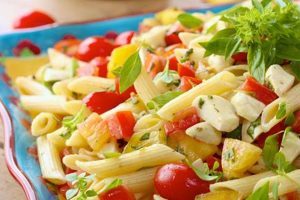
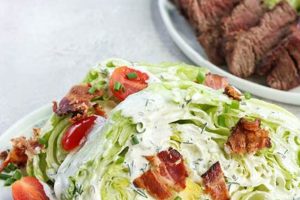
A dish featuring farfalle pasta so named for its resemblance to butterfly wings or bow ties combined with various ingredients forms the foundation of this culinary creation. A simple iteration might involve the pasta tossed with vegetables and a vinaigrette, while more complex versions incorporate proteins like chicken or shrimp, cheeses, and more elaborate dressings. Variations are plentiful, accommodating diverse tastes and dietary preferences.
The versatility of this pasta salad contributes to its popularity. It can serve as a light lunch, a side dish at a barbecue, or a potluck contribution. Its adaptability extends to ingredients; seasonal vegetables, pantry staples, and leftover proteins can be incorporated, minimizing food waste and maximizing flavor possibilities. Furthermore, the dish is often relatively quick and easy to prepare, making it a practical choice for busy individuals or families.
This exploration will delve into specific ingredient combinations, preparation techniques, and serving suggestions to help readers create delightful versions of this versatile dish. From classic recipes to innovative variations, the following sections will provide a comprehensive guide to crafting and enjoying pasta salads centered around the distinctive farfalle shape.
Tips for Creating Exceptional Farfalle Pasta Salad
Achieving a well-balanced and flavorful pasta salad requires attention to detail. These tips offer guidance for optimizing ingredient selection, preparation techniques, and presentation.
Tip 1: Cook Pasta Al Dente: Pasta cooked to a firm texture holds its shape better in a salad and prevents a mushy final product. Follow package directions, stopping the cooking process slightly before the recommended time for optimal results.
Tip 2: Balance Flavors and Textures: Consider incorporating a variety of ingredients to create a more interesting and satisfying salad. Combine crisp vegetables, creamy cheeses, savory proteins, and a flavorful dressing to achieve a balanced profile.
Tip 3: Dress the Pasta While Warm: Warm pasta absorbs flavors more readily. Toss the cooked pasta with a portion of the dressing while it’s still warm to enhance its overall taste.
Tip 4: Chill Thoroughly Before Serving: Allowing the salad to chill in the refrigerator for at least an hour allows the flavors to meld and enhances the overall dining experience. This also improves the texture of the pasta and other ingredients.
Tip 5: Don’t Overdress: Start with a smaller amount of dressing and add more as needed. An overdressed salad can become soggy and unappetizing.
Tip 6: Add Fresh Herbs: Fresh herbs like basil, parsley, or oregano can elevate the flavor profile of the salad. Add them just before serving for optimal freshness and aroma.
Tip 7: Consider the Occasion: Adapt ingredient choices to suit the occasion. A light vinaigrette and fresh vegetables are suitable for a summer picnic, while a richer, creamier dressing and heartier ingredients might be preferred for a more formal setting.
By following these guidelines, one can create a pasta salad that is not only visually appealing but also delivers a delightful combination of flavors and textures.
The following section will provide specific recipe examples demonstrating the practical application of these tips.
1. Farfalle Pasta
Farfalle pasta, with its distinctive butterfly or bow-tie shape, forms the foundational element of bow tie pasta salad. This shape offers several advantages in the context of a cold salad. Its ruffled edges and textured surface provide ample area for dressings and other ingredients to cling, ensuring a flavorful and well-distributed experience in each bite. Furthermore, farfalle holds its shape well during cooking and subsequent chilling, preventing the mushy texture often encountered with other pasta shapes in cold salads. For example, a rotini pasta, while also offering textural complexity, is more prone to clumping and softening when chilled, unlike the robust farfalle.
The visual appeal of farfalle also contributes to the salad’s aesthetic presentation. Its unique shape adds an element of visual interest, making the dish more attractive and appetizing. This can be particularly important for potlucks, catered events, or even simple weeknight meals. Consider a salad composed of farfalle, chopped vegetables, and grilled chicken. The bow tie shape of the pasta provides a visually appealing contrast to the other ingredients, creating a more engaging presentation compared to using a standard penne or spaghetti. Furthermore, the larger surface area of farfalle allows it to be easily skewered or picked up with tongs, enhancing the practicality of serving and consuming the salad.
The structural integrity, sauce-holding capacity, and aesthetic appeal of farfalle pasta make it the ideal choice for this type of salad. While other pasta shapes can be used, they often compromise texture, flavor distribution, or visual presentation. Understanding the specific benefits offered by farfalle contributes to a more informed approach to recipe development and ingredient selection, ultimately resulting in a more satisfying culinary outcome.
2. Vibrant Vegetables
The inclusion of vibrant vegetables elevates a bow tie pasta salad from simple to extraordinary. These elements contribute not only crucial nutrients and textural variety but also vibrant color and fresh flavors, transforming the dish into a visually appealing and palate-pleasing experience. Careful selection and preparation of vegetables are essential for maximizing their impact within the salad.
- Color and Visual Appeal
Brightly colored vegetables enhance the aesthetic appeal of the salad. Consider the contrast between deep green spinach, vibrant red bell peppers, and sunny yellow corn. This visual diversity makes the dish more inviting and appetizing. A monochromatic salad, while potentially flavorful, lacks the visual interest stimulated by a variety of colors.
- Texture and Mouthfeel
Different vegetables offer a range of textures, contributing to a more satisfying sensory experience. Crisp cucumbers and bell peppers provide a refreshing crunch, while blanched broccoli or roasted carrots offer a softer, more yielding bite. This interplay of textures prevents the salad from becoming monotonous and enhances its overall enjoyment.
- Nutritional Value
Vegetables enrich the salad with essential vitamins, minerals, and fiber. Incorporating a variety of vegetables ensures a broader spectrum of nutrients. A salad featuring leafy greens, such as spinach or kale, offers different nutritional benefits compared to one primarily composed of root vegetables like carrots or beets.
- Flavor Enhancement
Vegetables contribute a wide range of flavors, from the sweetness of roasted red peppers to the peppery bite of radishes. These flavors complement the pasta and other ingredients, creating a more complex and nuanced flavor profile. The careful selection of vegetables allows for the creation of flavor combinations tailored to specific preferences, such as a Mediterranean-inspired salad with artichoke hearts, olives, and tomatoes.
The strategic incorporation of vibrant vegetables is essential for maximizing the flavor, texture, nutritional value, and visual appeal of a bow tie pasta salad. By considering these factors, one can create a dish that is not only delicious but also offers a balanced and satisfying culinary experience.
3. Flavorful Proteins

Flavorful proteins play a crucial role in transforming a bow tie pasta salad from a side dish into a satisfying main course. Their inclusion contributes not only substantial nutritional value but also a depth of flavor and textural complexity that elevates the overall dining experience. The careful selection and preparation of proteins are key to maximizing their impact within the salad.
Consider grilled chicken breast, diced and tossed into the pasta salad. Its savory flavor complements the other ingredients, while its firm texture provides a pleasing contrast to the softer pasta and vegetables. Alternatively, seared shrimp introduces a delicate sweetness and a slightly chewy texture. Smoked salmon flakes offer a rich, smoky flavor and a flaky texture, creating a more sophisticated flavor profile. Vegetarian options, such as chickpeas or cubed tofu, provide plant-based protein and distinct textural elements. Each protein choice contributes a unique character to the salad, influencing its overall flavor profile and nutritional value. A salad featuring grilled chicken offers a different nutritional and flavor profile compared to one with smoked salmon or chickpeas.
The method of preparing the protein also significantly impacts the final result. Grilled chicken or fish impart smoky char and a slightly crisp exterior, while roasted or baked proteins offer a more tender texture. Pre-cooked proteins, such as rotisserie chicken or canned tuna, provide convenient shortcuts without sacrificing flavor. However, care must be taken to avoid overcooking, which can result in dry, tough protein that detracts from the salad’s overall quality. Marinating proteins before cooking can further enhance their flavor and tenderness. For example, marinating chicken in a lemon-herb mixture before grilling infuses it with bright, fresh flavors that complement the other salad components. Understanding the interplay of protein choices and preparation methods allows for the creation of a bow tie pasta salad tailored to specific dietary needs and flavor preferences.
4. Complementary Cheeses
Cheese, a versatile dairy product, significantly enhances bow tie pasta salad through its diverse flavors, textures, and nutritional contributions. Careful selection ensures compatibility with other ingredients, elevating the dish beyond a simple pasta salad. The interplay between cheese and other components creates a balanced and flavorful culinary experience. Understanding the characteristics of various cheeses allows for informed decisions that maximize their impact within the salad.
Consider a classic combination: fresh mozzarella, cherry tomatoes, and basil. The creamy, milky mozzarella complements the sweetness of the tomatoes and the peppery basil, creating a harmonious flavor profile. Feta cheese, with its salty, tangy notes, pairs well with Mediterranean-inspired ingredients like olives, cucumbers, and a lemon vinaigrette. A sharper cheddar provides a robust flavor that balances the sweetness of dried cranberries and candied pecans. Each cheese introduces a unique flavor dimension, influencing the overall taste and complexity of the salad. The texture of the cheese also plays a vital role. A crumbly cheese like feta or goat cheese contrasts with the smooth pasta, while a firmer cheese like provolone or cheddar offers a more substantial bite.
Beyond flavor and texture, cheese contributes nutritional value, providing calcium, protein, and other essential nutrients. However, the fat and salt content of cheese should be considered, especially when creating a health-conscious salad. Portion control and the selection of lower-fat cheese options can mitigate these concerns. The practical application of cheese selection requires careful consideration of the other salad ingredients and the desired flavor profile. A mismatch between cheese and other components can result in a disharmonious flavor experience. Understanding these principles allows for informed choices that maximize the positive contribution of cheese to the overall culinary creation.
5. Well-balanced dressing
A well-balanced dressing is paramount to a successful bow tie salad recipe. It serves as the unifying element, binding the diverse ingredients and imparting a cohesive flavor profile. The dressing’s role extends beyond mere flavor; it contributes to the overall texture and moisture content, influencing the final dish’s palatability. A poorly chosen or unbalanced dressing can overwhelm the other components or leave the salad dry and unappetizing. Careful consideration of flavor profiles, acidity, and consistency is crucial in crafting a dressing that complements rather than detracts from the salad’s overall composition.
- Acidity
Acidity provides brightness and helps cut through the richness of other ingredients. Vinegars, citrus juices, or even yogurt can contribute the necessary acidity. A vinaigrette with lemon juice and olive oil provides a light, refreshing acidity that complements a salad with fresh vegetables and herbs. Excessive acidity, however, can overwhelm delicate flavors, while insufficient acidity can result in a bland, uninspiring salad.
- Sweetness
A touch of sweetness balances the acidity and adds depth of flavor. Honey, maple syrup, or fruit juices can introduce subtle sweetness. A balsamic vinaigrette often incorporates a touch of honey to balance its tartness. Overly sweet dressings can mask the flavors of other ingredients, whereas a lack of sweetness can make the salad taste overly sharp or acidic.
- Flavor Complexity
Layering flavors within the dressing enhances the overall complexity of the salad. Incorporating herbs, spices, garlic, or ginger adds depth and nuance. A dressing featuring Dijon mustard, minced garlic, and fresh herbs creates a more complex flavor profile compared to a simple oil and vinegar dressing. Overly complex dressings, however, can clash with the flavors of other ingredients.
- Consistency
The dressing’s consistency influences how it coats the pasta and other ingredients. A thicker dressing clings better to the bow tie pasta, ensuring even distribution of flavor. A creamy dressing based on mayonnaise or yogurt provides a richer, more substantial coating compared to a thin vinaigrette. An overly thick dressing can make the salad heavy and gloppy, whereas a thin dressing might not adequately coat the ingredients, resulting in uneven flavor distribution.
The interplay of these elements determines the dressing’s effectiveness in harmonizing the various components of the bow tie pasta salad. A well-balanced dressing enhances the individual flavors of the pasta, vegetables, proteins, and cheeses, creating a cohesive and satisfying culinary experience. The right dressing elevates a simple bow tie pasta salad from a basic dish to a flavorful and memorable meal.
6. Fresh Herbs

Fresh herbs contribute significantly to the overall sensory experience of a bow tie salad recipe. Their aromatic qualities and vibrant flavors elevate the dish beyond a simple combination of ingredients, adding depth and complexity. Strategic selection and application of fresh herbs can transform a basic pasta salad into a culinary masterpiece.
- Aromatic Enhancement
Fresh herbs impart distinctive aromas that stimulate the olfactory senses, enhancing the overall enjoyment of the salad. Basil, with its sweet, anise-like scent, complements the flavors of tomatoes and mozzarella. Mint adds a refreshing coolness, while oregano contributes an earthy, slightly bitter aroma. These aromatic notes create a more engaging and multi-sensory dining experience.
- Flavor Elevation
Beyond aroma, fresh herbs contribute distinct flavors that complement and enhance the other ingredients in the salad. Parsley provides a clean, slightly peppery taste, while cilantro offers a brighter, citrusy flavor. Dill, with its subtle anise notes, pairs well with seafood and vegetables. The careful selection of herbs allows for the creation of specific flavor profiles tailored to individual preferences.
- Visual Appeal
Fresh herbs contribute visual appeal through their vibrant colors and textures. A sprinkle of chopped chives adds a pop of bright green, while sprigs of rosemary provide an earthy contrast. This visual element enhances the presentation of the salad, making it more appetizing and visually appealing. Incorporating a variety of herbs can create a visually dynamic and engaging dish.
- Nutritional Benefits
Many fresh herbs offer potential health benefits due to their antioxidant and anti-inflammatory properties. Parsley, for instance, is a good source of vitamins A and C, while rosemary contains compounds that may support cognitive function. While these benefits are often secondary to their culinary contributions, they add another layer of value to the inclusion of fresh herbs in the salad.
The integration of fresh herbs within a bow tie salad recipe is a crucial step in achieving a well-rounded and flavorful dish. Their contribution extends beyond mere flavor enhancement, encompassing aroma, visual appeal, and potential health benefits. The strategic selection and application of these aromatic additions elevate the salad from a simple combination of ingredients to a complex and satisfying culinary creation.
7. Proper Chilling

Proper chilling is an essential step in preparing a bow tie salad recipe, significantly impacting the final dish’s flavor, texture, and food safety. Chilling allows the flavors to meld, enhancing the overall taste experience. It also firms the pasta and vegetables, contributing to a more desirable texture. Furthermore, proper chilling inhibits bacterial growth, ensuring food safety.
- Flavor Development
Chilling allows the various components of the saladthe pasta, vegetables, proteins, cheeses, and dressingto meld and harmonize. The flavors deepen and become more integrated, resulting in a more complex and nuanced taste profile. For instance, a freshly made salad might taste disjointed, with the individual flavors of each ingredient standing out distinctly. After chilling, these flavors blend, creating a more cohesive and harmonious taste experience.
- Texture Enhancement
Chilling firms the pasta, preventing it from becoming mushy or overly soft. It also enhances the crispness of vegetables, maintaining their desirable texture. A warm pasta salad often has a less appealing texture, with the pasta tending towards softness and the vegetables potentially wilting. Chilling helps maintain the structural integrity of these components, resulting in a more enjoyable textural experience.
- Food Safety
Chilling inhibits the growth of harmful bacteria that can cause foodborne illness. This is particularly important for salads containing mayonnaise-based dressings or protein ingredients. Maintaining a temperature below 40F (4C) significantly slows bacterial growth, ensuring the salad remains safe to consume. Consuming a salad left at room temperature for an extended period increases the risk of foodborne illness.
- Enhanced Presentation
A chilled salad generally presents better than a warm one. The colors of the vegetables appear more vibrant, and the overall appearance is more refreshing and appealing. A warm salad can appear less appetizing due to potential wilting of vegetables and a less vibrant color palette. Chilling helps maintain the visual appeal of the salad, making it more enjoyable to consume.
Proper chilling is integral to maximizing the quality of a bow tie pasta salad. This crucial step enhances flavor development, improves texture, ensures food safety, and elevates the presentation, contributing to a more satisfying and enjoyable dining experience. Neglecting this step can compromise the salad’s overall quality, affecting both its taste and safety.
Frequently Asked Questions
This section addresses common inquiries regarding the preparation and enjoyment of farfalle pasta salad, providing clear and concise answers to facilitate a successful culinary experience.
Question 1: What is the optimal cooking time for farfalle pasta intended for salad?
Farfalle should be cooked al dente, slightly firmer than usual, to ensure it maintains its shape and texture in the salad. Refer to package directions and reduce the cooking time by one to two minutes. Testing the pasta for doneness by biting into a piece is recommended.
Question 2: Can vegetable substitutions be made in farfalle pasta salad recipes?
Flexibility in vegetable selection is encouraged. Consider seasonal availability and flavor compatibility when substituting. Peppers can be exchanged for similar textured vegetables like zucchini or yellow squash. Broccoli can replace cauliflower, and spinach can substitute for kale, maintaining nutritional and textural balance.
Question 3: What are suitable protein choices for individuals seeking a vegetarian farfalle pasta salad?
Chickpeas, cannellini beans, or grilled halloumi cheese offer excellent vegetarian protein options. Tofu, tempeh, or edamame provide additional plant-based protein alternatives, introducing varying textures and flavors.
Question 4: How can one prevent farfalle pasta salad from becoming overly dry?
Adequate dressing is essential for preventing dryness. Incorporating ingredients with higher moisture content, such as chopped tomatoes or cucumbers, contributes to moisture retention. Adding a small amount of reserved pasta water to the salad can also help maintain moisture without diluting the dressing’s flavor.
Question 5: What is the recommended storage duration for farfalle pasta salad?
Refrigeration in an airtight container for up to three days is recommended. Discard any salad left at room temperature for more than two hours to minimize food safety risks.
Question 6: Can farfalle pasta salad be prepared in advance for events?
Advance preparation is feasible. Prepare the salad components, excluding the dressing, and store them separately. Combine ingredients and dress the salad shortly before serving to maintain optimal texture and flavor.
Understanding these common considerations contributes to a successful outcome when preparing farfalle pasta salad, ensuring a delicious and satisfying culinary experience.
This concludes the frequently asked questions section. The following section will offer concluding remarks.
Conclusion
This exploration has provided a comprehensive overview of creating exceptional farfalle pasta salads. Key elements highlighted include the importance of perfectly cooked pasta, the strategic selection of vibrant vegetables, the incorporation of flavorful proteins and complementary cheeses, the creation of a well-balanced dressing, the judicious use of fresh herbs, and the necessity of proper chilling. Each component contributes significantly to the final dish, impacting its flavor, texture, presentation, and overall enjoyment.
The versatility of farfalle pasta salad allows for endless variations, accommodating diverse palates and dietary preferences. Culinary creativity is encouraged, with an emphasis on balancing flavors, textures, and colors. Mastery of these principles empowers individuals to craft not merely a simple side dish but a memorable culinary experience that delights the senses and satisfies the appetite. Continued exploration of flavor combinations and ingredient pairings promises an ongoing journey of culinary discovery within the realm of farfalle pasta salad creation.