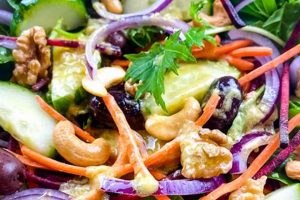
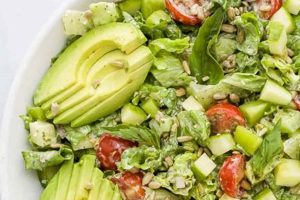
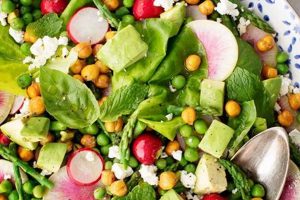
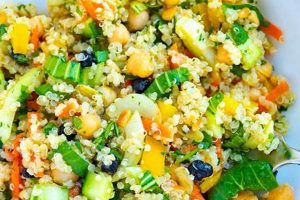
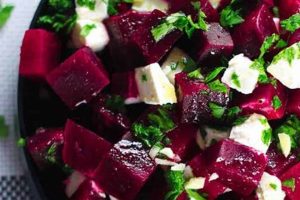
A dish composed of raw or cooked mustard greens, combined with various complementary ingredients like fruits, vegetables, nuts, cheeses, and dressings, constitutes a flavorful and nutritious culinary creation. A simple example includes young, tender mustard greens tossed with sliced red onion, crumbled bacon, and a vinaigrette dressing. More complex variations can incorporate roasted sweet potatoes, dried cranberries, toasted pecans, and a creamy dressing.
These culinary combinations offer significant nutritional value. Mustard greens are a rich source of vitamins A, C, and K, as well as minerals like calcium and potassium. Incorporating them into salads provides a palatable way to increase vegetable intake and benefit from their potential antioxidant and anti-inflammatory properties. Historically, mustard greens have been cultivated and consumed across various cultures for centuries, valued both for their nutritional benefits and distinctive flavor profile.
Further exploration will delve into specific preparation techniques, offer diverse recipe variations highlighting different flavor profiles, and address essential considerations for selecting and storing fresh mustard greens.
Tips for Mustard Greens Salad Preparation
Optimizing the flavor and texture of mustard greens salads requires attention to detail throughout the preparation process. These tips offer guidance for achieving successful results.
Tip 1: Selecting Greens: Opt for young, tender leaves with a vibrant green color. Avoid leaves with yellowing or wilting, as these indicate age and reduced quality.
Tip 2: Balancing Bitterness: The characteristic peppery flavor of mustard greens can be balanced by incorporating sweet or acidic elements. Consider adding ingredients such as fruits (apples, pears, or oranges), dried cranberries, or a vinaigrette dressing with a touch of honey or maple syrup.
Tip 3: Massaging the Greens: Massaging the leaves with a small amount of oil and salt helps tenderize the greens and reduce their bitterness. This step also helps the leaves wilt slightly, making them easier to dress and enjoy.
Tip 4: Complementary Ingredients: Enhance the flavor profile and texture by incorporating complementary ingredients such as toasted nuts (pecans, walnuts, or almonds), crumbled bacon or pancetta, roasted vegetables (sweet potatoes or butternut squash), or cheeses (goat cheese or feta).
Tip 5: Dressing Selection: The dressing should complement the other ingredients without overpowering the flavor of the greens. A light vinaigrette, a creamy dressing based on yogurt or buttermilk, or even a simple lemon-tahini dressing can work well.
Tip 6: Proper Storage: Store unwashed mustard greens in a plastic bag in the refrigerator for up to five days. Wash just before using to maintain freshness.
Tip 7: Avoiding Overdressing: Add dressing gradually, tasting as you go, to avoid overdressing the salad. Overdressing can make the greens soggy and dilute the overall flavor.
Careful attention to these suggestions will ensure a delicious and satisfying salad that showcases the distinctive flavor and nutritional benefits of mustard greens.
By following these tips, culinary enthusiasts can consistently create flavorful and satisfying mustard greens salads.
1. Fresh, Young Mustard Greens

Fresh, young mustard greens are paramount to a successful mustard greens salad recipe. Their quality significantly influences the overall flavor, texture, and nutritional value of the final dish. Selecting and handling these greens correctly is the first step towards a truly satisfying culinary experience.
- Tenderness and Texture:
Young mustard greens possess a desirable tenderness and pleasant texture, unlike older leaves which can be tough and fibrous. This tenderness contributes to a more palatable salad, as the leaves are easier to chew and digest. A salad made with older leaves can be unpleasantly chewy, detracting from the overall enjoyment.
- Flavor Profile:
The flavor of young mustard greens is more nuanced and less intensely bitter than that of mature leaves. While the characteristic peppery bite remains, it is balanced by a subtle sweetness, creating a more complex and enjoyable flavor profile. Mature leaves often possess an overwhelming bitterness that can be difficult to balance in a salad.
- Nutritional Value:
Younger leaves generally retain higher concentrations of vitamins and minerals. As the plant matures, some nutrient levels may decline. Utilizing fresh, young greens in a salad maximizes the nutritional benefits derived from this nutrient-rich vegetable.
- Visual Appeal:
The vibrant, deep green color of young mustard greens enhances the aesthetic appeal of the salad. Their crispness contributes to a visually attractive presentation, encouraging consumption. Older leaves often exhibit discoloration or wilting, detracting from the visual presentation of the dish.
These combined attributes of fresh, young mustard greenstenderness, balanced flavor, nutritional density, and visual appealdirectly contribute to a more successful and enjoyable mustard greens salad. Selecting these high-quality greens provides a strong foundation for a flavorful and nutritious dish.
2. Balanced Flavor Profiles

Balanced flavor profiles are essential for a successful mustard greens salad recipe. The inherent bitterness of mustard greens necessitates careful consideration of other ingredients to create a harmonious and palatable dish. A well-balanced salad will not only be more enjoyable but also showcase the versatility of mustard greens within a broader culinary context.
- Bitterness Management:
The assertive bitterness of mustard greens forms the foundation of the flavor profile and requires skillful management. Ingredients that offer contrasting tastes, such as sweetness or acidity, effectively counteract this bitterness. Examples include incorporating sweet fruits like sliced apples or pears, dried cranberries, or a vinaigrette with a touch of honey or maple syrup. Acidity from citrus fruits like oranges or lemons, or from vinegar in the dressing, also provides balance. Without these balancing elements, the bitterness can overwhelm the palate and detract from the overall enjoyment.
- Textural Contrast:
Balancing flavor also extends to textural considerations. The slight chewiness of mustard greens benefits from the incorporation of contrasting textures. Crispy elements like toasted nuts (almonds, pecans, or walnuts) or croutons provide a satisfying crunch. Creamy components like crumbled goat cheese or avocado offer a smooth counterpoint. These textural variations enhance the overall sensory experience and prevent the salad from becoming monotonous.
- Umami Inclusion:
Adding umami-rich ingredients further enhances the complexity of the flavor profile. Umami, often described as a savory, meaty flavor, complements the bitterness of mustard greens and adds depth. Examples include incorporating crumbled bacon or pancetta, shaved Parmesan cheese, or a sprinkle of toasted sesame seeds. These ingredients elevate the salad beyond a simple combination of greens and vegetables, creating a more sophisticated and satisfying dish.
- Aromatic Enhancement:
The aroma of a salad contributes significantly to the overall dining experience. Incorporating aromatic ingredients can heighten the appeal of a mustard greens salad. Fresh herbs like dill, parsley, or mint add a refreshing element. Spices like red pepper flakes or a pinch of cumin can introduce warmth and complexity. These aromatic components stimulate the senses and create a more engaging culinary experience.
By thoughtfully addressing each of these facetsbitterness management, textural contrast, umami inclusion, and aromatic enhancementa mustard greens salad transforms from a simple side dish into a complex and satisfying culinary creation. The careful balancing of these elements elevates the inherent qualities of mustard greens, showcasing their versatility and contributing to a truly memorable dining experience.
3. Complementary Ingredients

Complementary ingredients are crucial for elevating a mustard greens salad recipe from simple to exceptional. These additions serve several key functions: balancing the inherent bitterness of the greens, adding textural complexity, introducing contrasting flavors, and enhancing the overall nutritional value. The strategic selection and incorporation of complementary ingredients directly impact the final dish’s palatability and appeal.
Several categories of complementary ingredients work particularly well with mustard greens. Fruits, such as sliced apples, pears, or segments of orange, introduce sweetness and juiciness, counteracting the greens’ peppery bite. Dried fruits like cranberries or raisins offer concentrated sweetness and a chewy texture. Nuts, including toasted pecans, walnuts, or slivered almonds, contribute a satisfying crunch and healthy fats. Cheese, such as crumbled goat cheese, feta, or shaved Parmesan, provides creamy richness and salty notes. Proteins like grilled chicken or fish, bacon crumbles, or chickpeas add heartiness and further balance the flavors. Finally, vegetables such as roasted sweet potatoes, diced bell peppers, or shredded carrots introduce additional nutrients, colors, and textures. A salad featuring mustard greens, roasted sweet potatoes, crumbled bacon, and pecans exemplifies how complementary ingredients create a balanced, flavorful, and visually appealing dish.
Understanding the role of complementary ingredients allows for greater flexibility and creativity in mustard greens salad preparation. Seasonal variations become readily achievable by utilizing readily available produce. Dietary preferences can be accommodated by substituting ingredients. For example, vegans might opt for tofu instead of bacon, while those avoiding nuts might use sunflower seeds. Mastering the art of combining complementary ingredients unlocks the full potential of mustard greens, transforming them into a versatile base for a wide array of delicious and nutritious salads.
4. Appropriate Dressing Selection

Dressing selection significantly impacts the overall success of a mustard greens salad recipe. The right dressing complements the greens’ inherent flavors without overpowering them, while also harmonizing with other ingredients. A thoughtful approach to dressing choice elevates the salad from simple to sophisticated, enhancing both its palatability and culinary appeal.
- Balancing Bitterness:
Mustard greens possess a characteristic peppery bitterness. The dressing should offer a counterpoint to this bitterness, creating a balanced flavor profile. Vinaigrettes with a touch of sweetness, such as those incorporating honey, maple syrup, or fruit juices, effectively cut through the bitterness. Similarly, creamy dressings based on yogurt or buttermilk can mellow the peppery notes. A dressing that intensifies the bitterness rather than balancing it can result in an unpleasantly sharp flavor.
- Harmonizing with Other Ingredients:
The chosen dressing must harmonize with the other components of the salad. For example, a light vinaigrette complements a salad with fresh fruit and toasted nuts, while a richer, creamy dressing might pair better with roasted vegetables and bacon. A mismatch between the dressing and other ingredients can create a disjointed flavor experience. A salad with delicate ingredients might be overwhelmed by a heavy, intensely flavored dressing.
- Texture and Consistency:
The dressing’s texture and consistency contribute to the overall sensory experience. A light vinaigrette provides a refreshing counterpoint to the slightly chewy texture of the greens. A creamy dressing adds richness and coats the leaves, offering a different mouthfeel. The wrong consistency can negatively impact the salad’s appeal. For example, a watery dressing might make the salad soggy, while an overly thick dressing can be cloying.
- Acidity Level:
The acidity level of the dressing plays a vital role in balancing flavors and enhancing the overall taste. Vinegar-based dressings provide brightness and cut through richness. Citrus juices offer a lighter acidity. The right acidity level enhances the flavors of both the greens and other ingredients. Too much acidity can make the salad taste overly tart, while too little can result in a flat, uninspiring flavor profile.
Selecting an appropriate dressing is therefore essential for a successful mustard greens salad recipe. Careful consideration of the greens’ bitterness, the other ingredients, the desired texture, and the appropriate acidity level ensures a harmonious and enjoyable culinary experience. A well-chosen dressing elevates the salad, transforming it from a simple side dish into a sophisticated and flavorful culinary creation.
5. Proper Preparation Techniques

Proper preparation techniques are integral to a successful mustard greens salad recipe. These techniques directly influence the final dish’s flavor, texture, and overall palatability. Careful attention to each step, from selecting and cleaning the greens to incorporating complementary ingredients, ensures an optimal culinary outcome.
One crucial step involves thoroughly washing and drying the mustard greens. This removes any soil or debris while also ensuring the dressing adheres properly. Another key technique involves massaging the leaves. Massaging with a small amount of oil and salt tenderizes the greens, reducing their inherent bitterness and making them more palatable. The choice of cutting technique also matters. Larger pieces retain a robust texture, while finely chopped greens offer a more delicate mouthfeel. Additionally, the order of ingredient incorporation plays a role. Heartier components, such as roasted vegetables, should be added first, followed by more delicate elements like fresh herbs or crumbled cheese. Finally, proper dressing application is essential. Adding the dressing just before serving prevents the greens from becoming soggy and maintains the salad’s freshness.
Ignoring these proper preparation techniques can compromise the final product. Insufficiently washed greens can introduce unpleasant grit, while neglecting to massage the leaves can result in an overly bitter salad. Improper cutting techniques can lead to an uneven texture, and adding dressing too early can create a soggy, unappetizing dish. Therefore, adherence to these fundamental techniques is crucial for achieving a delicious and satisfying mustard greens salad. Mastering these techniques allows one to fully appreciate the unique flavor and nutritional benefits of mustard greens in a variety of culinary applications.
6. Creative Variations

Creative variations within mustard greens salad recipes demonstrate the versatility of this nutritious leafy green. Such variations stem from a desire to explore diverse flavor profiles, accommodate seasonal ingredient availability, and cater to individual dietary preferences. The inherent adaptability of mustard greens allows for a wide range of culinary interpretations, transforming a basic salad into a canvas for culinary expression. For example, a summer variation might incorporate grilled peaches, toasted pecans, and a balsamic vinaigrette, while an autumnal version could include roasted butternut squash, crumbled goat cheese, and a maple-Dijon dressing. These variations highlight the interplay between the core ingredient mustard greens and complementary elements, resulting in a diverse array of flavor experiences.
The practical significance of embracing creative variations lies in the ability to consistently create appealing and exciting mustard greens salads. This prevents monotony and encourages regular consumption of this nutrient-rich vegetable. Seasonal variations, in particular, leverage the peak flavors of available produce, resulting in salads that are both flavorful and cost-effective. Furthermore, creative variations allow for personalization and dietary adaptability. Substituting ingredients based on allergies, intolerances, or personal preferences expands the accessibility of mustard greens salads, ensuring inclusivity and broader appeal. One could substitute halloumi for feta to accommodate lactose intolerance or use sunflower seeds instead of nuts for those with allergies. These adaptations demonstrate the inherent flexibility of mustard greens as a culinary ingredient.
Creative variations are not merely a superficial aspect of mustard greens salad preparation; they represent a fundamental element in maximizing both the culinary and nutritional potential of this versatile green. By embracing experimentation and adapting recipes to individual circumstances, one can consistently enjoy flavorful and nutritious salads while minimizing food waste and maximizing the use of seasonal ingredients. This approach promotes a more sustainable and enjoyable culinary experience, highlighting the ongoing relevance and adaptability of mustard greens within a diverse and evolving culinary landscape.
Frequently Asked Questions
This section addresses common inquiries regarding mustard greens salad recipes, offering practical guidance and clarifying potential points of confusion.
Question 1: How can the bitterness of mustard greens be mitigated in a salad?
The inherent bitterness can be balanced by incorporating acidic elements (vinegar, citrus juice) or sweet components (fruit, honey). Massaging the leaves with oil and salt also helps reduce bitterness.
Question 2: What are suitable complementary ingredients for a mustard greens salad?
Complementary ingredients include fruits (apples, pears), nuts (pecans, walnuts), cheeses (goat cheese, feta), and other vegetables (roasted sweet potatoes, bell peppers).
Question 3: What type of dressing works best with mustard greens?
Light vinaigrettes, creamy dressings based on yogurt or buttermilk, and lemon-tahini dressings complement mustard greens well. The dressing should balance the greens’ bitterness and harmonize with other ingredients.
Question 4: How should mustard greens be stored for optimal freshness?
Unwashed mustard greens should be stored in a plastic bag in the refrigerator for up to five days. Wash just before using to maintain freshness.
Question 5: Can mustard greens be cooked before using them in a salad?
While typically used raw, mustard greens can be lightly cooked (steamed or sauted) before adding to a salad. Cooking reduces bitterness and alters the texture.
Question 6: How can one avoid a soggy mustard greens salad?
Avoid overdressing the salad and dress it just before serving. Thoroughly drying the leaves after washing also helps prevent sogginess.
Understanding these fundamental aspects of mustard greens salad preparation ensures a flavorful and enjoyable culinary experience. Properly addressing the bitterness, selecting complementary ingredients, and employing appropriate preparation techniques allows one to fully appreciate the unique qualities of this versatile leafy green.
The following section will offer a collection of diverse mustard greens salad recipes for practical application of the information presented.
Mustard Greens Salad Recipe
Exploration of mustard greens salad recipes reveals a versatile culinary landscape. Emphasis on ingredient selection, balancing bitterness, complementary pairings, and proper preparation techniques underscores the potential for diverse and flavorful outcomes. Nutritional value, coupled with culinary adaptability, positions mustard greens as a key component in healthy and engaging salads.
Culinary innovation within mustard greens salad recipes offers a pathway to increased consumption of nutrient-rich vegetables. Continued exploration of flavor profiles and ingredient combinations promises further development and enjoyment of this adaptable culinary staple. Proper technique and mindful ingredient selection remain central to maximizing the potential of mustard greens in creating flavorful and healthful salads.