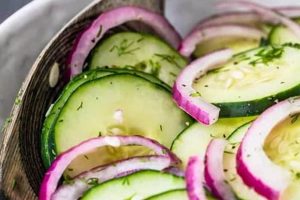
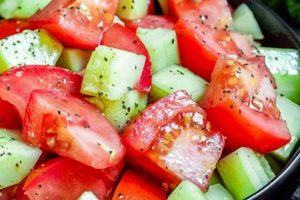
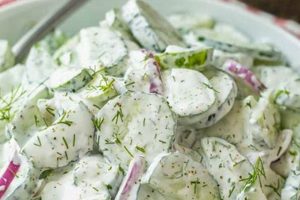
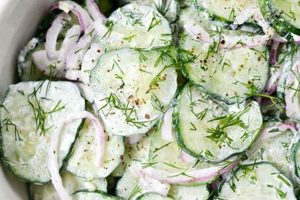
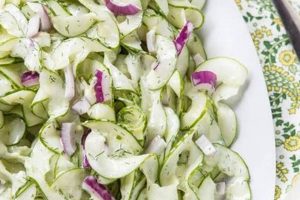
This dish typically features thinly sliced cucumbers, often combined with a light, refreshing vinaigrette. Variations might include additions such as onions, herbs (like dill or mint), or other vegetables, creating a crisp and flavorful salad. A defining characteristic is often its simplicity, focusing on fresh, high-quality ingredients.
A cool cucumber salad provides a healthy and hydrating side dish, particularly suitable for warmer weather. The low calorie count and high water content of cucumbers contribute to its dietary appeal. Such salads can complement a variety of main courses, from grilled meats and fish to sandwiches and heavier entrees. Historically, cucumbers have been incorporated into cuisines worldwide, adding a refreshing element to meals for centuries. Their versatility has led to countless regional variations, reflecting local culinary traditions.
The following sections will delve into specific variations of this salad, explore its nutritional value, and provide guidance on preparing it at home. Recipes will be provided for both classic and contemporary interpretations, offering options for various dietary preferences and skill levels.
Tips for a Superior Cucumber Salad
Preparation methods significantly impact the final quality of a cucumber salad. Attention to detail ensures optimal flavor and texture. The following tips provide guidance for achieving the best results.
Tip 1: Salt and Drain Cucumbers: Salting sliced cucumbers draws out excess moisture, preventing a watery salad. Place cucumber slices in a colander, sprinkle with salt, and let them sit for 15-20 minutes before rinsing and thoroughly drying.
Tip 2: Thinly and Evenly Slice Cucumbers: Uniform slices ensure even marination and a pleasing texture. A mandoline slicer or sharp knife can achieve consistent results.
Tip 3: Choose the Right Vinegar: A mild vinegar, such as rice vinegar or white wine vinegar, complements the delicate flavor of cucumbers. Avoid overly strong vinegars that might overpower the other ingredients.
Tip 4: Balance Flavors: A harmonious blend of sweet, sour, and savory elements is crucial. Balance the vinegar’s acidity with a touch of sweetness (like sugar or a sweetener substitute) and a pinch of salt.
Tip 5: Add Fresh Herbs: Incorporating fresh herbs elevates the salad’s flavor profile. Dill, mint, parsley, and chives are excellent choices. Add them just before serving to preserve their freshness.
Tip 6: Chill Before Serving: Chilling the salad allows the flavors to meld and enhances the refreshing quality of the cucumbers. Refrigerate for at least 30 minutes before serving.
Tip 7: Don’t Overdress: Add the dressing just before serving to prevent the cucumbers from becoming soggy. Start with a small amount of dressing and add more as needed.
By following these guidelines, one can create a cucumber salad that is both flavorful and visually appealing. These techniques contribute to a crisp, refreshing, and well-balanced dish.
The following section provides a selection of recipes incorporating these tips, ranging from classic preparations to innovative variations.
1. Fresh Cucumbers

Fresh cucumbers are fundamental to a successful cucumber salad, providing the dish’s signature crispness and refreshing flavor. Their quality significantly influences the overall taste and texture of the final product. Selecting and handling cucumbers correctly is crucial for achieving the desired outcome.
- Selection
Choosing the right cucumbers is paramount. Look for firm, unblemished cucumbers with vibrant green skin. Avoid those with soft spots, wrinkles, or yellowing skin, as these indicate age and reduced quality. Smaller cucumbers tend to have fewer seeds and a more delicate flavor.
- Storage
Proper storage maintains freshness. Uncut cucumbers should be refrigerated in a crisper drawer to prevent moisture loss. Once cut, wrap the remaining portion tightly in plastic wrap and store it in the refrigerator to maintain its crispness and prevent drying.
- Preparation
Thorough washing and proper slicing are essential preparatory steps. Wash cucumbers under cold water to remove any dirt or residue. Consistent, thin slices ensure even flavor distribution and a pleasing texture. Salting and draining sliced cucumbers removes excess moisture, preventing a watery salad.
- Flavor Impact
The inherent flavor of fresh cucumbers provides a neutral base that readily absorbs the flavors of the vinaigrette and other added ingredients. This characteristic allows for versatile flavor combinations, ranging from simple and classic to complex and innovative. The subtle, refreshing taste of a properly prepared cucumber complements a wide array of other flavors.
The emphasis on fresh cucumbers underscores the importance of quality ingredients in achieving a superior cucumber salad. By understanding the nuances of selection, storage, and preparation, one can maximize the flavor and textural contribution of this key ingredient, ensuring a refreshing and delightful culinary experience.
2. Thin Slices

Thinly slicing cucumbers is a defining characteristic of salads like the Cafe Max version. This technique maximizes surface area, optimizing flavor absorption and contributing to a delicate, palatable texture. The thinness of the cucumber slices significantly impacts the overall sensory experience of the salad.
- Surface Area and Flavor Infusion
Increased surface area from thin slicing allows the cucumbers to readily absorb the flavors of the vinaigrette. This ensures that each bite is infused with the desired balance of acidity, sweetness, and other seasonings. A thicker slice would limit this absorption, resulting in a less flavorful cucumber.
- Texture and Mouthfeel
Thin slices contribute to a delicate, almost translucent texture. This contrasts with thicker slices, which can be perceived as dense or cumbersome. The delicate texture enhances the refreshing quality of the salad, making it more enjoyable to consume.
- Visual Appeal
Thinly sliced cucumbers create a visually appealing presentation. The translucence and uniformity of the slices add an element of elegance to the salad. This attention to detail elevates the dining experience beyond mere sustenance.
- Even Marinating
Uniform, thin slices ensure even distribution of the marinade. This consistency contributes to a balanced flavor profile throughout the salad, avoiding pockets of over- or under-marinated cucumber. Consistent marinating is key to a harmonious blend of flavors.
The emphasis on thin slices in the Cafe Max cucumber salad recipe highlights the importance of technique in achieving optimal flavor, texture, and presentation. This seemingly simple step significantly impacts the overall quality and enjoyment of the dish. By understanding the rationale behind this technique, one can appreciate the nuanced approach to creating a seemingly simple, yet refined salad.
3. Light Vinaigrette

A light vinaigrette is integral to a successful cucumber salad, particularly in variations like the Cafe Max recipe. The vinaigrette provides the primary flavor profile, complementing the cucumber’s subtle taste and refreshing texture. Its lightness is crucial; a heavy or overly rich dressing would overwhelm the delicate cucumber flavor. Instead, a light vinaigrette enhances the cucumbers without masking their inherent freshness. A typical light vinaigrette for such a salad might consist of a mild vinegar like rice wine vinegar or white wine vinegar, a neutral oil such as grapeseed or canola, and a touch of sweetener and seasonings. This combination provides a balanced, refreshing acidity that harmonizes with the cucumbers.
The vinaigrette’s acidity also serves a practical purpose beyond flavor enhancement. The vinegar in the dressing helps to preserve the cucumbers’ vibrant green color, preventing them from browning or becoming dull. This effect is particularly noticeable in salads prepared in advance, where the vinaigrette acts as a protective barrier against oxidation. Additionally, the oil component of the vinaigrette adds a subtle richness and helps to distribute the flavors evenly across the cucumber slices, further enhancing their palatability.
Achieving the right balance in a light vinaigrette is key to a successful cucumber salad. Overly acidic dressings can be harsh, while insufficient acidity can render the salad bland. The careful selection of ingredients and precise proportions contribute to a harmonious blend of flavors that elevates the simple cucumber to a culinary delight. The vinaigrettes role extends beyond mere flavoring; it preserves color, enhances texture, and ultimately contributes to a more satisfying and refreshing dining experience. This understanding allows for greater control over the final product, ensuring a well-balanced and flavorful dish.
4. Optional Add-ins
Optional add-ins provide an opportunity to personalize and enhance the flavor profile of a basic cucumber salad, moving beyond the traditional simplicity often associated with recipes like the Cafe Max cucumber salad. These additions introduce complexity and textural variety, transforming a straightforward side dish into a more substantial and nuanced culinary experience. Careful selection of complementary ingredients allows for a customized flavor profile tailored to individual preferences or specific culinary goals.
- Fresh Herbs
Fresh herbs introduce aromatic complexity and a vibrant freshness. Dill, mint, parsley, and chives are popular choices, each contributing a unique flavor profile. Dill, for instance, offers a slightly tangy, anise-like flavor that pairs well with cucumbers, while mint provides a cooling, herbaceous note. The addition of fresh herbs elevates the sensory experience, moving beyond the basic cucumber flavor.
- Onions
Onions add a pungent bite and textural contrast. Thinly sliced red onion provides a sharp, slightly sweet flavor, while finely chopped scallions offer a milder onion flavor. The choice of onion variety influences the overall intensity and sweetness of the salad. This addition provides a textural counterpoint to the tender cucumbers.
- Other Vegetables
Incorporating other vegetables expands both the flavor profile and nutritional value. Diced tomatoes introduce a juicy sweetness and vibrant color, while bell peppers contribute a crisp texture and a subtle sweetness. These additions create a more substantial and visually appealing salad.
- Seeds and Nuts
Toasted sesame seeds provide a nutty aroma and a satisfying crunch, while chopped walnuts or pecans add a rich, earthy flavor and textural complexity. These additions contribute another layer of flavor and enhance the overall sensory experience of the dish.
Strategic use of optional add-ins allows for significant variation within the basic framework of a cucumber salad. Consideration of flavor pairings, textural contrasts, and visual appeal allows for a customized and enhanced dining experience. These additions demonstrate how a simple dish can be transformed through thoughtful ingredient selection and creative culinary exploration, demonstrating versatility within the realm of a classic preparation.
5. Chilling Time
Chilling time is a crucial element in preparing a cucumber salad, especially when aiming to replicate the refreshing qualities often associated with variations like the Cafe Max cucumber salad. Adequate chilling allows flavors to meld and enhances the desired textural characteristics of the dish. This seemingly passive step plays an active role in the final outcome, impacting both taste and texture.
- Flavor Development
Chilling allows the vinaigrette to permeate the cucumber slices thoroughly, ensuring a more uniform and pronounced flavor. The time spent in the refrigerator allows the various components of the vinaigrette, such as the vinegar, oil, and seasonings, to integrate fully with the cucumbers, resulting in a more harmonious and balanced flavor profile. This process is essential for maximizing the impact of the chosen flavor combinations.
- Texture Enhancement
Chilling firms the cucumber slices, enhancing their crispness. The cold temperature helps to maintain the structural integrity of the cucumber cells, preventing them from becoming soft or mushy. This results in a more satisfying textural experience, contributing to the refreshing quality expected from a well-made cucumber salad. A chilled salad offers a pleasant contrast to warmer dishes, further enhancing its appeal.
- Temperature and Palatability
A chilled cucumber salad is simply more refreshing, particularly in warmer weather. The cool temperature provides a welcome contrast to the ambient heat, enhancing the perceived freshness of the dish. This sensory experience contributes significantly to the overall enjoyment of the salad, making it a particularly appealing option during hotter months or as a complement to richer, heavier meals. The temperature itself becomes a key component of the dish’s overall appeal.
- Aromatic Infusion
If herbs are included, chilling allows their aromatic oils to release and infuse the salad more thoroughly. This enhances the complexity of the flavor profile and contributes to a more fragrant and enjoyable dining experience. The chilling process allows these volatile compounds to permeate the other ingredients, creating a more unified and aromatic final product. This is particularly noticeable with herbs like dill and mint, which possess strong aromatic profiles.
Therefore, chilling is not merely a storage step, but an active component in the development of flavor, texture, and overall enjoyment of a cucumber salad. Understanding the impact of chilling time allows for greater control over the final product, enabling the creation of a truly refreshing and flavorful dish that aligns with the expectations associated with recipes like the Cafe Max cucumber salad. The seemingly simple act of refrigeration elevates the dish beyond a mere combination of ingredients, transforming it into a carefully orchestrated culinary experience.
Frequently Asked Questions
This section addresses common inquiries regarding cucumber salad preparation, focusing on achieving optimal results.
Question 1: How can excess moisture be removed from cucumbers to prevent a watery salad?
Salting sliced cucumbers draws out excess water. Place slices in a colander, sprinkle with salt, and let sit for 15-20 minutes. Rinse and thoroughly dry before incorporating into the salad.
Question 2: What type of vinegar is best suited for a cucumber salad vinaigrette?
Mild vinegars, such as rice vinegar or white wine vinegar, are recommended. Stronger vinegars can overpower the delicate cucumber flavor. The goal is to complement, not mask, the cucumber’s inherent taste.
Question 3: How can one achieve uniformly thin cucumber slices?
A mandoline slicer or a sharp knife, used with careful technique, can produce consistent, thin slices. Uniformity ensures even marinating and a pleasant texture.
Question 4: What herbs pair well with cucumbers in a salad?
Dill, mint, parsley, and chives complement cucumbers. Fresh herbs are preferred for optimal flavor and aroma. Add herbs just before serving to maintain their freshness and prevent wilting.
Question 5: How long should a cucumber salad be chilled before serving?
Chilling for at least 30 minutes allows flavors to meld and enhances the refreshing quality of the salad. This also allows the cucumbers to absorb the vinaigrette more thoroughly.
Question 6: What can be added to a cucumber salad for increased flavor complexity?
Thinly sliced red onions, bell peppers, or fresh tomatoes add flavor and textural contrast. Toasted sesame seeds or chopped nuts can introduce a nutty element and satisfying crunch. Consider flavor pairings and overall balance when selecting additions.
Proper preparation techniques are essential for a successful cucumber salad. Attention to detail, from ingredient selection to chilling time, ensures a refreshing and flavorful dish.
The next section will offer a selection of cucumber salad recipes, incorporating the principles discussed throughout this article.
Cafe Max Cucumber Salad Recipe
This exploration of the Cafe Max cucumber salad recipe has highlighted the essential elements contributing to its refreshing simplicity and culinary potential. From the selection of fresh, crisp cucumbers to the delicate balance of a light vinaigrette, each component plays a crucial role in the final product. Emphasis on proper slicing techniques, optional add-ins, and adequate chilling time demonstrates the nuanced approach required to elevate this seemingly simple dish. Understanding the interplay of these elements allows for both successful replication and creative adaptation.
The principles discussed offer a foundation for culinary exploration, encouraging experimentation with flavors and textures. Adaptability remains key, allowing this classic preparation to evolve while retaining its core essence of refreshing simplicity. Further exploration of regional variations and innovative flavor combinations promises continued enjoyment and culinary discovery within the realm of cucumber salad preparation.