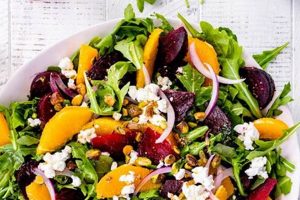
Quick and simple salads intended as a main course or accompaniment to dinner offer a range of possibilities, from light and refreshing to hearty and substantial. Examples include salads featuring grilled chicken or fish, pasta salads, and those incorporating beans, grains, or roasted vegetables. These preparations focus on minimal preparation time and readily available ingredients while maintaining nutritional value and flavor.
Streamlined salad preparations offer significant advantages to home cooks. They provide a convenient and healthful meal option for busy weeknights or a lighter alternative to more complex dishes. Historically, salads have evolved from simple combinations of raw greens to elaborate compositions showcasing culinary creativity. The demand for quick yet satisfying meals in modern life has driven the popularity of easily assembled salads featuring diverse ingredients and flavorful dressings.
This exploration will delve into a variety of approaches to create satisfying and effortless dinner salads, covering topics such as ingredient selection, dressing preparation, and techniques for composing balanced and flavorful meals.
Tips for Effortless Dinner Salads
Creating satisfying and simple dinner salads involves strategic planning and efficient techniques. The following tips offer guidance for achieving flavorful results with minimal effort.
Tip 1: Embrace Pre-washed Greens. Utilizing pre-washed and pre-cut lettuce or spinach significantly reduces preparation time. This allows more focus on other components, such as flavorful toppings and dressings.
Tip 2: Utilize Rotisserie Chicken or Pre-cooked Proteins. Incorporating readily available cooked proteins like rotisserie chicken, canned tuna, or hard-boiled eggs eliminates cooking time and adds substantial protein to the salad.
Tip 3: Maximize Pantry Staples. Canned beans, olives, artichoke hearts, and other pantry items offer convenient and nutritious additions to salads. These contribute flavor, texture, and valuable nutrients without extensive preparation.
Tip 4: Prepare Versatile Dressings. A simple vinaigrette can be made in large batches and stored for future use, saving time on weeknights. Experimenting with different flavor combinations, such as lemon-herb or balsamic vinaigrette, adds variety.
Tip 5: Incorporate Seasonal Produce. Seasonal fruits and vegetables offer peak flavor and nutritional value. Utilizing what is readily available ensures optimal freshness and taste while simplifying shopping.
Tip 6: Add Crunchy Elements. Nuts, seeds, croutons, or toasted tortilla strips provide textural contrast and enhance the overall sensory experience. These additions also contribute healthy fats and fiber.
Tip 7: Compose Salads in Layers. Layering ingredients prevents the salad from becoming soggy and ensures even distribution of flavors. Placing heavier items like proteins and grains at the bottom and lighter greens on top helps maintain freshness.
By implementing these strategies, individuals can create nutritious, flavorful, and visually appealing dinner salads with minimal time and effort. These approaches contribute to a healthy and enjoyable dining experience.
These practical tips pave the way for enjoyable and efficient salad preparation. The following section will explore specific recipe ideas that exemplify these principles.
1. Fresh, Seasonal Ingredients

Fresh, seasonal ingredients form the cornerstone of simple, yet flavorful dinner salads. Seasonality ensures optimal ripeness and peak flavor, minimizing the need for complex preparations or heavy dressings to enhance taste. A summer salad featuring ripe tomatoes, cucumbers, and fresh basil requires little more than a drizzle of olive oil and a sprinkle of salt to highlight the natural sweetness and vibrancy of the ingredients. Conversely, a winter salad might showcase roasted root vegetables like carrots and sweet potatoes, whose inherent sweetness intensifies with cooking, complemented by sturdy greens like kale or spinach. The inherent flavors of seasonal produce allow for streamlined preparations, aligning perfectly with the goal of creating easy dinner salads.
Utilizing seasonal ingredients also simplifies the process of creating balanced and nutritious meals. Nature provides complementary flavors and textures within each season. For example, the sweetness of summer berries pairs well with the peppery bite of arugula, while the earthy flavors of fall mushrooms complement the nutty taste of roasted squash. This natural harmony reduces the need for elaborate flavor combinations, further contributing to the ease of preparation. Additionally, seasonal produce tends to be more readily available and often more affordable, making it a practical choice for quick and budget-friendly meals.
In conclusion, prioritizing fresh, seasonal ingredients offers a pathway to effortless and flavorful dinner salads. Their inherent qualities minimize preparation time and maximize taste, aligning with the core principles of efficiency and enjoyment. Embracing seasonality not only simplifies cooking but also connects individuals more closely to the natural rhythms of food production, fostering a deeper appreciation for flavor and nutrition.
2. Pre-washed Greens

Pre-washed greens play a crucial role in simplifying dinner salad preparation. Their convenience significantly reduces the time and effort required, aligning perfectly with the concept of easy recipes. This convenience factor contributes to increased accessibility and encourages more frequent consumption of fresh salads.
- Time Savings:
Eliminating the need to wash and dry lettuce or spinach streamlines the salad-making process. This time-saving aspect is particularly valuable for busy weeknight meals, allowing for quick assembly without compromising on freshness or flavor.
- Reduced Kitchen Waste:
Pre-washed greens often come in resealable packaging, promoting better storage and reducing spoilage. This minimizes food waste compared to purchasing whole heads of lettuce that may not be fully consumed before wilting. The packaging also often reduces the need for additional water usage in the home.
- Enhanced Accessibility:
Pre-washed options provide an accessible entry point for individuals new to salad preparation or those with limited kitchen resources. The reduced effort required can encourage experimentation with different salad combinations and contribute to a more varied diet.
- Variety and Convenience:
Pre-washed greens are available in a variety of types and blends, offering diverse options for creating different salad profiles. From spring mix to baby spinach to shredded kale, these options cater to various taste preferences and nutritional needs, further simplifying ingredient selection.
The convenience of pre-washed greens directly contributes to the ease and efficiency of preparing dinner salads. By removing a time-consuming step, these products encourage healthier eating habits by making salad preparation more accessible and less daunting. This convenience factor ultimately supports the creation of quick, nutritious, and enjoyable meals, aligning perfectly with the objective of simple and satisfying dinner salad recipes.
3. Versatile Dressings

Versatile dressings are fundamental to achieving both simplicity and variety in easy dinner salad recipes. A well-chosen dressing elevates basic ingredients, adding depth of flavor and enhancing the overall sensory experience. The ability to utilize a single dressing across multiple salad combinations streamlines preparation and minimizes the need for specialized ingredients, aligning with the core principle of effortless cooking.
- Simplicity and Efficiency:
Versatile dressings, such as a classic vinaigrette, require minimal ingredients and can be prepared in larger batches for future use. This reduces preparation time on busy weeknights and simplifies meal planning. Having a readily available dressing encourages spontaneous salad creation, promoting healthier eating habits.
- Flavor Enhancement:
A versatile dressing acts as a unifying element, bringing together diverse flavors and textures within a salad. A simple lemon vinaigrette, for instance, can complement both delicate greens and heartier roasted vegetables, enhancing their natural flavors without overpowering them. This adaptability makes versatile dressings a valuable asset in creating a range of salad combinations.
- Adaptability and Customization:
While maintaining a core simplicity, versatile dressings can be easily adapted to create nuanced flavor profiles. Adding herbs, spices, or a touch of sweetness allows for customization without requiring extensive additional ingredients. This flexibility caters to diverse palates and dietary preferences.
- Health and Nutrition:
Versatile dressings, particularly those made with olive oil and vinegar, offer health benefits and contribute to the nutritional value of the salad. Olive oil provides healthy fats, while vinegar can aid in digestion and blood sugar regulation. Homemade dressings also allow for control over ingredients, minimizing added sugars and preservatives often found in commercial options.
The adaptability and ease of preparation associated with versatile dressings significantly contribute to the creation of effortless and enjoyable dinner salads. By simplifying the process while maximizing flavor potential, these dressings play a crucial role in making healthy eating both convenient and satisfying. A well-stocked pantry with a few versatile dressing options empowers individuals to create a wide array of salads with minimal effort, promoting a more balanced and nutritious diet.
4. Quick Protein Additions

Quick protein additions represent a critical component of easy dinner salad recipes. Their inclusion transforms a simple side dish into a complete and satisfying meal, aligning perfectly with the demand for convenient and nutritious dinners. The ease of incorporating these protein sources significantly impacts the overall simplicity and efficiency of salad preparation. Proteins contribute satiety, preventing hunger shortly after eating, a key factor in making salads a substantial meal option.
Several readily available protein sources exemplify the connection between speed and satisfaction. Canned tuna or salmon, requiring only draining, offer a rich source of omega-3 fatty acids and protein. Hard-boiled eggs, prepared in advance, provide a versatile and nutrient-dense addition. Rotisserie chicken, readily available from most grocery stores, eliminates cooking time and provides a flavorful protein base. These examples demonstrate the practical application of quick protein additions in achieving effortless meal preparation. Furthermore, the versatility of these proteins allows for diverse flavor combinations, preventing mealtime monotony and catering to a variety of dietary preferences. Chickpeas and lentils, requiring minimal cooking or available canned, offer plant-based protein options, expanding the inclusivity of easy dinner salads.
Understanding the role of quick protein additions is fundamental to maximizing the potential of easy dinner salad recipes. These additions contribute not only nutritional value but also textural and flavor complexity, elevating salads beyond simple side dishes. The ability to quickly and easily incorporate protein ensures that these salads provide sustained energy and satiety, making them a viable and desirable option for busy individuals and families. This understanding promotes healthier eating habits by simplifying access to nutritious and convenient meals. By recognizing the significance of this component, individuals can confidently create satisfying and effortless dinner salads that fit seamlessly into a balanced and healthy lifestyle.
5. Crunchy Textures

Crunchy textures play a significant role in enhancing the sensory appeal and overall enjoyment of easy dinner salad recipes. Their presence adds a contrasting element to the softer textures of leafy greens and other vegetables, creating a more dynamic and satisfying eating experience. This textural diversity contributes to the perception of freshness and elevates the salad beyond a simple combination of ingredients. The incorporation of crunchy elements aligns seamlessly with the objective of creating effortless yet appealing meals.
- Nuts and Seeds:
Nuts and seeds, such as toasted almonds, walnuts, sunflower seeds, or pumpkin seeds, offer a concentrated source of healthy fats, protein, and fiber, while also providing a satisfying crunch. Their versatility allows for seamless integration into a wide range of salad combinations, complementing both sweet and savory flavor profiles. The addition of nuts and seeds can transform a basic salad into a more substantial and texturally interesting meal.
- Croutons and Breadcrumbs:
Croutons and breadcrumbs, whether store-bought or homemade, introduce a familiar and comforting crunch. They absorb dressings effectively, contributing both flavor and texture. Homemade croutons, crafted from stale bread, offer an opportunity to minimize food waste and customize flavors with herbs and spices. The inclusion of these elements contributes to the overall heartiness and satisfaction of the salad.
- Raw Vegetables:
Certain raw vegetables, such as chopped carrots, celery, bell peppers, or jicama, offer inherent crispness. These vegetables not only contribute textural contrast but also introduce vitamins, minerals, and fiber, enhancing the nutritional value of the salad. Their bright colors and varying shapes also contribute visual appeal, making the salad more enticing.
- Tortilla Strips and Chips:
Crushed tortilla chips or strips introduce a distinct crunch and a subtle corn flavor. They pair particularly well with salads featuring Southwestern or Mexican-inspired ingredients. This addition offers a simple way to enhance both the texture and flavor profile of the salad with minimal effort.
The strategic incorporation of crunchy textures elevates easy dinner salads from basic to engaging culinary experiences. This element of contrast enhances enjoyment and promotes a more mindful approach to eating, as the varying textures encourage slower consumption and greater appreciation of individual flavors. The ease with which crunchy elements can be incorporated aligns perfectly with the concept of effortless meal preparation, further solidifying their importance in creating satisfying and simple dinner salads.
6. Minimal prep time
Minimal preparation time represents a cornerstone of “dinner salad recipes easy.” The emphasis on speed and efficiency directly addresses the demands of modern life, where time constraints often dictate meal choices. This focus on streamlined processes enables individuals to incorporate fresh, nutritious meals into their routines without sacrificing valuable time. The relationship between minimal prep time and easy salad recipes functions as both a cause and effect. The desire for quick meals drives the demand for simplified recipes, while the availability of such recipes, in turn, facilitates healthier eating habits. For example, a salad utilizing pre-washed greens, canned beans, and pre-cooked chicken requires significantly less preparation than a meal involving multiple cooking steps and extensive chopping. This efficiency allows for a nutritious dinner to be assembled in minutes, demonstrating the practical significance of minimizing preparation time.
The practical application of this principle manifests in various strategies. Utilizing pre-cut vegetables, pre-cooked proteins, and pantry staples minimizes active cooking and chopping time. Preparing dressings or components like roasted vegetables in advance further streamlines the process. Batch cooking grains or beans allows for quick assembly throughout the week. These strategies, focused on minimizing active preparation, contribute to the overall ease and accessibility of dinner salad recipes. For instance, a mason jar salad, layered with dressing, grains, vegetables, and protein, can be prepared in advance, requiring only a quick shake before consumption. Such examples highlight the practical benefits of minimizing prep time, enabling individuals to enjoy healthy meals even with limited time availability.
The ability to create nutritious and satisfying meals with minimal effort empowers individuals to prioritize healthy eating habits. Addressing the time constraints often associated with meal preparation removes a significant barrier to adopting healthier lifestyles. The understanding and application of minimal prep time as a core component of easy dinner salad recipes provides a practical pathway to incorporating fresh, flavorful meals into daily routines, ultimately promoting overall well-being. This principle, therefore, plays a crucial role in bridging the gap between the desire for healthy eating and the realities of busy schedules.
7. Flavorful Combinations

Flavorful combinations represent a crucial aspect of “dinner salad recipes easy,” demonstrating that simplicity doesn’t necessitate sacrificing taste. Strategic pairings of ingredients elevate basic salads into satisfying and enjoyable meals, crucial for maintaining long-term adherence to healthy eating habits. The perceived complexity of flavor directly influences satisfaction and encourages continued consumption of nutritious foods. This principle operates on a cause-and-effect basis: intentional flavor combinations lead to greater enjoyment, which, in turn, promotes consistent inclusion of salads in one’s diet. For instance, the combination of sweet roasted butternut squash, peppery arugula, and salty feta cheese creates a balanced and complex flavor profile that elevates the salad beyond a simple collection of ingredients. This interplay of tastes ensures a more satisfying and memorable meal, encouraging repeat preparation.
Practical application of this understanding involves considering complementary flavor profiles and textures. Pairing acidic dressings with rich ingredients, incorporating contrasting sweet and savory elements, and balancing soft textures with crunchy additions all contribute to a more dynamic and enjoyable salad experience. Consider a salad combining grilled chicken, creamy avocado, tangy black beans, crunchy corn, and a vibrant cilantro-lime dressing. Each ingredient contributes not only nutritional value but also a distinct flavor and texture, resulting in a cohesive and satisfying meal. This approach allows for customization based on individual preferences and seasonal ingredient availability, further enhancing the appeal of easy salad recipes. Furthermore, understanding flavor combinations allows for creative utilization of pantry staples and readily available ingredients, minimizing reliance on specialized or costly components. This practicality reinforces the connection between flavorful combinations and ease of preparation.
Mastery of flavor combinations unlocks the full potential of “dinner salad recipes easy.” This understanding empowers individuals to create satisfying and nutritious meals with minimal effort, contributing to sustainable healthy eating habits. Addressing flavor complexity directly combats the perception of salads as bland or uninspired dishes, transforming them into exciting and desirable meal options. This principle highlights the significant impact of thoughtful ingredient pairings on overall enjoyment and adherence to healthy dietary choices. By focusing on the interplay of flavors, individuals can transform simple salads into culinary experiences that nourish both body and palate.
Frequently Asked Questions
This section addresses common inquiries regarding the creation of easy dinner salads, providing practical solutions and clarifying potential misconceptions.
Question 1: How can one ensure dinner salads are sufficiently filling?
Incorporating substantial protein sources, such as grilled chicken, fish, beans, lentils, or hard-boiled eggs, ensures satiety. Adding complex carbohydrates like quinoa, farro, or roasted sweet potatoes further contributes to a feeling of fullness and provides sustained energy.
Question 2: What are effective strategies for preventing soggy salads?
Storing dressings separately and adding them just before consumption prevents greens from wilting. Layering ingredients, with heavier items at the bottom and lighter greens on top, also helps maintain freshness. Utilizing a salad spinner to thoroughly dry greens after washing further minimizes excess moisture.
Question 3: How can individuals adapt recipes to accommodate dietary restrictions?
Easy dinner salads offer inherent flexibility. Substituting ingredients based on dietary needs allows for customization. For gluten-free options, ensure croutons and dressings are gluten-free. Vegan adaptations can utilize tofu, tempeh, or nuts for protein and avoid dairy-based dressings.
Question 4: What are cost-effective approaches to creating these salads?
Utilizing seasonal produce, which is often more affordable, maximizes value. Canned beans and lentils offer a cost-effective protein source. Making dressings at home, rather than purchasing pre-made options, reduces costs and allows for customized flavors.
Question 5: How can variety be maintained to prevent mealtime boredom?
Rotating greens, proteins, and toppings ensures diversity. Experimenting with different dressings and flavor combinations prevents monotony. Exploring various cuisines for inspiration introduces new and exciting salad profiles.
Question 6: Can these salads be prepared in advance for busy schedules?
Preparing components, such as chopping vegetables or cooking grains, in advance streamlines weeknight assembly. Mason jar salads, layered with dressing at the bottom and other ingredients on top, offer a convenient make-ahead option for grab-and-go meals.
By understanding these practical considerations, individuals can confidently incorporate easy and flavorful dinner salads into their routines, promoting healthier eating habits without sacrificing time or enjoyment.
This concludes the frequently asked questions section. The following segment will offer a collection of sample recipes to further illustrate these principles.
Dinner Salad Recipes Easy
Exploration of “dinner salad recipes easy” reveals the accessibility and adaptability of this meal category. Emphasis on fresh, seasonal ingredients, combined with efficient preparation techniques, positions these salads as convenient and nutritious options. Strategic utilization of pre-washed greens, versatile dressings, quick protein additions, and crunchy textures elevates simple combinations into satisfying culinary experiences. Minimal preparation time, coupled with an understanding of flavorful combinations, empowers individuals to create diverse and enjoyable meals without extensive culinary expertise. Addressing practical considerations, such as preventing sogginess and accommodating dietary restrictions, further enhances the appeal and adaptability of these recipes.
The ease and versatility inherent in “dinner salad recipes easy” represent a significant opportunity to integrate healthful eating habits into demanding schedules. This approach fosters a sustainable relationship with nutrition by minimizing barriers to entry and maximizing enjoyment. Continued exploration of flavor profiles and preparation techniques promises further innovation within this category, expanding culinary horizons while prioritizing efficiency and well-being.