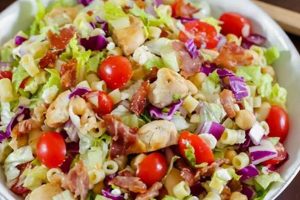
A vibrant, Italian-inspired dish, this salad typically features a mix of cured meats like salami, prosciutto, and pepperoni, cheeses such as provolone and mozzarella, olives, artichoke hearts, pepperoncini, and often other marinated vegetables like roasted red peppers or mushrooms. Served chilled, its dressed with a vinaigrette, sometimes incorporating ingredients like oregano, garlic, or red wine vinegar. Variations may include additions like garbanzo beans, giardiniera, or chopped tomatoes.
This style of salad offers a robust and flavorful experience, ideal as a starter or a light meal. The combination of savory meats, creamy cheeses, tangy vegetables, and piquant dressing provides a satisfying balance of textures and tastes. Its popularity stems from its versatility, suitability for diverse occasions, and the ease with which it can be adapted to individual preferences and dietary needs. Inspired by traditional Italian antipasto platters, the salad format presents a convenient and appealing way to enjoy these flavors.
This exploration will delve further into variations, preparation techniques, and the origins of the individual components, offering a comprehensive guide to understanding and enjoying this culinary creation.
Tips for an Exceptional Antipasto Salad
Elevating this classic Italian-American dish requires attention to detail and an understanding of balancing flavors and textures. The following tips offer guidance for creating a truly memorable salad.
Tip 1: Quality Ingredients are Key: Opt for high-quality cured meats and cheeses. Freshly sliced selections from a deli often offer superior flavor compared to pre-packaged options.
Tip 2: Balance is Essential: Strive for a balance of salty, tangy, and savory elements. Consider the intensity of each ingredient and adjust quantities accordingly. Too much of one flavor can overwhelm the others.
Tip 3: Marinate for Deeper Flavor: Marinating vegetables like artichoke hearts, mushrooms, or roasted red peppers in the vinaigrette prior to assembling the salad enhances their flavor and contributes to a more cohesive dish.
Tip 4: Dress Lightly: Overdressing can mask the individual flavors of the components. Start with a small amount of vinaigrette and add more as needed, tossing gently to coat.
Tip 5: Consider Texture: Vary textures by incorporating crisp elements like pepperoncini, crunchy vegetables, and creamy cheeses alongside the softer meats.
Tip 6: Serve Chilled, Not Cold: Allowing the salad to chill slightly before serving enhances the flavors. Avoid freezing, as this can negatively impact texture and taste.
Tip 7: Customize to Preference: This salad is highly adaptable. Experiment with different cheeses, meats, vegetables, and dressings to create unique variations.
By focusing on ingredient quality, balance, and proper preparation techniques, one can create a truly exceptional antipasto salad. The interplay of flavors and textures makes this dish a delightful culinary experience.
These tips provide a foundation for crafting a memorable antipasto salad. The following section will explore variations and offer specific recipe examples.
1. Ingredients

The hallmark of a successful antipasto salad lies in the careful selection and balance of its ingredients. Ingredient quality significantly impacts the overall flavor profile and contributes to an authentic experience. Understanding the role of each component allows for informed choices and creative variations.
- Cured Meats:
These provide a salty, savory foundation. Common choices include salami, pepperoni, prosciutto, and mortadella. Variations can explore regional Italian specialties like Nduja or spicy soppressata. The quantity and variety of cured meats contribute significantly to the salad’s overall richness and depth of flavor.
- Cheeses:
Cheeses offer creamy textures and contrasting flavors. Provolone, mozzarella, and parmesan are frequently used. Exploring options like pecorino romano or gorgonzola can introduce sharper, more pungent notes. The balance between mild and strong cheeses is crucial for achieving a harmonious flavor profile.
- Vegetables:
Vegetables provide brightness, acidity, and textural contrast. Artichoke hearts, roasted red peppers, pepperoncini, olives, and marinated mushrooms are typical additions. Considerations include the level of acidity and the interplay of textures, ensuring a balanced and refreshing counterpoint to the richer elements.
- Vinaigrette:
The vinaigrette ties the ingredients together, providing a cohesive flavor profile. A simple red wine vinaigrette is traditional, often incorporating oregano, garlic, and red pepper flakes. Variations might include lemon juice, balsamic vinegar, or Dijon mustard. The vinaigrette’s acidity balances the richness of the meats and cheeses, enhancing the overall flavor experience.
The interplay of these ingredient categories defines the character of the antipasto salad. A well-composed salad showcases a balance of salty, tangy, savory, and creamy elements, creating a vibrant and satisfying dish. Understanding the role of each ingredient allows for informed customization and the creation of truly exceptional variations. Further exploration of specific ingredient combinations and preparation techniques can enhance one’s appreciation for the nuanced complexities of this culinary creation.
2. Preparation

Proper preparation techniques are essential for maximizing the flavors and textures of an antipasto salad. While seemingly straightforward, attention to detail in each stage, from ingredient handling to final assembly, significantly impacts the overall quality and enjoyment of the dish. Careful preparation elevates the individual components and ensures a harmonious blend of flavors.
- Ingredient Preparation:
This stage focuses on readying each element for optimal flavor and presentation. Cured meats should be sliced thinly and evenly. Cheeses should be brought to room temperature to enhance their flavor and texture. Vegetables, especially those that benefit from marinating, should be prepared in advance. Proper ingredient preparation sets the foundation for a well-balanced and visually appealing salad.
- Marinating:
Marinating certain vegetables, like artichoke hearts, mushrooms, or roasted red peppers, infuses them with additional flavor and creates a more cohesive flavor profile. A simple vinaigrette is commonly used for marinating, allowing the vegetables to absorb its tangy notes. The marinating process also tenderizes some vegetables, contributing to a more pleasant textural experience.
- Chilling:
Chilling the assembled salad allows the flavors to meld and enhances the overall freshness. However, over-chilling can negatively impact the textures of certain ingredients. Ideally, the salad should be chilled for a short period, allowing the flavors to harmonize without compromising texture or quality.
- Assembly & Dressing:
The final assembly requires careful consideration of ingredient placement and dressing application. Distributing ingredients evenly ensures a balanced flavor experience in each bite. The vinaigrette should be added just before serving and tossed gently to coat the ingredients without overdressing, preserving the distinct flavors of each component.
These preparatory steps contribute significantly to the final product. Meticulous attention to each stage ensures a balanced, flavorful, and visually appealing antipasto salad. By understanding the importance of proper preparation, one can elevate this classic dish from simple to exceptional, showcasing the vibrant flavors and textures that define it.
3. Variations

The concept of “variations” is integral to understanding the adaptability and enduring appeal of the antipasto salad. While a core set of ingredients defines the dish, variations allow for customization based on individual preferences, dietary restrictions, and seasonal availability. This flexibility ensures the salad remains relevant and enjoyable in diverse contexts. The ability to adapt the recipe contributes to its versatility, making it suitable for casual gatherings, formal occasions, or even light meals.
Several factors drive the development of variations. Dietary considerations, such as vegetarian or vegan diets, necessitate ingredient substitutions. For example, marinated mushrooms or grilled tofu can replace cured meats. Seasonal availability influences ingredient choices, leading to variations featuring fresh produce like asparagus in spring or butternut squash in autumn. Regional influences also play a role, with variations incorporating local specialties like pepperoncini in Southern Italy or Castelvetrano olives in Sicily. These adaptations demonstrate the dynamic nature of the recipe and its capacity to reflect diverse culinary traditions. Specific examples include substituting feta cheese for provolone, adding chickpeas for increased protein, or incorporating sun-dried tomatoes for a more intense flavor profile. These modifications not only cater to individual needs but also expand the potential flavor combinations, enhancing the culinary experience.
Understanding the role of variations provides a deeper appreciation for the antipasto salad’s adaptability. It allows individuals to tailor the recipe to specific needs and preferences while retaining the core characteristics that define the dish. This flexibility contributes to its continued popularity and ensures its relevance across diverse culinary landscapes. Embracing variations fosters creativity and allows for a more personalized and enjoyable culinary experience, showcasing the enduring appeal of this adaptable Italian-inspired salad.
4. Presentation
Presentation plays a crucial role in the overall enjoyment of a buca-style antipasto salad. Visual appeal enhances the dining experience, stimulating appetite and creating a sense of anticipation. Thoughtful arrangement transforms a simple mix of ingredients into a visually captivating dish. The interplay of colors, textures, and shapes contributes to a more engaging and satisfying culinary experience. For instance, the vibrant reds of pepperoni, the creamy whites of mozzarella, and the deep greens of olives create a visually striking contrast that elevates the perceived freshness and quality of the salad.
Several factors influence effective presentation. The choice of serving platter or bowl significantly impacts the visual appeal. A large, shallow platter allows for an expansive arrangement, showcasing the variety of ingredients. Individual portions in smaller bowls offer a more intimate and controlled presentation. The arrangement of ingredients also contributes to the overall aesthetic. Consider placing larger items, like rolled prosciutto or artichoke hearts, strategically to create focal points. Distributing smaller elements, such as olives and pepperoncini, evenly ensures visual balance and avoids a cluttered appearance. Garnishing with fresh herbs, like sprigs of basil or oregano, adds a final touch of elegance and reinforces the Italian-inspired theme. In a restaurant setting, a well-presented antipasto salad communicates attention to detail and enhances the perceived value of the dish, contributing to customer satisfaction.
Effective presentation elevates the perceived quality and enjoyment of the antipasto salad. It transforms a collection of ingredients into a cohesive and visually appealing dish, enhancing the overall dining experience. While flavor remains paramount, thoughtful presentation amplifies the sensory experience, making the salad more enticing and memorable. Ignoring presentation diminishes the potential impact of even the highest-quality ingredients. Therefore, careful consideration of visual elements is essential for maximizing the appeal and enjoyment of this classic Italian-American dish.
5. Inspiration
Understanding the inspiration behind a “buca antipasto salad recipe” provides valuable context and appreciation for its evolution. This exploration delves into the historical and cultural influences that shaped this dish, highlighting its connection to Italian culinary traditions and its adaptation within American dining culture. Examining these influences illuminates the recipe’s significance and enduring appeal.
- Italian Culinary Heritage
The foundation of the antipasto salad lies within the rich tapestry of Italian culinary heritage. Antipasto, meaning “before the meal,” traditionally refers to a platter of cured meats, cheeses, olives, and marinated vegetables served as a prelude to the main course. This practice reflects a core element of Italian dining culturethe emphasis on savoring a variety of flavors and textures as part of a leisurely and communal meal. The antipasto salad draws direct inspiration from this tradition, adapting the platter format into a convenient and shareable salad.
- Regional Italian Variations
Regional variations within Italy significantly influenced the evolution of the antipasto salad. Different regions boast unique specialties, impacting ingredient choices and flavor profiles. For example, Southern Italy’s emphasis on spicy cured meats and briny olives contrasts with Northern Italy’s preference for milder flavors and richer cheeses. These regional distinctions offer a diverse range of inspiration for customizing antipasto salad recipes, reflecting specific Italian culinary traditions.
- American Adaptation and Evolution
The antipasto salad, as understood in American dining culture, represents an adaptation of traditional Italian antipasto. While retaining core elements like cured meats and cheeses, the American version often incorporates ingredients less common in traditional Italian cuisine. This evolution reflects the dynamic nature of culinary traditions and the adaptation of recipes within new cultural contexts. The “buca” style, specifically, represents a further adaptation, often characterized by larger portion sizes and bolder flavor profiles.
- Contemporary Interpretations
Contemporary culinary trends further influence the ongoing evolution of the antipasto salad. Emphasis on fresh, seasonal ingredients, and lighter preparations lead to variations incorporating grilled vegetables, artisanal cheeses, and house-made vinaigrettes. These modern interpretations demonstrate the adaptability of the antipasto salad and its capacity to remain relevant within evolving culinary landscapes.
By exploring these inspirational facets, one gains a deeper appreciation for the “buca antipasto salad recipe” as more than a simple list of ingredients. It represents a culmination of culinary traditions, regional influences, and ongoing innovation. Understanding this historical and cultural context enriches the dining experience, transforming a casual salad into a celebration of flavor and tradition.
Frequently Asked Questions
This section addresses common inquiries regarding the preparation and enjoyment of antipasto salad, offering clarity and guidance for both novice and experienced cooks.
Question 1: What is the ideal serving temperature for antipasto salad?
Serving the salad slightly chilled enhances the flavors of the ingredients. Over-chilling can dull flavors and negatively impact textures. Room temperature is generally not recommended, particularly for salads containing cured meats and cheeses.
Question 2: Can antipasto salad be prepared in advance?
Certain components, such as marinated vegetables, can be prepared a day or two in advance. However, assembling the entire salad too far ahead can lead to soggy ingredients and diminished flavors. It is generally recommended to combine ingredients and dress the salad shortly before serving.
Question 3: What are suitable substitutions for individuals with dietary restrictions?
Numerous substitutions cater to various dietary needs. Vegetarians can replace cured meats with marinated mushrooms, grilled tofu, or artichoke hearts. Vegans can utilize plant-based cheeses and ensure the vinaigrette contains no animal products. Gluten-free variations require careful selection of ingredients, focusing on naturally gluten-free options and avoiding cross-contamination.
Question 4: How can one prevent the salad from becoming overly acidic?
Balancing the acidity of the vinaigrette with the other ingredients is crucial. Start with a small amount of vinaigrette and adjust according to taste. Rinsing marinated vegetables can also help reduce excess acidity. Incorporating milder cheeses and less acidic vegetables, such as roasted red peppers, can further balance the overall flavor profile.
Question 5: What are some appropriate wine pairings for antipasto salad?
Light-bodied red wines, such as Pinot Noir or Chianti, complement the flavors of cured meats and cheeses. Crisp white wines, like Pinot Grigio or Sauvignon Blanc, offer a refreshing contrast to the richer elements. Ros wines can also provide a balanced pairing, particularly with variations featuring lighter ingredients.
Question 6: How long can leftover antipasto salad be stored?
Properly stored in an airtight container in the refrigerator, leftover salad can typically be consumed within two to three days. However, the quality and texture may degrade over time. It is essential to observe any signs of spoilage before consumption.
Understanding these common queries empowers individuals to prepare and enjoy antipasto salad with greater confidence and appreciation for its nuances. Careful consideration of these aspects enhances the overall dining experience.
The following section will offer a curated selection of recipe variations to inspire culinary exploration.
Conclusion
Exploration of the “buca antipasto salad recipe” reveals a dish grounded in Italian culinary tradition yet adaptable to contemporary preferences. Emphasis on quality ingredients, balanced flavors, and thoughtful presentation elevates this seemingly simple salad to a culinary experience. Understanding the interplay of cured meats, cheeses, vegetables, and vinaigrette allows for informed customization and the creation of truly exceptional variations. From ingredient selection to preparation techniques and presentation nuances, each step contributes to the final product’s overall quality and enjoyment.
The enduring appeal of this salad lies in its versatility and adaptability. Whether adhering to traditional preparations or embracing innovative variations, the “buca antipasto salad recipe” offers a platform for culinary creativity and personal expression. Continued exploration of regional influences, ingredient combinations, and presentation styles promises an evolving and enriching culinary journey. This exploration encourages further experimentation and a deeper appreciation for the nuanced artistry within this classic dish.