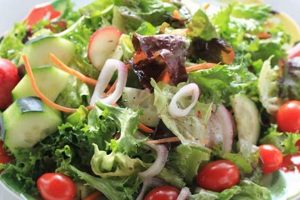
A refreshing and vibrant dish, this type of salad features cranberries as the star ingredient, often combined with other fruits, nuts, and sometimes vegetables. It distinguishes itself by excluding gelatin, resulting in a lighter, less sweet, and often more texturally interesting alternative to traditional congealed cranberry salads. A typical preparation might involve fresh or dried cranberries tossed with oranges, pecans, and a light vinaigrette.
This preparation offers a number of advantages. It caters to dietary preferences by omitting processed ingredients like gelatin, often aligning with vegetarian and vegan lifestyles. Furthermore, it allows the natural tartness of cranberries to shine, providing a brighter flavor profile. Historically, molded gelatin salads gained popularity mid-20th century. As culinary preferences shifted towards fresh, less processed foods, gelatin-free versions emerged as a desirable alternative, offering a more contemporary take on this classic side dish.
The following sections will explore various approaches to crafting these salads, including ingredient selection, preparation techniques, and suggestions for complementary pairings.
Tips for Crafting Delicious Gelatin-Free Cranberry Salads
Achieving optimal flavor and texture requires attention to detail throughout the preparation process. The following tips offer guidance for creating a successful and satisfying dish.
Tip 1: Balance Sweetness and Tartness: The natural tartness of cranberries benefits from a balancing sweetness. Consider incorporating ingredients like oranges, apples, or a touch of maple syrup or honey.
Tip 2: Choose Fresh, High-Quality Cranberries: Fresh cranberries offer the best flavor and texture. Look for plump, firm berries with a vibrant red color. Dried cranberries can be substituted, but adjust sweetness accordingly.
Tip 3: Explore Textural Variety: A compelling salad incorporates a range of textures. Toasted nuts, such as pecans, walnuts, or almonds, provide satisfying crunch. Seeds, like pumpkin or sunflower, offer another dimension.
Tip 4: Consider Citrus Additions: Citrus fruits, like oranges and grapefruits, complement the cranberry flavor profile beautifully. Their segments add juicy bursts and a refreshing element.
Tip 5: Experiment with Herbs and Spices: Fresh herbs, such as mint or cilantro, can add complexity and freshness. A pinch of ground cinnamon or ginger offers warm, seasonal notes.
Tip 6: Dress Lightly: A light vinaigrette enhances the salad without overpowering the delicate flavors. A simple combination of olive oil, lemon juice, and a touch of honey or maple syrup works well.
Tip 7: Chill Thoroughly Before Serving: Chilling allows the flavors to meld and enhances the refreshing qualities of the salad, making it an ideal accompaniment to heavier dishes.
By following these tips, one can create a delicious and healthful salad that showcases the vibrant flavors and versatility of cranberries. These preparations offer a refreshing alternative to heavier, more traditional side dishes.
This exploration of ingredients, techniques, and flavor combinations provides a foundation for creating a wide variety of cranberry salads tailored to individual preferences.
1. Fresh Cranberries

Fresh cranberries serve as the cornerstone of a successful cranberry salad without jello. Their vibrant tartness and firm texture provide a foundation upon which other ingredients build, contributing significantly to the overall flavor and sensory experience.
- Flavor Profile
The distinct tartness of fresh cranberries offers a refreshing counterpoint to sweeter elements within the salad. This tartness is crucial in achieving a balanced flavor profile, preventing the salad from becoming overly sweet. The intensity of this tartness can vary slightly depending on the cranberry variety and growing conditions.
- Texture and Visual Appeal
Plump, firm fresh cranberries contribute a pleasant chewiness to the salad, contrasting with other ingredients like crunchy nuts or succulent citrus segments. Their vibrant red color also enhances the visual appeal of the dish, making it more attractive and appetizing.
- Nutritional Value
Fresh cranberries are a source of antioxidants and vitamins, adding nutritional value to the salad. Using fresh cranberries in place of processed ingredients like cranberry sauce or jellied cranberry further enhances the health benefits of the dish.
- Availability and Storage
Fresh cranberries are typically readily available during the fall and winter months. Proper storage, such as refrigeration, is essential for maintaining their quality and extending their shelf life, allowing for enjoyment beyond the peak season. Freezing fresh cranberries is also an excellent option for preserving them for later use in salads.
The selection and incorporation of fresh cranberries directly impacts the final product. By understanding the characteristics and benefits of fresh cranberries, one can leverage their unique qualities to create a vibrant and flavorful cranberry salad without jello that is both satisfying and visually appealing. The natural tartness and pleasing texture of fresh cranberries offer a compelling alternative to the often overly sweet and homogenous texture of salads incorporating gelatin.
2. Citrus pairings

Citrus fruits offer a crucial balancing element in cranberry salads without jello. Their inherent acidity and sweetness complement the tartness of cranberries, creating a more complex and nuanced flavor profile. This interplay of flavors prevents the salad from being overwhelmingly tart while simultaneously enhancing the natural sweetness of the fruit components. Beyond flavor, citrus fruits contribute textural variety. The juicy segments offer a burst of freshness that contrasts with the chewiness of cranberries and any added nuts or seeds. Examples of successful pairings include oranges, grapefruits, and mandarins, each offering a slightly different flavor profile and level of sweetness.
The choice of citrus fruit influences the final character of the salad. Oranges provide a familiar sweetness, while grapefruits introduce a slightly more bitter edge. Mandarins offer a delicate sweetness and smaller segments. The amount of citrus incorporated should be carefully considered to achieve the desired balance. Too much can overpower the cranberry flavor, while too little might not provide sufficient sweetness. Practical applications include adjusting the citrus variety based on seasonal availability and personal preference. For instance, navel oranges are readily available in winter, aligning with peak cranberry season, whereas grapefruits offer a refreshing option in the spring.
In summary, citrus pairings are essential for achieving a harmonious balance of flavors and textures in cranberry salads without jello. Careful selection and proportioning of citrus fruits allow for customization and optimization of the overall sensory experience. This understanding enables the creation of salads that are both refreshing and complex, showcasing the versatility of cranberries in combination with complementary ingredients.
3. Textural Contrast

Textural contrast forms a critical component of successful cranberry salads without jello, elevating them from simple mixtures to complex sensory experiences. The inherent chewiness of cranberries, while pleasant, benefits from the incorporation of contrasting textures. This interplay prevents a monotonous mouthfeel, adding depth and interest to each bite. The absence of jello, which often creates a uniform, soft texture, necessitates a more deliberate approach to textural variation.
Several ingredients contribute effectively to textural contrast. Nuts, such as pecans, walnuts, or almonds, introduce a satisfying crunch. Toasting these nuts intensifies their crispness and enhances their inherent flavors. Seeds, like pumpkin or sunflower seeds, offer a similar textural element, with slightly different flavor profiles. Dried fruits, if used, provide a chewy counterpoint to the fresh cranberries. Even incorporating thinly sliced or diced celery or apples can introduce subtle textural nuances. Consider a cranberry salad with toasted pecans, dried cranberries, and fresh orange segments: the combination of crunchy nuts, chewy cranberries, and juicy orange segments creates a dynamic and satisfying experience.
Understanding the importance of textural contrast enables the creation of more sophisticated and enjoyable cranberry salads. This awareness allows for strategic ingredient selection and preparation techniques to maximize the sensory experience. Achieving a balance of textures not only improves the palatability of the salad but also enhances its visual appeal, making it a more inviting and satisfying dish. The deliberate incorporation of contrasting textures compensates for the absence of jello, resulting in a more dynamic and engaging culinary creation.
4. Sweetness Balance
Sweetness balance plays a vital role in crafting a palatable cranberry salad without jello. The inherent tartness of cranberries necessitates careful consideration of sweetening elements to achieve a harmonious flavor profile. Without the added sweetness often contributed by jello, achieving this balance becomes even more critical. A well-balanced sweetness prevents the salad from being overwhelmingly tart while allowing the natural cranberry flavor to shine.
- Natural Sweeteners
Natural sweeteners, such as fresh or dried fruits, offer an effective way to balance tartness. Fruits like oranges, apples, or raisins contribute sweetness while also providing complementary flavors and textures. The choice of fruit influences the overall flavor profile of the salad. For example, oranges offer a bright, citrusy sweetness, while apples provide a milder sweetness with a subtle tartness of their own.
- Liquid Sweeteners
Liquid sweeteners, like maple syrup, honey, or agave nectar, provide adjustable sweetness and can be easily incorporated into dressings. These sweeteners offer different flavor nuances: maple syrup lends a warm, caramel-like note, while honey imparts a floral sweetness. The quantity used must be carefully controlled to avoid excessive sweetness.
- Sweet Spices
A touch of sweet spice, such as cinnamon or nutmeg, can enhance sweetness while adding depth of flavor. These spices complement the tartness of cranberries and contribute warmth, particularly suitable for autumnal or winter salads. However, moderation is key, as overuse can create an overly spiced flavor profile.
- Balancing Sweetness with Acidity
Balancing sweetness with acidity is crucial. A touch of lemon or lime juice in the dressing can enhance sweetness perception while preventing the salad from becoming cloying. This acidity also complements the tartness of the cranberries, creating a more complex and refreshing flavor profile.
Successfully balancing sweetness in a cranberry salad without jello involves careful consideration of the interplay between various sweetening agents, the natural tartness of the cranberries, and other flavor components. This balance ensures a palatable and enjoyable salad where the cranberry flavor is prominent but not overpowering. A thoughtfully balanced sweetness transforms the salad from a simple side dish to a more sophisticated and satisfying culinary experience.
5. Light vinaigrette
A light vinaigrette plays a crucial role in cranberry salads without jello, acting as a unifying element that complements the other ingredients while enhancing their individual flavors. Unlike heavier dressings, a light vinaigrette does not mask the natural tartness of cranberries or the sweetness of other fruit components. Instead, it provides a subtle backdrop that allows these flavors to shine. The absence of jello, which often contributes a pre-existing sweetness and texture, necessitates a dressing that enhances rather than overwhelms. A light vinaigrette achieves this balance, contributing acidity, a touch of sweetness, and a smooth texture that coats the ingredients without creating a heavy or cloying mouthfeel. For example, a simple vinaigrette made with olive oil, lemon juice, and a touch of honey complements the tartness of cranberries while adding a subtle sweetness and a smooth texture that enhances the overall salad experience.
The specific composition of the vinaigrette influences the final flavor profile. Olive oil provides a neutral base, allowing the other flavors to emerge. Acidity from lemon or lime juice balances the sweetness of the fruit and enhances the tartness of the cranberries. A touch of sweetness, from honey or maple syrup, further complements the cranberries and other fruits. Herbs, like mint or cilantro, can be added to introduce additional complexity and freshness. The choice of ingredients should align with the overall flavor profile desired. For instance, a vinaigrette with lime juice and cilantro complements a cranberry salad with a Southwestern flair, while a lemon-mint vinaigrette suits a more traditional preparation. The quantity of dressing should also be considered. Too much dressing can overwhelm the delicate flavors, while too little might not adequately coat the ingredients.
In summary, the inclusion of a light vinaigrette significantly impacts the overall success of a cranberry salad without jello. It provides a necessary balance of flavors, enhances the natural sweetness and tartness of the components, and contributes to a pleasant textural experience. Careful consideration of the vinaigrette’s ingredients and quantity ensures a harmonious and flavorful final product. This understanding allows for a more nuanced approach to creating cranberry salads, moving beyond the limitations of traditional jello-based recipes and offering a wider range of flavor possibilities.
6. Herbs and Spices

Judicious use of herbs and spices significantly elevates cranberry salads without jello, adding depth and complexity beyond the core fruit and nut components. These aromatic additions introduce layers of flavor that complement the inherent tartness of cranberries and sweetness of other ingredients. The absence of jello, often flavored artificially, necessitates a more nuanced approach to flavor development, making herbs and spices essential for achieving a balanced and interesting profile. Fresh herbs, such as mint, cilantro, or rosemary, contribute bright, herbaceous notes that contrast with the sweetness of fruits and the richness of nuts. Warm spices, like cinnamon, ginger, or allspice, offer comforting, autumnal flavors, particularly suitable for holiday-inspired salads. The specific combination of herbs and spices influences the overall character of the salad. For instance, mint and a touch of ginger complement a cranberry-orange salad, while rosemary and cinnamon enhance a cranberry-apple combination. Adding chopped fresh rosemary to a cranberry salad with pecans and oranges creates a savory, herbaceous counterpoint to the sweet and tart flavors, demonstrating a practical application of this principle.
Specific examples illustrate the impact of herbs and spices. Fresh mint adds a refreshing coolness that balances the sweetness of oranges and the tartness of cranberries. A pinch of ground cinnamon enhances the warmth of toasted pecans and dried cranberries. A hint of ground ginger adds a subtle spiciness that complements the tartness of cranberries and the sweetness of apples. The quantity used must be carefully considered. Too much can overpower the delicate flavors of the fruit, while too little might not provide a discernible impact. Fresh herbs should be added just before serving to maintain their vibrancy, while ground spices can be incorporated earlier in the preparation process.
Strategic incorporation of herbs and spices allows for a more nuanced and flavorful cranberry salad experience, compensating for the absence of jello and its often singular flavor profile. Understanding the interplay between herbs, spices, and other salad components empowers culinary creativity, leading to more complex and satisfying flavor combinations. This knowledge allows for the creation of cranberry salads tailored to specific preferences and occasions, showcasing the versatility of this fruit beyond traditional preparations.
Frequently Asked Questions
This section addresses common inquiries regarding the preparation and enjoyment of cranberry salads without jello, offering clarity and guidance for achieving optimal results.
Question 1: What are the advantages of omitting jello from cranberry salad?
Omitting jello allows the natural flavors of the cranberries and other ingredients to shine. It also caters to dietary restrictions, such as vegetarian and vegan diets, and often results in a lighter, less sweet salad.
Question 2: How can the texture of jello be replicated without using gelatin?
Replicating the exact texture of jello is difficult. However, a pleasant textural variety can be achieved through incorporating ingredients like toasted nuts, seeds, and dried fruits, which provide contrasting textures and compensate for the absence of gelatin.
Question 3: What are suitable replacements for the sweetness typically provided by jello?
Natural sweeteners, such as honey, maple syrup, or agave nectar, can be incorporated into the dressing. Fresh or dried fruits, like oranges, apples, or raisins, also contribute sweetness and complementary flavors.
Question 4: How can one prevent a cranberry salad without jello from becoming watery?
Excess moisture can be avoided by using fresh, dry ingredients. Ensure that fruits are patted dry before adding them to the salad. If using frozen cranberries, thaw and drain them thoroughly before incorporating them.
Question 5: How long can cranberry salad without jello be stored?
Properly stored in an airtight container in the refrigerator, cranberry salad without jello typically lasts for 3-5 days. The freshness of ingredients impacts storage time; salads with fresh fruit generally have a shorter shelf life.
Question 6: Can frozen cranberries be used in these salads?
Frozen cranberries can be used. Thaw and drain them thoroughly before incorporating them into the salad to prevent excess moisture. Adjust sweetness accordingly, as frozen cranberries can sometimes be slightly less tart than fresh.
Understanding these common concerns facilitates successful preparation and enjoyment of cranberry salads without jello. Attention to ingredient selection, flavor balance, and proper storage ensures a delicious and satisfying culinary experience.
This FAQ section provides a foundation for informed decision-making regarding cranberry salad preparation. The following sections will offer specific recipe ideas and variations to further explore this versatile dish.
Conclusion
Exploration of cranberry salad recipes without jello reveals a departure from traditional, gelatin-based preparations. Emphasis on fresh ingredients, balanced sweetness, textural variety, and complementary flavors characterizes this approach. Citrus pairings, toasted nuts, and light vinaigrettes contribute to a vibrant and refreshing culinary experience. Strategic use of herbs and spices further enhances complexity, offering a range of flavor profiles beyond the limitations of pre-packaged ingredients. Consideration of ingredient freshness, proper storage techniques, and attention to moisture control ensures optimal results. Addressing common preparation concerns empowers informed decision-making and facilitates culinary success.
This exploration underscores the versatility of cranberries beyond conventional applications. Moving beyond reliance on processed ingredients allows for greater culinary creativity and customization, aligning with evolving preferences for fresh, flavorful, and adaptable dishes. Culinary exploration in this direction promises further innovation and a deeper appreciation for the natural flavors and textures inherent in fresh ingredients. This approach encourages a shift towards more healthful and personalized culinary experiences.