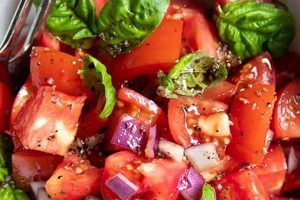
A superb caprese salad hinges on the quality and freshness of its ingredients. Typically, it features ripe tomatoes, fresh mozzarella cheese, and basil leaves, seasoned with salt, pepper, and high-quality olive oil. A balsamic glaze is a popular addition. Variations might include different types of tomatoes, cheeses, or herbs, but the core elements remain consistent.
The appeal of this simple Italian salad lies in its vibrant flavors and refreshing nature. The sweetness of ripe tomatoes, the creamy richness of mozzarella, and the peppery bite of basil create a harmonious balance. It is a visually appealing dish, showcasing the colors of the Italian flag. Its straightforward preparation makes it a popular appetizer or side dish, suitable for casual meals and elegant occasions alike. Originating on the island of Capri, it embodies the essence of Italian cuisine with its focus on fresh, high-quality ingredients.
The following sections will explore techniques for selecting the best ingredients, preparing a classic caprese salad, and creative variations for a personalized culinary experience. Guidance on presentation and serving suggestions will also be provided.
Tips for a Superior Caprese Salad
Creating an exceptional caprese salad involves attention to detail and an understanding of the interplay between ingredients. These tips offer guidance on achieving optimal flavor and presentation.
Tip 1: Tomato Selection is Paramount: Opt for ripe, in-season tomatoes. Heirloom varieties offer diverse flavors and vibrant colors. Ensure the tomatoes are at room temperature for optimal flavor expression.
Tip 2: Prioritize Fresh Mozzarella: Fresh mozzarella, preferably di bufala (made from water buffalo milk), provides the ideal creamy texture and delicate flavor. Avoid pre-shredded or low-moisture varieties.
Tip 3: Basil Handling Requires Care: Fresh basil leaves should be torn by hand, not chopped, to prevent bruising and preserve their aromatic oils. Smaller leaves are preferred for their tenderness.
Tip 4: Olive Oil Quality Matters: Use extra virgin olive oil with a robust flavor profile. A drizzle is sufficient; avoid overdressing.
Tip 5: Seasoning Enhances Flavor: Sea salt and freshly cracked black pepper are essential. A pinch of flaky sea salt sprinkled over the mozzarella enhances its flavor.
Tip 6: Balsamic Glaze Adds Depth (Optional): A high-quality balsamic glaze offers a touch of sweetness and acidity. Use sparingly to avoid overpowering the other flavors.
Tip 7: Presentation Elevates the Experience: Arrange the sliced tomatoes, mozzarella, and basil leaves attractively on a platter. Consider overlapping the ingredients slightly for a visually appealing presentation.
By following these guidelines, one can create a caprese salad that showcases the simplicity and elegance of Italian cuisine. Attention to these details ensures a harmonious balance of flavors and a visually stunning dish.
The following section concludes with a summary of the key elements discussed and offers final recommendations for achieving caprese salad perfection.
1. High-Quality Ingredients

The pursuit of the best caprese salad hinges on the quality of its components. This seemingly simple dish, composed of few ingredients, relies heavily on the individual excellence of each element. Subpar ingredients result in a mediocre salad, while high-quality ingredients elevate it to an exceptional culinary experience.
- Ripe, In-Season Tomatoes:
Tomatoes form the base of the caprese salad, and their quality significantly impacts the overall flavor profile. Out-of-season tomatoes often lack the sweetness and vibrant flavor characteristic of vine-ripened, in-season varieties. Heirloom tomatoes, with their diverse colors and flavor profiles, offer an opportunity to explore nuanced tastes. The difference between a bland, supermarket tomato and a juicy, locally-sourced heirloom is substantial in a caprese salad.
- Fresh Mozzarella di Bufala:
Authentic mozzarella di bufala, made from water buffalo milk, possesses a delicate, creamy texture and a slightly tangy flavor that complements the sweetness of ripe tomatoes. Processed, low-moisture mozzarella lacks the same richness and depth of flavor. The superior quality of fresh mozzarella di bufala is readily apparent in its texture and taste, contributing significantly to the overall experience.
- Fresh, Aromatic Basil:
Fresh basil provides a peppery, slightly minty counterpoint to the tomatoes and mozzarella. Dried basil lacks the vibrancy and complexity of fresh leaves. Small, tender basil leaves offer the best flavor and texture. The aroma of fresh basil, released when the leaves are torn, is an integral part of the sensory experience of a caprese salad.
- Extra Virgin Olive Oil:
High-quality extra virgin olive oil, with its fruity and peppery notes, enhances the other flavors in the salad. A delicate drizzle of a good olive oil is preferable to an abundance of a lower-quality oil. The olive oil acts as a unifying element, bringing together the distinct flavors of the tomatoes, mozzarella, and basil.
The synergy between these high-quality ingredients is what defines a truly exceptional caprese salad. Each component contributes distinct characteristics, creating a balanced and harmonious flavor profile. Investing in top-tier ingredients ensures a memorable culinary experience that showcases the simplicity and elegance of Italian cuisine.
2. Ripe Tomatoes
Ripe tomatoes are fundamental to a superlative caprese salad. The inherent sweetness and balanced acidity of a perfectly ripe tomato provide the flavor foundation upon which the other ingredients build. Underripe tomatoes, characterized by a mealy texture and tartness, detract from the desired flavor profile. Overripe tomatoes, while sweet, may have an undesirable mushy consistency that compromises the structural integrity of the salad. The tomato’s role extends beyond flavor; it provides a juicy counterpoint to the creamy mozzarella and peppery basil. A flavorful tomato elevates the overall sensory experience, while a subpar tomato diminishes it. For instance, a bland, out-of-season tomato offers little to complement the richness of the mozzarella, while a vibrant, locally-sourced heirloom tomato in peak season enhances the entire dish.
The selection of appropriate tomatoes is crucial. Factors such as variety, growing conditions, and ripeness stage contribute to the ultimate flavor and texture. Heirloom varieties, known for their diverse flavors and vibrant colors, offer a spectrum of options, from the sweet Brandywine to the tangy Green Zebra. Locally grown tomatoes, often harvested at peak ripeness, generally possess superior flavor compared to those transported long distances. Indicators of ripeness include vibrant color, a slight give to the touch, and a fragrant aroma. Observing these characteristics ensures selection of tomatoes that contribute optimally to the caprese salad.
Tomato selection presents a practical challenge, especially outside of peak growing season. However, prioritizing quality remains essential. Seeking out local farmers’ markets or specialty grocers often yields superior options. When faced with limited choices, opting for smaller varieties, such as cherry or grape tomatoes, can provide a more consistent flavor experience. Understanding the pivotal role of ripe tomatoes in a caprese salad informs ingredient selection and ultimately determines the success of the dish. The balance of sweetness, acidity, and texture contributes significantly to the overall sensory experience.
3. Fresh Mozzarella

Fresh mozzarella plays a critical role in a caprese salad, contributing a creamy texture and delicate flavor that balances the acidity of the tomatoes and the peppery notes of the basil. The quality of the mozzarella significantly impacts the overall sensory experience. Its delicate flavor profile requires careful consideration of sourcing and handling.
- Texture and Flavor Profile:
Fresh mozzarella, particularly mozzarella di bufala (made from water buffalo milk), possesses a unique, soft, and slightly elastic texture. Its flavor is milky, fresh, and subtly tangy, offering a pleasing contrast to the other ingredients. This textural and flavor contrast is essential for a balanced and harmonious caprese salad.
- Moisture Content:
High moisture content is a hallmark of fresh mozzarella. This characteristic contributes to its creamy texture and helps prevent the cheese from becoming dry and rubbery when sliced. Lower moisture mozzarella, often found pre-shredded or in blocks, lacks the desirable creaminess and can negatively impact the overall texture of the salad. Maintaining the proper moisture level is key to preserving the integrity of the mozzarella.
- Sourcing and Storage:
Ideally, fresh mozzarella should be purchased from a reputable cheesemonger or deli and consumed within a few days. Proper storage, in its original liquid and refrigerated, is essential for maintaining optimal freshness and preventing bacterial growth. Sourcing fresh, high-quality mozzarella is essential for achieving the desired flavor and texture.
- Pairing with Other Ingredients:
The mild flavor of fresh mozzarella allows it to complement the other ingredients in a caprese salad without overpowering them. Its creamy texture contrasts beautifully with the juicy tomatoes and fragrant basil. The interplay between these elements creates a harmonious balance of flavors and textures that defines a successful caprese salad.
The selection of fresh, high-quality mozzarella is paramount to crafting a truly exceptional caprese salad. Its delicate flavor, creamy texture, and appropriate moisture content contribute significantly to the overall balance and harmony of the dish. Prioritizing the quality of the mozzarella ensures a delightful culinary experience.
4. Fragrant Basil
Fragrant basil is integral to a best caprese salad recipe, providing a distinct aromatic and flavor counterpoint to the sweetness of ripe tomatoes and the creamy richness of fresh mozzarella. The herb’s peppery, slightly minty notes contribute a layer of complexity that elevates the salad beyond a simple combination of ingredients. Without fresh basil, the dish lacks a crucial dimension of flavor, resulting in a less dynamic and satisfying experience. The specific variety of basil influences the overall profile; sweet basil offers a classic flavor, while other varieties like lemon or Thai basil introduce citrus or anise notes, respectively. For example, using Thai basil alongside standard sweet basil creates a more complex, nuanced flavor profile.
The volatile oils within basil leaves are responsible for its characteristic fragrance and flavor. These oils are best preserved by tearing the leaves by hand rather than chopping them with a knife. Chopping bruises the leaves and causes oxidation, diminishing both aroma and flavor. Gentle handling ensures maximum impact within the finished dish. Furthermore, smaller, younger basil leaves typically possess a more tender texture and concentrated flavor compared to larger, mature leaves. Selecting these smaller leaves contributes to a more refined and flavorful salad. The difference between freshly torn basil and pre-chopped, store-bought basil is readily apparent in a caprese salad; the fresh basil provides a vibrant, herbaceous aroma and flavor that is absent in the pre-chopped alternative.
Optimal utilization of basil in a caprese salad extends beyond simple inclusion. Strategic placement and timing maximize its impact. Distributing the basil evenly throughout the salad ensures that its flavor is experienced in every bite. Adding the basil just before serving prevents wilting and preserves its vibrant green color. These practical considerations demonstrate that achieving a “best” caprese salad requires not only the presence of fragrant basil but also an understanding of how to handle and incorporate it effectively. Ignoring these details can result in a salad that falls short of its full potential, even with high-quality tomatoes and mozzarella. Careful attention to the selection, handling, and incorporation of fragrant basil ensures a balanced and harmonious flavor profile, essential for a truly exceptional caprese salad.
5. Extra Virgin Olive Oil
Extra virgin olive oil is not merely a dressing in a best caprese salad recipe; it is a crucial component that elevates the dish. Its quality and characteristics significantly influence the final flavor profile, interacting with the other ingredients to create a harmonious blend. Selecting the right olive oil is as important as choosing ripe tomatoes or fresh mozzarella.
- Flavor Profile:
Extra virgin olive oil offers a complex flavor profile, ranging from fruity and peppery to grassy and buttery. These nuances complement the sweetness of the tomatoes and the creaminess of the mozzarella, adding depth and complexity to the overall taste. A robust, peppery olive oil, for instance, can enhance the inherent sweetness of ripe heirloom tomatoes, creating a balanced flavor dynamic.
- Acidity:
The acidity level of extra virgin olive oil is a key factor in its flavor profile. Lower acidity oils tend to have a milder flavor, while higher acidity oils offer a more pronounced, sometimes peppery, taste. In a caprese salad, a balanced acidity level in the olive oil complements the natural acidity of the tomatoes without overpowering the other flavors. For example, an olive oil with high acidity might clash with particularly acidic tomatoes, whereas one with lower acidity would provide a smoother, more balanced flavor profile.
- Quality and Freshness:
Like the other ingredients in a caprese salad, the quality and freshness of the olive oil are paramount. Freshly pressed, high-quality extra virgin olive oil possesses a vibrant flavor and aroma that enhances the overall sensory experience. Using older or lower-quality oil can introduce off-flavors that detract from the delicate balance of the salad. The difference between a freshly pressed extra virgin olive oil and a lower-quality oil is readily apparent in the final dish, influencing both aroma and taste.
- Quantity and Application:
While essential, extra virgin olive oil should be used judiciously in a caprese salad. A light drizzle is sufficient to coat the ingredients and enhance their flavors. Overdressing can mask the delicate flavors of the tomatoes, mozzarella, and basil. The goal is to complement, not overwhelm, the other ingredients. A delicate hand ensures the olive oil enhances the salad without dominating it.
The careful selection and application of extra virgin olive oil are essential for achieving a “best” caprese salad. Its flavor profile, acidity, quality, and quantity all contribute to the overall balance and harmony of the dish. Understanding these factors allows for informed decisions that elevate the caprese salad from simple to exceptional. The olive oil acts as a unifying element, bringing together the distinct flavors of the core ingredients, creating a cohesive and delicious culinary experience.
6. Proper Seasoning
Proper seasoning is paramount in achieving a truly exceptional caprese salad. While high-quality ingredients form the foundation, appropriate seasoning elevates the dish, enhancing the inherent flavors of the tomatoes, mozzarella, and basil. Salt, primarily, plays a crucial role, not only by adding saltiness but also by amplifying the other flavors. Insufficient seasoning results in a bland salad that fails to showcase the quality of its components. Conversely, excessive seasoning can overwhelm the delicate balance of flavors, masking the sweetness of the tomatoes and the creaminess of the mozzarella. A properly seasoned caprese salad allows the individual flavors to shine while harmonizing as a cohesive whole. For instance, a caprese salad made with perfectly ripe heirloom tomatoes, fresh mozzarella di bufala, and fragrant basil, yet under-seasoned, will taste flat and lackluster. The same ingredients, properly seasoned, will deliver a vibrant and satisfying flavor experience.
The type of salt used also influences the final outcome. Flaky sea salt, such as Maldon or fleur de sel, offers a delicate crunch and clean saltiness that complements the other ingredients without overpowering them. Table salt, while functional, lacks the same textural and flavor nuance. Freshly cracked black pepper adds a subtle layer of complexity, enhancing the peppery notes of the basil. The timing of seasoning also matters. Salting the tomatoes slightly in advance draws out excess moisture, intensifying their flavor and preventing a watery salad. Sprinkling flaky sea salt over the mozzarella just before serving enhances its creamy texture and adds a burst of flavor in each bite. These nuances demonstrate the importance of both the type and application of seasoning.
Mastering the art of proper seasoning requires attention to detail and an understanding of the interplay between ingredients. It involves not only the correct amount of salt and pepper but also the type of salt used and the timing of its application. Achieving a balance that enhances without overpowering the inherent flavors of the ingredients is key to creating a truly exceptional caprese salad. Failure to appreciate the importance of proper seasoning results in a dish that falls short of its full potential, regardless of the quality of its components. The difference between a bland and a vibrant caprese salad often lies in the nuanced application of salt and pepper.
7. Elegant Presentation

Elegant presentation distinguishes a merely good caprese salad from a truly exceptional one. While flavor remains paramount, visual appeal elevates the dining experience, transforming a simple dish into a culinary statement. The arrangement of tomatoes, mozzarella, and basil significantly impacts perception and enjoyment. A haphazard arrangement diminishes the perceived value, while a thoughtful presentation enhances it, creating anticipation and pleasure. This principle operates on the understanding that visual appeal stimulates appetite and enhances perceived flavor. A beautifully presented caprese salad suggests care and attention to detail, creating a positive impression before the first bite is even taken. For instance, a caprese salad served on a chipped plate with ingredients carelessly tossed together communicates a lack of effort, while the same salad artfully arranged on a pristine platter conveys elegance and sophistication.
Several techniques contribute to elegant presentation. Classic arrangements involve alternating slices of tomato and mozzarella, often overlapping slightly, with fresh basil leaves tucked between. More contemporary presentations might incorporate variations in slicing techniques, such as using a mandoline for uniformly thin slices or creating rolls of mozzarella and tomato. The use of high-quality servingware, including platters and individual plates, further enhances visual appeal. Consideration should be given to color contrast and balance. The vibrant red of tomatoes, the pristine white of mozzarella, and the deep green of basil offer inherent visual appeal, which can be maximized through deliberate arrangement. Adding a drizzle of balsamic glaze, if desired, should be done with restraint, enhancing the visual presentation without overwhelming the other colors. A caprese salad arranged with uniformly thick slices of tomato and mozzarella, alternating with vibrant basil leaves, and served on a white platter, offers a stark visual contrast that is inherently appealing. Conversely, a salad with unevenly sliced ingredients, wilted basil, and a haphazard drizzle of balsamic glaze detracts from the visual experience.
Elegant presentation requires minimal effort yet yields substantial returns in terms of perceived value and enjoyment. It demonstrates respect for the ingredients and elevates the dining experience. While flavor remains the cornerstone of a successful caprese salad, presentation plays a crucial role in transforming it from a simple dish into a culinary masterpiece. Challenges may arise in maintaining the visual appeal if the salad sits for an extended period, as the mozzarella can release moisture and the basil can wilt. Serving the salad immediately after preparation mitigates these challenges, ensuring optimal visual impact. Ultimately, understanding the significance of presentation, alongside ingredient quality and proper seasoning, unlocks the full potential of the caprese salad, allowing it to become a true expression of culinary artistry.
Frequently Asked Questions
This section addresses common inquiries regarding the preparation and enjoyment of a superior caprese salad.
Question 1: Can other cheeses be substituted for fresh mozzarella?
While fresh mozzarella is traditional, variations using burrata, bocconcini, or even a high-quality feta can offer interesting flavor profiles. However, these substitutions alter the classic caprese experience.
Question 2: What are the best tomato varieties for caprese salad?
Ripe, in-season tomatoes are essential. Heirloom varieties, such as Brandywine, Cherokee Purple, or Green Zebra, offer diverse flavors and vibrant colors. Locally sourced tomatoes, when available, are often preferred for their freshness.
Question 3: Should balsamic glaze be added to a caprese salad?
Balsamic glaze is a popular addition, offering sweetness and acidity. However, it should be used sparingly to avoid overpowering the delicate flavors of the tomatoes, mozzarella, and basil. High-quality balsamic glaze is recommended.
Question 4: How should basil be handled for a caprese salad?
Basil leaves should be torn by hand rather than chopped to prevent bruising and preserve their aromatic oils. Smaller, younger leaves are generally preferred for their tenderness and concentrated flavor.
Question 5: What type of olive oil is best suited for caprese salad?
High-quality extra virgin olive oil, with a robust flavor profile, is recommended. A light drizzle is sufficient; avoid overdressing, as this can mask the flavors of the other ingredients.
Question 6: How should a caprese salad be stored?
Ideally, a caprese salad is best consumed immediately after preparation. If storage is necessary, keep the ingredients separate and combine just before serving to prevent the mozzarella from becoming watery and the basil from wilting.
Careful attention to these details ensures a caprese salad that exemplifies the essence of Italian cuisine: simplicity, freshness, and quality.
The subsequent section will offer a curated selection of variations on the classic caprese salad theme, inspiring culinary creativity.
Best Caprese Salad Recipe
Achieving a truly exceptional caprese salad transcends simply combining tomatoes, mozzarella, and basil. It represents a commitment to quality, freshness, and a nuanced understanding of flavor dynamics. This exploration has highlighted the critical role of ingredient selection, emphasizing the importance of ripe, in-season tomatoes; fresh, high-quality mozzarella; fragrant basil; and premium extra virgin olive oil. Proper seasoning and elegant presentation further elevate the dish, transforming it from a simple combination of components into a culinary experience. Each element contributes to the overall harmony and balance, showcasing the inherent simplicity and elegance of Italian cuisine. The seemingly straightforward nature of this salad belies the careful attention to detail required for optimal results.
The pursuit of the best caprese salad recipe is an ongoing journey, a testament to the enduring appeal of fresh, high-quality ingredients and the transformative power of culinary artistry. It encourages appreciation for the subtle nuances of flavor and the importance of respecting the integrity of each component. By embracing these principles, one can consistently create a caprese salad that delights the senses and embodies the essence of Italian culinary excellence.