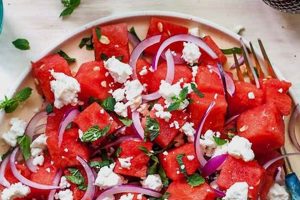
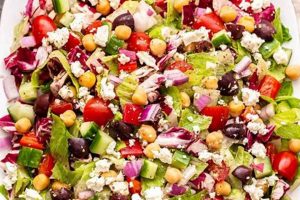
Salads featuring tomatoes as the primary ingredient often incorporate feta cheese for its salty, tangy, and creamy characteristics. This combination creates a classic Mediterranean flavor profile, complemented by ingredients such as olives, cucumbers, red onion, and various herbs. A simple vinaigrette, frequently olive oil-based, typically dresses these salads.
The inclusion of this specific cheese elevates a basic tomato salad, adding depth and complexity. Its briny and slightly acidic notes balance the sweetness of ripe tomatoes, while its crumbly texture provides a pleasant contrast to the juicy vegetables. This pairing is a staple in Mediterranean cuisine, reflecting the region’s emphasis on fresh, seasonal ingredients. The historical significance of both tomatoes and feta in this region underscores the longstanding appreciation for this flavor combination.
Further exploration will delve into specific recipe variations, highlighting diverse approaches to preparing and presenting these salads. This includes examining different types of tomatoes and feta, exploring complementary ingredients and dressings, and offering tips for achieving optimal flavor and presentation.
Tips for Crafting Exceptional Tomato and Feta Salads
Achieving optimal flavor and presentation requires attention to detail. The following tips offer guidance for creating salads that highlight the complementary nature of tomatoes and this specific cheese.
Tip 1: Tomato Selection is Key: Opt for ripe, flavorful tomatoes. Heirloom varieties offer a range of colors, textures, and sweetness, enhancing both visual appeal and taste. Consider the tomato’s sweetness and acidity when selecting the accompanying cheese.
Tip 2: Cheese Quality Matters: Choose high-quality feta, preferably stored in brine. This preserves its creamy texture and distinctive flavor. Avoid pre-crumbled varieties, as they tend to be drier.
Tip 3: Balance Flavors and Textures: Incorporate ingredients that complement the saltiness of the cheese and sweetness of the tomatoes. Cucumbers, red onion, and Kalamata olives provide contrasting textures and flavors.
Tip 4: Herb Selection Enhances the Profile: Fresh herbs such as mint, oregano, or basil elevate the salad’s aromatic complexity. Choose herbs that complement the other ingredients and personal preference.
Tip 5: Dressing Should Complement, Not Overpower: A simple vinaigrette, often olive oil-based, allows the flavors of the tomatoes and cheese to shine. Lemon juice or red wine vinegar adds a touch of acidity, balancing the richness of the cheese.
Tip 6: Proper Timing is Crucial: Dress the salad just before serving to prevent the tomatoes from becoming soggy and the cheese from drying out. This preserves the optimal texture of each ingredient.
Tip 7: Presentation Elevates the Dining Experience: Arrange the salad thoughtfully, considering color and texture. A sprinkle of extra feta or a drizzle of olive oil enhances visual appeal.
By following these guidelines, one can create a visually appealing and flavorful salad showcasing the harmonious pairing of ripe tomatoes and tangy feta cheese. Attention to these details ensures a delightful culinary experience.
The following section will offer a selection of specific recipes, demonstrating how these tips can be applied in practice.
1. Ripe, flavorful tomatoes

The foundation of any successful tomato and feta salad lies in the quality of the tomatoes themselves. Ripe, flavorful tomatoes provide the necessary sweetness and acidity to balance the salty, tangy feta, creating a harmonious flavor profile. Selecting the right tomatoes is paramount for achieving the desired outcome.
- Ripeness Indicators
Optimal ripeness is indicated by vibrant color, a slight give to the touch, and a fragrant aroma. Avoid tomatoes that are overly soft, bruised, or lack a noticeable scent. Different varieties achieve peak ripeness at varying rates; understanding these nuances ensures optimal flavor.
- Variety Selection
Heirloom varieties offer a diverse range of flavors, colors, and textures, enhancing both the visual appeal and taste complexity of the salad. From the sweetness of Brandywine to the acidity of Cherokee Purple, each variety contributes unique characteristics. Consider the overall balance of the salad when selecting varieties.
- Seasonality and Sourcing
Locally sourced, in-season tomatoes generally offer superior flavor compared to those transported long distances. Farmers’ markets provide access to freshly picked produce, maximizing flavor and supporting local agriculture. The seasonality of tomatoes influences their taste profile; summer-ripened tomatoes often exhibit the most intense flavor.
- Tomato Preparation
Proper preparation techniques further enhance the flavor and texture of the tomatoes. Slicing tomatoes evenly ensures consistent flavor distribution and visual appeal. For larger tomatoes, removing the seeds and excess pulp can prevent the salad from becoming watery. Consider the size and texture of the tomato when determining the appropriate cutting technique.
By prioritizing ripe, flavorful tomatoes, one elevates the overall quality and enjoyment of a tomato and feta salad. The careful selection, sourcing, and preparation of tomatoes lay the groundwork for a successful dish, highlighting the inherent synergy between ripe tomatoes and salty feta.
2. High-quality feta

High-quality feta cheese plays a crucial role in elevating tomato salad recipes from simple to exceptional. The cheese’s inherent characteristicsits salty, tangy, and creamy naturecomplement the sweetness and acidity of ripe tomatoes, creating a balanced and flavorful dish. Inferior feta, often overly salty or dry, can detract from the delicate balance, overpowering the other ingredients.
Authentic feta, traditionally made from sheep’s milk or a blend of sheep and goat’s milk, possesses a distinct flavor profile. This profile develops through aging in brine, a process that contributes to the cheese’s characteristic crumbly texture and tangy taste. The brine also preserves the feta, ensuring optimal freshness and preventing it from drying out. Examples of high-quality feta include Greek feta protected designation of origin (PDO), which adheres to specific production standards, and French Valbreso feta, known for its rich, creamy texture. Conversely, mass-produced feta often utilizes cow’s milk and lacks the nuanced flavor and texture of traditional varieties. This difference can significantly impact the overall quality of the tomato salad.
Selecting high-quality feta ensures a pleasant culinary experience. Its creamy texture contrasts with the juicy tomatoes, while its briny, slightly acidic notes harmonize with the tomatoes’ sweetness. Prioritizing quality feta contributes significantly to the overall balance and complexity of the salad. Choosing feta stored in brine, rather than pre-crumbled varieties, helps maintain its optimal texture and flavor. Understanding the nuances of feta selection allows one to create a tomato salad that truly showcases the synergistic relationship between high-quality ingredients.
3. Complementary Ingredients

Complementary ingredients enhance the synergy between tomatoes and feta in a salad, creating a more complex and balanced flavor profile. These additions contribute textural contrast, introduce aromatic complexity, and amplify the inherent qualities of the primary components. Careful selection ensures each ingredient plays a specific role in elevating the overall culinary experience.
Cucumbers, with their refreshing crispness, provide a textural counterpoint to the creamy feta and juicy tomatoes. Red onion introduces a subtle sharpness that cuts through the richness of the cheese, while Kalamata olives offer a briny, savory element. Fresh herbs, such as mint, oregano, or basil, contribute aromatic complexity, further enhancing the Mediterranean character of the salad. Other additions might include bell peppers for sweetness and crunch, or artichoke hearts for a subtle earthy note. The interplay of these flavors and textures creates a multi-dimensional sensory experience, transforming a simple tomato and feta salad into something truly exceptional. For instance, a salad featuring ripe heirloom tomatoes, creamy feta, crisp cucumbers, Kalamata olives, thinly sliced red onion, and fresh oregano, dressed with a light lemon vinaigrette, exemplifies the harmonious blend of complementary flavors and textures. The slight bitterness of the olives, the piquant onion, and the herbaceous oregano all work in concert to enhance the sweetness of the tomatoes and the tanginess of the feta.
Understanding the role of complementary ingredients allows for informed choices that enhance the overall balance and complexity of tomato and feta salads. This knowledge empowers experimentation with various flavor combinations, ensuring each ingredient contributes to a cohesive and delightful culinary experience. The strategic use of complementary ingredients elevates the salad beyond a simple combination of tomatoes and feta, transforming it into a well-rounded and satisfying dish.
4. Balanced vinaigrette

A balanced vinaigrette plays a critical role in tomato salad recipes featuring feta. It provides a crucial bridge, uniting the diverse flavors and textures, rather than masking them. An overly acidic dressing can overwhelm the delicate sweetness of the tomatoes and clash with the tangy feta. Conversely, a bland dressing fails to elevate the inherent flavors of the salad’s components. A balanced vinaigrette enhances the synergy between the ingredients, creating a cohesive and harmonious culinary experience.
The ideal vinaigrette for such a salad typically features a high-quality extra virgin olive oil as its base. This oil contributes a fruity, peppery flavor that complements the tomatoes and feta. The acidic component, often lemon juice or red wine vinegar, provides the necessary brightness to cut through the richness of the cheese and enhance the sweetness of the tomatoes. The ratio of oil to acid is crucial; a typical vinaigrette consists of a 3:1 ratio of oil to acid, but this can be adjusted to preference. Additional flavor components, such as Dijon mustard, minced garlic, or dried oregano, can further enhance the complexity of the vinaigrette without overpowering the core flavors of the salad. For example, a lemon-herb vinaigrette with a touch of Dijon mustard complements the flavors of ripe tomatoes, feta, cucumbers, and red onion, creating a vibrant and balanced salad.
Understanding the importance of a balanced vinaigrette allows for informed decision-making when preparing tomato salad recipes featuring feta. Careful consideration of the oil, acid, and additional flavor components ensures the dressing complements, rather than competes with, the other ingredients. This results in a salad where the flavors of the tomatoes, feta, and complementary ingredients shine through, creating a harmonious and satisfying culinary experience.
5. Proper Timing

Proper timing is crucial when preparing tomato salad recipes featuring feta cheese. This impacts both the textural integrity of the ingredients and the overall flavor balance. Delayed dressing or premature assembly can lead to undesirable outcomes, such as soggy tomatoes, dry feta, or a diluted vinaigrette. Understanding the optimal timing for each stage of preparation ensures a successful and enjoyable culinary experience. The delicate nature of ripe tomatoes makes them particularly susceptible to degradation when exposed to acidic dressings for extended periods. Similarly, feta cheese can dry out if left exposed to air, losing its characteristic creamy texture.
For optimal results, one should combine the tomatoes, feta, and other complementary ingredients just before serving. The vinaigrette should be added at the very last moment, ensuring the tomatoes maintain their firmness and the feta retains its moisture. This practice maximizes the textural contrast and prevents the flavors from becoming muddled. Consider a scenario where a tomato and feta salad is dressed hours before consumption. The tomatoes will likely release excess moisture, resulting in a watery salad with compromised textural integrity. The feta, exposed to air, may become dry and lose its characteristic creamy texture. The vinaigrette itself may become diluted, diminishing its impact on the overall flavor profile.
Adhering to proper timing preserves the distinct qualities of each ingredient, contributing to a more satisfying sensory experience. The crispness of the vegetables, the creaminess of the feta, and the vibrancy of the vinaigrette are all maintained through timely assembly and dressing. This careful attention to timing elevates the tomato salad from a simple combination of ingredients to a well-executed dish showcasing the harmonious interplay of flavors and textures. Understanding and applying this principle is essential for anyone seeking to create exceptional tomato salad recipes featuring feta cheese.
Frequently Asked Questions
This section addresses common inquiries regarding tomato and feta salad preparation, offering practical guidance for achieving optimal results.
Question 1: What type of feta is best suited for tomato salads?
Authentic Greek feta, made from sheep’s milk or a blend of sheep and goat’s milk, offers the most desirable flavor profile. Feta stored in brine maintains optimal texture and flavor compared to pre-crumbled varieties.
Question 2: How can one prevent the salad from becoming watery?
Using ripe, but not overly soft, tomatoes minimizes excess moisture. Removing seeds and pulp from larger tomatoes further helps prevent a watery consistency. Dressing the salad immediately before serving is crucial.
Question 3: What other ingredients complement tomatoes and feta in a salad?
Cucumbers, red onion, Kalamata olives, and fresh herbs like mint, oregano, or basil create a balanced and flavorful combination. Other options include bell peppers and artichoke hearts.
Question 4: What type of dressing is recommended for a tomato and feta salad?
A simple vinaigrette made with high-quality extra virgin olive oil and lemon juice or red wine vinegar enhances the flavors of the tomatoes and feta without overpowering them. A 3:1 ratio of oil to acid is generally recommended.
Question 5: Can this salad be prepared in advance?
For optimal texture and flavor, it is recommended to combine the ingredients and add the dressing just before serving. Advanced preparation can lead to soggy tomatoes and dry feta.
Question 6: How can one enhance the visual appeal of a tomato and feta salad?
Consider using a variety of colorful heirloom tomatoes and arranging the ingredients thoughtfully. A sprinkle of extra feta or a drizzle of olive oil can elevate the presentation.
Addressing these common questions provides a solid foundation for creating delicious and visually appealing tomato and feta salads. Attention to detail at each stage of preparation ensures optimal results.
The next section will provide a collection of curated recipes, demonstrating the practical application of the principles discussed.
Tomato Salad Recipes Feta
Exploration of tomato salad recipes incorporating feta cheese reveals a compelling interplay of flavors and textures. Emphasis on ingredient quality, specifically ripe tomatoes and authentic feta, is paramount. Complementary ingredients, such as cucumbers, olives, and fresh herbs, enhance the inherent synergy between the core components. A balanced vinaigrette, typically olive oil-based with a touch of acidity, unifies the diverse elements. Proper timing, with a focus on last-minute assembly and dressing, preserves textural integrity and prevents flavor degradation. Attention to these key elements distinguishes a simple combination of ingredients from a truly exceptional culinary creation.
Tomato and feta salads represent more than a mere culinary combination; they embody a celebration of fresh, seasonal ingredients and the enduring appeal of Mediterranean cuisine. Continued exploration of flavor profiles and ingredient combinations offers endless possibilities for culinary innovation within this classic framework. The timeless appeal of these salads lies in their simplicity, versatility, and capacity to showcase the inherent beauty of fresh, high-quality ingredients.