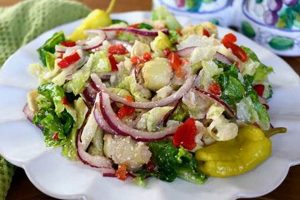
A classic Italian appetizer or side dish features fresh mozzarella, ripe tomatoes, and basil leaves, arranged attractively and drizzled with a balsamic glaze. Variations may include additions like olives, pesto, or a sprinkle of salt and pepper. A simple version involves layering sliced tomatoes and mozzarella, topped with basil and a balsamic reduction.
This dish embodies simplicity and freshness, highlighting the high-quality ingredients. The sweetness of ripe tomatoes, the creamy richness of mozzarella, and the peppery basil create a harmonious flavor profile, further enhanced by the tangy sweetness of balsamic glaze. Its visual appeal and minimal preparation time make it a popular choice for entertaining or a light meal. The combination of ingredients provides vitamins, minerals, and antioxidants, contributing to a healthy diet.
This exploration will delve further into variations of this refreshing salad, covering topics such as selecting the finest ingredients, preparing the balsamic reduction, and presenting the dish for optimal visual and gustatory appeal. Different balsamic vinegar types and their impact on the final flavor will also be discussed.
Tips for a Perfect Caprese Salad with Balsamic Glaze
Elevating this simple salad requires attention to detail. The following tips ensure a delightful culinary experience.
Tip 1: Ingredient Quality is Paramount: Opt for fresh, locally sourced ingredients whenever possible. Vine-ripened tomatoes offer superior flavor. High-quality mozzarella, such as buffalo mozzarella (mozzarella di bufala), adds richness.
Tip 2: Balsamic Glaze Consistency: Reduce balsamic vinegar on low heat until it reaches a syrupy consistency. Over-reduction can result in a bitter taste. The glaze should coat the back of a spoon.
Tip 3: Tomato Selection and Preparation: Choose tomatoes at peak ripeness, avoiding overripe or bruised specimens. Heirloom varieties offer diverse flavors and colors. Slice tomatoes evenly for uniform presentation and flavor distribution.
Tip 4: Mozzarella Handling: Allow mozzarella to come to room temperature for optimal flavor and texture. Drain excess liquid before arranging.
Tip 5: Basil Usage: Fresh basil leaves are essential. Avoid dried basil for this dish. Tear larger leaves into smaller pieces for easier consumption.
Tip 6: Seasoning: Use high-quality sea salt and freshly cracked black pepper sparingly to enhance the natural flavors of the ingredients.
Tip 7: Arrangement and Presentation: Consider the visual appeal. Classic arrangements involve alternating slices of tomato and mozzarella. Drizzle the balsamic glaze artfully, avoiding excessive pooling.
Adhering to these guidelines ensures a delightful balance of flavors and textures. The result is a refreshing and visually appealing dish suitable for any occasion.
By understanding the nuances of ingredient selection, preparation, and presentation, one can truly appreciate the elegant simplicity of this classic Italian salad.
1. Fresh, Ripe Tomatoes

The foundation of a successful Caprese salad rests upon the quality of its tomatoes. Fresh, ripe tomatoes provide the essential sweetness and juiciness that balance the richness of the mozzarella and the tang of the balsamic glaze. Selecting the right tomatoes is paramount to achieving the desired flavor profile.
- Variety Selection
Different tomato varieties offer unique flavor profiles and textures. Heirloom tomatoes, with their diverse colors and nuanced flavors, provide complexity. Beefsteak tomatoes, known for their meaty texture and lower water content, offer a robust presence. Cherry or grape tomatoes, while smaller, contribute a burst of sweetness. The chosen variety significantly influences the overall taste experience.
- Ripeness Indicators
Optimal ripeness is crucial. Indicators of ripeness include vibrant color, a slight give to the touch, and a fragrant aroma. Avoid tomatoes with bruises, blemishes, or soft spots. Underripe tomatoes lack flavor, while overripe tomatoes can be mealy. Careful selection ensures the ideal balance of sweetness and acidity.
- Seasonality and Sourcing
Tomatoes at their peak flavor are typically available during the summer months. Locally sourced, vine-ripened tomatoes offer superior taste compared to those shipped long distances. Farmers’ markets often provide access to a wider variety of heirloom and locally grown options, maximizing flavor potential.
- Preparation and Handling
Proper handling preserves the integrity of the tomatoes. Store ripe tomatoes at room temperature, away from direct sunlight. Refrigeration can diminish flavor. Slice tomatoes just before serving to maintain freshness and prevent excess moisture from seeping into the salad. Evenly sized slices ensure consistent flavor distribution and enhance the visual appeal.
The careful consideration of variety, ripeness, seasonality, and handling elevates the Caprese salad from a simple dish to a culinary experience. The tomato, as the star ingredient, contributes significantly to the overall balance of flavors and textures. Its inherent sweetness, acidity, and juiciness play a crucial role in complementing the other components, creating a harmonious and refreshing dish.
2. High-Quality Mozzarella

High-quality mozzarella plays a crucial role in a Caprese salad, contributing a creamy texture and delicate flavor that balances the acidity of the tomatoes and the sweetness of the balsamic glaze. The type of mozzarella significantly impacts the overall experience. Fresh mozzarella, particularly mozzarella di bufala (made from water buffalo milk), offers a richer, creamier texture and a slightly tangy flavor compared to standard cow’s milk mozzarella. This richness enhances the interplay of flavors, creating a more complex and satisfying sensory experience. Using low-quality or processed mozzarella can detract from the salad’s freshness and delicate balance.
The difference between fresh mozzarella and processed mozzarella becomes evident in the final dish. Fresh mozzarella, with its higher moisture content, provides a soft, melt-in-your-mouth texture that contrasts beautifully with the firmness of the tomatoes. Processed mozzarella, often denser and drier, lacks this textural nuance. Furthermore, the delicate, milky flavor of fresh mozzarella allows the other ingredients to shine, while processed mozzarella can introduce unwanted sharpness or artificial flavors that disrupt the harmony of the salad. For example, comparing a Caprese salad made with fresh mozzarella di bufala to one made with pre-shredded, low-moisture mozzarella reveals a noticeable difference in both texture and overall flavor complexity.
Understanding the importance of high-quality mozzarella is essential for creating an authentic and flavorful Caprese salad. Selecting fresh mozzarella, ideally mozzarella di bufala, elevates the dish by providing a creamy texture and delicate flavor that harmonizes with the other components. While cost considerations might tempt one to use less expensive alternatives, the compromise in flavor and texture ultimately detracts from the overall experience. Investing in high-quality mozzarella ensures a truly satisfying and authentic Caprese salad.
3. Fragrant Basil Leaves

Fresh basil provides an aromatic counterpoint to the other ingredients in a Caprese salad. Its peppery, slightly minty aroma and flavor complement the sweetness of ripe tomatoes and the richness of mozzarella. The herb’s inherent oils contribute to the overall sensory experience, making the salad more than just a combination of individual components.
- Variety Selection
Different basil varieties offer subtle flavor variations. Sweet basil, the most common type, possesses the classic peppery, anise-tinged flavor profile ideal for Caprese salad. Other varieties, such as Genovese basil, Thai basil, or lemon basil, can introduce interesting nuances but may not complement the traditional flavor profile as effectively. Selecting the appropriate variety ensures the desired balance and aromatic intensity.
- Freshness and Handling
Fresh basil leaves are essential for optimal flavor. Dried basil lacks the vibrancy and complexity of fresh leaves. To maximize flavor, store fresh basil at room temperature, stems submerged in water, or wrapped in a slightly damp paper towel and refrigerated. Adding basil at the last moment preserves its delicate aroma and prevents bruising or wilting.
- Flavor Pairing and Balance
Basil’s peppery notes provide a crucial bridge between the sweetness of the tomatoes and the richness of the mozzarella. This balance is key to the Caprese salad’s success. Too much basil can overpower the other flavors, while too little can leave the dish lacking complexity. Careful portioning ensures that the basil enhances, rather than dominates, the overall flavor profile.
- Visual Appeal and Presentation
Beyond its aromatic contribution, basil also enhances the salad’s visual appeal. Whole leaves, strategically placed, add a vibrant green element to the red and white of the tomatoes and mozzarella. Torn or chiffonade-cut leaves create a more integrated presentation while distributing the flavor more evenly throughout the salad. The visual presentation further elevates the dining experience.
The careful selection, handling, and incorporation of fresh basil elevates the Caprese salad. Its aromatic and visual contributions are integral to the dish’s overall appeal. By understanding the nuances of basil’s flavor profile and its interaction with other ingredients, one can fully appreciate its crucial role in this classic Italian salad.
4. Authentic Balsamic Glaze
Authentic balsamic glaze forms an integral part of a true Caprese salad, adding a nuanced layer of sweet acidity that balances the other components. Its complex flavor profile, derived from cooked and aged grape must, elevates the simple salad to a sophisticated culinary experience. Understanding the characteristics of authentic balsamic glaze is essential for appreciating its contribution to the overall dish.
- Origin and Production
True balsamic glaze originates from Modena, Italy, and undergoes a strict production process. Made from cooked grape must, it is aged in wooden barrels for years, developing a complex, syrupy consistency and a unique sweet-and-sour flavor profile. This traditional process differentiates authentic balsamic glaze from commercially produced imitations, which often contain added sugars, thickeners, and artificial colorings that compromise the flavor and detract from the authenticity of the dish.
- Flavor Profile and Complexity
Authentic balsamic glaze offers a complex interplay of sweet, tangy, and slightly acidic notes. The aging process contributes to the development of subtle woody and caramel undertones, further enriching the flavor profile. This depth of flavor enhances the freshness of the tomatoes and mozzarella, creating a harmonious balance. Unlike cheaper alternatives, authentic balsamic glaze does not have a harsh, overly acidic taste. Its smooth, mellow sweetness complements the other ingredients without overpowering them.
- Viscosity and Texture
The viscosity of authentic balsamic glaze is a crucial factor in its contribution to the Caprese salad. Its syrupy consistency allows it to cling to the ingredients, ensuring even flavor distribution. This also enhances the visual appeal of the dish, adding a glossy sheen to the tomatoes and mozzarella. A thinner, less viscous glaze would simply pool at the bottom of the plate, failing to integrate with the other components and potentially making the salad soggy.
- Impact on Overall Dish
The use of authentic balsamic glaze significantly impacts the overall taste and presentation of the Caprese salad. Its complex flavor profile enhances the natural sweetness of the tomatoes and the creamy richness of the mozzarella. The glaze acts as a unifying element, bringing together the individual ingredients into a harmonious whole. Its dark, glossy appearance also elevates the visual presentation, creating an aesthetically pleasing and appetizing dish.
In a Caprese salad, the balsamic glaze is not merely a condiment but a crucial component that contributes to the overall balance of flavors, textures, and visual appeal. Choosing an authentic balsamic glaze elevates the dish, showcasing the quality and craftsmanship that distinguish this classic Italian salad.
5. Extra Virgin Olive Oil
Extra virgin olive oil is not merely a condiment but a crucial component that elevates the Caprese salad. Its role extends beyond simply adding richness; it acts as a flavor enhancer and textural component, contributing significantly to the overall sensory experience. The choice of extra virgin olive oil directly impacts the final result, affecting both the taste and the mouthfeel of the salad. A high-quality extra virgin olive oil, with its fruity, peppery notes, complements the sweetness of the tomatoes and the richness of the mozzarella, creating a harmonious blend of flavors. The oil’s viscosity also coats the ingredients, allowing the flavors to linger on the palate. For instance, using a robust Tuscan extra virgin olive oil with its peppery finish adds a distinct layer of complexity compared to a milder, more delicate oil. This interplay highlights the importance of selecting an extra virgin olive oil that complements the other ingredients.
The practical significance of understanding the role of extra virgin olive oil lies in the ability to create a truly exceptional Caprese salad. The right oil enhances the natural flavors of the tomatoes, mozzarella, and basil, creating a synergistic effect where the whole is greater than the sum of its parts. Furthermore, the oil’s texture contributes to the overall mouthfeel, adding a luxurious richness that complements the creamy mozzarella and juicy tomatoes. Consider a scenario where a low-quality or overly processed olive oil is used. The resulting salad might lack the desired vibrancy and complexity, with the oil’s flavor potentially clashing with the delicate balance of the other ingredients. This underscores the crucial role of selecting a high-quality extra virgin olive oil to achieve the desired culinary outcome.
In summary, extra virgin olive oil is an essential element of a well-executed Caprese salad. Its contribution extends beyond simply adding fat; it acts as a flavor enhancer, a textural component, and a unifying element that brings together the other ingredients. Selecting a high-quality extra virgin olive oil, and understanding its impact on the final dish, is crucial for creating a Caprese salad that truly embodies the essence of Italian culinary excellence. The careful consideration of this seemingly simple ingredient elevates the dish, transforming it from a basic combination of ingredients into a sophisticated and satisfying culinary creation.
6. Sea Salt and Black Pepper
Sea salt and freshly cracked black pepper, while seemingly simple seasonings, play a crucial role in enhancing the flavor profile of a Caprese salad. They act not as primary flavors, but as enhancers, amplifying the inherent sweetness of the tomatoes, the creaminess of the mozzarella, and the peppery notes of the basil. The salinity of sea salt, in particular, draws out the moisture in the tomatoes, intensifying their sweetness and balancing the richness of the mozzarella. The subtle heat and complex aroma of freshly cracked black pepper add another layer of depth, complementing the balsamic glaze and further enhancing the interplay of flavors. Using table salt, with its added iodine and anti-caking agents, can introduce a metallic taste that detracts from the fresh flavors of the salad. Similarly, pre-ground black pepper, having lost its volatile oils, lacks the aromatic complexity and subtle heat of freshly ground peppercorns. For example, a Caprese salad seasoned with high-quality sea salt and freshly cracked black pepper will exhibit a brighter, more nuanced flavor profile compared to one seasoned with standard table salt and pre-ground pepper.
The practical significance of understanding the role of these seasonings lies in the ability to elevate a simple Caprese salad to a truly exceptional culinary experience. The correct application of sea salt and black pepper unlocks the full potential of the ingredients, creating a harmonious balance of flavors. Over-salting can mask the delicate flavors of the other components, while insufficient seasoning can leave the salad tasting bland. Similarly, using too much black pepper can overwhelm the palate, while too little fails to provide the desired complexity. Consider the difference between a Caprese salad where the tomatoes are lightly sprinkled with sea salt just before serving, allowing their juices to mingle with the seasoning, and one where the salt is added well in advance, resulting in excessive moisture loss and a less vibrant flavor. This illustrates the importance of precise seasoning and timing.
In conclusion, sea salt and freshly cracked black pepper are essential elements in a well-executed Caprese salad. They function as flavor enhancers, amplifying the inherent qualities of the other ingredients and creating a balanced, nuanced flavor profile. The proper selection and application of these seasonings demonstrate an attention to detail that elevates the dish from simple to sophisticated. While often overlooked, these seemingly basic seasonings play a critical role in achieving the desired culinary outcome, highlighting the importance of understanding the nuances of flavor interaction and the impact of ingredient quality.
7. Thoughtful Presentation

Thoughtful presentation elevates the Caprese salad from a simple arrangement of ingredients to a visually appealing culinary experience. Consideration of color, texture, and arrangement transforms the dish, enhancing its perceived freshness and flavor. The visual appeal stimulates appetite and sets the stage for a more enjoyable dining experience. A strategically arranged Caprese salad, with vibrant red tomatoes, creamy white mozzarella, and deep green basil, drizzled artfully with balsamic glaze, is more enticing than a haphazardly plated version, even if the ingredients are identical. This visual engagement enhances the perception of flavor, creating a more satisfying sensory experience. For example, a Caprese salad arranged on a platter with alternating slices of tomato and mozzarella, garnished with fresh basil leaves and a drizzle of balsamic glaze, presents a more appealing visual than a bowl of mixed, chopped ingredients. This demonstrates the impact of visual presentation on perceived quality.
The practical significance of thoughtful presentation lies in its ability to enhance the overall dining experience. It communicates care and attention to detail, transforming a simple salad into a more sophisticated dish. Various plating techniques can be employed, from classic alternating slices to more elaborate arrangements, depending on the occasion. The choice of serving dish also contributes to the overall presentation. A rustic wooden board provides a different aesthetic than a sleek white plate. Furthermore, the arrangement of elements on the plate, considering negative space and color contrast, can significantly impact the visual appeal. For instance, a Caprese salad served on individual plates, with each element carefully arranged, creates a more formal and elegant impression than a communal platter. This demonstrates how presentation can be tailored to suit different dining contexts.
In conclusion, thoughtful presentation plays a crucial role in the overall enjoyment of a Caprese salad. It enhances the visual appeal, stimulating appetite and influencing the perception of flavor. By considering the arrangement, color contrast, and choice of servingware, one can elevate this simple salad to a visually stunning and more satisfying culinary experience. The attention to detail in presentation demonstrates a respect for the ingredients and enhances the dining experience, transforming a simple dish into a celebration of fresh, high-quality ingredients. This underscores the importance of visual appeal as a key component of culinary artistry.
Frequently Asked Questions
This section addresses common inquiries regarding the preparation and enjoyment of Caprese salad with balsamic glaze.
Question 1: Can other cheeses be substituted for mozzarella?
While mozzarella is traditional, variations can include burrata, a creamier cheese, or provolone for a sharper flavor. However, these substitutions alter the classic flavor profile.
Question 2: What is the best type of balsamic vinegar to use for the glaze?
Authentic balsamic vinegar from Modena, Italy, designated as “Aceto Balsamico Tradizionale di Modena,” offers superior flavor complexity. However, commercially available balsamic vinegar of good quality can also produce a satisfactory glaze.
Question 3: How can one prevent the salad from becoming watery?
Salting the tomatoes slightly before assembling the salad and using thicker slices helps draw out excess moisture. Additionally, arranging the salad just before serving prevents the ingredients from sitting in their juices.
Question 4: Can the salad be prepared in advance?
While the individual components can be prepared ahead of time, assembling the salad just before serving ensures optimal freshness and prevents the ingredients from becoming soggy. The balsamic glaze can be made in advance and stored.
Question 5: How should the salad be stored if there are leftovers?
Storing leftover Caprese salad is not recommended as the ingredients will continue to release moisture and the basil may wilt. However, if necessary, store the components separately and reassemble just before consuming.
Question 6: Are there any variations on the classic Caprese salad recipe?
Numerous variations exist, including adding ingredients such as olives, avocado, prosciutto, or pesto. These additions offer different flavor profiles while maintaining the core essence of the dish.
Understanding these common points of inquiry allows for greater success in preparing and enjoying this classic Italian dish. Careful attention to ingredient selection, preparation, and presentation elevates the Caprese salad experience.
The next section will delve deeper into specific balsamic vinegar recommendations for crafting the perfect glaze.
Caprese Salad Balsamic Recipe
Exploration of the Caprese salad balsamic recipe reveals a dish reliant on high-quality ingredients and precise execution. Fresh, ripe tomatoes, creamy mozzarella, fragrant basil, authentic balsamic glaze, extra virgin olive oil, sea salt, and freshly cracked black pepper contribute distinct yet complementary flavor and textural elements. Thoughtful presentation further elevates the dish, enhancing visual appeal and overall enjoyment. Understanding the nuances of each component allows for a deeper appreciation of this deceptively simple yet remarkably complex culinary creation.
The enduring popularity of the Caprese salad underscores its timeless appeal. Its simplicity, freshness, and reliance on quality ingredients resonate with culinary traditions emphasizing minimal processing and natural flavors. Continued exploration of ingredient variations and presentation styles offers opportunities to further refine and personalize this classic dish, ensuring its continued presence in culinary repertoires worldwide. Ultimately, the Caprese salad balsamic recipe represents a harmonious blend of flavors and textures, a testament to the enduring power of simple, high-quality ingredients when combined with culinary expertise.