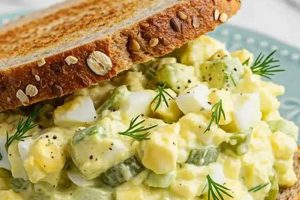
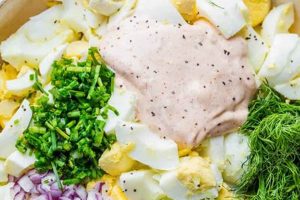
A classic lunchtime staple, this dish typically consists of chopped hard-boiled eggs, mayonnaise, mustard, and seasonings, often including celery, onion, and relish. Variations may incorporate different herbs, spices, or other additions like diced pickles or olives. An example includes a simple combination of eggs, mayonnaise, yellow mustard, salt, pepper, and celery for a traditional flavor profile. More complex versions might feature paprika, Dijon mustard, fresh dill, or even a touch of cayenne pepper.
The enduring popularity of this type of salad stems from its affordability, ease of preparation, and satisfying protein content. Historically, such egg-based salads gained traction as a way to utilize leftover eggs and create a filling, inexpensive meal. This practicality, combined with its customizable nature, has solidified its place as a versatile dish suitable for sandwiches, salads, or as a standalone snack. Its adaptability lends itself to various dietary preferences, with options for using low-fat mayonnaise, adding different vegetables for increased nutritional value, or incorporating alternative flavor profiles.
This exploration will further delve into variations on the classic preparation, offering insights into ingredient selection, techniques for achieving the perfect texture, and creative serving suggestions. Whether seeking a traditional approach or innovative twists, the information provided will guide readers toward mastering this culinary staple.
Tips for Exceptional Egg Salad
Achieving optimal flavor and texture in egg salad involves attention to detail throughout the preparation process. These tips offer guidance for elevating this simple dish.
Tip 1: Perfect Hard-Boiled Eggs: Avoid overcooking eggs, which can lead to a rubbery texture and a greenish ring around the yolk. A gentle simmer followed by an ice bath ensures proper doneness and easy peeling.
Tip 2: Precise Chopping: Uniformly chopped eggs create a pleasant consistency. A dedicated egg slicer yields clean cuts, while a knife allows for more rustic variations.
Tip 3: Balanced Seasoning: Salt and pepper are essential, but exploring other seasonings unlocks greater depth of flavor. Consider Dijon mustard, paprika, or fresh herbs like dill or chives.
Tip 4: Mayonnaise Matters: The quality and quantity of mayonnaise significantly impact the final result. Start with a small amount and add gradually until the desired creaminess is achieved.
Tip 5: Texture Enhancement: Incorporating finely diced celery or red onion introduces a welcome crunch. Experiment with other textural elements like chopped pickles or water chestnuts.
Tip 6: Chilling Time: Allowing the egg salad to chill for at least 30 minutes allows the flavors to meld, resulting in a more cohesive and enjoyable experience.
Tip 7: Creative Serving Suggestions: While classic sandwich fillings are always an option, explore other avenues such as lettuce wraps, avocado halves, or crackers for presentation variety.
By following these guidelines, one can transform a basic egg salad into a truly delectable dish. Attention to these details yields a superior culinary outcome.
With a foundation in these essential tips, one can confidently explore diverse variations and elevate this classic dish to new heights.
1. High-quality Ingredients
The hallmark of exceptional deli-style egg salad rests upon the foundation of high-quality ingredients. Ingredient selection directly impacts the final flavor, texture, and overall enjoyment of the dish. Superior components elevate this seemingly simple preparation into a truly satisfying culinary experience.
- Fresh Eggs:
Fresh eggs are paramount. Their flavor is more pronounced, and the yolks possess a richer color and smoother texture. Farm-fresh or organic options often provide a noticeable difference in taste compared to standard supermarket eggs. Freshness translates to a superior final product, contributing significantly to the overall quality of the egg salad.
- Mayonnaise Selection:
Mayonnaise serves as the binding agent and contributes significantly to the overall flavor profile. Opting for a high-quality mayonnaise, preferably one made with real eggs and minimal additives, significantly enhances the richness and creaminess of the egg salad. The choice between regular, light, or olive oil-based mayonnaise allows for customization based on personal preference and dietary considerations. This ingredient plays a pivotal role in the final outcome.
- Aromatic Vegetables:
Fresh, crisp vegetables such as celery and red onion contribute not only textural contrast but also aromatic complexity. Finely diced, these ingredients add a refreshing bite and enhance the overall flavor profile. The quality of these vegetables directly impacts the final product; wilted or less-than-fresh produce will detract from the overall experience. Careful selection ensures a vibrant and flavorful egg salad.
- Mustard and Seasonings:
Mustard acts as a flavor enhancer, adding a tangy dimension to the egg salad. Dijon, yellow, or stone-ground mustard each offer unique flavor profiles. Freshly ground black pepper and high-quality sea salt further elevate the taste. The judicious use of these ingredients contributes significantly to the overall balance and complexity of the final dish.
By prioritizing high-quality ingredients in every facet of preparation, one ensures a superior deli-style egg salad. The synergy between these components results in a dish that transcends the sum of its parts, offering a truly delightful culinary experience. The careful consideration of each element ultimately distinguishes an average egg salad from a truly exceptional one.
2. Precise Cooking Techniques
Precise cooking techniques are essential for achieving the desired texture and flavor in deli-style egg salad. Properly cooked eggs are key to the overall quality of the dish. Overcooking or undercooking can negatively impact both the taste and texture, affecting the final product’s overall appeal.
- Egg Cooking Method:
The method employed for cooking the eggs significantly influences the final result. A gentle simmer, rather than a rolling boil, prevents overcooking and ensures a tender, creamy yolk. Starting the eggs in cold water and bringing them to a simmer gradually promotes even cooking and minimizes cracking. This controlled approach is crucial for achieving the desired texture.
- Cooling and Peeling:
Immediately transferring the cooked eggs to an ice bath halts the cooking process and facilitates easier peeling. The rapid temperature change helps separate the egg white from the shell, resulting in cleaner removal and minimizing waste. This step is critical for maintaining the egg’s integrity and preventing a rubbery texture.
- Chopping Technique:
Uniformly chopped eggs contribute to a visually appealing and texturally consistent egg salad. Using an egg slicer creates even pieces, while a sharp knife allows for more rustic, hand-chopped variations. The chosen method influences the final presentation and mouthfeel of the salad. Consistency in size ensures even distribution of flavor and a pleasant texture.
- Ingredient Incorporation:
Gentle folding of the ingredients, rather than aggressive mixing, prevents over-mashing the eggs and maintains a desirable texture. This careful approach ensures that the yolks remain creamy and the whites retain their shape. The resulting egg salad will have a lighter, more appealing texture.
Mastery of these precise cooking techniques elevates the deli-style egg salad from a simple mixture to a carefully crafted dish. Attention to detail in each step, from cooking the eggs to incorporating the ingredients, results in a superior final product that showcases the quality of the ingredients and the skill of the preparer. The precision employed directly translates to a more enjoyable and satisfying culinary experience.
3. Balanced Flavor Profile
A balanced flavor profile distinguishes exceptional deli-style egg salad. Harmony among the ingredientsachieved through careful proportioning and complementary flavor pairingselevates this simple dish. A well-balanced egg salad offers a complex interplay of creamy, tangy, savory, and subtly sweet notes, engaging the palate with a nuanced experience. This balance differentiates a truly enjoyable egg salad from a bland or overpowering one.
- The Tangy Element:
Tanginess, often provided by mustard or vinegar, cuts through the richness of the mayonnaise and eggs. A touch of Dijon mustard adds a sharp, complex note, while a splash of apple cider vinegar offers a brighter, more acidic counterpoint. This acidic component prevents the egg salad from becoming overly rich and adds a refreshing dimension.
- Savory Foundation:
The savory foundation stems primarily from the eggs themselves, enhanced by the addition of salt and freshly ground black pepper. Other savory elements, such as finely chopped chives or dill, can further deepen the flavor profile. This savory base provides the grounding element for the other flavors to build upon.
- Creamy Texture and Flavor:
Mayonnaise contributes the creamy texture and a subtle richness. The quality of the mayonnaise plays a significant role here; a richer mayonnaise will lend more flavor, while a lighter version offers a less intense backdrop for the other ingredients. This creaminess binds the ingredients together and provides a smooth mouthfeel.
- Subtle Sweetness and Aromatic Complexity:
A touch of sweetness can balance the other flavors, often achieved through the addition of finely diced sweet pickle relish or a pinch of sugar. Aromatic complexity is introduced through ingredients like finely chopped red onion or celery, which offer a refreshing crunch and subtle bite. These nuanced flavors add depth and prevent the egg salad from becoming one-dimensional.
Achieving a harmonious balance among these elements is crucial for creating a truly exceptional deli-style egg salad. The interplay of these flavors creates a dynamic and satisfying sensory experience, highlighting the quality of the ingredients and the skill of the preparer. A well-balanced flavor profile elevates this classic dish from simple fare to a culinary delight.
4. Appropriate Textural Elements

Textural elements significantly influence the overall enjoyment of deli-style egg salad. A harmonious blend of textures creates a more engaging and satisfying culinary experience. The interplay between creamy, crunchy, and potentially smooth or firm components elevates the dish beyond a simple mixture of ingredients. Consider the foundational creaminess provided by the mayonnaise and egg yolks. This soft base benefits from contrasting textures. Finely diced celery provides a classic crispness, while minced red onion offers a sharper, more pungent crunch. The interplay of these textures creates a dynamic mouthfeel that enhances enjoyment.
Understanding the role of textural contrast allows for informed ingredient selection and preparation. For example, coarsely chopped celery yields a more pronounced crunch compared to finely diced pieces. Similarly, the inclusion of chopped water chestnuts or diced pickles introduces different levels of crispness and firmness. Even a sprinkle of toasted sesame seeds can add a surprising textural element. These variations demonstrate the impact of ingredient choices on the overall sensory experience. Achieving the desired textural balance ultimately depends on individual preferences and the specific flavor profile being pursued. A salad emphasizing a smoother, creamier texture might incorporate finely chopped ingredients, while a salad aiming for a more robust, crunchy experience would benefit from coarser chopping or the addition of ingredients with a firmer texture.
Appropriate textural elements contribute significantly to the overall quality and enjoyment of deli-style egg salad. Careful consideration of these elements allows for a more nuanced and satisfying culinary experience. The interplay of textures adds complexity and depth, transforming a simple mixture into a well-composed dish. Mastering this aspect of preparation enhances the final product, offering a more engaging and memorable culinary experience.
5. Proper Storage Practices
Proper storage practices are crucial for maintaining the safety and quality of deli-style egg salad. This perishable dish requires careful handling and refrigeration to prevent bacterial growth and spoilage. Failure to adhere to proper storage guidelines can lead to foodborne illnesses and diminished quality, impacting both flavor and texture. The delicate nature of the ingredients, particularly the mayonnaise and eggs, necessitates a controlled environment to preserve freshness and prevent undesirable changes.
Refrigeration at or below 40F (4C) is essential for inhibiting bacterial growth. Egg salad should be stored in airtight containers to minimize exposure to air and prevent cross-contamination. Prompt refrigeration after preparation is vital; leaving egg salad at room temperature for extended periods, especially in warmer environments, creates ideal conditions for bacterial proliferation. Consuming egg salad left unrefrigerated for more than two hours significantly increases the risk of foodborne illness. Practical applications include using shallow containers for faster cooling and ensuring the refrigerator maintains a consistent, safe temperature. Regularly checking the refrigerator’s temperature gauge helps ensure optimal food safety. These practices are particularly crucial during warmer months or when transporting egg salad to picnics or outdoor events.
Proper storage extends the shelf life and preserves the quality of deli-style egg salad. While refrigeration slows bacterial growth, it does not eliminate it entirely. Therefore, consuming the egg salad within three to five days of preparation is generally recommended. Freezing egg salad is not advised, as the mayonnaise-based dressing separates upon thawing, resulting in an undesirable texture. Understanding and implementing these storage guidelines ensures the safe consumption and optimal enjoyment of this classic dish. Neglecting these practices compromises both safety and quality, potentially leading to unpleasant consequences. Prioritizing proper storage safeguards against foodborne illness and maintains the intended flavor and texture, ensuring a satisfying and safe culinary experience.
6. Creative Presentation

Creative presentation elevates deli-style egg salad from a simple staple to a visually appealing and enticing dish. While flavor and texture remain paramount, presentation enhances the overall dining experience, transforming a familiar dish into something special. Thoughtful plating and creative serving suggestions add an element of sophistication and demonstrate attention to detail, further enhancing enjoyment.
- Beyond the Sandwich:
Moving beyond the traditional sandwich format opens up a world of possibilities. Serving egg salad in lettuce cups provides a lighter, low-carb alternative. Hollowed-out avocado halves offer a visually appealing and flavorful vessel. Using endive spears or cucumber rounds as bases adds a touch of elegance and freshness.
- Garnishes and Accompaniments:
Strategic garnishing enhances visual appeal and complements the flavors of the egg salad. Fresh herbs like dill, chives, or parsley add a touch of color and freshness. A sprinkle of paprika or a dusting of finely chopped red onion provides visual contrast and a subtle flavor boost. Serving egg salad alongside crusty bread, crackers, or a vibrant green salad completes the meal and offers textural variety.
- Plating Techniques:
Thoughtful plating elevates the presentation. Instead of simply scooping egg salad onto a plate, consider using a piping bag or cookie cutter to create attractive shapes. Layering egg salad with other ingredients, such as sliced tomatoes or cucumbers, adds visual interest and textural contrast. Using a variety of serving platters and bowls further enhances the visual appeal.
- Contextual Considerations:
Presentation should align with the occasion. For a casual lunch, a simple scoop of egg salad on a bed of lettuce might suffice. For a more formal setting, consider more elaborate plating techniques and garnishes. The context of the meal, whether a picnic, a brunch, or a light supper, informs the presentation style.
Creative presentation enhances the enjoyment of deli-style egg salad by engaging multiple senses. Visual appeal stimulates appetite, while thoughtful plating and accompaniments complement the existing flavors and textures. Elevating the presentation transforms a familiar dish into a more memorable and satisfying culinary experience, demonstrating care and attention to detail. By considering these elements, one can transform a simple egg salad into a truly delightful culinary creation.
Frequently Asked Questions
This section addresses common inquiries regarding the preparation and enjoyment of deli-style egg salad.
Question 1: How long does egg salad typically last in the refrigerator?
Properly stored in an airtight container at or below 40F (4C), egg salad generally remains safe to consume for three to five days. Beyond this timeframe, the risk of bacterial growth increases significantly.
Question 2: Can egg salad be frozen?
Freezing is not recommended. The mayonnaise-based dressing separates upon thawing, resulting in an undesirable texture. This separation affects the overall quality and enjoyment of the egg salad.
Question 3: What are common signs of spoiled egg salad?
Indicators of spoilage include a sour odor, slimy texture, or discoloration. If any of these signs are present, discarding the egg salad is crucial to prevent foodborne illness. Relying solely on visual cues is insufficient; any questionable odor or texture warrants discarding.
Question 4: How can one achieve a smoother, less chunky texture?
A smoother consistency can be achieved by using a finer chop for the eggs and other ingredients. A potato masher or fork can also be employed to gently mash the yolks before incorporating other components. This creates a creamier, less textured final product.
Question 5: What are some healthy variations of traditional egg salad?
Healthier variations can be achieved by substituting Greek yogurt or avocado for a portion of the mayonnaise. Incorporating additional vegetables, such as chopped bell peppers or spinach, increases nutritional value. These substitutions offer lighter, more nutrient-dense alternatives.
Question 6: How can one prevent the yolks from becoming dry or crumbly?
Preventing dry yolks requires careful attention to the cooking process. A gentle simmer and immediate transfer to an ice bath ensure proper doneness without overcooking. Overcooked yolks tend to become dry and crumbly, negatively impacting the final texture of the egg salad.
Careful consideration of these frequently asked questions ensures the safe and enjoyable preparation and consumption of deli-style egg salad. Adhering to these guidelines contributes to both a satisfying culinary experience and the prevention of foodborne illness.
Further exploration of recipe variations and serving suggestions provides opportunities for customization and culinary creativity.
Deli Egg Salad Recipe
This exploration has provided a comprehensive overview of crafting exceptional deli egg salad. From the selection of fresh, high-quality ingredients to the nuances of precise cooking techniques and balanced flavor profiles, each step contributes significantly to the final product. The importance of appropriate textural elements, proper storage practices, and creative presentation has been highlighted, demonstrating the potential for elevating this seemingly simple dish into a culinary delight. Understanding the interplay of these factors empowers culinary enthusiasts to achieve superior results.
The enduring appeal of deli egg salad lies in its versatility and adaptability. Whether adhering to a classic preparation or exploring innovative variations, attention to detail and a commitment to quality yield rewarding results. This exploration serves as a foundation for continued culinary experimentation, encouraging a deeper appreciation for the art of crafting truly exceptional egg salad. The potential for customization and creative expression ensures that this classic dish remains a timeless culinary staple.