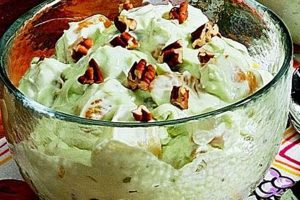
This classic dessert, often referred to as “Lime Jell-O Salad” or simply “Green Salad,” typically features a combination of lemon-lime soda, gelatin, fruit, and sometimes nuts or miniature marshmallows. Variations exist, including the use of different fruits like pineapple, oranges, or cherries, and additions such as cream cheese or whipped cream for a richer texture. The distinctive ingredient, lemon-lime soda, contributes a unique tangy flavor and a light, bubbly texture to the gelatin base.
Its popularity stems from its simple preparation, refreshing taste, and visually appealing presentation. A staple at potlucks, picnics, and holiday gatherings, particularly in the mid-20th century, this dessert evokes a sense of nostalgia for many. The ease of preparation made it a practical choice for busy home cooks, and the combination of sweet and tart flavors, along with the variety of textures, appeals to a broad range of palates. This dish often serves as a gateway to exploring the world of gelatin-based desserts, demonstrating the versatility and adaptability of this ingredient.
This article will delve deeper into the history of this refreshing treat, explore popular variations, provide a detailed recipe, and offer tips for achieving the perfect texture and flavor. Furthermore, we will discuss how this classic dessert has evolved over time and continues to be enjoyed today.
Tips for a Perfect Lime Jell-O Salad
Achieving optimal texture and flavor requires attention to detail throughout the preparation process. The following tips offer guidance for creating a successful and satisfying dessert.
Tip 1: Proper Gelatin Dissolution: Ensure the gelatin is completely dissolved before adding other ingredients. Undissolved gelatin can result in an unpleasant, grainy texture. This can be achieved by allowing the gelatin to bloom in cold water before dissolving it in hot liquid, stirring constantly.
Tip 2: Temperature Control: Allow the gelatin mixture to cool slightly before adding the remaining ingredients, particularly the fruit and soda. Adding cold ingredients to a hot mixture can lead to uneven setting and a less desirable texture.
Tip 3: Fruit Selection: Choose fruits that complement the lemon-lime flavor. Canned fruits, such as mandarin oranges and pineapple, are traditional choices. Fresh fruits can also be used, but ensure they are properly drained to prevent excess liquid from affecting the gelatin’s setting.
Tip 4: Enhancing Texture: Consider incorporating additions like miniature marshmallows or chopped nuts for textural variety. These additions can enhance the overall sensory experience of the dessert.
Tip 5: Mold Selection: Use a mold that complements the occasion and desired presentation. Bundt pans, loaf pans, or individual serving dishes can all be used. Ensure the mold is lightly greased or sprayed with cooking spray for easy removal.
Tip 6: Chilling Time: Allow adequate chilling time for the dessert to fully set. This typically requires several hours in the refrigerator. A firm set ensures clean slices and an appealing presentation.
Tip 7: Garnishing: Consider garnishing the finished dessert with whipped cream, fresh fruit, or a sprinkle of chopped nuts. This adds visual appeal and complements the overall flavor profile.
By following these tips, one can create a visually appealing and flavorful dessert. Attention to detail in each step ensures a successful outcome, resulting in a treat that is both refreshing and satisfying.
With these tips in mind, the following section will offer a complete recipe, allowing practical application of the discussed techniques.
1. Lemon-lime Soda

Lemon-lime soda plays a crucial role in this classic dessert, contributing significantly to its characteristic flavor profile and texture. Its inclusion distinguishes this dish from other gelatin-based salads, offering a unique taste and a light, effervescent quality.
- Flavor Profile
The tartness of lemon-lime soda balances the sweetness of the fruit and other ingredients, creating a refreshing and complex flavor. This balance prevents the dessert from being overly sweet, contributing to its broad appeal. The specific brand of soda used can subtly influence the final taste, with some brands offering a more pronounced citrus flavor than others. This allows for customization based on individual preferences.
- Carbonation and Texture
The carbonation in the soda contributes a light and airy texture to the gelatin, preventing it from becoming dense or overly firm. This results in a delicate, almost mousse-like consistency that contrasts pleasantly with the other ingredients. The level of carbonation can be adjusted by allowing the soda to flatten slightly before incorporating it into the recipe, offering further control over the final texture.
- Historical Context
The use of lemon-lime soda in this dessert reflects the culinary trends of the mid-20th century, when convenience foods and innovative flavor combinations gained popularity. This ingredient exemplifies the resourcefulness of home cooks in utilizing readily available products to create unique and appealing dishes. The continued popularity of this dessert speaks to the enduring appeal of this particular flavor combination.
- Variations and Adaptations
While 7 Up is the traditional choice, other lemon-lime sodas can be substituted, offering opportunities for experimentation and personalization. The intensity of the citrus flavor can be adjusted by using different brands or by combining lemon-lime soda with other carbonated beverages, such as ginger ale or club soda. This adaptability contributes to the enduring appeal of this versatile dessert.
The interplay between the lemon-lime soda and the other ingredients creates a harmonious balance of flavors and textures, resulting in a refreshing and nostalgic dessert. The adaptability of this ingredient allows for variations and personalizations, ensuring its continued relevance in contemporary cuisine.
2. Gelatin

Gelatin is fundamental to the structure and texture of this classic dessert. Its unique properties allow the liquid ingredients to set into a semi-solid form, creating the characteristic wobble and jiggle associated with this dish. Understanding gelatin’s role is crucial for achieving the desired consistency and overall success of the recipe.
- Structure and Texture
Gelatin’s ability to form a gel is essential for transforming the liquid components of the recipe into a cohesive dessert. The protein molecules in gelatin create a network that traps the liquid, resulting in a semi-solid structure. This network provides the characteristic “wobble” and allows the dessert to hold its shape when molded or sliced. The concentration of gelatin used influences the final firmness, allowing for adjustments based on desired texture preferences.
- Hydration and Dissolution
Proper hydration and dissolution of the gelatin are crucial for achieving a smooth and homogenous texture. Gelatin granules must be bloomed in cold water before being dissolved in hot liquid. This process ensures even hydration and prevents clumping, which can lead to an unpleasant, grainy texture in the finished product. Incomplete dissolution can result in pockets of unhydrated gelatin, negatively impacting the overall quality of the dessert.
- Interaction with Other Ingredients
Gelatin interacts with other ingredients in the recipe, particularly the acidity of the lemon-lime soda. The acidity can influence the setting strength of the gelatin, requiring careful balancing of ingredients to achieve the desired consistency. Adding certain fruits, such as pineapple, can also interfere with gelatin setting due to enzymes present in the fruit. Understanding these interactions is crucial for achieving a successful outcome.
- Historical Use in Desserts
Gelatin has a long history of use in desserts, dating back centuries. Its ability to create visually appealing and texturally interesting dishes has made it a popular ingredient in various culinary traditions. In the context of this particular recipe, gelatin reflects the mid-20th century trend of using convenient and readily available ingredients to create innovative and visually appealing desserts.
Gelatin’s role extends beyond simply providing structure; it contributes to the overall sensory experience of this dessert, influencing its texture, appearance, and stability. Its proper handling and incorporation are crucial for achieving a successful and enjoyable final product. The interplay between gelatin and the other ingredients highlights the importance of understanding its unique properties to create a balanced and harmonious dessert.
3. Fruit Cocktail

Fruit cocktail contributes significantly to the sensory experience of a classic lemon-lime gelatin salad. The mixture of fruits, typically including peaches, pears, pineapple, grapes, and cherries, provides a complex interplay of sweetness, tartness, and varying textures. This medley complements the tangy flavor of the lemon-lime soda and the smooth texture of the gelatin, creating a balanced and multi-faceted flavor profile. The vibrant colors of the fruit cocktail also enhance the visual appeal of the dessert, making it an attractive option for festive occasions and gatherings. For instance, the bright red cherries and yellow pineapple contrast with the light green of the gelatin, creating a visually striking presentation. The variety of shapes and sizes within the fruit cocktail also adds to the textural complexity of the dish.
The choice of fruit cocktail can influence the overall flavor and sweetness of the salad. Some commercially available fruit cocktails are packed in heavy syrup, which adds significant sweetness. This can be balanced by using a less sweet gelatin or by opting for a fruit cocktail packed in lighter syrup or juice. Alternatively, using fresh fruit allows for greater control over the sweetness and flavor profile. Consider the interplay between canned pineapple and gelatin setting; enzymes in fresh pineapple can prevent gelatin from setting properly, while canned pineapple has been heat-treated, neutralizing these enzymes. This demonstrates the practical significance of understanding the properties of different fruit options.
Fruit cocktail serves a crucial role in both the flavor and presentation of this retro dessert. Careful consideration of the sweetness and texture of the chosen fruit cocktail, along with an understanding of how it interacts with other ingredients like gelatin, allows for successful execution and enjoyment of the dish. The fruit cocktail provides a visual centerpiece, while its varied flavors and textures contribute significantly to the overall sensory experience, making it an integral component of this classic recipe.
4. Whipped Cream
Whipped cream, while not a mandatory component, often serves as a crucial complement to the old fashioned 7 Up salad. Its inclusion elevates the dessert from a simple, refreshing treat to a more decadent and visually appealing offering. The creamy texture of whipped cream contrasts with the jiggly gelatin and the often-included fruit cocktail, providing a textural complexity that enhances the overall sensory experience. The richness of the cream also balances the tartness of the lemon-lime soda and the sweetness of the fruit, resulting in a more balanced and satisfying flavor profile. For example, the lightness of whipped cream complements the sometimes-dense nature of the gelatin, preventing the dessert from feeling too heavy. Its smooth, cool temperature also contrasts with the room temperature or chilled salad, further adding to the sensory experience.
The practical significance of including whipped cream extends beyond flavor and texture. It provides a blank canvas for garnishing, allowing for creative presentations. A dollop of whipped cream can be adorned with a maraschino cherry, a sprinkle of chopped nuts, or a sprig of mint, elevating the visual appeal of the dessert, making it more suitable for special occasions or festive gatherings. Furthermore, whipped cream contributes to the perceived value of the dessert, transforming it from a simple everyday treat into a more special occasion offering. This is particularly relevant in contexts like potlucks or holiday gatherings, where presentation plays a significant role.
Whipped creams role in the old fashioned 7 Up salad is multifaceted. It contributes to the texture, flavor, and visual presentation, ultimately elevating the perceived value and overall enjoyment of this classic dessert. Understanding its impact allows for informed decision-making regarding its inclusion and presentation, ensuring a successful and satisfying culinary experience. Its presence signifies a conscious effort to enhance the dessert, reflecting an understanding of the interplay of flavors and textures, and showcasing the potential for simple ingredients to create a more complex and enjoyable final product. The choice to include whipped cream often reflects the specific context in which the salad is served, underscoring the adaptability of this retro dessert to various occasions and preferences.
5. Nuts (optional)
Nuts, while an optional addition to the old fashioned 7 Up salad, offer an opportunity to introduce textural contrast and nuanced flavor dimensions. Their presence, though not integral to the core recipe, can significantly impact the overall sensory experience of the dessert. This exploration delves into the various facets of incorporating nuts into this classic dish, examining their contribution to texture, flavor complexity, visual appeal, and historical context.
- Textural Contrast
The primary contribution of nuts lies in their ability to disrupt the otherwise homogenous texture of the gelatin-based salad. The smooth, yielding nature of the gelatin and fruit is juxtaposed with the crisp, firm bite of nuts, creating a more dynamic and engaging mouthfeel. This contrast prevents the dessert from feeling monotonous, adding a layer of complexity that elevates the overall sensory experience. For example, the inclusion of chopped pecans or walnuts offers a noticeable textural counterpoint to the soft, jiggly gelatin.
- Flavor Complexity
Beyond texture, nuts introduce subtle flavor nuances that complement the existing flavor profile of the salad. The earthy, sometimes-bitter notes of nuts, such as pecans or walnuts, contrast with the sweetness of the fruit and the tang of the lemon-lime soda, creating a more balanced and sophisticated flavor. This complexity adds depth and prevents the dessert from being overly one-dimensional. The choice of nut can be tailored to complement the specific fruit cocktail used, further enhancing the flavor synergy.
- Visual Appeal
Nuts also contribute to the visual presentation of the salad. Sprinkled over the top or incorporated within the gelatin, they add visual interest and break up the monotony of the color palette. Toasted nuts, in particular, offer a richer, more appealing visual element. Their presence signals an attention to detail and elevates the perceived value of the dessert. This visual enhancement can be particularly relevant for special occasions or festive gatherings.
- Historical Context and Regional Variations
The inclusion of nuts in this type of dessert reflects broader culinary trends, particularly in the mid-20th century when this salad gained popularity. Nuts were a readily available and affordable ingredient, offering a simple way to enhance both flavor and texture. Regional variations of the recipe often incorporate locally available nuts, reflecting regional culinary traditions and preferences. This historical context provides insight into the evolution of the recipe and its adaptation to different culinary landscapes.
The addition of nuts, while optional, demonstrates the potential for customization and nuanced flavor and texture enhancement within the traditional 7 Up salad framework. Their presence underscores the adaptability of the recipe and highlights the interplay between seemingly simple ingredients in creating a more complex and satisfying culinary experience. The careful selection and incorporation of nuts can elevate this classic dessert, transforming it from a simple treat into a more sophisticated and texturally dynamic offering.
Frequently Asked Questions
This section addresses common inquiries regarding the preparation and variations of this classic dessert, providing clarity and guidance for achieving optimal results.
Question 1: Can fresh pineapple be used in this recipe?
Fresh pineapple contains an enzyme called bromelain that prevents gelatin from setting. Canned pineapple has been heat-treated, deactivating this enzyme, making it suitable for use. While fresh pineapple can be incorporated, it requires brief cooking to neutralize the bromelain before adding it to the gelatin mixture.
Question 2: How can the sweetness of the salad be adjusted?
The sweetness can be adjusted by using a sugar-free or low-sugar gelatin, opting for a fruit cocktail packed in juice or light syrup, or by reducing the amount of added sugar if the recipe calls for it. Alternatively, incorporating tart fruits like cranberries or raspberries can balance the overall sweetness.
Question 3: What can be substituted for 7 Up?
Other lemon-lime sodas can be substituted, but the flavor profile may vary slightly. Alternatively, a combination of lemon-lime soda and other carbonated beverages like ginger ale or club soda can create unique flavor combinations. The level of carbonation also influences the texture, allowing for further customization.
Question 4: How can a firmer set be achieved?
A firmer set can be achieved by increasing the amount of gelatin used or by reducing the amount of liquid. Ensuring complete dissolution of the gelatin is also crucial for proper setting. Chilling the dessert for a longer period can also contribute to a firmer consistency.
Question 5: Can this dessert be made ahead of time?
This dessert can be made up to two days in advance and stored, covered, in the refrigerator. This makes it a convenient option for gatherings and allows the flavors to meld and develop over time. The texture may become slightly firmer upon extended refrigeration.
Question 6: How can this dessert be served?
This versatile dessert can be served in a variety of ways. It can be molded in a decorative bundt pan or served in individual dishes. Garnishes like whipped cream, fresh fruit, or chopped nuts enhance the presentation. It can be enjoyed as a light dessert, a side dish, or even as a refreshing snack.
Understanding the interplay between ingredients and techniques allows for successful execution of this classic recipe. Attention to detail and consideration of individual preferences ensure a satisfying and enjoyable culinary experience.
The following section will provide a historical overview, tracing the origins and evolution of this beloved retro dessert.
Old Fashioned 7 Up Salad Recipe
This exploration of the old fashioned 7 Up salad recipe has provided a comprehensive overview of this classic dessert, from its core ingredients and preparation techniques to its historical context and enduring appeal. The examination of individual components, such as the lemon-lime soda, gelatin, fruit cocktail, whipped cream, and optional nuts, highlighted the nuanced interplay of flavors and textures that contribute to the unique character of this dish. Furthermore, the provided tips and frequently asked questions offer practical guidance for achieving optimal results and adapting the recipe to individual preferences. The adaptability of this recipe, evidenced by the various possible ingredient substitutions and serving suggestions, underscores its versatility and enduring relevance in contemporary cuisine.
The old fashioned 7 Up salad recipe represents more than just a simple dessert; it embodies a culinary tradition, reflecting the resourcefulness and ingenuity of home cooks throughout history. Its continued presence at gatherings and celebrations speaks to its nostalgic charm and enduring appeal across generations. Further exploration of regional variations and adaptations promises to reveal even deeper insights into the cultural significance of this classic dish, encouraging continued appreciation and experimentation within the culinary landscape. This timeless recipe serves as a reminder of the power of simple ingredients to create lasting culinary memories.