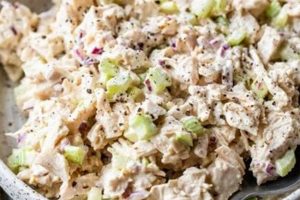
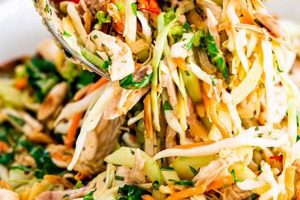
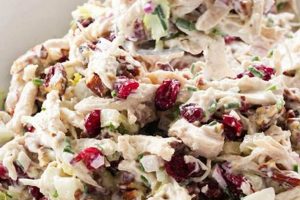
A dish combining cooked chicken, mayonnaise, and pecans, often incorporating additional ingredients like celery, grapes, onion, or seasonings, constitutes a classic American staple. Variations can include different types of mayonnaise, herbs, spices, and fruits, allowing for a wide range of flavor profiles. A simple version might involve shredded chicken, mayonnaise, chopped pecans, and celery, while more complex versions might feature dried cranberries, curry powder, or apples.
This dish offers a versatile, protein-rich meal option suitable for picnics, lunches, or light dinners. Its adaptability to diverse palates makes it a popular choice for gatherings. Historically, chicken salad emerged in the mid-19th century, gaining popularity alongside the increasing availability of mayonnaise. The addition of pecans introduces a satisfying textural contrast and a rich, buttery flavor that complements the other ingredients. This combination represents a nutritious and flavorful choice for a quick meal or appetizer.
Further exploration will delve into specific ingredient selections, preparation methods, and serving suggestions for this adaptable dish, ranging from traditional approaches to innovative variations.
Tips for Crafting Exceptional Chicken Salad with Pecans
Achieving optimal flavor and texture requires attention to detail in ingredient selection and preparation. The following tips offer guidance for creating a superior culinary experience.
Tip 1: Chicken Selection is Key: Utilizing high-quality chicken contributes significantly to the overall flavor profile. Roasting a whole chicken or poaching boneless, skinless breasts yields superior results compared to pre-cooked or canned options.
Tip 2: Toasting Pecans Enhances Flavor: Toasting pecans before incorporating them into the salad intensifies their nutty flavor and adds a desirable crunch. Spread pecans on a baking sheet and toast in a preheated oven at 350F (175C) for 5-7 minutes, or until fragrant.
Tip 3: Freshness Matters: Incorporating fresh ingredients elevates the overall quality. Opt for crisp celery, freshly chopped onions, and ripe grapes or other fruits.
Tip 4: Mayonnaise Considerations: The choice of mayonnaise influences the final flavor profile. Experiment with different types, such as classic, light, or flavored varieties, to find a preferred taste. Homemade mayonnaise offers an additional layer of customization.
Tip 5: Balancing Flavors: Achieving a harmonious balance of sweet, savory, and acidic notes is crucial. Adjust the amounts of ingredients like grapes, onions, or lemon juice to achieve the desired flavor profile.
Tip 6: Texture Enhancement: Adding textural complexity elevates the sensory experience. Consider incorporating diced apples, chopped water chestnuts, or dried cranberries for added crunch and variety.
Tip 7: Seasoning Strategies: Proper seasoning enhances the natural flavors of the ingredients. Salt and freshly ground black pepper are essential, while herbs like tarragon, chives, or dill add complexity.
By adhering to these guidelines, one can consistently produce a chicken salad with pecans that exhibits exceptional flavor, texture, and visual appeal.
This foundation in best practices facilitates further exploration of specific recipe variations and creative adaptations.
1. High-Quality Chicken

The foundation of exceptional chicken salad rests upon the quality of its core ingredient: chicken. Utilizing high-quality chicken significantly impacts the overall flavor, texture, and enjoyment of the final product. This section explores the multifaceted role of high-quality chicken within the context of a chicken salad recipe featuring pecans.
- Flavor Enhancement
High-quality chicken possesses a richer, more robust flavor compared to commercially processed or pre-cooked options. Freshly roasted or poached chicken offers a depth of flavor that enhances the overall complexity of the salad. This inherent flavor advantage elevates the other ingredients, allowing the pecan’s nuttiness and other complementary flavors to shine. Conversely, lower-quality chicken can introduce off-flavors that detract from the overall experience.
- Texture Optimization
Chicken sourced from higher-quality cuts, such as boneless, skinless breasts, tends to possess a more desirable texture when cooked properly. This results in tender, succulent pieces that contrast pleasingly with the crunch of the pecans and other textural elements within the salad. Lower-quality chicken may be dry, stringy, or otherwise unappealing in texture, compromising the overall balance of the dish.
- Nutritional Value
High-quality chicken typically offers greater nutritional value, including higher protein content and a more favorable balance of essential amino acids. This contributes to a more nutritious and satisfying meal. Choosing lean, high-quality chicken aligns with health-conscious approaches to preparing this classic dish.
- Overall Culinary Experience
The cumulative impact of enhanced flavor, optimized texture, and superior nutritional value contributes significantly to a more enjoyable culinary experience. The investment in high-quality chicken elevates the chicken salad from a simple dish to a truly satisfying and memorable one. This distinction highlights the importance of prioritizing ingredient quality in achieving culinary excellence.
By prioritizing high-quality chicken, one lays the groundwork for a truly exceptional chicken salad with pecans. The interplay between the rich flavor of the chicken, the crunch of the pecans, and the other complementary ingredients creates a harmonious and satisfying culinary experience. This underscores the significant impact of ingredient selection on the final outcome of the dish.
2. Fresh Ingredients

Fresh ingredients play a pivotal role in elevating a chicken salad recipe with pecans from satisfactory to exceptional. The vibrancy and quality of these components contribute significantly to the overall flavor, texture, and aroma of the final dish. This section explores the multifaceted impact of ingredient freshness on this classic recipe.
- Flavor Enhancement
Fresh ingredients possess a brightness and intensity of flavor often absent in their stale counterparts. Fresh celery offers a crisp, clean taste, while freshly chopped onions provide a pungent bite that complements the richness of the chicken and pecans. Fresh herbs, such as parsley or chives, contribute a vibrant herbaceous note that elevates the overall flavor profile. The use of fresh ingredients allows these individual flavors to shine, creating a more dynamic and nuanced culinary experience.
- Textural Integrity
Fresh ingredients maintain their structural integrity, contributing to a more desirable textural experience. Crisp celery and onions provide a satisfying crunch that contrasts with the tender chicken and creamy mayonnaise. Fresh grapes or other fruits offer a juicy burst that adds another layer of textural complexity. This interplay of textures enhances the overall enjoyment of the dish, making it more appealing and satisfying.
- Visual Appeal
Fresh ingredients contribute to the visual appeal of the chicken salad, making it more appetizing. Vibrant colors from fresh herbs, fruits, and vegetables create a visually stimulating presentation. The contrast between the colors and textures of the various ingredients enhances the aesthetic appeal, making the dish more inviting and enjoyable.
- Aroma Enhancement
Fresh ingredients contribute to a more appealing aroma, further enhancing the sensory experience. The fragrant notes of fresh herbs, coupled with the clean, natural scents of fresh vegetables and fruits, create an enticing aroma that stimulates the appetite and heightens anticipation for the first bite. This olfactory component plays a crucial role in the overall enjoyment of the dish.
The use of fresh, high-quality ingredients significantly impacts the overall quality of a chicken salad recipe with pecans. The enhanced flavor, textural integrity, visual appeal, and aromatic qualities contribute synergistically to a more satisfying and enjoyable culinary experience. Prioritizing ingredient freshness elevates this classic dish, demonstrating the importance of quality components in achieving culinary excellence.
3. Toasted Pecans
Toasted pecans contribute significantly to the overall sensory experience of chicken salad. The toasting process intensifies the inherent nutty flavor of the pecans, creating a deeper, more complex taste that complements the other ingredients. Heat-induced chemical reactions, specifically the Maillard reaction, are responsible for this flavor enhancement. The Maillard reaction occurs between amino acids and reducing sugars in the pecans when exposed to heat, producing a cascade of flavor compounds that contribute to the characteristic toasted nuttiness. Furthermore, toasting enhances the pecans’ texture, creating a desirable crunch that contrasts with the softer textures of the chicken and mayonnaise. This textural contrast elevates the overall enjoyment of the dish.
Consider a standard chicken salad recipe. Without toasted pecans, the flavor profile might be relatively one-dimensional, relying primarily on the chicken and mayonnaise for taste and texture. Incorporating toasted pecans, however, introduces a layer of complexity, adding depth and richness to the overall flavor profile. The crunch of the toasted pecans also provides a welcome textural contrast, preventing the salad from becoming monotonous. For example, a chicken salad served on croissants benefits significantly from the textural interplay between the flaky pastry, the creamy filling, and the crunchy pecans. This textural variety elevates the dish from simple to sophisticated.
Understanding the impact of toasted pecans on chicken salad allows for greater control over the final product. Controlling the toasting processtime and temperatureallows one to fine-tune the flavor and texture of the pecans, ensuring they complement the other ingredients harmoniously. Over-toasting can result in a bitter flavor, while under-toasting fails to maximize the potential for flavor and texture enhancement. Achieving the optimal balance ensures a delicious and satisfying culinary experience. This careful attention to detail highlights the importance of seemingly small steps in creating a truly exceptional dish. The toasted pecan, therefore, becomes more than just an ingredient; it becomes a key element in achieving culinary excellence.
4. Balanced Flavors
Balanced flavors constitute a critical element in a successful chicken salad recipe incorporating pecans. The interplay of sweet, savory, acidic, and fatty components creates a harmonious flavor profile that elevates the dish beyond a simple combination of ingredients. Achieving this balance requires careful consideration of ingredient selection and proportion, ensuring each element contributes without overpowering the others.
- Sweetness
Sweetness often comes from incorporated fruits, such as grapes, dried cranberries, or chopped apples. These ingredients provide a subtle sweetness that balances the savory elements, preventing the salad from becoming bland. The level of sweetness should complement, not dominate, the overall flavor profile. For example, the sweetness of grapes can balance the savory chicken and the richness of the pecans, creating a more nuanced and enjoyable flavor experience.
- Savory Notes
The primary savory component is the chicken itself. High-quality, properly cooked chicken contributes a rich, savory foundation to the salad. Additional savory notes can be introduced through ingredients like celery, onion, or certain seasonings. These savory elements provide depth and complexity, balancing the sweetness and acidity of the other ingredients. For instance, the subtle savory flavor of celery complements the richness of the chicken and the sweetness of grapes, creating a well-rounded flavor profile.
- Acidity
Acidity provides brightness and cuts through the richness of the mayonnaise and pecans. Lemon juice, vinegar, or certain types of mustard can introduce the necessary acidity. A touch of acid brightens the flavors, preventing the salad from feeling heavy or overly rich. Lemon juice, for instance, adds a refreshing tartness that balances the richness of the mayonnaise and the sweetness of the fruit, creating a more vibrant flavor experience.
- Fat Content
Mayonnaise and pecans contribute the majority of the fat content. The richness of these ingredients adds depth and complexity to the flavor profile. However, the fat content must be carefully balanced with the other elements to prevent the salad from becoming overly rich or heavy. Using a lighter mayonnaise or reducing the amount of pecans can help achieve this balance. The goal is to achieve a harmonious blend of flavors where no single element dominates.
The interplay of these four flavor componentssweetness, savory notes, acidity, and fatcreates a dynamic and balanced flavor profile in a chicken salad recipe featuring pecans. Achieving this balance elevates the dish, transforming it from a simple combination of ingredients into a cohesive and satisfying culinary experience. The careful consideration of each element, from ingredient selection to proportion, ensures a harmonious blend of flavors that delights the palate.
5. Mayonnaise Choice
Mayonnaise serves as a critical binding agent and flavor component in chicken salad recipes incorporating pecans. The choice of mayonnaise significantly influences the overall flavor profile, texture, and richness of the final product. Careful selection of this key ingredient is essential for achieving a balanced and enjoyable culinary experience.
- Classic Mayonnaise
Traditional mayonnaise, typically made with oil, egg yolks, vinegar or lemon juice, and seasonings, provides a rich, creamy base for the salad. Its tangy flavor complements the savory chicken and nutty pecans. Classic mayonnaise offers a familiar flavor profile that appeals to a wide range of palates, making it a versatile choice for traditional chicken salad preparations. For example, a chicken salad featuring classic mayonnaise, celery, and toasted pecans delivers a balanced flavor profile that highlights the individual ingredients without overwhelming the palate.
- Light Mayonnaise
Light mayonnaise, often containing less oil and fewer calories than classic mayonnaise, offers a lighter, less rich option. While still providing a creamy texture, its milder flavor allows the other ingredients, such as the pecans and seasonings, to take center stage. This option suits those seeking a lower-fat alternative without compromising the creamy texture essential to chicken salad. A chicken salad featuring light mayonnaise might highlight the flavors of fresh herbs and toasted pecans more prominently than a version using classic mayonnaise.
- Flavored Mayonnaise
Flavored mayonnaises, such as olive oil mayonnaise, avocado oil mayonnaise, or those infused with herbs or spices, offer opportunities for flavor customization. These options introduce additional complexity to the salad, complementing or contrasting with the other ingredients. For instance, an olive oil mayonnaise can impart a subtle fruity and peppery flavor that enhances the nuttiness of the pecans, while a chipotle mayonnaise adds a smoky heat that contrasts with the sweetness of grapes or dried cranberries.
- Homemade Mayonnaise
Crafting mayonnaise from scratch allows for complete control over ingredients and flavor profiles. Adjusting the type of oil, the acidity level, or incorporating additional seasonings allows for customization tailored to specific preferences or dietary needs. Homemade mayonnaise offers a unique opportunity to elevate the chicken salad by creating a bespoke flavor profile. This can involve incorporating specific flavor combinations, such as roasted garlic or fresh herbs, to enhance the overall taste experience.
The choice of mayonnaise significantly impacts the overall character of a chicken salad recipe with pecans. Selecting the appropriate mayonnaise depends on desired flavor profile, dietary considerations, and the balance of other ingredients. Each type of mayonnaise, from classic to homemade, offers distinct characteristics that can enhance or detract from the final dish. Careful consideration of this key ingredient ensures a well-balanced and enjoyable culinary experience.
6. Textural Contrast
Textural contrast significantly contributes to the enjoyment of a chicken salad recipe featuring pecans. A successful dish balances the creamy nature of the mayonnaise and chicken with contrasting textures, preventing a monotonous mouthfeel. This interplay of textures elevates the sensory experience, making each bite more engaging and satisfying. Pecans, inherently crunchy, provide a primary source of textural contrast within the salad. Their crispness offsets the softer elements, creating a dynamic interplay that enhances enjoyment. Additional ingredients, strategically selected, further amplify this textural complexity. Consider the addition of diced celery, which introduces a refreshing crunch, or chopped grapes, which offer a burst of juiciness. These contrasting textures stimulate the palate and prevent the dish from feeling heavy or overly rich.
The importance of textural contrast becomes evident when comparing different versions of the dish. A chicken salad solely composed of shredded chicken and mayonnaise, while palatable, lacks the dynamic mouthfeel provided by contrasting textures. The addition of toasted pecans immediately elevates the dish, adding a satisfying crunch that complements the creamy base. Further incorporating diced celery and grapes amplifies this effect, creating a more complex and enjoyable textural experience. This contrast also influences the perceived flavor profile. The interplay of textures allows individual flavors to stand out, preventing the richness of the mayonnaise from overwhelming the other ingredients. The crispness of the pecans and celery, for instance, allows their individual flavors to be more readily perceived, enhancing the overall complexity of the taste experience.
Understanding the role of textural contrast enables the creation of more nuanced and satisfying chicken salad recipes. Strategic ingredient selection, considering both flavor and texture, allows for careful calibration of the overall sensory experience. This awareness transforms the dish from a simple combination of ingredients into a carefully crafted culinary creation. The practical significance of this understanding lies in its ability to elevate the dish, transforming it from merely palatable to truly delightful. By thoughtfully incorporating textural contrast, one creates a dish that is not only flavorful but also engaging and enjoyable to consume. This attention to detail highlights the importance of texture in achieving culinary excellence.
7. Proper Seasoning
Proper seasoning significantly influences the final flavor profile of a chicken salad recipe incorporating pecans. Seasoning enhances the inherent flavors of the ingredients, creating a more complex and balanced taste experience. Without proper seasoning, the dish can taste bland, with the individual flavors failing to reach their full potential. Salt, a fundamental seasoning, enhances the savory notes of the chicken and amplifies the sweetness of other components, such as fruit. Freshly ground black pepper adds a subtle heat and complexity that complements the richness of the pecans and mayonnaise. The interplay of these seasonings creates a foundation upon which other flavors can build.
Consider a scenario where chicken salad is prepared without any seasoning. The flavors of the chicken, pecans, and other ingredients might remain muted, failing to create a cohesive and satisfying taste experience. Adding salt enhances the savory notes of the chicken, bringing its flavor to the forefront. Incorporating black pepper introduces a subtle heat that complements the richness of the pecans and mayonnaise. Further additions, such as a pinch of paprika or a dash of cayenne pepper, can add depth and complexity. The difference between seasoned and unseasoned chicken salad highlights the crucial role seasoning plays in elevating the dish.
The practical application of this understanding lies in the ability to adjust seasoning to achieve the desired flavor profile. A lighter hand with seasoning might be preferred when incorporating bolder flavors, such as those from strongly flavored herbs or spices. Conversely, a more generous application of seasoning may be necessary when using milder ingredients. Understanding the interplay of seasonings allows for precise control over the final flavor profile, ensuring a balanced and delicious outcome. Mastering the art of seasoning elevates the chicken salad recipe with pecans, transforming it from a simple combination of ingredients into a carefully crafted culinary experience.
Frequently Asked Questions
This section addresses common inquiries regarding chicken salad recipes incorporating pecans, providing concise and informative responses.
Question 1: How can one prevent chicken salad from becoming overly dry?
Adequate mayonnaise is key to maintaining moisture. Start with a recommended amount, then adjust incrementally until the desired consistency is achieved. Over-mixing can also contribute to dryness; combine ingredients gently until just incorporated.
Question 2: What are suitable alternatives to pecans in this recipe?
Walnuts, almonds, or cashews offer comparable flavor profiles and textures. Sunflower seeds or pumpkin seeds provide a nut-free alternative, while maintaining a satisfying crunch. Consider the overall flavor profile when substituting, adjusting seasonings accordingly.
Question 3: How long can chicken salad with pecans be safely stored?
Refrigeration in an airtight container is crucial for food safety. Consume within three to five days for optimal quality. Discard any salad left at room temperature for more than two hours to prevent bacterial growth.
Question 4: Can frozen chicken be used in this recipe?
While not ideal, frozen chicken can be utilized. Ensure thorough thawing and proper cooking before incorporating it into the salad. Thawing in the refrigerator is the safest method. Avoid thawing at room temperature to minimize bacterial risks. The final texture might differ slightly from using fresh chicken.
Question 5: How can one adapt this recipe for different dietary restrictions?
Substituting mayonnaise with Greek yogurt or avocado creates a lower-fat and dairy-free version. Gluten-free bread or crackers can be used for serving. Ensure all added ingredients align with specific dietary needs, such as gluten-free or vegan requirements. Careful ingredient selection allows for adaptation to various dietary restrictions.
Question 6: What are some creative serving suggestions beyond sandwiches or crackers?
Chicken salad with pecans can be served as a filling for lettuce wraps, bell peppers, or tomatoes. It can also be used as a topping for baked potatoes or mixed greens. Consider using it as a dip for vegetables or incorporating it into a croissant or crepe filling.
Careful attention to ingredient quality, preparation methods, and storage guidelines ensures a safe and enjoyable culinary experience. Adaptability within the recipe allows for customization based on individual preferences and dietary needs.
This comprehensive overview provides a foundational understanding for creating and enjoying this classic dish. Further exploration may involve experimenting with variations or exploring complementary recipes.
Chicken Salad Recipe with Pecans
Exploration of this classic dish reveals the interplay of several key elements contributing to its enduring appeal. High-quality chicken forms the foundation, offering a rich, savory base. Fresh ingredients contribute brightness and textural complexity, while toasted pecans provide a satisfying crunch and intensified nutty flavor. Balanced flavors, achieved through the careful consideration of sweetness, acidity, and savory notes, ensure a harmonious flavor profile. Mayonnaise choice influences the overall richness and texture, with options ranging from classic to innovative variations. Textural contrast, provided by pecans and other ingredients like celery or grapes, elevates the sensory experience. Finally, proper seasoning enhances the inherent flavors of each component, ensuring a well-rounded and satisfying dish.
Culinary success with this recipe rests upon a thorough understanding of these interconnected elements. Consideration of ingredient quality, thoughtful preparation, and attention to detail elevate this dish from simple to exceptional. Continued exploration of variations and flavor combinations offers a path to further culinary discovery and personalized enjoyment. The enduring popularity of chicken salad with pecans serves as a testament to its adaptability and enduring appeal within the culinary landscape.