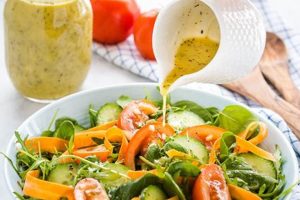
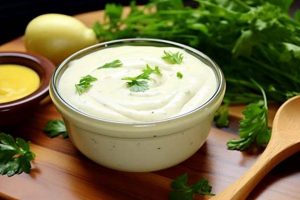
A Caesar salad dressing prepared from scratch typically involves emulsifying raw egg yolks, olive oil, lemon juice, garlic, Worcestershire sauce, anchovies, and Parmesan cheese. This contrasts with commercially produced dressings, which often contain preservatives, stabilizers, and other additives. A classic preparation might involve coddling the egg yolks or using pasteurized eggs for food safety.
Crafting a Caesar dressing at home offers several advantages. It allows control over ingredients, accommodating dietary restrictions and preferences for flavor intensity. Freshly made dressings generally possess a brighter, more vibrant taste compared to bottled alternatives. Additionally, understanding the process connects one to culinary traditions, given the dressing’s rich history originating in Tijuana, Mexico.
The following sections delve into various aspects of creating this iconic dressing, including detailed recipes, variations, ingredient substitutions, and tips for achieving the perfect emulsion and balance of flavors.
Tips for Superior Caesar Salad Dressing
Achieving a restaurant-quality Caesar dressing at home requires attention to detail and an understanding of key techniques. These tips offer guidance for creating a truly exceptional dressing.
Tip 1: Emulsion Stability: A stable emulsion prevents the dressing from separating. Gradual addition of oil to the egg yolks while whisking vigorously is crucial for a smooth, cohesive texture. If the mixture breaks, a teaspoon of warm water whisked in can often re-emulsify it.
Tip 2: Fresh Ingredients: The quality of ingredients directly impacts the final flavor. Opt for fresh garlic, high-quality olive oil, and freshly grated Parmesan cheese for the best results.
Tip 3: Anchovy Selection: Anchovies provide a crucial umami depth. Salt-packed anchovies offer a cleaner, more intense flavor than oil-packed varieties. Rinse them thoroughly before use.
Tip 4: Lemon Juice vs. Vinegar: While traditional recipes utilize lemon juice, a splash of red wine vinegar can add complexity and enhance the dressing’s tanginess.
Tip 5: Garlic Infusion: Mince the garlic finely or grate it to ensure even distribution of flavor throughout the dressing. Allowing the minced garlic to sit in the lemon juice for a few minutes before adding other ingredients mellows its intensity.
Tip 6: Seasoning Adjustments: Taste and adjust seasoning throughout the process. The saltiness of anchovies and Parmesan can vary, requiring adjustments to salt and black pepper.
Tip 7: Storage: Homemade Caesar dressing can be stored in an airtight container in the refrigerator for up to three days, though it is best consumed fresh.
By following these tips, one can ensure a balanced and flavorful Caesar salad dressing that elevates any salad.
This exploration of techniques and flavor profiles provides a foundation for confident experimentation and culinary mastery in the art of Caesar dressing preparation.
1. Fresh Ingredients

The quality of a homemade Caesar salad dressing hinges directly on the freshness of its components. Utilizing fresh ingredients elevates the flavor profile significantly, offering a vibrancy absent in dressings made with pre-packaged or aged elements. This distinction stems from the volatile compounds present in fresh produce, herbs, and cheeses, which contribute to the dressing’s aromatic complexity and overall taste. For instance, freshly squeezed lemon juice possesses a brighter, more citrusy flavor compared to bottled alternatives, while freshly grated Parmesan cheese offers a richer, nuttier depth than pre-grated versions.
Consider the impact of using fresh garlic. Its pungent, sharp notes dissipate over time. Freshly minced or grated garlic delivers a robust flavor that mellows and integrates seamlessly into the dressing, contributing a crucial element to the classic Caesar taste. Similarly, using high-quality, fresh olive oil provides a smooth, fruity foundation for the emulsion, impacting both flavor and texture. The delicate flavor of fresh, high-quality anchovies, properly rinsed, adds a crucial savory dimension often lost with pre-packaged options.
Prioritizing fresh ingredients ultimately determines the authenticity and quality of the homemade Caesar dressing. The practice yields superior flavor, aroma, and texture, differentiating it from commercially produced counterparts. Recognizing this connection empowers one to make informed decisions about ingredient selection, ensuring a final product that embodies the true essence of this culinary classic. The effort invested in sourcing fresh ingredients translates directly to a more flavorful and rewarding culinary experience.
2. Emulsification Technique

Emulsification is fundamental to a successful homemade Caesar salad dressing. This technique combines two immiscible liquidsin this case, oil and an aqueous mixture of egg yolk, lemon juice, and other ingredientsinto a stable, creamy emulsion. The egg yolk acts as an emulsifier, containing lecithin which binds the oil and water molecules together, preventing separation. Without proper emulsification, the dressing will separate, resulting in an oily layer on top and a watery layer beneath, compromising both texture and flavor delivery.
The process involves slowly adding the oil to the egg yolk mixture while whisking constantly. The continuous whisking action breaks down the oil into tiny droplets, which are then coated by the lecithin in the egg yolk, suspending them in the aqueous phase. If the oil is added too quickly, the emulsion may break, leading to separation. A common indicator of a broken emulsion is a thin, watery consistency and a visible separation of oil. Employing a blender or food processor can streamline the process, particularly for larger batches, but the underlying principle remains the same: controlled incorporation of oil while continuously agitating the mixture.
The stability of the emulsion directly impacts the sensory experience of the dressing. A properly emulsified dressing coats the lettuce leaves evenly, delivering a balanced flavor in every bite. A broken emulsion, conversely, leads to uneven coating and an unpleasant mouthfeel. Understanding the science behind emulsification allows for greater control over the final product, ensuring a consistently smooth, creamy, and flavorful Caesar salad dressing. Mastery of this technique distinguishes a truly excellent homemade Caesar dressing from a mediocre one.
3. Anchovy Selection

Anchovy selection significantly influences the flavor profile of homemade Caesar salad dressing. These small, oily fish offer a unique umami richness and salty depth crucial to the dressing’s authentic character. Choosing the right type of anchovy and understanding its impact contributes fundamentally to the overall culinary outcome. Oil-packed anchovies, readily available in most supermarkets, provide a convenient option. However, their flavor can be less intense and sometimes carry a slightly fishy aftertaste. Salt-packed anchovies, while requiring rinsing and filleting, deliver a cleaner, more pronounced umami flavor. Their intense saltiness necessitates careful portioning within the recipe. The selection process requires consideration of flavor intensity preferences and the level of effort one is willing to invest in preparation.
A direct comparison reveals noticeable flavor distinctions. A dressing made with oil-packed anchovies might present a milder, more subdued savory note. In contrast, a dressing crafted with salt-packed anchovies offers a more pronounced, briny, and complex umami punch. Consider a scenario where a recipe calls for two anchovy fillets. Using oil-packed anchovies might necessitate adding more fillets or a dash of fish sauce to achieve the desired umami depth. Conversely, using salt-packed anchovies may require careful adjustment of added salt in the recipe. These nuances demonstrate the practical implications of anchovy selection, underscoring its significance in achieving the desired flavor balance.
Ultimately, the choice between oil-packed and salt-packed anchovies rests on individual preferences and culinary goals. Understanding the impact of each option empowers one to make informed decisions that align with desired flavor outcomes. Whether seeking a subtle savory undertone or a bold umami statement, careful anchovy selection distinguishes a truly exceptional homemade Caesar dressing. This attention to detail elevates the culinary experience, ensuring a dressing that reflects a nuanced appreciation for flavor complexities and ingredient selection.
4. Garlic Preparation

Garlic preparation significantly impacts the final flavor profile of homemade Caesar salad dressing. The method employed influences both the intensity and distribution of garlic’s pungent notes throughout the emulsion. Mincing garlic finely creates smaller pieces, leading to a more pronounced garlic presence. Conversely, grating garlic yields a finer texture, integrating its flavor more subtly while mitigating the potential for overpowering sharpness. A third approach involves crushing the garlic and allowing it to macerate in the lemon juice or vinegar, mellowing its pungency while infusing the liquid with garlicky essence. The choice of method depends on the desired intensity and the overall balance sought within the dressing.
Consider a dressing prepared with coarsely chopped garlic. Bites containing larger garlic pieces will deliver an intense burst of raw garlic flavor, potentially overshadowing the other delicate components. On the other hand, a dressing prepared with finely minced garlic offers a more consistent flavor experience. The smaller garlic pieces distribute evenly throughout the emulsion, providing a balanced garlic presence in each bite. If a milder garlic flavor is preferred, grating the garlic or allowing it to macerate softens its raw pungency. Maceration also allows the garlic flavor to infuse the acidic component of the dressing, contributing a subtle yet pervasive garlic undertone.
Appropriate garlic preparation ensures that the garlic flavor complements rather than dominates the other ingredients in the dressing. This careful attention to detail contributes to a more harmonious and balanced final product. Selecting the right methodmincing, grating, or maceratingallows control over the intensity and distribution of garlic’s contribution to the dressing’s overall flavor profile. This understanding allows for tailored adjustments based on individual palate preferences and desired culinary outcomes.
5. Seasoning Balance

Seasoning balance is paramount in a homemade Caesar salad dressing recipe. It distinguishes a truly exceptional dressing from a mediocre one. Achieving this balance involves a nuanced understanding of the interplay between salty, acidic, and savory elements. Careful consideration of ingredient contributions and iterative tasting adjustments are crucial for achieving a harmonious flavor profile. This process elevates the sensory experience, ensuring a dressing that complements the other salad components without overpowering them.
- Salt Calibration
Salt plays a pivotal role in Caesar dressing, enhancing other flavors and balancing acidity. However, several ingredients already contribute saltiness: anchovies, Parmesan cheese, and sometimes Worcestershire sauce. Over-salting easily overwhelms the delicate interplay of other flavors. Careful initial salting, followed by incremental adjustments after incorporating other ingredients, is essential. Tasting throughout the process allows for precise calibration, preventing an overly salty or bland outcome.
- Acidity Adjustment
Acidity, primarily from lemon juice, provides brightness and balances richness. The right level of acidity cuts through the creamy emulsion and the fattiness of the cheese and olive oil, creating a refreshing counterpoint. Too much acidity can make the dressing sharp and unpleasant, while too little can leave it flat and heavy. Adjusting acidity based on the specific lemon used and other ingredients, like a splash of vinegar for complexity, is crucial for achieving the desired balance.
- Black Pepper Integration
Black pepper adds a subtle layer of complexity and spice. Freshly ground black pepper offers a more vibrant aroma and flavor compared to pre-ground pepper. The amount used depends on personal preference and the balance of other flavors. Integrating black pepper gradually, tasting after each addition, allows for precise control, preventing an overpowering peppery bite. The goal is to enhance, not dominate, the overall flavor profile.
- Umami Enhancement
Umami, a savory depth, is a hallmark of Caesar dressing. Anchovies are the primary source of umami, contributing a rich, savory backbone. Worcestershire sauce can further enhance this umami dimension. Balancing the umami contribution from these ingredients with the salt and acidity levels is crucial. Too much umami can make the dressing taste overly fishy or savory, while too little can leave it lacking depth. Careful ingredient selection and portioning contribute to a harmonious umami presence within the overall flavor composition.
The interplay of these seasoning elements defines the final character of the Caesar dressing. Achieving a balanced flavor profile elevates the entire culinary experience, ensuring that the dressing enhances the salad rather than masking its fresh components. It’s a testament to the understanding that even seemingly minor adjustments in seasoning can profoundly impact the overall enjoyment of a dish. This attention to detail distinguishes a well-crafted homemade Caesar salad dressing from a simple mixture of ingredients.
6. Proper Storage

Proper storage is essential for maintaining the quality and safety of homemade Caesar salad dressing. Due to the presence of raw egg yolks in classic recipes, careful refrigeration and adherence to appropriate storage practices are critical for mitigating bacterial growth and preserving flavor. Improper storage can lead to spoilage, rendering the dressing unsafe to consume and diminishing its desirable flavor characteristics. Storing the dressing in an airtight container limits oxidation and prevents the absorption of odors from other foods in the refrigerator. This safeguards the delicate balance of flavors crafted during preparation.
Consider the scenario where a freshly prepared Caesar dressing is left at room temperature for several hours. This environment fosters rapid bacterial growth, particularly given the presence of raw egg yolks, potentially leading to foodborne illness. Conversely, promptly refrigerating the dressing in a sealed container inhibits bacterial proliferation and preserves the dressing’s quality. Similarly, using a container with a loose-fitting lid can expose the dressing to air and other refrigerator odors, leading to off-flavors and a compromised texture. The dressing’s delicate emulsion can also break down more readily when exposed to fluctuating temperatures, further emphasizing the need for consistent and appropriate refrigeration.
Effective storage practices directly impact the safety and flavor integrity of homemade Caesar salad dressing. Refrigeration in an airtight container at or below 40F (4C) is crucial for inhibiting bacterial growth and preserving the emulsion’s stability. Consuming the dressing within three to four days of preparation ensures optimal quality and minimizes the risk of spoilage. Understanding and implementing these storage practices are vital for ensuring both the safety and enjoyment of this classic culinary creation. Neglecting proper storage compromises not only the flavor and texture but also the safety of the dressing.
Frequently Asked Questions
This section addresses common inquiries regarding the preparation and enjoyment of homemade Caesar salad dressing.
Question 1: Can pasteurized eggs be used in place of raw egg yolks?
Pasteurized eggs offer a safer alternative to raw egg yolks, eliminating the risk of salmonella. While the flavor and emulsification properties might differ slightly, pasteurized eggs provide a suitable substitute for those concerned about food safety.
Question 2: How can one achieve a thicker consistency in the dressing?
A thicker consistency can be achieved by adding additional grated Parmesan cheese or a small amount of Dijon mustard. Incorporating a cooked, mashed egg yolk can also contribute to a richer, thicker texture.
Question 3: What are suitable substitutes for anchovies?
While anchovies provide a distinct umami flavor, Worcestershire sauce, fish sauce, or capers can offer a degree of savory depth in their absence. Miso paste can also contribute a similar umami richness.
Question 4: How long can homemade Caesar dressing be stored?
Homemade Caesar dressing, especially when made with raw egg yolks, should be stored in an airtight container in the refrigerator for no more than three to four days. Dressings made with pasteurized eggs may last slightly longer.
Question 5: Can the dressing be made ahead of time for a large gathering?
The dressing can be prepared a day in advance, excluding the addition of croutons. Add croutons just before serving to maintain their texture. Ensure thorough chilling and proper storage to maintain quality.
Question 6: What types of lettuce are best suited for Caesar salad?
Romaine lettuce, with its crisp texture and sturdy leaves, is the traditional choice for Caesar salad. Other lettuces, such as Little Gem or butter lettuce, can also offer a pleasant textural contrast.
Addressing these frequently asked questions provides further clarity and guidance for achieving optimal results when preparing homemade Caesar salad dressing.
This information equips individuals with the knowledge to confidently create and enjoy this classic dressing.
Homemade Caesar Salad Dressing Recipe
Exploration of homemade Caesar salad dressing recipes reveals the interplay of fresh ingredients, precise emulsification, and balanced seasoning as crucial for achieving optimal flavor and texture. Anchovy selection, garlic preparation, and proper storage further influence the dressing’s overall quality and longevity. Understanding these elements empowers culinary enthusiasts to create dressings that surpass commercially produced alternatives, offering a taste experience reflective of individual preferences and culinary expertise.
Mastery of Caesar dressing preparation represents not merely a recipe followed but a culinary skill honed. This knowledge allows adaptation and refinement, encouraging exploration of variations and personalized expressions of this classic dressing. The potential for culinary creativity, coupled with an appreciation for the historical and cultural significance of this iconic dressing, transforms a simple recipe into a rewarding culinary endeavor.