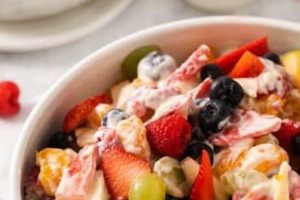
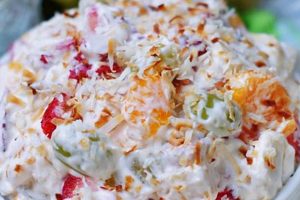
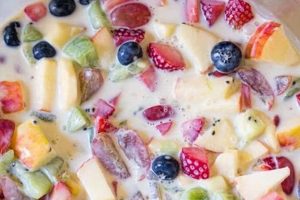
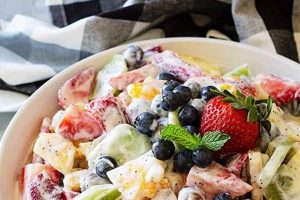
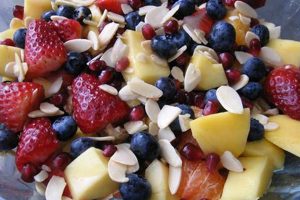
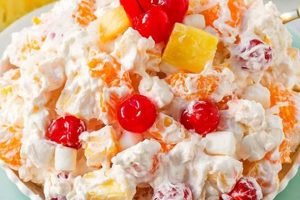
Gelatin-based desserts incorporating various fruits offer a refreshing and often colorful culinary experience. Combinations range from simple, single-fruit additions to complex mixtures featuring a medley of fresh, canned, or frozen options. These desserts can be molded into elaborate shapes or served as simpler mixtures. A classic example involves embedding mandarin orange segments and pineapple chunks within a lime-flavored gelatin.
These versatile dishes can be tailored to individual preferences and dietary needs. Their cool, light texture makes them particularly appealing in warmer weather. Historically, gelatin-based salads gained popularity in the mid-20th century, becoming a staple at potlucks and holiday gatherings. They represent an accessible and adaptable way to incorporate fruit into one’s diet, potentially encouraging increased fruit consumption, especially among those who might not otherwise choose it. Their relative ease of preparation also contributes to their enduring appeal.
Further exploration will delve into specific variations, ingredient selection, preparation techniques, nutritional considerations, and creative presentation ideas for these desserts.
Tips for Creating Exquisite Gelatin and Fruit Desserts
Achieving optimal results with fruit and gelatin combinations requires attention to several key factors. The following tips offer guidance for creating visually appealing and flavorful desserts.
Tip 1: Layer for Visual Appeal: Layering different colors and textures of gelatin creates a visually striking presentation. Allow each layer to set completely before adding the next to prevent blending.
Tip 2: Balance Sweetness: Consider the natural sweetness of the fruit when selecting the gelatin flavor. Tart fruits pair well with sweeter gelatin flavors, while sweet fruits often complement less sweet or tart gelatin.
Tip 3: Prevent Fruit from Sinking: Distribute fruit evenly throughout the gelatin. For denser fruits prone to sinking, allow the gelatin to partially set before adding them. Alternatively, smaller fruit pieces can be suspended more easily.
Tip 4: Proper Mold Preparation: Lightly oiling the mold before adding the gelatin ensures easy removal. Dipping the mold briefly in warm water also facilitates release.
Tip 5: Chill Time is Crucial: Adequate chilling time allows the gelatin to set completely, resulting in a firm, desirable texture. Follow recommended chilling times for specific recipes.
Tip 6: Incorporate Complementary Ingredients: Enhance flavor and texture by incorporating ingredients like nuts, shredded coconut, or miniature marshmallows. These additions create more complex and interesting desserts.
Tip 7: Consider Canned vs. Fresh Fruit: While fresh fruit offers vibrant flavor, canned fruit provides convenience. Canned fruit should be well-drained to prevent excess liquid from affecting the gelatin’s setting process.
By following these tips, one can elevate basic gelatin and fruit combinations into elegant and enjoyable desserts. Careful attention to detail, from ingredient selection to presentation, ensures a satisfying culinary experience.
These guidelines provide a strong foundation for creating delightful gelatin and fruit desserts. The following section offers specific recipe examples for further inspiration.
1. Fruit Selection

Fruit selection significantly impacts the overall quality of a gelatin and fruit dessert. The choice of fruit determines not only the flavor profile but also the texture, color, and visual appeal. Compatibility between fruit and gelatin flavors is crucial. For instance, tart fruits like berries and cherries pair well with sweeter gelatin flavors, while sweeter fruits such as peaches and mangoes complement milder or tart jellos. Textural considerations are equally important. Firm fruits like apples and grapes hold their shape well, while softer fruits like bananas and kiwi may require careful handling or incorporation to prevent excessive softening or disintegration within the gelatin. The ripeness of the fruit also influences the final outcome; overly ripe fruit can release excess liquid, affecting the gelatin’s ability to set properly. Color variation adds visual interest. Combining fruits of different colors creates a vibrant and appealing presentation.
Consider a tropical-themed dessert. A combination of mango, pineapple, and papaya provides a vibrant color palette and a sweet, tangy flavor profile that complements coconut or lime-flavored gelatin. Conversely, a lighter, refreshing dessert might incorporate berries like raspberries, blueberries, and strawberries with a lemon or orange-flavored gelatin. Using a mix of fresh and canned fruits offers versatility. Fresh berries provide a bright, fresh flavor, while canned mandarin oranges or pineapple chunks offer convenience and a consistent texture. Balancing different textures enhances the sensory experience. Combining firmer fruits like grapes with softer fruits like peaches adds a pleasant textural contrast. Incorporating elements like chopped nuts or shredded coconut further enhances textural complexity.
Careful fruit selection elevates gelatin and fruit desserts from simple to sophisticated. Understanding the interplay of flavors, textures, and colors allows for greater control over the final product. This knowledge enables the creation of desserts tailored to specific preferences and occasions, ranging from light and refreshing to rich and decadent. Considering these factors ensures a harmonious blend of flavors and textures, resulting in a visually appealing and palate-pleasing dessert.
2. Jello Flavor Pairing
Jello flavor pairing represents a critical element in successful fruit and jello salad recipes. Harmonious flavor combinations elevate the dish beyond a simple mixture of ingredients, creating a balanced and enjoyable sensory experience. The interplay between fruit acidity and jello sweetness determines the overall flavor profile. Pairing tart fruits like berries or citrus with sweeter jello flavors like cherry or strawberry creates a balanced contrast. Conversely, sweet fruits like peaches or mangoes benefit from pairing with less sweet or tart jello flavors like lemon or lime. An example of a successful pairing includes a lime-flavored jello with mandarin oranges and pineapple, the tartness of the lime complementing the sweetness of the fruit. Conversely, a less successful pairing might involve a sweet, ripe mango with a similarly sweet cherry jello, potentially resulting in an overly sweet and less nuanced flavor profile. Selecting complementary flavors enhances the individual characteristics of each ingredient while creating a unified and satisfying whole.
Careful consideration of flavor pairings extends beyond simple sweetness and tartness. Flavor notes within specific fruits and jello varieties can be amplified or muted through strategic pairings. For example, the tropical notes of a pineapple pair well with coconut-flavored jello, enhancing the overall tropical theme. Similarly, the subtle floral notes of a berry blend can be complemented by a lemon-flavored jello, which brightens the berry flavors without overpowering them. Understanding the nuances of flavor profiles allows for the creation of more sophisticated and complex flavor combinations. This understanding translates to a more enjoyable culinary experience, where individual ingredients contribute to a cohesive and well-balanced flavor profile. This attention to detail elevates a simple dessert into a carefully crafted culinary creation.
Mastery of jello flavor pairing significantly contributes to the success of fruit and jello salad recipes. It allows for a greater degree of control over the final flavor profile, transforming a simple dessert into a carefully constructed culinary experience. Attention to the interplay between fruit and jello flavors ensures a harmonious and satisfying result. Challenges may arise when working with particularly strong or unusual fruit flavors. In such cases, experimentation and careful tasting are essential to achieve a balanced outcome. This process highlights the importance of understanding flavor profiles as a fundamental principle in culinary practice, ultimately contributing to the creation of more nuanced and enjoyable dishes.
3. Mold Preparation

Mold preparation plays a crucial role in the successful execution of fruit and jello salad recipes. Proper preparation ensures clean release of the set dessert, preserving its structural integrity and enhancing presentation. Different mold materials and shapes offer varying aesthetic options, contributing to the overall visual appeal. The following facets explore the key aspects of mold preparation.
- Mold Material
Mold material influences both the ease of release and the final presentation. Metal molds, while durable, may require more thorough greasing to prevent sticking. Glass molds offer an elegant presentation and often release the dessert more readily. Silicone molds provide flexibility, allowing for intricate shapes and easy removal. Choosing the appropriate material depends on the desired outcome and complexity of the dessert’s design. A simple fruit and jello salad might benefit from a classic glass mold, while a more elaborate, layered dessert might require the flexibility of a silicone mold.
- Mold Shape
Mold shape contributes significantly to the visual appeal. Traditional bundt pans or fluted molds create elegant, classic shapes. Novelty molds, such as those shaped like fruits or animals, offer whimsical presentations, particularly suitable for themed occasions. Simple loaf pans or rectangular dishes provide a versatile option for everyday desserts. Selecting a mold shape aligned with the occasion and the overall aesthetic of the dessert enhances its presentation.
- Mold Greasing/Preparation
Proper greasing prevents the dessert from sticking to the mold, ensuring a clean release. Lightly coating the interior surface of the mold with a neutral-flavored oil, such as vegetable or canola oil, typically suffices. For particularly intricate molds or sticky desserts, a light dusting of flour or cornstarch after oiling can provide added insurance against sticking. Alternatively, cooking sprays specifically designed for baking can offer a convenient alternative to traditional greasing methods. Thorough and even application of the chosen release agent ensures the dessert maintains its shape and detail upon removal from the mold.
- Temperature Considerations
Temperature plays a subtle yet important role in mold preparation, particularly for metal or glass molds. Chilling the mold briefly before adding the jello mixture can facilitate smoother layering and prevent premature setting, especially in warmer environments. Conversely, dipping a filled mold briefly in warm water can aid in releasing the set dessert. The subtle manipulation of temperature contributes to a more seamless and successful mold release process.
Effective mold preparation ensures the structural integrity and aesthetic appeal of the finished dessert. Consideration of mold material, shape, greasing techniques, and temperature contribute to a clean, effortless release and an attractive presentation. These factors, combined with careful fruit selection and jello flavor pairing, elevate fruit and jello salad recipes from simple to sophisticated culinary creations.
4. Chilling Time
Chilling time represents a critical factor in the successful preparation of fruit and jello salad recipes. Adequate chilling allows the gelatin to solidify completely, achieving the desired texture and structural integrity. Insufficient chilling results in a weak set, potentially compromising the dessert’s presentation and overall appeal. Conversely, excessive chilling can make the gelatin too firm, affecting its palatability. The following facets explore the nuances of chilling time and its impact on the final product.
- Factors Influencing Chilling Time
Several factors influence the required chilling time. The volume of the jello mixture plays a significant role; larger volumes require longer chilling periods. The temperature of the surrounding environment also affects setting time. A colder refrigerator accelerates the process, while a warmer environment necessitates longer chilling. The specific recipe and the presence of additional ingredients, such as fruit pieces or other inclusions, can also impact setting time. Recipes often provide estimated chilling times, but adjustments may be necessary based on these environmental and compositional variables.
- Optimal Chilling Temperature
Maintaining a consistent and appropriate refrigerator temperature is essential for optimal jello setting. A temperature between 35F and 40F (2C and 4C) is generally recommended. Fluctuations in temperature can disrupt the setting process, leading to an uneven texture or a weaker set. Using a refrigerator thermometer ensures accurate temperature monitoring, contributing to consistent results. Avoid placing the jello mold near the refrigerator’s vents, as temperature fluctuations in these areas can affect the setting process.
- Testing for Doneness
Determining the appropriate chilling time often involves tactile assessment. Gently pressing the surface of the jello provides an indication of its firmness. A slight jiggle indicates the jello is nearing completion, while a firm, non-yielding surface suggests it has fully set. Avoid excessive pressing, as this can damage the delicate structure, particularly during the initial setting stages. Visual cues, such as a clear separation between the jello and the mold’s edges, also indicate doneness. Experience plays a role in accurately judging the set of the jello.
- Consequences of Inadequate or Excessive Chilling
Insufficient chilling yields a soft, unstable jello that may not hold its shape when unmolded. This can compromise the dessert’s presentation and overall aesthetic appeal. Conversely, excessive chilling can result in a rubbery texture, detracting from the desired smooth and palatable consistency. Understanding the appropriate chilling time is crucial for achieving the optimal balance between structural integrity and desirable texture.
Chilling time is integral to the success of fruit and jello salad recipes. Understanding the factors influencing chilling time, maintaining optimal chilling temperatures, and employing appropriate testing methods ensure the desired texture, structural integrity, and overall appeal of the final product. Careful attention to chilling time transforms a simple mixture of ingredients into a cohesive and visually appealing dessert. Neglecting this critical step compromises the dessert’s structure and palatability, highlighting the importance of precision in culinary practice.
5. Layering Techniques

Layering techniques significantly enhance the aesthetic appeal and textural complexity of fruit and jello salad recipes. Strategic layering elevates these desserts from simple mixtures to visually stunning creations. Careful consideration of color, texture, and flavor distribution within each layer contributes to a more engaging sensory experience. Creating distinct layers requires allowing each layer to set completely before adding the next. This prevents color bleeding and maintains the integrity of individual layers, resulting in a visually defined and appealing dessert. The order in which layers are added impacts the final presentation. Placing visually appealing elements, such as vibrant fruit pieces, in the top layer maximizes their visual impact. A classic example involves layering different colors of jello, each embedded with complementary fruit pieces, creating a rainbow effect. Alternatively, layering varying textures, such as a creamy layer atop a fruit-studded layer, adds textural intrigue.
Beyond visual appeal, layering techniques influence flavor perception. Alternating layers with contrasting flavor profiles creates a dynamic tasting experience. For example, a layer of tart raspberry jello can be followed by a layer of sweet vanilla-flavored jello, each containing complementary fruits. This approach prevents flavor monotony and enhances the overall enjoyment of the dessert. Layering also allows for the incorporation of a wider variety of ingredients. Different fruits, nuts, or even whipped cream layers can be incorporated, adding depth and complexity to the flavor profile. This expands the possibilities beyond basic fruit and jello combinations, creating opportunities for culinary creativity. A layered dessert featuring a bottom layer of crushed cookies, followed by a layer of cream cheese filling, and topped with a fruit-studded jello layer exemplifies this versatility.
Mastery of layering techniques enhances the presentation and sensory experience of fruit and jello salad recipes. Careful planning and execution of layering strategies result in visually appealing and texturally diverse desserts. Challenges may include preventing layers from separating or achieving a clean separation between layers. Addressing these challenges requires precise timing and attention to detail during the setting process. Ultimately, effective layering elevates these desserts from simple preparations to carefully crafted culinary creations, demonstrating the impact of technique on the final product.
6. Additional Ingredients

Supplemental ingredients expand the flavor and textural profile of fruit and jello salad recipes. These additions move beyond basic fruit and jello combinations, offering complexity and enhancing sensory appeal. Incorporating nuts, such as chopped walnuts or pecans, provides a contrasting crunch and nutty flavor that complements the smooth texture of the jello and the sweetness of the fruit. Shredded coconut introduces a subtle sweetness and chewy texture, particularly suitable for tropical-themed salads. Miniature marshmallows contribute a light, airy texture and additional sweetness. Spices, like cinnamon or nutmeg, can add warmth and depth of flavor, particularly when paired with autumnal fruits like apples or cranberries. Whipped cream or cream cheese-based mixtures offer a creamy, tangy counterpoint to the fruit and jello, enhancing richness. The choice of additional ingredients should complement the existing flavors and textures, creating a balanced and harmonious final product. For example, a cranberry jello salad with orange segments and chopped walnuts benefits from the textural contrast of the walnuts and the complementary flavor profiles of cranberry, orange, and walnut. Conversely, incorporating overly sweet elements into an already sweet fruit and jello combination may result in an unbalanced and less appealing dessert.
The quantity of additional ingredients requires careful consideration. Overabundance can mask the delicate flavors of the fruit and jello, while insufficient amounts may fail to provide the intended textural or flavor enhancement. Balancing the proportion of additional ingredients relative to the core components ensures they contribute positively to the overall sensory experience without overpowering the primary flavors. Practical applications include using crushed cookies or graham crackers as a base layer to add a contrasting texture and flavor. Toasted nuts or seeds offer a deeper, roasted flavor profile. Integrating a layer of whipped cream or a dollop of yogurt adds a creamy element. These additions enhance both the visual presentation and the gustatory experience. A layered jello salad featuring a graham cracker crust, a layer of whipped cream, and a top layer of fruit-studded jello exemplifies this layered approach, showcasing the diverse possibilities achievable through the strategic incorporation of additional ingredients.
Strategic incorporation of additional ingredients elevates fruit and jello salad recipes from simple to complex culinary creations. Thoughtful selection and balanced proportions are essential for achieving a harmonious blend of flavors and textures. Challenges may arise when combining ingredients with disparate flavor profiles or textures. Addressing these challenges requires careful experimentation and an understanding of how individual ingredients interact. Understanding the role and impact of additional ingredients provides a foundation for culinary creativity, enabling the development of more sophisticated and nuanced desserts. This attention to detail demonstrates a deeper understanding of flavor composition and texture interplay, ultimately contributing to a more satisfying culinary experience.
7. Presentation Style
Presentation style significantly impacts the perceived value and enjoyment of fruit and jello salad recipes. Visual appeal enhances the dining experience, stimulating appetite and creating a sense of occasion. A thoughtfully presented dessert elevates the perception of flavor and quality, transforming a simple dish into a culinary centerpiece. Consider the impact of serving a layered jello salad in a plain glass bowl versus a decorative mold. The latter immediately elevates the perceived sophistication of the dessert. Garnishing a simple fruit and jello mixture with fresh mint sprigs or a dusting of powdered sugar adds visual interest and suggests attention to detail. Conversely, a haphazardly arranged or sloppily served dessert can diminish enjoyment, regardless of the quality of the ingredients or the execution of the recipe. Presentation influences perception, impacting overall satisfaction.
Several factors contribute to effective presentation. The choice of serving dish plays a crucial role. Elegant glassware, vintage serving platters, or uniquely shaped bowls enhance visual appeal. Color coordination between the jello, fruit, and serving dish creates a harmonious aesthetic. Consider a vibrant red jello salad served in a clear glass bowl, allowing the color to shine. Portion size also influences perception. Smaller, individually molded portions often appear more elegant than a large, communal serving. Garnishes, while seemingly minor, add significant visual interest. Fresh herbs, edible flowers, a dusting of cocoa powder, or a drizzle of sauce enhance the visual appeal and can complement the flavor profile. Arrangement of fruit pieces within the jello contributes to visual interest. Strategic placement creates patterns or visual focal points, further enhancing presentation.
Effective presentation maximizes the enjoyment of fruit and jello salad recipes. Careful consideration of serving dishes, color coordination, portion size, and garnishes elevates these desserts from simple to sophisticated. Challenges may include achieving a balance between visual appeal and practicality. Overly elaborate presentations can be time-consuming and impractical for everyday occasions. Understanding the context and adapting the presentation style accordingly ensures a balance between effort and impact. Effective presentation communicates care and attention to detail, enhancing the overall dining experience and demonstrating respect for both the ingredients and the individuals partaking in the dessert.
Frequently Asked Questions
The following addresses common inquiries regarding the preparation and enjoyment of fruit and jello salads.
Question 1: How can one prevent fruit from sinking to the bottom of the mold?
Denser fruits tend to sink. Allowing the jello to partially set before adding fruit or using smaller fruit pieces can prevent this. Distributing fruit evenly throughout the mixture also helps.
Question 2: What are suitable jello flavor pairings for specific fruits?
Tart fruits, such as berries and citrus, pair well with sweeter jello flavors like cherry or strawberry. Sweeter fruits, like peaches and mangoes, complement milder jello flavors such as lemon or lime. Flavor pairings should achieve balance.
Question 3: Can one use frozen fruit in jello salads?
Frozen fruit can be used, but thawing and draining thoroughly beforehand is essential to prevent excess liquid from affecting the jello’s setting process. Thawing also prevents the fruit from creating icy patches within the jello. Consider the potential impact of the fruit’s color bleeding into the jello during thawing.
Question 4: How long should the dessert chill for optimal setting?
Chilling time varies based on factors including the volume of the mixture and the surrounding temperature. Recipes generally provide estimated chilling times. A firm, non-yielding surface indicates the jello has set completely. Testing doneness involves gently pressing the surface; a slight jiggle indicates the jello is nearing completion. Excessive chilling can result in a rubbery texture.
Question 5: How can one ensure a clean release of the jello from the mold?
Lightly oiling the mold before adding the mixture is crucial. Briefly dipping the mold in warm water can also facilitate release. Silicone molds generally offer the easiest release, followed by glass and metal. Thorough greasing is especially important for metal molds. Choosing appropriately shaped molds simplifies release.
Question 6: What are suitable garnishes for fruit and jello salads?
Fresh mint sprigs, whipped cream, toasted nuts, shredded coconut, or a dusting of powdered sugar are suitable garnish options. The garnish should complement the flavors and textures of the salad. Visual appeal is paramount; garnishes should enhance the presentation without overpowering the dessert.
Understanding these common points of inquiry facilitates successful preparation and presentation, enhancing the overall enjoyment of fruit and jello salad recipes.
The following section will explore a collection of diverse recipes, showcasing a range of flavor combinations and presentation styles.
Fruit and Jello Salad Recipes
Exploration of fruit and jello salad recipes reveals a deceptively complex interplay of factors influencing the final product. Careful consideration of fruit selection, jello flavor pairing, mold preparation, chilling time, layering techniques, additional ingredients, and presentation style significantly impacts the sensory experience and overall appeal. Success hinges on a thorough understanding of these elements and their synergistic effects. From ingredient selection to final presentation, attention to detail governs the transformation of simple components into a cohesive and enjoyable dessert.
Fruit and jello salad recipes offer a versatile platform for culinary expression. Potential for creativity within this seemingly simple framework remains largely untapped. Continued exploration and experimentation promise further evolution and refinement of these classic desserts. One can anticipate a resurgence in popularity as culinary enthusiasts rediscover the potential of these versatile and adaptable recipes. The future of fruit and jello salad recipes lies in the innovative application of culinary techniques and the continued exploration of flavor and texture combinations.