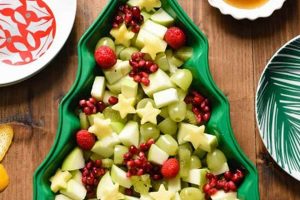
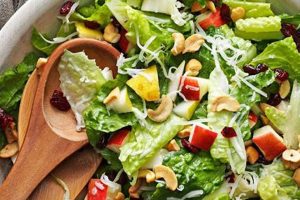
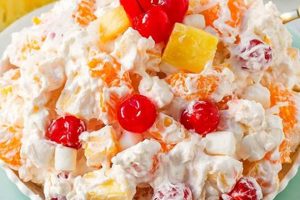
A blend of various fresh fruits, often complemented by the addition of nuts, creates a nutritious and flavorful dish. A typical preparation might include berries, melon, grapes, and chopped almonds or walnuts, dressed with a light syrup or citrus juice. Variations are vast and can incorporate seasonal fruits, different nut varieties, and diverse dressings to create unique flavor profiles.
Combining fruits and nuts offers a rich source of vitamins, minerals, antioxidants, and healthy fats. This combination contributes to a balanced diet and can provide sustained energy. Historically, fresh fruit availability often dictated such preparations, leading to diverse regional variations. The inclusion of nuts likely evolved as a means of adding protein and texture, enhancing both nutritional value and culinary appeal.
The following sections will explore optimal fruit and nut pairings, suggest various dressing options, provide step-by-step preparation instructions, and offer tips for storage and presentation.
Tips for Creating the Perfect Fruit and Nut Salad
Achieving a well-balanced and flavorful fruit and nut salad requires attention to detail. The following tips offer guidance for optimal selection, preparation, and presentation.
Tip 1: Select ripe, but firm, fruit. Overripe fruit can become mushy and detract from the salad’s texture. Underripe fruit may lack sweetness and optimal flavor.
Tip 2: Consider contrasting textures and flavors. Combine soft fruits like berries and bananas with firmer options such as apples and pears. Balance sweet fruits with tart options to create a complex flavor profile.
Tip 3: Toast nuts briefly to enhance their flavor. A quick toasting in a dry pan over medium heat brings out the natural oils and intensifies the nutty aroma and taste.
Tip 4: Add nuts just before serving. This prevents them from absorbing moisture from the fruit and becoming soggy, maintaining their desirable crunch.
Tip 5: Dress the salad lightly. A heavy dressing can overpower the delicate flavors of the fruit. A light syrup, citrus juice, or a drizzle of honey often suffices.
Tip 6: Use a variety of nuts for optimal nutritional value and textural interest. Almonds, walnuts, pecans, and pistachios each offer unique flavor and texture contributions.
Tip 7: Chill the salad briefly before serving to enhance the refreshing quality. Avoid prolonged chilling, as it can impact the texture of some fruits.
By following these tips, one can ensure a visually appealing, flavorful, and nutritionally balanced fruit and nut salad.
These guidelines offer a foundation for creating a delightful culinary experience, demonstrating the versatility and appeal of this simple yet satisfying dish.
1. Fresh, Seasonal Fruits
Fresh, seasonal fruits form the foundation of a successful fruit and nut salad. Seasonality dictates optimal ripeness and peak flavor. Utilizing in-season produce yields the most vibrant colors, textures, and sweetness. For example, a summer salad might showcase ripe berries and juicy melon, while an autumn version could incorporate crisp apples and pears. This connection between seasonality and flavor significantly elevates the overall quality of the dish. Choosing seasonal ingredients also supports local agriculture and reduces the environmental impact associated with long-distance transportation.
The choice of seasonal fruits directly impacts the nutritional profile of the salad. Fruits at their peak ripeness offer maximum vitamin and antioxidant content. Incorporating a variety of seasonal fruits ensures a broader spectrum of nutrients. Furthermore, the natural sweetness of ripe fruit often reduces the need for added sugars in dressings, contributing to a healthier preparation. Consider a spring salad featuring strawberries, rich in vitamin C, paired with sliced kiwi, a source of vitamin K. This combination provides both flavor and nutritional complexity.
Prioritizing fresh, seasonal fruits ensures a superior culinary experience. The inherent vibrancy of in-season produce enhances both the visual appeal and the flavor profile of the salad. This approach supports sustainable practices and maximizes nutritional value. By understanding the crucial role of seasonality, one can consistently create a delightful and healthful fruit and nut salad. Successfully incorporating seasonal fruits provides a framework for a dish that is not only delicious but also nutritionally beneficial and environmentally conscious.
2. Variety of Textures

Textural diversity significantly contributes to the sensory experience of a fruit and nut salad. A combination of crisp, soft, and crunchy elements elevates the dish beyond simple flavor and offers a more engaging culinary experience. Careful consideration of textural contrast enhances enjoyment and promotes satisfaction.
- Crisp Elements
Crisp fruits, such as apples, pears, and grapes, provide a refreshing contrast to softer ingredients. Their firmness offers a satisfying bite and contributes to the overall structural integrity of the salad. The crispness also enhances the perception of freshness.
- Soft Elements
Softer fruits, including bananas, berries, and melon, contribute a juicy sweetness and a smooth mouthfeel. These elements balance the crisp components and add a dimension of richness to the overall composition. The varying degrees of softness within this category further enhance textural complexity.
- Crunchy Elements
Nuts, the key crunchy component, introduce a satisfying contrast to both crisp and soft fruits. Toasted nuts amplify this crunch and contribute a roasted, nutty aroma. The variety of nuts available, from almonds and walnuts to pecans and pistachios, offers a wide range of textural nuances.
- Balancing Textures
The interplay of these textures creates a dynamic sensory experience. Balancing the proportions of crisp, soft, and crunchy elements ensures that no single texture dominates. This balanced approach allows each element to contribute its unique character and enhances the overall enjoyment of the salad.
A successful fruit and nut salad strategically combines these textural variations. The interplay of crisp, soft, and crunchy components elevates the dish from a simple combination of ingredients to a multi-sensory culinary experience. This attention to texture enriches the perception of flavor and promotes a greater appreciation for the individual components and the overall composition. This considered approach ultimately transforms a basic fruit salad into a more complex and satisfying culinary creation.
3. Complementary Nuts

Nut selection significantly impacts the flavor profile and nutritional value of a fruit and nut salad. Choosing nuts that complement the chosen fruits enhances the overall balance and complexity of the dish. Careful consideration of flavor pairings and textural contrasts elevates the culinary experience.
- Flavor Pairing
Nuts offer diverse flavor profiles, ranging from the buttery richness of pecans to the subtle sweetness of almonds. Pairing nuts with fruits that share complementary flavor notes creates a harmonious blend. For example, the earthy notes of walnuts pair well with apples and pears, while the bright, tangy flavor of pistachios complements citrus fruits and berries. Understanding these flavor affinities allows for the creation of a well-balanced and nuanced flavor profile.
- Textural Contrast
Nuts introduce a desirable textural contrast to the softer textures of many fruits. Their inherent crunch and density provide a counterpoint to the juiciness of berries or the smoothness of bananas. This interplay of textures creates a more dynamic and engaging sensory experience. The degree of crunch can also be manipulated through toasting, offering further textural variation.
- Nutritional Enhancement
Incorporating nuts enhances the nutritional value of the salad by adding healthy fats, protein, and fiber. These nutrients complement the vitamins and minerals present in the fruits, creating a more complete and balanced nutritional profile. The specific nutritional contributions vary depending on the type of nut chosen, offering opportunities to tailor the salad to specific dietary needs or preferences.
- Visual Appeal
The visual appeal of a fruit and nut salad benefits from the inclusion of nuts. Their varied shapes, sizes, and colors add visual interest and complexity to the presentation. The contrast between the smooth surfaces of fruits and the textured surfaces of nuts further enhances the visual appeal. Toasted nuts, with their deeper color, contribute an additional layer of visual depth.
The strategic selection of complementary nuts elevates the fruit salad from a simple combination of ingredients to a well-balanced and nuanced culinary creation. By considering flavor pairings, textural contrasts, nutritional enhancements, and visual appeal, one can create a dish that satisfies on multiple levels. This attention to detail transforms the fruit and nut salad into a more complex and rewarding culinary experience.
4. Balanced Sweetness
Balanced sweetness forms a cornerstone of a successful fruit and nut salad. Inherent fruit sugars provide the foundational sweetness, but achieving true balance requires thoughtful consideration of contrasting flavors and judicious use of supplemental sweeteners. An overly sweet salad can mask the nuanced flavors of individual fruits, while insufficient sweetness can result in a bland or tart profile. The interplay of sweet and tart elements creates a dynamic flavor profile that enhances enjoyment.
Several factors contribute to balanced sweetness. The selection of fruits plays a crucial role. Incorporating naturally tart fruits, such as berries or citrus segments, alongside sweeter options like bananas or mangoes, creates inherent balance. The ripeness of the fruit also influences sweetness; perfectly ripe fruit offers optimal sweetness without being cloying. If additional sweetness is desired, a light dressing, such as a honey-lime vinaigrette or a simple agave syrup drizzle, can enhance the overall flavor profile without overpowering the natural fruit sugars. For example, a salad containing tart raspberries, sweet ripe peaches, and a touch of honey showcases this balance effectively.
Understanding the role of balanced sweetness allows for precise control over the final flavor profile. This careful calibration enhances the complexity and enjoyment of the fruit and nut salad. Successfully balancing sweetness allows the individual flavors of each component to shine through, creating a harmonious and satisfying culinary experience. It prevents the dish from becoming one-dimensionally sweet and allows for the appreciation of the subtle nuances of each ingredient. This approach transforms a simple fruit salad into a more sophisticated and enjoyable dish.
5. Appropriate Dressing
Dressing selection significantly influences the overall balance and enjoyment of a fruit and nut salad. An appropriate dressing complements, rather than masks, the natural flavors of the fruits and nuts. The dressing should enhance the inherent sweetness and tartness, contributing to a harmonious flavor profile. A heavy or overly sweet dressing can obscure the delicate nuances of the fruit, while a bland dressing fails to elevate the overall taste experience. For instance, a light citrus vinaigrette enhances the brightness of berries and provides a counterpoint to the richness of nuts, whereas a creamy dressing might overwhelm the delicate flavors.
Several factors contribute to appropriate dressing selection. Acidity plays a crucial role; a touch of acidity brightens the flavors and balances sweetness. Texture also warrants consideration; a light vinaigrette offers a contrasting texture to the fruits and nuts, while a thicker dressing adds a creamy element. Flavor pairings are essential; a honey-lime dressing complements tropical fruits, while a maple-cinnamon dressing enhances autumnal flavors. Furthermore, the intensity of the dressing should align with the overall flavor profile of the salad; a subtly flavored dressing suits delicate fruits, while a more robust dressing complements bolder flavors. The quantity of dressing is also important; a light coating enhances flavor without making the salad soggy. A salad featuring pears, walnuts, and gorgonzola benefits from a light balsamic vinaigrette, highlighting the individual components while creating a cohesive flavor profile.
Understanding the principles of appropriate dressing selection allows for the creation of a well-balanced and harmonious fruit and nut salad. Careful consideration of acidity, texture, flavor pairings, and intensity ensures that the dressing enhances, rather than detracts from, the overall sensory experience. A well-chosen dressing elevates the individual flavors of the fruits and nuts, creating a cohesive and satisfying culinary experience. Mastery of this element distinguishes a simple fruit salad from a truly exceptional one.
6. Proper Storage
Proper storage is crucial for maintaining the quality, flavor, and safety of a fruit and nut salad. Improper storage can lead to undesirable changes in texture, flavor, and nutritional value, as well as potential bacterial growth. Implementing appropriate storage techniques preserves the freshness and appeal of the salad, ensuring an optimal culinary experience.
- Preventing Oxidation
Oxidation, particularly in fruits like apples and bananas, causes browning and flavor degradation. Limiting exposure to air through techniques such as storing cut fruit in airtight containers or coating it with a layer of citrus juice helps mitigate oxidation. This preservation of color and flavor enhances the overall appeal and palatability of the salad.
- Maintaining Texture
Proper storage helps maintain the desired textures of the various components. Storing the salad in a refrigerator at an appropriate temperature prevents the fruits from becoming overly soft or mushy. Keeping nuts separate and adding them just before serving prevents them from absorbing moisture and losing their desirable crunch. This attention to detail preserves the textural integrity of each ingredient, contributing to a more enjoyable sensory experience.
- Retarding Bacterial Growth
Proper refrigeration significantly slows bacterial growth, preserving the safety and extending the shelf life of the fruit and nut salad. Storing the salad below 40F (4C) inhibits the proliferation of microorganisms that can cause spoilage and foodborne illness. Adhering to safe food handling practices, such as washing hands and using clean utensils, further minimizes the risk of contamination.
- Optimizing Flavor and Nutritional Value
Proper storage preserves the fresh flavors and nutritional value of the fruit and nut salad. Storing the salad correctly minimizes vitamin and antioxidant degradation, ensuring that the maximum nutritional benefits are retained. Furthermore, maintaining optimal storage conditions preserves the vibrant flavors of the fruits and nuts, contributing to a more enjoyable and healthful culinary experience. For example, storing a salad with berries separately from the dressing until just before serving maintains their vibrant color and plump texture.
Proper storage techniques play a pivotal role in preserving the quality, safety, and enjoyment of a fruit and nut salad. By understanding and implementing these practices, one can maximize the shelf life and maintain the desired flavor, texture, and nutritional value of this versatile dish. Effective storage ensures that the salad remains a delightful and healthful culinary experience. This attention to detail elevates the fruit and nut salad from a simple dish to a carefully crafted culinary creation.
7. Attractive Presentation

Attractive presentation elevates a fruit and nut salad from a simple dish to a visually appealing culinary creation. Visual appeal significantly influences perception of flavor and overall enjoyment. A thoughtfully presented salad entices the appetite and enhances the dining experience. Consider the contrast between a haphazardly tossed salad and one artfully arranged with a variety of colors, textures, and heights. The latter immediately suggests greater care and attention to detail, creating anticipation for a more refined culinary experience. For instance, a fruit salad featuring segments of orange and grapefruit arranged in a pinwheel pattern, interspersed with vibrant berries and a sprinkle of chopped pistachios, offers a visual feast that complements the diverse flavors.
Several factors contribute to attractive presentation. Color plays a vital role; a variety of colors creates visual interest and suggests a diversity of flavors and nutrients. Texture also contributes; contrasting smooth and rough surfaces, such as polished apple slices alongside coarsely chopped nuts, adds depth and complexity. Height variation creates visual dynamism; mounding the salad in the center of a platter or using a pedestal serving dish adds dimension. Garnishes, such as fresh mint sprigs or a dusting of powdered sugar, provide finishing touches that enhance the overall presentation. The choice of serving vessel also contributes; a clear glass bowl showcases the vibrant colors of the fruit, while a rustic wooden bowl adds a touch of earthiness. Practical examples include arranging melon balls and berries in hollowed-out citrus halves or creating skewers of alternating fruits and nuts for individual servings.
The impact of attractive presentation extends beyond mere aesthetics. A visually appealing salad communicates care and attention to detail, suggesting a higher level of culinary craftsmanship. This perception influences enjoyment and can even enhance the perceived flavor of the dish. While flavor remains paramount, visual appeal adds a crucial layer of enjoyment. Mastering the art of attractive presentation elevates the fruit and nut salad from a simple combination of ingredients to a visually stunning and thoroughly enjoyable culinary experience. This understanding highlights the significant role of visual appeal in enhancing the perception and appreciation of culinary creations.
Frequently Asked Questions
This section addresses common inquiries regarding the preparation and enjoyment of fruit and nut salads.
Question 1: How can browning be prevented in fruits like apples and bananas?
Browning, a result of oxidation, can be minimized by limiting air exposure. Coating cut fruit with citrus juice or storing it in airtight containers creates a barrier against oxygen, preserving freshness and appearance. Additionally, selecting varieties less prone to browning, such as Granny Smith apples, can further mitigate this effect.
Question 2: What is the best way to store a fruit and nut salad to maintain optimal freshness?
Refrigeration below 40F (4C) in an airtight container is essential for preserving freshness and inhibiting bacterial growth. Storing nuts separately and adding them just before serving prevents them from absorbing moisture and becoming soggy. Dressing the salad immediately before consumption maintains the texture and integrity of the individual components.
Question 3: Can canned fruit be used in a fruit and nut salad?
While fresh fruit is generally preferred for optimal flavor and texture, canned fruit can be used as a substitute. Opting for canned fruit packed in juice rather than syrup minimizes added sugar. Draining the fruit thoroughly before adding it to the salad prevents excess liquid from diluting the flavors and compromising the texture.
Question 4: What are some suitable dressings for fruit and nut salads beyond traditional vinaigrettes?
Flavor profiles can be expanded beyond traditional vinaigrettes. A light drizzle of honey or maple syrup offers subtle sweetness. Yogurt-based dressings provide a creamy texture and tangy flavor. Citrus-infused olive oil adds brightness and complexity. Experimentation with herbs and spices, such as mint, cinnamon, or ginger, further enhances the flavor profile.
Question 5: How can a fruit and nut salad be made more appealing to children?
Presentation plays a key role in appealing to children. Cookie cutters can create fun shapes from fruits like melons and pineapple. Arranging the salad in a visually appealing manner, such as creating a rainbow or a face, adds an element of playfulness. Incorporating a small amount of yogurt or a dollop of whipped cream can further enhance the appeal.
Question 6: What are the key nutritional benefits of incorporating nuts into a fruit salad?
Nuts provide essential nutrients often lacking in fruits alone. They offer healthy fats, protein, and fiber, complementing the vitamins and minerals found in fruits. Nuts contribute to satiety and provide sustained energy. Specific nuts offer unique benefits, such as the antioxidants in walnuts and the vitamin E in almonds. The combination of fruits and nuts creates a nutritionally balanced and satisfying dish.
Careful consideration of these frequently asked questions facilitates successful preparation and enjoyment of fruit and nut salads. Attention to detail in ingredient selection, storage, and presentation ensures a satisfying culinary experience.
Beyond these frequently asked questions, further exploration of specific fruit and nut pairings, dressing variations, and presentation techniques can enhance the culinary creativity and enjoyment of this versatile dish.
Conclusion
Exploration of fruit salad preparation with the inclusion of nuts reveals the multifaceted nature of this seemingly simple dish. Emphasis on fresh, seasonal ingredients, balanced sweetness, textural variety, complementary nut selection, and appropriate dressings underscores the potential for culinary complexity. Proper storage and attractive presentation further enhance the sensory experience and nutritional value. Consideration of these elements transforms a basic mixture into a carefully composed culinary creation.
Culinary innovation within this framework offers boundless opportunities. Experimentation with diverse fruit and nut combinations, exploration of novel dressings, and creative presentation techniques expand culinary horizons. Such endeavors elevate the fruit and nut salad beyond a mere dish to an expression of culinary artistry and a celebration of fresh, wholesome ingredients.