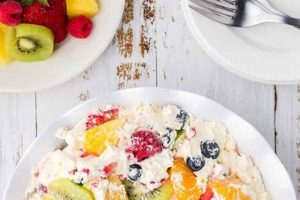
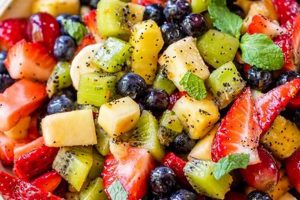
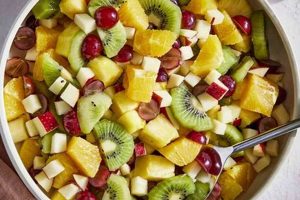
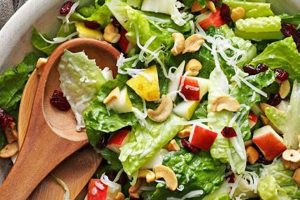
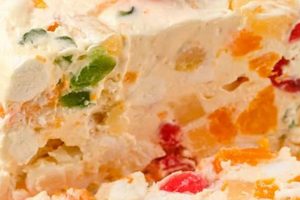
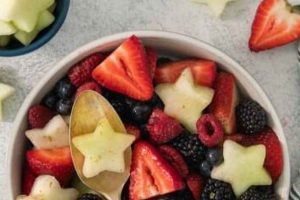
Fresh, colorful combinations of fruits are a popular addition to Thanksgiving feasts. These dishes offer a refreshing counterpoint to heavier, richer holiday fare, and can range from simple mixtures of seasonal favorites to more elaborate creations incorporating unique ingredients and dressings. For instance, a classic might feature apples, grapes, and oranges, while a more complex version could include cranberries, pomegranate seeds, and a maple-citrus vinaigrette.
Such dishes contribute vibrancy and lightness to the traditional Thanksgiving meal. They provide a welcome contrast in texture and flavor, offering a palate cleanser between courses. Historically, the availability of fresh produce influenced holiday menus. As access to a wider variety of fruits expanded, these salads became a more common and celebrated part of the Thanksgiving tradition, offering a burst of freshness alongside autumnal staples.
Exploring variations on this theme allows for creativity and customization, aligning with personal preferences and dietary needs. Considerations such as fruit selection, preparation techniques, and complementary dressings will be examined further.
Tips for Thanksgiving Fruit Salads
Creating a memorable fruit salad for Thanksgiving requires attention to detail and a balance of flavors and textures. The following tips offer guidance for constructing a successful dish.
Tip 1: Select Seasonal Fruits: Prioritize fruits at their peak ripeness during the autumn harvest. Apples, pears, cranberries, and pomegranates are excellent choices.
Tip 2: Balance Sweetness and Tartness: Combine fruits with varying levels of sweetness and acidity for a more complex flavor profile. Balance the sweetness of grapes and bananas with the tartness of cranberries or citrus fruits.
Tip 3: Consider Texture: Incorporate a variety of textures. Combine softer fruits like berries and melon with firmer options such as apples and pears.
Tip 4: Prepare Ingredients Properly: Wash all fruits thoroughly. Peel and chop fruits into uniform sizes for even distribution and visual appeal.
Tip 5: Enhance with Herbs and Spices: Fresh mint, cinnamon, or ginger can add depth and complexity to the flavor profile.
Tip 6: Dress Lightly: A simple vinaigrette, a light citrus glaze, or a sprinkle of maple syrup can enhance the natural sweetness of the fruit without overpowering it. Avoid heavy dressings.
Tip 7: Time Appropriately: Some fruits, such as apples and bananas, are prone to browning. Prepare these closer to serving time or toss them with a bit of lemon juice to prevent oxidation.
Tip 8: Presentation Matters: Arrange the salad attractively in a serving bowl. Consider garnishes like toasted nuts or edible flowers for an elegant touch.
By following these guidelines, one can create a fruit salad that complements the Thanksgiving meal while showcasing the season’s bounty.
These tips provide a foundation for creating a delightful fruit salad. Adaptation and experimentation are encouraged to develop a dish that reflects individual preferences and complements the overall Thanksgiving feast.
1. Seasonal Fruit Selection

Seasonal fruit selection plays a crucial role in crafting Thanksgiving fruit salads. Utilizing fruits at their peak ripeness during the autumn harvest yields optimal flavor and texture. This practice also aligns with the spirit of Thanksgiving, which traditionally celebrates the season’s bounty. Apples, cranberries, pears, and pomegranates exemplify autumnal produce, offering a taste of the harvest season. A fruit salad incorporating these ingredients not only provides a delicious and refreshing element to the meal but also connects the dish to the historical and cultural context of the holiday. Conversely, using out-of-season fruits can result in a less flavorful and potentially more expensive salad.
The availability of specific fruits varies throughout the year, impacting both cost and quality. Selecting fruits in season ensures optimal flavor and texture, as these fruits have reached their peak ripeness naturally. For instance, apples harvested in the fall offer a crispness and sweetness that may be lacking in apples stored for extended periods. Furthermore, choosing seasonal produce often supports local farmers and reduces the environmental impact associated with long-distance transportation. This commitment to seasonality enhances the Thanksgiving meal by incorporating ingredients that reflect the time and place of the celebration.
Prioritizing seasonal fruit selection contributes significantly to the overall success of a Thanksgiving fruit salad. It allows for the creation of dishes that are both flavorful and reflective of the holiday’s essence. Understanding the nuances of seasonal availability empowers individuals to make informed choices that enhance both the culinary and cultural aspects of their Thanksgiving celebrations. This approach reinforces the connection between the meal and the agricultural rhythms of the year, promoting a deeper appreciation for the season’s bounty.
2. Flavor Balance

Flavor balance is a critical component of successful fruit salad recipes, especially for Thanksgiving. A well-balanced fruit salad offers a complex and enjoyable taste experience, complementing the richer dishes of a traditional Thanksgiving feast. Achieving this balance requires careful consideration of the various flavor profiles present in different fruits and how they interact with one another. A harmonious blend of sweet, tart, and tangy notes elevates a simple fruit salad to a culinary highlight.
- Sweetness and Acidity
Balancing sweetness and acidity is paramount. Overly sweet salads can become cloying, while excessive tartness can be unappealing. The sweetness of ripe bananas or grapes can be offset by the tartness of cranberries or citrus fruits like oranges or grapefruits. This interplay of contrasting flavors prevents the salad from becoming monotonous and provides a refreshing counterpoint to other Thanksgiving dishes. For example, a salad with honeydew melon (sweet) and kiwi (tart) provides a pleasant contrast. The proper ratio of sweet to tart ingredients depends on personal preference and the specific fruits used.
- Texture’s Role in Flavor Perception
Texture influences how flavors are perceived. A variety of textures creates a more dynamic and engaging sensory experience. The soft texture of berries contrasts with the crispness of apples or pears, affecting how their sweetness or tartness registers on the palate. Combining different textures also adds visual interest to the salad. A salad with only soft fruits might feel heavy, while one with only firm fruits could lack juiciness. Consider the mouthfeel of each fruit and aim for a combination that offers variety.
- Influence of Dressings and Herbs
Dressings and herbs can further enhance flavor balance. A light vinaigrette, a squeeze of citrus juice, or a sprinkle of fresh herbs like mint or basil can complement the natural flavors of the fruit without overpowering them. A honey-lime dressing, for instance, can bridge the gap between sweet and tart fruits, creating a cohesive flavor profile. However, heavy or overly sweet dressings can mask the delicate flavors of the fruit and should be used sparingly.
- Impact of Fruit Ripeness
The ripeness of the fruit significantly impacts its flavor profile. Underripe fruit can be overly tart or lack sweetness, while overripe fruit can become mushy and lose its distinct flavor. Selecting fruits at their peak ripeness ensures optimal flavor and contributes to a well-balanced salad. Tasting the fruit before adding it to the salad is crucial for adjusting the balance of flavors as needed.
By carefully considering these facets of flavor balance, one can create a Thanksgiving fruit salad that not only refreshes the palate but also complements the overall flavor profile of the meal. A well-executed fruit salad provides a welcome contrast to richer dishes and adds a bright, flavorful element to the Thanksgiving table. The careful interplay of sweet, tart, tangy, and textural elements elevates the fruit salad from a simple side dish to a memorable culinary experience, embodying the spirit of the harvest celebration.
3. Textural Variety
Textural variety significantly enhances Thanksgiving fruit salads, elevating them beyond simple mixtures of ingredients. A thoughtfully constructed salad incorporates a range of textures, creating a more engaging and satisfying culinary experience. This diversity stimulates the palate and adds depth to the overall enjoyment of the dish, complementing the broader Thanksgiving meal.
- Contrast and Harmony
Juxtaposing contrasting textures, such as the crispness of apples against the softness of grapes or the firmness of pears alongside the delicate nature of berries, creates a dynamic interplay within the salad. This contrast prevents monotony and keeps the palate engaged. The interplay of textures mirrors the variety often found in a larger Thanksgiving spread, offering a lighter, refreshing element alongside heavier dishes.
- Sensory Enhancement
Textural diversity amplifies the sensory experience of consuming the salad. The varying textures interact with the taste receptors in the mouth, creating a more complex and nuanced flavor perception. A salad with a single texture, such as all soft fruits, can become monotonous. However, incorporating elements like crunchy pomegranate seeds or toasted nuts elevates the experience, providing a satisfying counterpoint to softer fruits.
- Visual Appeal
Different textures contribute to the visual appeal of the fruit salad. A mix of shapes and sizes, alongside varying textures, creates a visually stimulating presentation. The visual appeal enhances the overall dining experience, making the salad more enticing. For example, a salad featuring whole grapes, segmented oranges, and diced apples offers more visual interest than one with uniformly chopped ingredients.
- Impact on Dressing Adherence
Texture influences how the dressing interacts with the fruit. A variety of textures allows the dressing to cling to different surfaces, ensuring even distribution of flavor. For example, a smooth vinaigrette might pool at the bottom of a salad composed solely of smooth fruits. However, if the salad includes textured fruits like raspberries or chopped apples, the dressing adheres more effectively, coating the various components and enhancing the overall flavor profile.
By incorporating a variety of textures, a Thanksgiving fruit salad becomes more than just a collection of ingredients; it transforms into a carefully composed dish that stimulates the senses and complements the celebratory nature of the meal. This attention to textural detail elevates the dining experience, showcasing the versatility of fruit and its ability to contribute a complex and refreshing element to the Thanksgiving feast.
4. Presentation

Presentation plays a significant role in the overall impact of Thanksgiving fruit salads. While flavor and freshness are paramount, visual appeal enhances the dining experience, transforming a simple dish into a centerpiece worthy of the festive occasion. Thoughtful presentation elevates the perceived value of the salad, signaling care and attention to detail. A well-presented salad entices guests and contributes to the celebratory atmosphere of the Thanksgiving meal. For example, a salad artfully arranged on a platter with garnishes and contrasting colors appears more appetizing than one haphazardly tossed in a bowl. This visual appeal stimulates appetite and enhances enjoyment.
Several factors contribute to effective fruit salad presentation. The choice of serving vessel influences the overall aesthetic. A clear glass bowl showcases the vibrant colors of the fruit, while a rustic wooden bowl adds a touch of autumnal charm. The arrangement of the fruit itself is also crucial. Consider creating visual interest through variations in size, shape, and color. Garnishes, such as fresh mint sprigs, edible flowers, or a sprinkle of toasted nuts, add a finishing touch. A thoughtfully arranged salad demonstrates care and elevates the perceived value of the dish, making it more appealing and enjoyable. Furthermore, the presentation should complement the overall table setting and the style of the Thanksgiving meal.
Effective presentation enhances the enjoyment of Thanksgiving fruit salads. Visual appeal stimulates appetite and contributes to a positive dining experience. The care taken in presenting the salad communicates attention to detail and enhances the perceived quality of the dish. By considering the choice of serving vessel, arrangement of ingredients, and use of garnishes, one can transform a simple fruit salad into a visually stunning and memorable part of the Thanksgiving feast. Ultimately, thoughtful presentation elevates the fruit salad from a simple side dish to a celebratory centerpiece, reflecting the spirit of the holiday and enhancing the overall dining experience.
5. Dressing Choices
Dressing choices significantly influence the overall flavor profile and enjoyment of Thanksgiving fruit salads. The right dressing complements the natural sweetness and tartness of the fruit, enhancing its flavors without overpowering them. A poorly chosen dressing, conversely, can mask the delicate flavors of the fruit or create an unbalanced taste experience. Therefore, careful consideration of dressing options is essential when creating a fruit salad for Thanksgiving.
- Light and Bright Vinaigrettes
Light vinaigrettes, often citrus-based, provide a refreshing counterpoint to the sweetness of the fruit. A simple lemon or orange vinaigrette adds a touch of tanginess without being overly acidic. For example, a vinaigrette made with fresh orange juice, a hint of honey, and a pinch of ginger complements a salad featuring apples, pears, and cranberries. These vinaigrettes enhance the natural flavors of the fruit and provide a light, refreshing element to the Thanksgiving meal.
- Creamy Dressings (Used Sparingly)
While creamy dressings, such as those made with yogurt or whipped cream, can be used, they should be employed judiciously. Overly rich dressings can mask the delicate flavors of the fruit. If a creamy dressing is desired, consider using a lighter version, perhaps incorporating Greek yogurt or whipped coconut cream. A small dollop of a light vanilla yogurt dressing can complement a fruit salad with berries and bananas, but using it sparingly prevents the salad from becoming overly heavy. Restraint with creamy dressings ensures the fruit remains the star of the dish.
- Herbaceous Infusions
Fresh herbs can be incorporated into dressings or used as a garnish to add depth and complexity. Mint, basil, and tarragon offer refreshing herbaceous notes that complement various fruits. A simple syrup infused with fresh mint can be drizzled over a melon and berry salad, adding a refreshing layer of flavor. Such infusions provide a subtle yet noticeable enhancement without overpowering the fruit.
- Spiced Dressings for Autumnal Flair
Spiced dressings, incorporating cinnamon, nutmeg, or ginger, align with the autumnal flavors of Thanksgiving. A light maple syrup dressing with a hint of cinnamon complements apples, pears, and cranberries, creating a cohesive flavor profile that evokes the warmth of the season. These spices enhance the traditional Thanksgiving flavors and create a sense of harmony within the meal.
Selecting the appropriate dressing is crucial for a successful Thanksgiving fruit salad. The dressing should enhance, not overpower, the natural flavors of the fruit. Whether a light vinaigrette, a touch of creamy dressing, an herbaceous infusion, or a spiced syrup, the chosen dressing should complement the overall flavor profile of the salad and contribute to a harmonious and enjoyable Thanksgiving meal. Careful consideration of dressing choices ensures the fruit salad remains a refreshing and flavorful component of the feast.
6. Freshness Preservation
Freshness preservation is paramount in crafting successful Thanksgiving fruit salads. Maintaining the quality and appeal of the fruit ensures the salad remains a vibrant and enjoyable component of the Thanksgiving meal. Deterioration, evidenced by browning, softening, or loss of flavor, detracts significantly from the sensory experience. Several factors contribute to fruit degradation, including enzymatic browning, oxidation, and microbial growth. These processes are accelerated at room temperature, underscoring the importance of proper storage and handling techniques.
Several strategies mitigate these challenges and preserve fruit freshness. Refrigeration slows enzymatic activity and microbial growth, significantly extending shelf life. Storing cut fruit in airtight containers minimizes exposure to oxygen, reducing oxidation and browning. Specific fruits, such as apples and bananas, benefit from a protective coating of lemon juice, which inhibits enzymatic browning. Preparing certain components closer to serving time further preserves freshness. For instance, delaying the addition of easily bruised berries or readily browning fruits like bananas ensures they retain their optimal texture and appearance. Understanding the properties of individual fruits allows for tailored preservation techniques, optimizing the overall quality and appeal of the Thanksgiving fruit salad.
Proper freshness preservation directly impacts the quality, appeal, and enjoyment of Thanksgiving fruit salads. Neglecting these considerations can compromise the dish, diminishing its visual appeal and flavor. Implementing appropriate storage and handling techniques safeguards the integrity of the fruit, ensuring the salad contributes a refreshing and flavorful element to the Thanksgiving feast. Attention to detail in preserving freshness elevates the fruit salad from a simple side dish to a vibrant and memorable component of the holiday meal.
Frequently Asked Questions
This section addresses common inquiries regarding the preparation and inclusion of fruit salads in Thanksgiving meals.
Question 1: How far in advance can a fruit salad be prepared for Thanksgiving?
Preparation timing depends on the specific fruits used. Salads with robust fruits like apples and grapes can be prepared a day or two in advance. However, more delicate fruits, such as berries and bananas, are best added closer to serving time to prevent browning or softening. Proper storage techniques, like refrigeration and airtight containers, are crucial for maintaining freshness.
Question 2: What are suitable dressings for a Thanksgiving fruit salad?
Light dressings, such as citrus vinaigrettes or honey-based syrups, complement the natural sweetness of the fruit without overpowering it. Heavier, cream-based dressings are generally less suitable as they can mask the delicate fruit flavors. A light glaze made with maple syrup and a hint of cinnamon can enhance the autumnal flavors.
Question 3: How can browning be prevented in fruit salads?
Browning, often seen in apples and bananas, results from oxidation. Coating susceptible fruits with a bit of lemon or lime juice helps prevent this enzymatic reaction. Additionally, minimizing exposure to air by storing the salad in an airtight container helps maintain freshness.
Question 4: What fruits are traditionally used in Thanksgiving fruit salads?
Seasonal fruits like apples, cranberries, pears, and grapes are common choices, reflecting the autumn harvest. Incorporating these fruits connects the salad to the traditional themes of Thanksgiving. However, variations incorporating other fruits can also complement the meal.
Question 5: Can frozen fruit be used in Thanksgiving fruit salads?
While fresh fruit is generally preferred for optimal flavor and texture, frozen fruit can be incorporated, especially for fruits like berries. Ensure the fruit is thoroughly thawed and drained before adding it to the salad to prevent excess moisture. Frozen fruit may alter the texture of the salad.
Question 6: How can a fruit salad be made more visually appealing for Thanksgiving?
Consider the serving vessel and the arrangement of the fruit. A clear glass bowl showcases the vibrant colors. Varying the shapes and sizes of the fruit pieces adds visual interest. Garnishes like fresh mint sprigs, edible flowers, or a sprinkle of toasted nuts provide an elegant finishing touch.
Careful consideration of these frequently asked questions ensures the creation of a successful Thanksgiving fruit salad that complements the holiday meal and delights guests.
Beyond these frequently asked questions, further exploration of specific recipes and variations allows for customization and adaptation to individual preferences and dietary needs.
Conclusion
Exploration of Thanksgiving fruit salad recipes reveals the importance of seasonality, flavor balance, textural variety, presentation, dressing selection, and freshness preservation. Each element contributes significantly to the overall quality and enjoyment of the dish, ensuring it complements the traditional Thanksgiving feast. Careful consideration of these factors allows for the creation of a fruit salad that is not only visually appealing but also offers a refreshing and flavorful counterpoint to richer holiday fare.
Thanksgiving fruit salads offer a versatile canvas for culinary creativity. Adaptation and refinement of these principles allow for the development of unique and personalized dishes that reflect individual preferences and enhance the celebratory nature of the Thanksgiving meal. Continued exploration of flavor profiles, textures, and presentation techniques ensures this dish remains a vibrant and evolving component of holiday traditions.