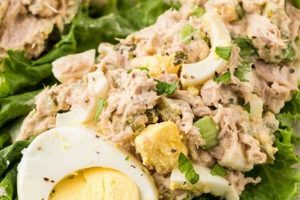
An optimal egg salad formulation balances flavor, texture, and ease of preparation. A classic example combines chopped hard-boiled eggs, mayonnaise, mustard, celery, onion, and seasonings. Variations can include ingredients such as paprika, dill, chives, or avocado for enhanced taste and visual appeal.
Achieving a well-executed egg salad offers several advantages. It provides a cost-effective and protein-rich meal option suitable for various occasions, from quick lunches to picnics and potlucks. Egg salad has a long history as a versatile dish, adapting to changing culinary trends and regional preferences. Its enduring popularity stems from its simple preparation and adaptability to different flavor profiles.
This article will further explore elements that contribute to an exceptional egg salad, covering topics such as egg cooking techniques, ingredient selection, and creative variations to elevate this classic dish.
Tips for Exceptional Egg Salad
Elevating egg salad from simple to extraordinary involves attention to detail in every step of preparation. The following tips offer guidance for achieving optimal results.
Tip 1: Perfect Hard-Boiled Eggs: Achieving the ideal hard-boiled egg texture is crucial. Overcooked eggs can become rubbery and dry. A recommended method involves gently placing eggs in boiling water, cooking for 8-10 minutes, then immediately transferring them to an ice bath to halt the cooking process.
Tip 2: Precise Chopping: Uniformly chopped eggs create a pleasing texture and ensure even distribution of flavors. A sharp knife and consistent chopping motion are essential. Over-chopping can lead to a mushy consistency.
Tip 3: Mayonnaise Matters: Mayonnaise serves as the foundation of egg salad. High-quality mayonnaise adds richness and depth of flavor. Experimenting with different types of mayonnaise, such as olive oil-based or flavored varieties, can introduce unique flavor profiles.
Tip 4: Balancing Flavors: A harmonious blend of seasonings enhances the overall taste. Mustard adds tang, while finely diced celery and onion provide a subtle crunch. Salt and pepper should be used judiciously to complement the other flavors.
Tip 5: Fresh Herbs and Spices: Incorporating fresh herbs like dill or chives elevates the flavor profile. A dash of paprika or a pinch of cayenne pepper can add a touch of complexity and visual appeal.
Tip 6: Mindful Ingredient Ratios: The ratio of ingredients affects the final taste and texture. Too much mayonnaise can result in a bland and overly rich salad, while insufficient mayonnaise can lead to a dry and crumbly texture. Careful measurement is key.
Tip 7: Chilling Time: Allowing the egg salad to chill in the refrigerator for at least 30 minutes allows the flavors to meld and develop fully. This step enhances the overall taste experience.
By following these tips, one can create an egg salad that surpasses expectations, offering a delightful balance of flavors and textures.
This exploration of essential techniques provides a foundation for creating exceptional egg salad. The following section will offer variations and serving suggestions to further inspire culinary creativity.
1. High-quality Ingredients

Ingredient quality significantly impacts the final outcome of any dish, and egg salad is no exception. Superior ingredients elevate the flavor profile, texture, and overall enjoyment of the final product. This section explores the crucial role of high-quality ingredients in crafting exceptional egg salad.
- Fresh Eggs:
Fresh eggs are paramount. They possess a superior flavor and bind better with other ingredients, creating a cohesive mixture. Farm-fresh eggs or those sourced from local markets often offer noticeable flavor advantages over commercially produced alternatives. Freshness ensures a pleasant aroma and taste, preventing off-flavors that can detract from the overall experience.
- Mayonnaise Selection:
Mayonnaise forms the base of egg salad, influencing both flavor and texture. Opting for high-quality mayonnaise, preferably made with real eggs and oil, contributes richness and depth. Different mayonnaise varieties, like olive oil-based or those with added flavors, can introduce nuanced complexities. The choice of mayonnaise directly impacts the creaminess and overall palatability.
- Fresh Produce:
Fresh produce, such as celery, onion, and herbs, adds vibrancy and textural contrast. Crisp celery and pungent onion provide a refreshing counterpoint to the richness of the eggs and mayonnaise. Fresh herbs like dill or chives introduce aromatic complexity. Wilted or stale produce can negatively impact the flavor and visual appeal, diminishing the overall quality.
- Seasoning Choices:
Seasoning plays a crucial role in balancing flavors and enhancing the overall profile. High-quality mustard, such as Dijon or stone-ground, adds tanginess. Freshly ground black pepper provides a subtle spice note. Judicious use of sea salt enhances the natural flavors of the ingredients. The careful selection and application of seasonings ensure a well-balanced and flavorful final product.
Investing in high-quality ingredients ensures a superior egg salad experience. The interplay of fresh eggs, premium mayonnaise, crisp produce, and carefully selected seasonings elevates this simple dish, transforming it into a culinary delight. Discerning palates will appreciate the noticeable difference that quality ingredients make in creating an exceptional egg salad.
2. Proper Egg Cooking

Proper egg cooking is fundamental to achieving a superlative egg salad. The texture of hard-boiled eggs directly impacts the final product’s overall quality. Overcooked eggs become rubbery and dry, resulting in a crumbly, less desirable egg salad. Undercooked eggs, conversely, create a watery consistency that compromises the salad’s structural integrity. The ideal hard-boiled egg for egg salad exhibits a firm yet yielding texture, contributing to a smooth, creamy consistency.
Several methods exist for cooking eggs to the optimal consistency. One common approach involves placing eggs in a single layer in a saucepan, covering them with cold water, and bringing the water to a rolling boil. Once boiling, the heat source is removed, and the eggs are allowed to sit in the hot water for a specific duration depending on the desired yolk consistency typically 8-10 minutes for a firm yet moist yolk. Immediately transferring the cooked eggs to an ice water bath halts the cooking process and prevents the formation of a greenish ring around the yolk. This rapid cooling also makes the eggs easier to peel.
The importance of proper egg cooking extends beyond mere texture. Overcooked eggs can develop an unpleasant sulfurous odor, detracting from the overall flavor profile of the egg salad. Properly cooked eggs, on the other hand, possess a clean, delicate flavor that allows the other ingredients, such as mayonnaise, mustard, and seasonings, to shine through. Mastering the art of egg cooking ensures a pleasant sensory experience, free from undesirable textures and off-putting aromas. This precision contributes significantly to a truly exceptional egg salad, demonstrating the integral connection between proper egg preparation and the final dish’s success.
3. Balanced Seasoning
Balanced seasoning is paramount in achieving a superlative egg salad. It elevates the dish beyond simple functionality, transforming it into a flavorful experience. Seasoning acts as a unifying force, harmonizing the various ingredients and creating a cohesive flavor profile. Without proper seasoning, egg salad can taste bland and uninspired, failing to reach its full potential. A well-seasoned egg salad, conversely, offers a complex interplay of flavors that tantalize the palate.
The interplay of salt, pepper, mustard, and other seasonings creates depth and complexity. Salt enhances the inherent flavors of the eggs and other ingredients, while pepper adds a subtle bite. Mustard contributes a tangy dimension, balancing the richness of the mayonnaise. Other seasonings, such as paprika, garlic powder, or onion powder, can further enhance the flavor profile, adding nuanced layers of taste. For example, a touch of smoked paprika introduces a smoky depth, while a pinch of cayenne pepper adds a hint of heat. The key lies in achieving a harmonious balance where no single flavor dominates, but rather contributes to a cohesive whole.
Achieving balanced seasoning requires careful consideration and a nuanced approach. It’s a process of gradual addition and tasting, adjusting the seasonings until the desired flavor profile is achieved. Over-seasoning can easily overwhelm the delicate flavors of the eggs and other ingredients, while under-seasoning leaves the salad tasting flat and one-dimensional. The ideal balance allows each ingredient to contribute its unique flavor while simultaneously creating a unified and harmonious whole. This precise calibration of seasonings distinguishes a truly exceptional egg salad from a merely adequate one, demonstrating the critical role of balanced seasoning in achieving culinary excellence.
4. Textural Contrast
Textural contrast plays a crucial role in elevating egg salad from mundane to exceptional. A harmonious blend of textures creates a more engaging and satisfying sensory experience. Without textural variation, egg salad can become monotonous and one-dimensional. The interplay of creamy, crunchy, and potentially even slightly chewy elements adds depth and complexity, enhancing overall enjoyment.
Finely diced celery and red onion offer classic examples of textural contrast in egg salad. Celery contributes a refreshing crispness, while red onion provides a subtle pungency and a slightly firmer bite. These additions counterbalance the creamy texture of the egg and mayonnaise base, preventing the salad from feeling overly rich or heavy. Other ingredients, such as chopped water chestnuts, crumbled bacon, or toasted nuts, can further enhance textural complexity, adding unique dimensions to the overall experience. Consider the difference between a uniformly smooth egg salad and one that includes finely diced pickles, offering a pleasant burst of acidity alongside a textural counterpoint. This interplay of textures elevates the eating experience, making each bite more interesting and enjoyable.
Understanding the significance of textural contrast allows for strategic ingredient selection and preparation techniques that enhance the overall quality of egg salad. Careful attention to the size and shape of chopped ingredients ensures an optimal balance of textures. Over-chopping can lead to a loss of textural definition, while larger pieces may disrupt the overall cohesiveness of the salad. Achieving a harmonious balance of textures requires thoughtful consideration and precise execution. This attention to detail ultimately distinguishes an exceptional egg salad from a merely adequate one.
5. Flavorful Additions
Flavorful additions represent a critical component in distinguishing a truly exceptional egg salad from a merely satisfactory one. These additions introduce complexity and depth, transforming the flavor profile from basic to nuanced and exciting. Strategic incorporation of flavorful additions elevates the overall sensory experience, offering a more sophisticated and enjoyable culinary creation.
- Fresh Herbs:
Fresh herbs contribute brightness and aromatic complexity to egg salad. Dill, chives, parsley, and tarragon are popular choices, each imparting a unique character. Dill, with its slightly tangy, anise-like flavor, pairs well with the richness of the mayonnaise. Chives offer a delicate onion flavor, adding a subtle sharpness. Parsley provides a fresh, herbaceous note, while tarragon contributes a slightly licorice-like flavor. The quantity of herbs used should be carefully considered; a light hand ensures that the herbs enhance rather than overpower the other flavors.
- Spices:
Spices offer an opportunity to introduce warmth, depth, and complexity to egg salad. Paprika, smoked paprika, cayenne pepper, and curry powder are excellent choices. Paprika adds a subtle sweetness and vibrant color. Smoked paprika introduces a smoky dimension, enhancing the overall richness. Cayenne pepper provides a touch of heat, while curry powder contributes a complex blend of savory spices. A small amount of spice can significantly impact the flavor profile, creating a more dynamic and engaging experience.
- Other Savory Ingredients:
Incorporating other savory ingredients can further enhance the flavor profile and textural complexity of egg salad. Finely chopped pickles, capers, or olives introduce a briny, salty element that complements the richness of the mayonnaise. Crumbled bacon adds a smoky, savory dimension, while a touch of hot sauce provides a piquant kick. These additions offer opportunities for customization, allowing for the creation of egg salad variations tailored to individual preferences.
- Acidic Elements:
A touch of acidity brightens the flavor profile and balances the richness of the egg salad. A squeeze of lemon juice or a splash of white wine vinegar adds a refreshing tartness that cuts through the richness of the mayonnaise and eggs. This acidic element enlivens the palate and prevents the salad from tasting overly heavy. The judicious use of acid is crucial; too much can overpower the other flavors, while too little may not provide the desired balancing effect.
The careful selection and incorporation of flavorful additions elevates egg salad from a simple staple to a culinary delight. These additions contribute not only to the flavor profile but also to the overall sensory experience, enhancing the aroma, texture, and visual appeal. By understanding the interplay of these elements, one can craft an egg salad that truly stands out, demonstrating a mastery of flavor and a commitment to culinary excellence. Consider these additions not as mere afterthoughts but as essential components in achieving the best possible egg salad recipe.
6. Chilling Time
Chilling time represents a crucial, often overlooked, element in achieving an exceptional egg salad. This period of refrigeration allows the flavors of the various ingredients to meld and harmonize, resulting in a more cohesive and nuanced flavor profile. The immediate consumption of freshly prepared egg salad often results in a less integrated flavor experience, where individual ingredients stand out rather than blending seamlessly. Chilling allows the subtle nuances of each componentthe tang of mustard, the richness of mayonnaise, the savory notes of seasoningsto permeate the mixture, creating a more complex and balanced overall taste. For instance, the sharpness of freshly chopped onions mellows during chilling, integrating more harmoniously with the other ingredients.
The impact of chilling extends beyond flavor development. Chilling also firms the texture of the egg salad, making it easier to handle and spread. A freshly made egg salad, particularly one with a higher mayonnaise content, can be somewhat loose and difficult to manage. Refrigeration allows the ingredients to bind more effectively, resulting in a more desirable consistency for sandwiches, wraps, or salads. This improved texture also contributes to a more aesthetically pleasing presentation, as the chilled egg salad holds its shape better, whether served on a platter or scooped onto crackers.
Therefore, incorporating adequate chilling timeideally a minimum of 30 minutes, and preferably longerbecomes integral to any “best recipe” designation for egg salad. This seemingly simple step significantly enhances the final product, demonstrating a commitment to quality and a deep understanding of the factors contributing to culinary excellence. Neglecting this crucial step compromises the overall quality of the dish, hindering the full development of flavors and textures. Chilling time should be viewed not as an optional afterthought but as a fundamental component of creating a truly exceptional egg salad experience. This understanding highlights the importance of considering time as an ingredient in itself, contributing just as significantly as the tangible components of the recipe.
Frequently Asked Questions
This section addresses common inquiries regarding optimal egg salad preparation, offering concise and informative responses to enhance understanding and ensure culinary success.
Question 1: How can rubbery texture in egg salad be avoided?
Overcooking is the primary cause of rubbery egg whites. Precise cooking times and immediate cooling in an ice bath prevent this issue. Aim for 8-10 minutes in boiling water, followed by immediate chilling.
Question 2: What contributes to bland egg salad?
Insufficient or low-quality mayonnaise, inadequate seasoning, and lack of acidic elements can contribute to blandness. Utilizing high-quality mayonnaise, a balanced blend of seasonings, and a touch of acid, such as lemon juice or vinegar, enhances the flavor profile.
Question 3: How can watery egg salad be prevented?
Watery egg salad often results from undercooked eggs or excessive moisture from ingredients like tomatoes. Ensuring properly cooked eggs and carefully draining any added vegetables mitigates excess moisture.
Question 4: What are ideal seasonings beyond basic salt and pepper?
Mustard (Dijon or stone-ground), paprika (sweet or smoked), garlic powder, onion powder, and fresh herbs like dill or chives elevate the flavor profile beyond basic seasoning.
Question 5: How long should egg salad be chilled before serving?
Chilling for at least 30 minutes allows flavors to meld and the texture to firm. Longer chilling, up to several hours, further enhances flavor development.
Question 6: How can one achieve textural variation in egg salad?
Finely diced celery, red onion, chopped water chestnuts, crumbled bacon, or toasted nuts introduce textural contrast to the creamy base. The size and type of additions influence the overall textural experience.
Addressing these common concerns provides a foundation for consistently achieving high-quality egg salad. Careful attention to detail in each step of preparation ensures optimal results.
The following section will offer a curated selection of egg salad variations, showcasing the versatility and adaptability of this classic dish.
Best Recipe for Egg Salad
This exploration has delved into the multifaceted aspects of crafting exceptional egg salad. From the foundational importance of high-quality ingredients and precise egg cooking techniques to the nuanced interplay of balanced seasoning, textural contrast, and flavorful additions, each element contributes significantly to the final product. Adequate chilling time further enhances flavor development and textural cohesion, underscoring the importance of considering time as an integral ingredient. Addressing common preparation challenges empowers culinary enthusiasts to consistently achieve optimal results, avoiding pitfalls such as rubbery textures, bland flavors, or excessive moisture.
Achieving the best recipe for egg salad transcends mere ingredient combination; it represents a culinary pursuit of balanced flavors, harmonious textures, and thoughtful preparation. This exploration serves as a guide, empowering readers to elevate this classic dish from simple sustenance to a truly remarkable culinary experience. The potential for creative variations, incorporating diverse ingredients and flavor profiles, ensures egg salad remains a versatile and enduring culinary staple.