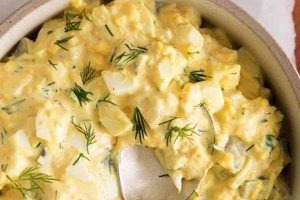
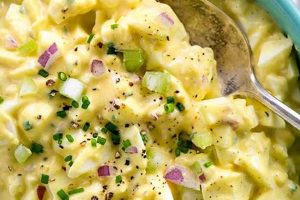
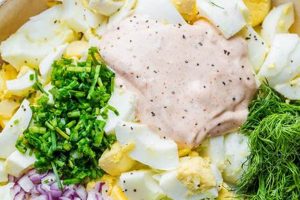
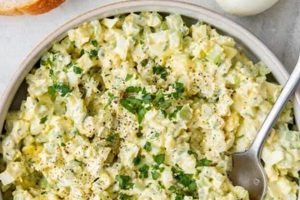
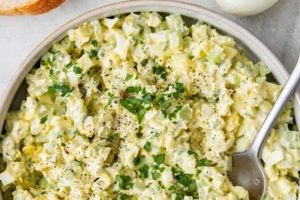
A superior egg salad hinges on a balance of flavors and textures. Freshly cooked eggs, finely chopped, are blended with a creamy base, often mayonnaise, and enhanced with complementary ingredients. Relish, with its sweet and tangy notes from chopped pickles and vegetables, provides a vibrant counterpoint to the richness of the eggs and mayonnaise. A well-executed version features a harmonious blend of these elements, creating a satisfyingly savory and refreshing dish.
The enduring appeal of this classic dish stems from its versatility and simplicity. It offers a quick and nutritious meal option, adaptable to various dietary preferences with ingredient substitutions. Historically, variations have appeared across cultures, highlighting its adaptability and widespread acceptance. From simple sandwiches to elegant appetizers, its presence on menus and in home kitchens speaks to its enduring popularity.
This exploration delves into the art of crafting exceptional egg salad, examining key ingredients, techniques, and variations to elevate this simple dish to culinary excellence.
Tips for Exceptional Egg Salad
Crafting exceptional egg salad involves attention to detail and an understanding of the interplay of flavors and textures. The following tips offer guidance for achieving optimal results.
Tip 1: Perfect Egg Cooking: Overcooked yolks lead to a dry, crumbly texture. Aim for a firm yet moist yolk by cooking eggs in simmering water for 8-10 minutes, followed by an immediate ice bath to halt the cooking process.
Tip 2: Precise Chopping: Uniformly chopped eggs contribute to a pleasing consistency. A sharp knife or an egg slicer ensures clean cuts, avoiding unsightly crushed pieces.
Tip 3: Mayonnaise Selection: High-quality mayonnaise forms the foundation of a creamy, flavorful egg salad. Experiment with different brands and types, such as olive oil or avocado-based mayonnaise, to find a preferred flavor profile.
Tip 4: Relish Enhancement: Relish adds a crucial acidic element. Consider using a combination of sweet and dill relish for a balanced flavor. Finely chopped fresh herbs like dill or chives can further enhance the relish component.
Tip 5: Seasoning Balance: Salt and freshly ground black pepper are essential for enhancing the overall flavor. A touch of Dijon mustard or paprika can add complexity.
Tip 6: Mindful Ingredient Incorporation: Gently fold ingredients together to avoid overmixing, which can result in a mushy texture. A light touch preserves the integrity of the chopped eggs.
Tip 7: Chilling Time: Allowing the egg salad to chill in the refrigerator for at least 30 minutes allows the flavors to meld and develop fully.
By implementing these techniques, one can elevate egg salad from a simple dish to a culinary delight, maximizing flavor and texture for a truly satisfying experience.
With these fundamental principles established, the following section will explore variations and serving suggestions to further enhance the enjoyment of egg salad.
1. High-Quality Ingredients
The pursuit of a truly exceptional egg salad necessitates an uncompromising approach to ingredient selection. High-quality ingredients elevate this seemingly simple dish, transforming it from mundane to memorable. The impact of ingredient quality manifests in several key aspects, directly influencing the final product’s flavor, texture, and overall appeal. Fresh, farm-fresh eggs, for example, possess richer yolks and firmer whites, contributing to a superior texture and flavor depth compared to their mass-produced counterparts. Likewise, the choice of mayonnaise plays a critical role; a high-quality mayonnaise, preferably made with real ingredients and minimal additives, provides a creamy, flavorful foundation that enhances the overall experience. Even the seemingly minor components, such as the relish, benefit from a discerning approach. A vibrant, flavorful relish, made with crisp vegetables and a balanced sweet-and-tangy profile, elevates the egg salad’s complexity. The synergy between these carefully chosen ingredients results in a cohesive and harmonious dish, where each component contributes to the overall excellence.
The practical implications of using high-quality ingredients extend beyond mere flavor enhancement. Fresh, properly stored ingredients translate to improved food safety, reducing the risk of spoilage or bacterial contamination. Furthermore, higher-quality ingredients often contain fewer additives and preservatives, aligning with a preference for healthier eating habits. Consider the difference between a relish made with fresh cucumbers and a commercially produced version laden with preservatives and artificial coloring. The former offers a cleaner, brighter flavor profile, contributing to a more wholesome and enjoyable culinary experience.
In conclusion, the emphasis on high-quality ingredients represents a non-negotiable aspect of crafting a truly exceptional egg salad. The choice of each component, from the eggs to the mayonnaise and relish, directly impacts the final product’s sensory attributes and overall quality. By prioritizing ingredient excellence, one ensures a delectable and satisfying culinary creation that transcends the ordinary.
2. Precise Egg Cooking
Precise egg cooking is paramount in achieving an optimal egg salad. The desired texturefirm yet yielding whites and creamy, not crumbly, yolksdirectly results from controlled cooking. Overcooked eggs become dry and chalky, detracting from the overall creaminess and flavor of the salad. Conversely, undercooked eggs introduce a sulfurous odor and an unappetizing, slimy texture. The ideal cooking time, typically 8-10 minutes in simmering water, produces a perfectly set white and a yolk that retains its moisture and rich flavor. This precision ensures that the eggs contribute the appropriate textural and flavor elements to the finished dish. Consider the difference between an egg salad made with rubbery, overcooked eggs versus one with perfectly cooked eggsthe latter provides a more pleasant mouthfeel and allows the flavors of the other ingredients, such as the relish, to shine through.
The practical application of this principle involves careful timing and temperature control. An ice bath immediately following the cooking process halts residual heat and prevents overcooking. This rapid cooling also facilitates easier peeling, a practical benefit in the preparation process. Furthermore, the choice of cooking method influences the outcome. Steaming eggs can provide more consistent results than boiling, minimizing the risk of cracking and ensuring even cooking throughout. The specific method chosen, whether boiling or steaming, should be executed with precision to guarantee optimal egg texture and contribute to the overall quality of the egg salad.
In summary, the importance of precise egg cooking in creating a superior egg salad cannot be overstated. It directly impacts the texture, flavor, and overall appeal of the final product. Mastering this fundamental step lays the groundwork for a successful egg salad, allowing the nuanced flavors of the relish and other ingredients to harmonize and deliver a truly satisfying culinary experience. Neglecting this crucial step often leads to a compromised final product, highlighting its significance within the broader context of creating a “best egg salad recipe with relish.”
3. Balanced Flavor Profile

A balanced flavor profile is essential to a superlative egg salad. The delicate flavor of the eggs provides a neutral canvas, requiring careful balancing of other ingredients to create a harmonious and satisfying taste experience. Without this balance, the egg salad can become bland, overly tangy, or excessively sweet, diminishing its overall appeal. The interplay of flavors contributes significantly to the perceived quality of the dish.
- Salt and Acidity
Salt enhances the inherent flavors of the eggs and other ingredients, while acidity, typically from relish, cuts through the richness of the mayonnaise and eggs. The right balance prevents the salad from tasting flat or overly rich. For example, a dill relish contributes a bright, tangy flavor, balancing the creamy mayonnaise. Insufficient salt renders the salad bland, while excessive acidity makes it unpleasantly sour.
- Sweetness and Savory Notes
A touch of sweetness, often present in some relish varieties, complements the savory elements of the eggs and mayonnaise. This dynamic interplay prevents the salad from being one-dimensional. A sweet pickle relish, for instance, adds a subtle sweetness that contrasts with the savory notes of the eggs. Overly sweet relish, however, can make the salad cloying.
- Textural Contrast
While not strictly a flavor component, texture plays a crucial role in perceived flavor balance. The creamy texture of the mayonnaise and eggs contrasts with the crunch of the relish, adding another dimension to the eating experience. A finely chopped relish provides a subtle crunch, while a coarsely chopped relish offers a more pronounced textural contrast. The absence of textural variation can result in a monotonous and less satisfying dish.
- Aromatic Complexity
Fresh herbs or spices, while optional, contribute aromatic complexity. A sprinkle of paprika or a few snipped chives can elevate the flavor profile without overpowering the other ingredients. These aromatic additions enhance the overall sensory experience, adding depth and complexity beyond the basic ingredients. However, excessive use can mask the delicate flavors of the eggs and relish.
Achieving a balanced flavor profile requires careful consideration of these interacting elements. The “best egg salad recipe with relish” hinges on this delicate balance, transforming simple ingredients into a culinary delight. The interplay of salt, acidity, sweetness, texture, and aromatics elevates the egg salad from basic sustenance to a nuanced and satisfying dish. Each element plays a crucial role, and attention to detail in balancing these flavors distinguishes an exceptional egg salad from a mediocre one.
4. Optimal Relish Selection
Optimal relish selection significantly impacts the overall quality of egg salad. Relish contributes crucial acidity, sweetness, and textural complexity, directly influencing the final product’s flavor profile. The interplay between the relish and other core ingredients, primarily eggs and mayonnaise, determines whether the egg salad achieves a harmonious balance or an unbalanced, one-dimensional taste. A “best egg salad recipe with relish” necessitates careful consideration of relish characteristics, including sweetness, tanginess, and texture.
Consider, for instance, the contrast between a sweet pickle relish and a dill relish. Sweet pickle relish, with its higher sugar content, contributes a pronounced sweetness and a softer texture. This choice complements an egg salad emphasizing creamy richness. Conversely, dill relish, characterized by its tangy, herbaceous notes and crisper texture, provides a brighter counterpoint to the richness of the mayonnaise and eggs. A bread and butter pickle relish, with its balanced sweet and tangy profile, offers a middle ground, imparting a subtle sweetness and a moderate acidity that complements a wider range of flavor preferences. The choice ultimately depends on the desired flavor profile of the egg salad.
Beyond the basic relish types, variations exist within each category. Some dill relishes contain added spices or hot peppers, introducing complexity and heat. Similarly, sweet pickle relishes vary in sweetness and texture depending on the brand and ingredients. Experimentation with different relishes allows for nuanced flavor customization, aligning the relish choice with specific taste preferences and desired outcomes. The understanding of these nuances is crucial in achieving a “best egg salad recipe with relish,” demonstrating the practical significance of optimal relish selection. Failure to consider relish characteristics can result in a suboptimal egg salad, highlighting the critical role of this seemingly minor ingredient.
5. Appropriate Mayonnaise

Mayonnaise serves as the foundational binding agent in egg salad, profoundly influencing texture, flavor, and overall quality. “Appropriate mayonnaise,” within the context of a “best egg salad recipe with relish,” signifies more than simply any mayonnaise; it denotes a conscious selection based on specific criteria that contribute to the desired outcome. This choice directly impacts the final product’s sensory characteristics and overall appeal. The interplay between mayonnaise and other ingredients, particularly relish, necessitates careful consideration of its properties. Mayonnaise viscosity, flavor profile, and fat content each play a crucial role in the ultimate success of the recipe.
Consider the impact of mayonnaise viscosity. A thinner mayonnaise results in a looser, less cohesive egg salad, potentially leading to a watery or unappetizing texture. Conversely, a thicker mayonnaise creates a firmer, more substantial salad, better suited for sandwiches or stuffed eggs. Flavor profiles also vary significantly. Standard mayonnaise provides a neutral backdrop, allowing the flavors of the eggs and relish to shine through. Specialty mayonnaises, such as olive oil or avocado-based versions, introduce additional flavor nuances, potentially enhancing or detracting from the overall balance, depending on the desired outcome. Fat content influences both flavor and texture. Full-fat mayonnaise contributes richness and creaminess, while lower-fat options create a lighter, less decadent experience, potentially compromising the overall satisfaction for some palates. For instance, a classic egg salad featuring a sweet pickle relish often benefits from the richness of full-fat mayonnaise, while a lighter, dill relish-based salad might pair well with a lower-fat or olive oil mayonnaise.
Selecting the appropriate mayonnaise demonstrates an understanding of the intricate interplay of ingredients within an egg salad. It highlights the importance of considering not only individual ingredient characteristics but also their synergistic effects. This nuanced approach distinguishes a truly exceptional egg salad from a mediocre one. Failure to consider mayonnaise characteristics can result in a final product that falls short of expectations, underscoring the practical significance of this seemingly simple choice. The “best egg salad recipe with relish” hinges on this attention to detail, emphasizing the crucial role of “appropriate mayonnaise” in achieving culinary excellence.
6. Textural Harmony
Textural harmony constitutes a critical element in a superlative egg salad. This refers to the interplay of textures within the dish, contributing significantly to the overall eating experience. A “best egg salad recipe with relish” necessitates careful consideration of textural interplay, balancing contrasting textures to achieve a harmonious and satisfying result. This balance prevents the egg salad from becoming monotonous or unappealing. The absence of textural variation can render the dish bland and less enjoyable, highlighting the importance of textural harmony as a defining characteristic.
Consider the primary textural components of egg salad: the creamy base of mayonnaise and eggs, and the contrasting texture provided by the relish. The relish, typically composed of chopped pickles and vegetables, introduces a crucial textural counterpoint to the smoothness of the egg and mayonnaise mixture. This contrast prevents the salad from becoming overly smooth and homogenous, adding an element of interest and complexity to each bite. For example, a finely chopped relish provides a subtle crunch, while a more coarsely chopped relish delivers a more pronounced textural variation. The size and consistency of the egg pieces also contribute to the overall texture. Overly mashed or finely chopped eggs can result in a paste-like consistency, while larger, more distinct pieces provide a more substantial and satisfying mouthfeel. The interplay of these textural elements creates a dynamic and engaging sensory experience. Imagine the difference between a uniformly smooth egg salad and one that offers a pleasant contrast between creamy and crunchy elementsthe latter provides a more stimulating and enjoyable culinary experience. This contrast elevates the dish beyond simple sustenance, transforming it into a more refined and satisfying culinary creation.
Achieving textural harmony requires a nuanced understanding of ingredient characteristics and their interactions. It highlights the importance of not only selecting appropriate ingredients but also preparing them in a way that maximizes their textural contributions. This attention to detail distinguishes a truly exceptional egg salad from a merely adequate one. The “best egg salad recipe with relish” depends on this carefully orchestrated balance of textures, transforming individual components into a cohesive and delightful whole. Mastery of this principle contributes significantly to the overall enjoyment and perceived quality of the dish, solidifying its status as a culinary achievement.
7. Fresh Herbs (Optional)

While not strictly essential, fresh herbs contribute a nuanced layer of flavor and aromatic complexity to egg salad, elevating it from simple to exceptional. Their judicious use enhances the overall sensory experience, complementing the existing flavors derived from the eggs, mayonnaise, and relish. Understanding the role of fresh herbs within the context of a “best egg salad recipe with relish” allows for a more sophisticated and tailored approach to flavor development. This exploration examines specific herbs and their impact on the final product.
- Chives
Chives, with their delicate onion flavor, provide a subtle yet noticeable lift to egg salad. Their fine texture blends seamlessly with the other ingredients, adding a fresh, slightly pungent note that complements the richness of the mayonnaise and the tang of the relish. A sprinkle of freshly chopped chives can brighten the overall flavor profile without overpowering the delicate balance of the other components.
- Dill
Dill, often associated with pickles and other preserved vegetables, offers a natural pairing with relish in egg salad. Its slightly tangy, anise-like flavor enhances the existing savory notes, creating a cohesive and harmonious flavor profile. Dill’s feathery texture adds a subtle visual appeal, further enhancing the overall presentation of the dish.
- Parsley
Parsley, with its clean, fresh flavor, acts as a neutral backdrop, allowing the other flavors in the egg salad to shine through. While not as assertive as chives or dill, parsley contributes a subtle freshness and a pleasant herbaceous aroma. Its bright green color also enhances the visual appeal of the finished product.
- Tarragon
Tarragon, with its distinct licorice-like flavor, offers a more adventurous option for egg salad. Its unique aroma and flavor profile can add an unexpected twist, particularly when paired with a sweeter relish. However, tarragon’s assertive flavor requires careful application to avoid overpowering the other ingredients.
The selection and application of fresh herbs represent a crucial step in achieving a truly exceptional egg salad. While optional, their judicious use can significantly elevate the flavor profile and overall sensory experience. The choice of herb depends on individual preferences and the desired flavor outcome. Experimentation with different combinations and quantities allows for customization and the creation of a signature egg salad recipe. Understanding the role of each herb and its interaction with the other ingredients contributes significantly to the pursuit of the “best egg salad recipe with relish,” demonstrating the power of nuanced flavor development in achieving culinary excellence.
Frequently Asked Questions
This section addresses common inquiries regarding the preparation and enjoyment of egg salad featuring relish.
Question 1: What is the optimal cooking time for eggs intended for egg salad?
Optimal egg cooking time for egg salad is typically 8-10 minutes in simmering water. This duration ensures firm whites and creamy yolks, ideal for the dish.
Question 2: How can one prevent overcooked, dry yolks in egg salad?
An ice bath immediately following cooking halts the cooking process, preventing overcooked yolks and facilitating easier peeling.
Question 3: Which type of relish best complements egg salad?
Relish selection depends on individual preference. Sweet pickle relish provides sweetness, dill relish offers tang, and bread and butter relish provides a balance of both. Experimentation is encouraged.
Question 4: What can be done to prevent egg salad from becoming overly watery?
Using a thicker mayonnaise and ensuring the eggs are well-drained prevents excess moisture in the final product. Refrigerating for at least 30 minutes also helps the ingredients bind and absorb excess liquid.
Question 5: How long can egg salad be safely stored in the refrigerator?
Egg salad should be consumed within 3-5 days of preparation when stored properly in an airtight container in the refrigerator.
Question 6: Can other ingredients be added to enhance the flavor of egg salad?
Fresh herbs, such as chives, dill, or parsley, and spices, such as paprika or mustard powder, can enhance the flavor profile. Chopped celery or red onion can add textural complexity.
Careful attention to these details ensures a satisfying and enjoyable egg salad experience.
This concludes the frequently asked questions section. The following section offers a collection of curated egg salad recipes featuring various relishes.
Best Egg Salad Recipe with Relish
Crafting a truly exceptional egg salad transcends mere ingredient combination; it represents a nuanced understanding of flavor balance, textural harmony, and ingredient selection. This exploration has highlighted the critical role of each component in achieving a superior final product. From the precise cooking of the eggs to the careful selection of relish and mayonnaise, every detail contributes to the overall culinary experience. The interplay of creamy richness, tangy acidity, and subtle sweetness defines a well-executed egg salad, offering a satisfying and refreshing culinary delight.
The pursuit of the “best egg salad recipe with relish” encourages culinary exploration and personal adaptation. While fundamental principles guide the process, individual preferences ultimately dictate the ideal balance of flavors and textures. This journey of culinary discovery offers not only a delightful end product but also an appreciation for the transformative power of simple ingredients, thoughtfully combined.