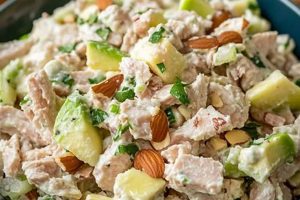
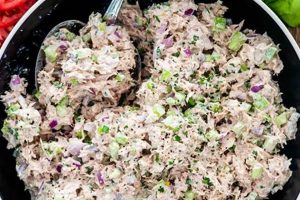
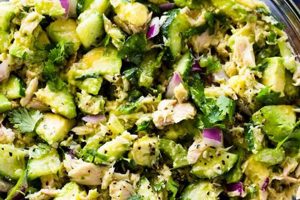
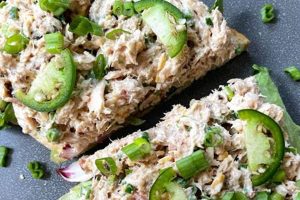
Methods for preparing a dish of flaked tuna combined with other ingredients, typically mayonnaise, celery, and onion, offer a wide range of variations. These preparations can include classic combinations as well as innovative twists incorporating diverse flavors and textures, from spicy additions like jalapeos to Mediterranean influences like olives and capers. A simple version might involve just tuna, mayonnaise, and salt, while more complex versions can incorporate herbs, spices, vegetables, and fruits.
Tuna salad’s popularity stems from its affordability, ease of preparation, and nutritional value. As a good source of protein and omega-3 fatty acids, it offers a healthy and convenient meal option. Historically, canned tuna became widely accessible in the early 20th century, leading to the rise of tuna salad as a staple dish, particularly in North America. Its adaptability has allowed it to remain a popular choice for sandwiches, salads, and snacks across generations.
This exploration will delve into various preparation methods, highlight nutritional aspects, and offer creative variations to enhance the classic tuna salad experience. From selecting the right tuna to mastering the perfect mayonnaise-to-tuna ratio, readers will discover tips and techniques to elevate their tuna salad creations.
Tips for Elevated Tuna Salad
Optimizing tuna salad involves attention to detail and a willingness to experiment with flavors and textures. The following tips provide guidance for creating a superior culinary experience.
Tip 1: Tuna Selection Matters: Opting for high-quality tuna packed in either water or oil significantly impacts the final flavor profile. Water-packed tuna offers a cleaner taste, while oil-packed tuna lends richness. Consider sustainable fishing practices when making a selection.
Tip 2: Mayonnaise Mastery: The mayonnaise-to-tuna ratio is crucial. Too much mayonnaise results in a bland, overly creamy texture, while too little leads to dryness. Start with a smaller amount and adjust to preference. Greek yogurt can be substituted for a lighter, tangier option.
Tip 3: Elevate with Flavorful Additions: Classic ingredients like celery and onion provide a foundational crunch and flavor. Experimenting with additions such as chopped pickles, hard-boiled eggs, or fresh herbs like dill or chives can enhance the complexity of the salad.
Tip 4: Texture Enhancement: Incorporating textural elements adds depth and interest. Consider adding chopped nuts, such as walnuts or pecans, or water chestnuts for a satisfying crunch.
Tip 5: Seasoning is Key: Salt and pepper are essential, but exploring other seasonings can elevate the flavor profile. A dash of paprika, cayenne pepper, or lemon zest can add brightness and complexity.
Tip 6: Chill for Optimal Flavor: Allowing the tuna salad to chill in the refrigerator for at least 30 minutes allows the flavors to meld and develop. This step enhances the overall taste experience.
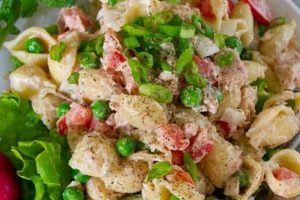
Tip 7: Creative Serving Suggestions: Tuna salad extends beyond sandwiches. Consider serving it on crackers, lettuce wraps, or as a filling for tomatoes or avocados for a lighter presentation. It can also be incorporated into pasta salads or served atop a bed of greens.
By following these tips, one can transform simple ingredients into a delectable and satisfying tuna salad experience. Attention to detail in ingredient selection, flavor balancing, and textural considerations contributes to creating a truly memorable dish.
These insights provide a foundation for crafting exceptional tuna salad. Further exploration of specific recipes and variations will follow.
1. Classic Recipes
Classic tuna salad recipes provide a foundational understanding of the dish, representing established methods and flavor profiles. These recipes typically emphasize simplicity and readily available ingredients, serving as a starting point for culinary exploration. A classic preparation often involves canned tuna, mayonnaise, celery, and onion, seasoned with salt and pepper. This basic combination highlights the inherent flavors of the core ingredients and demonstrates the essential balance of creamy, savory, and crunchy textures. The reliance on pantry staples contributes to the enduring popularity of these recipes, ensuring accessibility across generations and economic backgrounds. Classic recipes also offer a benchmark against which to measure variations and innovations.
Understanding classic tuna salad recipes provides a practical framework for customization. Once the fundamental principles of ingredient balance and flavor profiles are grasped, cooks can confidently experiment with additions and substitutions. For example, a classic recipe can be adapted by incorporating chopped pickles for tanginess, hard-boiled eggs for richness, or fresh herbs like dill for a brighter flavor. Examining classic methods also illuminates the importance of ingredient quality. Selecting high-quality canned tuna and using fresh, crisp vegetables significantly impacts the overall taste and texture. A classic recipe demonstrates that even with simple ingredients, careful selection and proper handling contribute to a superior culinary outcome.
Mastery of classic tuna salad recipes offers valuable culinary skills and provides a historical context for understanding this popular dish. These recipes represent not only a practical approach to meal preparation but also a cultural touchstone, reflecting evolving tastes and culinary trends. While innovation and creativity are encouraged, an appreciation for classic preparations remains crucial for building a strong culinary foundation. The simplicity of these recipes allows for a deeper understanding of fundamental flavor pairings and textural interplay, empowering cooks to create personalized versions with confidence and expertise.
2. Ingredient Variations

Ingredient variations represent a crucial aspect of tuna salad preparation, offering a pathway to personalized flavor profiles and accommodating diverse dietary needs and preferences. The adaptability of tuna salad allows for a wide range of additions and substitutions, transforming a basic recipe into a culinary canvas for creative expression. This flexibility stems from the inherent neutrality of tuna, which readily absorbs and complements a variety of flavors. Understanding the impact of ingredient variations allows cooks to tailor the dish to specific tastes, creating everything from spicy and tangy to savory and herbaceous versions. For example, incorporating chopped jalapeos and a squeeze of lime juice yields a zesty, Southwestern-inspired salad, while the addition of chopped walnuts, grapes, and curry powder creates a more complex and aromatic profile. The potential for customization extends beyond flavor to encompass texture, with ingredients like chopped water chestnuts or sunflower seeds adding crunch, and avocado contributing creaminess.
The practical significance of ingredient variations lies in their ability to enhance nutritional value, accommodate dietary restrictions, and prevent culinary monotony. Substituting Greek yogurt for mayonnaise reduces fat content while adding protein and tanginess. Incorporating a variety of vegetables, such as chopped bell peppers, carrots, or cucumbers, boosts the nutritional profile and introduces vibrant colors and textures. For individuals with gluten sensitivities, ensuring gluten-free bread or crackers are used for serving is essential. Ingredient variations also offer solutions for utilizing leftover ingredients, promoting efficient kitchen practices and reducing food waste. For instance, leftover roasted vegetables or cooked grains can be incorporated into tuna salad, adding depth of flavor and textural complexity. The ability to adapt tuna salad to available ingredients ensures its continued relevance and appeal in diverse culinary settings.
Ingredient variations elevate tuna salad from a simple staple to a versatile and adaptable culinary creation. The ability to personalize flavors, textures, and nutritional profiles expands the possibilities of this dish, ensuring its continued enjoyment across a spectrum of tastes and dietary requirements. A thorough understanding of how different ingredients interact with the base components of tuna salad empowers cooks to confidently experiment and create unique flavor combinations. This adaptability not only enhances the culinary experience but also promotes resourcefulness and creativity in the kitchen. Ultimately, embracing ingredient variations contributes to a more dynamic and satisfying approach to tuna salad preparation, transforming a familiar dish into a culinary adventure.
3. Healthy Options
Health-conscious preparations of tuna salad offer significant nutritional benefits while maintaining palatability. Focusing on ingredient selection and preparation methods allows for a balance between flavor and wellness. Reduced fat content, increased protein, and enhanced micronutrient intake are achievable through strategic modifications. For example, substituting Greek yogurt for mayonnaise drastically lowers fat content while boosting protein and adding a tangy flavor. Incorporating a variety of vegetables, such as chopped bell peppers, cucumbers, and spinach, introduces vitamins, minerals, and fiber, increasing nutritional density without compromising taste. Opting for water-packed tuna over oil-packed further reduces fat and calorie content. These adjustments demonstrate that health-conscious choices do not necessitate sacrificing flavor; rather, they can enhance the overall culinary experience.
The practical significance of healthy tuna salad options extends beyond individual well-being to broader health trends and dietary needs. Addressing concerns about sodium content, choosing low-sodium tuna and incorporating fresh herbs and spices instead of relying on salt for flavor can contribute to a heart-healthy diet. Accommodating dietary restrictions, such as gluten-free or dairy-free diets, is achievable through careful ingredient selection. Gluten-free bread or crackers can be used for serving, while avocado can provide a creamy texture in place of dairy-based mayonnaise. The adaptability of tuna salad to various dietary needs underscores its value as a versatile and inclusive meal option. These adaptations ensure that individuals with specific dietary requirements can enjoy a flavorful and nutritious meal without compromising their health goals.
Prioritizing healthy options in tuna salad preparation allows for a mindful approach to nutrition without sacrificing taste or convenience. Understanding the impact of ingredient choices empowers individuals to make informed decisions that align with their health goals. The ability to adapt tuna salad to various dietary needs and preferences highlights its versatility as a meal component. Ultimately, embracing healthy options contributes to a sustainable and enjoyable approach to healthy eating, demonstrating that nutritious choices can be both delicious and accessible.
4. Quick Preparations
Time constraints often dictate meal choices, making quick preparations a crucial consideration in the context of recipes for tuna fish salad. The ability to assemble a nutritious and flavorful meal rapidly enhances the appeal of this versatile dish. Examining efficient preparation methods reveals strategies for minimizing time investment without compromising quality or taste. This exploration delves into specific facets of quick preparation, offering practical guidance for streamlining the process.
- Pre-chopped Ingredients
Utilizing pre-chopped vegetables, such as celery and onion, significantly reduces preparation time. Pre-chopped ingredients are readily available in most supermarkets, offering convenience without sacrificing freshness. This allows for immediate assembly of the salad, eliminating the need for chopping and reducing overall preparation time. The availability of pre-chopped ingredients streamlines the process, making tuna salad a viable option even when time is limited.
- Canned Tuna Convenience
Canned tuna’s inherent convenience contributes significantly to the speed of preparation. The readily available, shelf-stable nature of canned tuna eliminates the need for cooking or extensive preparation. Simply draining the can provides the primary ingredient, ready to be combined with other components. This convenience factor makes tuna salad a practical choice for quick meals and snacks.
- Simplified Flavor Combinations
Focusing on a few key flavor components streamlines the process without sacrificing taste. A simple combination of mayonnaise, salt, and pepper can suffice for a flavorful tuna salad, eliminating the need for extensive ingredient preparation or complex flavor combinations. This minimalist approach prioritizes efficiency, making it suitable for quick meals. While more complex flavors can enhance the experience, a simplified approach prioritizes speed and convenience.
- No-Cook Preparation
The no-cook nature of tuna salad contributes substantially to its quick preparation. Unlike dishes requiring cooking or baking, tuna salad requires only the mixing of ingredients, eliminating the need for heat application and associated time constraints. This characteristic makes it ideal for situations where cooking facilities are limited or unavailable, such as picnics or office lunches. The absence of cooking time significantly reduces the overall preparation process, making tuna salad a convenient and efficient meal option.
These facets of quick preparation highlight the efficiency and adaptability of tuna salad as a meal option. By strategically utilizing pre-chopped ingredients, canned tuna, simplified flavor combinations, and the no-cook nature of the dish, individuals can create a nutritious and satisfying meal within minutes. This emphasis on speed and convenience expands the practical applications of tuna salad, making it a versatile choice for various meal occasions, from quick lunches to impromptu snacks.
5. Gourmet Creations
Elevating tuna salad beyond the realm of simple meals, gourmet creations explore the potential of this versatile dish through innovative ingredient combinations, refined techniques, and sophisticated presentations. This exploration delves into the multifaceted aspects of gourmet tuna salad, examining how culinary creativity transforms a basic recipe into an exceptional dining experience.
- High-Quality Ingredients
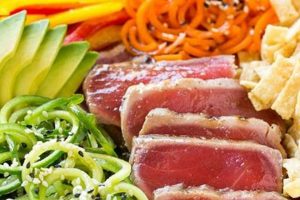
Emphasis on premium ingredients distinguishes gourmet tuna salad from everyday preparations. Instead of standard canned tuna, gourmet versions might incorporate line-caught tuna steaks, seared and flaked to perfection. Artisan mayonnaise, made with high-quality oils and vinegars, replaces standard commercial varieties. Freshly picked herbs, such as tarragon or chervil, add nuanced flavors, while gourmet additions, like capers, olives, or artichoke hearts, introduce complexity and textural contrast. The selection of top-tier ingredients elevates the sensory experience, demonstrating a commitment to quality and flavor.
- Creative Flavor Combinations
Gourmet tuna salad recipes often showcase unexpected yet harmonious flavor pairings. Incorporating ingredients like smoked paprika, toasted sesame seeds, or a drizzle of truffle oil adds depth and complexity. Fruit, such as diced mango or finely chopped pear, introduces sweetness and acidity, balancing the richness of the tuna and mayonnaise. These creative combinations challenge conventional notions of tuna salad, demonstrating the dish’s potential for culinary innovation. The exploration of diverse flavor profiles transforms a simple dish into a sophisticated culinary creation.
- Elegant Presentation
Presentation plays a crucial role in gourmet tuna salad. Moving beyond simple sandwiches or scoops on lettuce, gourmet versions might be served in elegant endive spears, atop crostini, or as a filling for delicate puff pastry shells. Attention to plating details, such as garnishing with microgreens or edible flowers, enhances the visual appeal and elevates the dining experience. The careful consideration of presentation transforms tuna salad into a visually stunning and appetizing dish, suitable for sophisticated gatherings or special occasions.
- Mindful Preparation Techniques
Gourmet tuna salad recipes often emphasize specific preparation techniques that enhance flavor and texture. Gently folding ingredients together, rather than vigorously mixing, preserves the integrity of delicate components. Chilling the salad for an optimal period allows flavors to meld and develop fully. Attention to detail in preparation, such as using a sharp knife for chopping ingredients and ensuring even distribution of seasonings, contributes to the overall quality and refinement of the final product. These mindful techniques demonstrate a commitment to culinary excellence, transforming a simple preparation into a refined culinary experience.
These facets of gourmet tuna salad preparation demonstrate the transformative potential of culinary creativity. By focusing on high-quality ingredients, exploring innovative flavor combinations, prioritizing elegant presentation, and employing mindful preparation techniques, chefs and home cooks alike can elevate this classic dish to new heights of culinary sophistication. Gourmet tuna salad represents not merely a meal but an expression of culinary artistry, showcasing the versatility and potential of even the most humble ingredients.
6. Global Influences
Culinary traditions worldwide offer diverse interpretations of tuna salad, reflecting regional palates and ingredient availability. Examining these global influences reveals a spectrum of flavors and techniques that expand the possibilities of this adaptable dish. This exploration highlights how cultural nuances transform a basic recipe into a reflection of culinary heritage.
- Mediterranean Influences
Mediterranean interpretations of tuna salad often incorporate ingredients characteristic of the region, such as olives, capers, feta cheese, and fresh herbs like oregano and mint. Lemon juice and olive oil provide a bright and flavorful dressing, reflecting the emphasis on fresh, vibrant flavors in Mediterranean cuisine. These additions create a lighter, more herbaceous profile compared to traditional mayonnaise-based versions. The use of high-quality olive oil contributes to the perceived health benefits often associated with Mediterranean cuisine.
- Asian Influences
Asian-inspired tuna salads frequently feature ingredients like soy sauce, sesame oil, ginger, and sriracha. These additions introduce umami richness and a subtle heat, reflecting the complex flavor profiles common in many Asian cuisines. The use of ingredients like seaweed or water chestnuts adds textural complexity. These variations demonstrate the adaptability of tuna salad to diverse culinary traditions.
- South American Influences
South American interpretations of tuna salad often incorporate ingredients like cilantro, avocado, lime juice, and aji amarillo paste. These additions introduce a vibrant, fresh flavor profile with a subtle heat, reflecting the diverse culinary landscape of South America. The use of avocado adds creaminess and healthy fats, while cilantro provides a bright, herbaceous note. These variations highlight the regional differences within South American cuisine itself.
- North African Influences
North African influences on tuna salad often include ingredients like preserved lemons, harissa paste, cumin, and coriander. These additions introduce a complex interplay of sweet, sour, and spicy flavors, reflecting the rich culinary heritage of the region. The use of preserved lemons adds a distinctive salty and tangy note, while harissa paste provides a smoky heat. These variations demonstrate how regional spices and ingredients can transform a familiar dish.
These global influences demonstrate the remarkable adaptability of tuna salad as a culinary canvas. By incorporating regional ingredients and flavor profiles, this simple dish becomes a reflection of diverse culinary traditions. From the bright, herbaceous notes of the Mediterranean to the complex spice blends of North Africa, exploring global influences expands the possibilities of tuna salad, enriching both its flavor profile and its cultural significance. The exploration of these variations provides not only culinary inspiration but also a deeper understanding of how food reflects cultural identity and culinary heritage.
7. Dietary Adaptations
Dietary adaptations play a crucial role in expanding the accessibility and inclusivity of tuna salad recipes. Addressing specific dietary needs and preferences ensures that this versatile dish can be enjoyed by a wider range of individuals. Modifications to traditional recipes, driven by health concerns, ethical choices, or religious observances, demonstrate the adaptability of tuna salad as a meal component. These adaptations often involve ingredient substitutions or omissions, impacting the nutritional profile, flavor, and texture of the final product. Understanding the connection between dietary adaptations and tuna salad recipes allows for a more inclusive and personalized approach to meal preparation. For example, individuals following a gluten-free diet can opt for gluten-free bread or crackers when creating tuna salad sandwiches, while those observing a vegan diet can utilize plant-based mayonnaise alternatives and incorporate ingredients like chickpeas or avocado for added protein and creaminess. Adapting recipes to accommodate lactose intolerance might involve using a dairy-free mayonnaise or incorporating a non-dairy yogurt as a binder.
The practical significance of dietary adaptations lies in their ability to address a spectrum of dietary requirements, ranging from common allergies and intolerances to specific lifestyle choices. Recipes tailored to address allergies, such as those involving nuts or shellfish, require careful ingredient selection and preparation to prevent cross-contamination. For individuals managing conditions like diabetes, controlling carbohydrate intake is crucial. Tuna salad can be adapted to fit low-carbohydrate diets by using lettuce wraps instead of bread or by incorporating low-carbohydrate vegetables like cauliflower rice. Similarly, individuals following low-sodium diets can benefit from using low-sodium tuna and minimizing added salt in the recipe. These adaptations demonstrate that dietary restrictions do not necessitate sacrificing flavor or satisfaction. Careful consideration of ingredient choices and preparation methods allows for the creation of delicious and nutritious tuna salad variations that cater to a wide range of dietary needs.
Dietary adaptations transform tuna salad from a simple dish into a versatile and inclusive meal option. The ability to modify recipes to accommodate individual needs and preferences ensures that this classic dish remains relevant and accessible to a diverse population. Understanding the principles of dietary adaptation empowers individuals to personalize their meals, promoting both culinary enjoyment and dietary adherence. While challenges may arise in replicating certain flavors or textures when substituting ingredients, the increasing availability of specialized dietary products and the growing awareness of dietary needs continue to expand the possibilities for creating delicious and adaptable tuna salad recipes. Ultimately, the focus on dietary adaptations contributes to a more inclusive and personalized approach to food, fostering a greater appreciation for the role of culinary creativity in promoting health and well-being.
Frequently Asked Questions
This section addresses common inquiries regarding tuna salad preparation, offering concise and informative responses to clarify potential uncertainties and misconceptions.
Question 1: What is the ideal tuna-to-mayonnaise ratio?
The optimal ratio depends on individual preference, but a general guideline suggests starting with one part mayonnaise to two parts tuna. Adjustments can be made to achieve desired creaminess.
Question 2: Can Greek yogurt be substituted for mayonnaise?
Greek yogurt offers a healthier alternative to mayonnaise, contributing a tangy flavor and reducing overall fat content. Start with a similar ratio as mayonnaise and adjust according to taste.
Question 3: How long can tuna salad be stored in the refrigerator?
Tuna salad should be stored in an airtight container and refrigerated for no more than three to five days. Consume promptly for optimal freshness and quality.
Question 4: What are common signs of spoiled tuna salad?
Indicators of spoilage include a sour or unpleasant odor, a slimy texture, and discoloration. If any of these signs are present, discard the tuna salad immediately.
Question 5: How can sodium content be reduced in tuna salad?
Opt for low-sodium canned tuna and minimize added salt during preparation. Enhance flavor with fresh herbs, spices, and lemon juice instead of relying solely on salt.
Question 6: Can tuna salad be frozen?
While freezing is possible, it’s generally not recommended. Freezing can negatively impact the texture and flavor of tuna salad, resulting in a watery consistency upon thawing. It is best enjoyed fresh.
Understanding these key aspects of tuna salad preparation contributes to a safer and more enjoyable culinary experience. Careful attention to ingredient selection, storage practices, and preparation techniques ensures optimal flavor, texture, and food safety.
This FAQ section provides a foundation for informed tuna salad preparation. Further exploration of specific recipes and variations will enhance culinary expertise and broaden culinary horizons.
Conclusion
Methods for preparing tuna fish salad offer a diverse range of possibilities, from classic combinations to innovative variations incorporating global influences and dietary adaptations. Exploration of ingredient selection, preparation techniques, and flavor profiles reveals the versatility of this adaptable dish. Nutritional considerations, including healthy ingredient substitutions and mindful portion control, highlight the potential for creating health-conscious versions without compromising flavor. Understanding proper storage practices and recognizing signs of spoilage ensures food safety and maintains optimal quality. From quick preparations for time-constrained individuals to gourmet creations for sophisticated palates, the adaptability of tuna fish salad caters to a wide spectrum of culinary needs and preferences.
Tuna fish salad’s enduring popularity stems from its accessibility, affordability, and adaptability. Continued exploration of culinary traditions and innovative ingredient combinations promises to further expand the possibilities of this versatile dish, ensuring its continued presence in kitchens worldwide. Culinary experimentation and personalized adaptations empower individuals to transform simple ingredients into flavorful and satisfying meals. The potential for creativity within the realm of tuna fish salad remains vast, offering endless opportunities for culinary discovery and enjoyment.