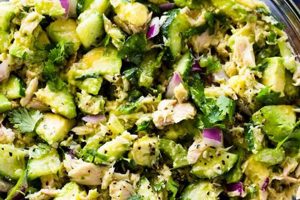
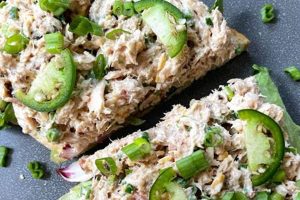
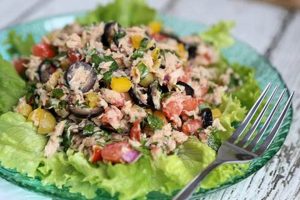
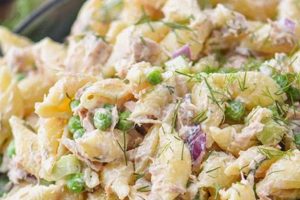
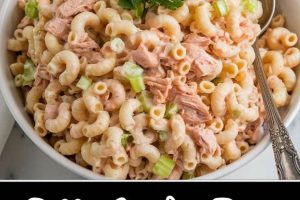
A foundational dish in many cultures, canned tuna combined with mayonnaise forms the core of this simple, adaptable meal. Common additions include chopped celery, onion, and seasonings like salt and pepper. This mixture can be enjoyed on its own, in sandwiches, wraps, or as a salad topper.
Affordable, quick to prepare, and packed with protein, this type of dish offers a convenient and nutritious meal option. Its versatility allows for endless customization with various ingredients and flavor profiles, catering to diverse palates and dietary needs. Historically, canned tuna’s rise in popularity during the early 20th century made such recipes accessible to a wider population, contributing to its enduring presence in kitchens worldwide.
The following sections will delve into variations on this classic preparation, offering guidance on ingredient selection, preparation techniques, and creative serving suggestions.
Tips for Exceptional Tuna Salad
Elevating a simple tuna salad to something truly special involves attention to detail and a few key techniques. These tips offer guidance on optimizing flavor and texture for a superior culinary experience.
Tip 1: Quality Ingredients Matter: Opt for high-quality canned tuna packed in oil or water, ensuring optimal flavor and texture. Draining the tuna thoroughly prevents a watery consistency.
Tip 2: Mindful Mayonnaise Selection: The choice of mayonnaise significantly impacts the overall flavor profile. Experiment with different types, from classic to flavored varieties, to find a preferred taste.
Tip 3: Texture Enhancement: Incorporating finely diced celery and red onion adds a pleasant crunch and elevates the sensory experience.
Tip 4: Seasoning Strategies: Freshly ground black pepper, a touch of salt, and a squeeze of lemon juice enhance the natural flavors of the tuna. Consider incorporating herbs like dill or chives for an added dimension.
Tip 5: Temperature Considerations: Chilling the prepared tuna salad for at least 30 minutes allows the flavors to meld and enhances the overall experience.
Tip 6: Bread Selection: Serving the tuna salad on crusty bread, croissants, or in lettuce wraps provides textural contrast and elevates the presentation.
Tip 7: Creative Additions: Explore adding chopped hard-boiled eggs, grapes, or capers for a unique twist on the classic recipe.
By following these suggestions, one can transform a basic tuna salad into a delightful culinary creation. Attention to these details ensures a satisfying and memorable dining experience.
With these tips in mind, considerations for variations and customizations will be explored in the concluding section.
1. High-quality Canned Tuna
The foundation of any successful basic tuna salad rests upon the selection of canned tuna. High-quality canned tuna elevates the final dish, impacting flavor, texture, and overall enjoyment. Understanding the nuances of selecting superior canned tuna is crucial for achieving optimal results.
- Species and Processing:
Different tuna species offer varying flavor profiles and textures. Albacore, known for its light color and delicate flavor, contrasts with skipjack, which possesses a stronger, more robust taste. Processing methods, such as solid or chunk, also influence the final texture of the salad. Solid pack tuna offers larger flakes, suitable for a more substantial texture, whereas chunk tuna provides smaller pieces, ideal for a smoother consistency.
- Packing Medium:
Tuna packed in oil retains moisture and often exhibits a richer flavor compared to water-packed alternatives. Oil-packed tuna adds an inherent richness to the salad, while water-packed tuna offers a leaner option. Draining the tuna thoroughly, regardless of the packing medium, is essential for preventing excess moisture in the final product.
- Sustainability and Sourcing:
Considering the source and sustainability practices of the canned tuna brand supports responsible fishing and ocean conservation. Opting for brands committed to sustainable fishing practices contributes to the long-term health of marine ecosystems.
- Freshness and Quality Indicators:
Examining the can for any signs of damage, such as dents or swelling, is crucial before purchase. Checking the expiration date and opting for reputable brands ensures the use of fresh, high-quality ingredients. The appearance and aroma of the tuna upon opening the can should be assessed to confirm its quality.
The selection of high-quality canned tuna directly impacts the overall quality and enjoyment of basic tuna salad recipes. Prioritizing species, packing medium, sustainability, and freshness indicators ensures a superior culinary experience. Attention to these details elevates a simple tuna salad from ordinary to exceptional.
2. Mayonnaise (classic or flavored)

Mayonnaise serves as a crucial binding agent and flavor enhancer in basic tuna salad recipes. Its creamy texture coats the tuna, creating a cohesive mixture while contributing richness and depth. The type of mayonnaise selected significantly influences the overall flavor profile of the salad. Classic mayonnaise provides a neutral backdrop, allowing the natural flavors of the tuna and other ingredients to shine. Flavored mayonnaises, such as those infused with herbs, spices, or citrus, introduce additional complexity. For instance, a lemon-dill mayonnaise complements the tuna’s inherent brininess, while a chipotle mayonnaise adds a smoky heat. The quantity of mayonnaise used also affects the final product; too little results in a dry, crumbly salad, whereas too much creates an overly rich and heavy consistency. The interplay between mayonnaise and other ingredients determines the salad’s final character.
The choice of mayonnaise allows for customization and creativity within basic tuna salad recipes. A simple swap from classic to flavored mayonnaise can dramatically alter the sensory experience. Consider a salad featuring tuna, celery, and red onion. With classic mayonnaise, the focus remains on the clean flavors of the ingredients. Substituting a sriracha mayonnaise introduces a spicy kick, transforming the overall profile. Further experimentation with globally inspired mayonnaises, such as a wasabi mayonnaise, opens possibilities for fusion cuisine. This adaptability makes mayonnaise a powerful tool in shaping the final dish.
Careful consideration of mayonnaise selection is essential for crafting a well-balanced and flavorful tuna salad. The choice between classic and flavored varieties, along with mindful portioning, allows for customization and creative expression. Understanding the impact of mayonnaise on texture, flavor, and overall balance empowers culinary exploration within the seemingly simple realm of basic tuna salad recipes. This awareness elevates the dish from a basic staple to a canvas for culinary creativity.
3. Finely Chopped Celery

Finely chopped celery represents a cornerstone ingredient in basic tuna salad recipes, contributing crucial textural and flavor dimensions. Its presence elevates the salad beyond a simple protein and mayonnaise mixture, offering a refreshing counterpoint and enhancing the overall sensory experience. Understanding celery’s role extends beyond mere inclusion; its preparation and integration significantly impact the final product.
- Texture and Mouthfeel
Celery’s crisp, fibrous nature introduces a satisfying crunch, contrasting with the softness of the tuna and the creaminess of the mayonnaise. This textural interplay prevents the salad from becoming monotonous, creating a more dynamic and enjoyable mouthfeel. The fineness of the chop influences the perceived texture; a coarser chop provides more pronounced crunch, while a finer chop offers a gentler contrast.
- Flavor Enhancement
Celery’s subtle, slightly vegetal flavor complements the richness of the tuna and the tang of the mayonnaise. Its inherent freshness brightens the overall flavor profile, preventing the salad from feeling heavy or overly rich. This balancing effect is crucial for achieving a harmonious blend of flavors.
- Nutritional Value
Beyond flavor and texture, celery contributes nutritional value to the dish. It provides dietary fiber, vitamins, and minerals, enhancing the nutritional profile of the basic tuna salad. This addition aligns with health-conscious approaches to meal preparation.
- Visual Appeal
The bright green flecks of finely chopped celery enhance the visual appeal of the tuna salad. This subtle color contrast creates a more visually engaging dish, increasing its overall attractiveness. Presentation plays a significant role in the perception of food, and celery’s visual contribution should not be overlooked.
The integration of finely chopped celery into basic tuna salad recipes exemplifies the importance of considering texture, flavor, nutrition, and visual appeal in culinary creations. While seemingly a minor component, its presence significantly elevates the overall quality and enjoyment of the dish. This understanding underscores the transformative potential of even the simplest ingredients when thoughtfully incorporated.
4. Diced Red Onion
Diced red onion constitutes a prevalent addition to basic tuna salad recipes, contributing a distinct sharpness and textural complexity that elevates the overall sensory experience. Its integration, however, requires careful consideration of preparation techniques and balancing flavors to ensure its contribution enhances rather than overwhelms the final product.
- Flavor Profile
Red onion possesses a pungent, slightly sweet, and sulfurous flavor profile that contrasts with the richness of the tuna and the creaminess of the mayonnaise. This assertive flavor, when properly balanced, adds a depth and complexity often lacking in simpler preparations. The intensity of the onion’s flavor can be modulated through soaking the diced pieces in cold water for a brief period, mitigating the sharpness while retaining its textural contribution.
- Textural Contrast
The crisp, firm texture of diced red onion provides a welcome counterpoint to the softer textures of the tuna and mayonnaise. This textural variation enhances the overall mouthfeel, preventing a homogenous consistency. The size of the dice influences the perceived texture; a finer dice integrates more seamlessly, while a coarser dice offers a more pronounced crunch.
- Visual Appeal
The vibrant purple hue of red onion introduces a visual element that elevates the aesthetic presentation of the tuna salad. This pop of color contrasts with the muted tones of the tuna and mayonnaise, creating a more visually appealing dish. Visual presentation plays a significant role in the overall dining experience, and the inclusion of red onion contributes to this aspect.
- Balancing Flavors
The intensity of red onion’s flavor requires careful balancing within the overall composition of the tuna salad. Overuse can overwhelm the delicate flavors of the tuna, while too little fails to provide the intended complexity. The proportion of red onion to other ingredients, particularly the tuna and mayonnaise, dictates the final balance. Additional acidic elements, such as lemon juice or vinegar, can further balance the onion’s pungency.
The incorporation of diced red onion into basic tuna salad recipes exemplifies the impact of nuanced ingredient selection and preparation. Its pungent flavor, crisp texture, and vibrant color contribute significantly to the overall sensory experience. However, achieving a harmonious balance requires careful consideration of its intensity and proportion relative to other components. Successful integration transforms a simple tuna salad into a more complex and satisfying culinary creation.
5. Seasoning (salt, pepper)
Seasoning, primarily with salt and pepper, forms an integral part of basic tuna salad recipes. Though seemingly simple, their judicious application significantly impacts the final flavor profile, elevating the dish beyond its constituent ingredients. Careful consideration of seasoning choices and techniques distinguishes a bland tuna salad from a flavorful one.
- Salt’s Role in Flavor Enhancement
Salt amplifies the inherent flavors of the tuna, mayonnaise, and any additional ingredients. It does not merely add saltiness but rather unlocks existing flavors, creating a more complex and nuanced taste experience. The type of salt used can also subtly influence the final product. Sea salt, with its coarser texture and mineral complexity, offers a different dimension compared to finer table salt. The quantity of salt requires careful calibration to enhance without overpowering other flavors.
- Pepper’s Contribution to Complexity
Freshly ground black pepper introduces a subtle heat and depth, contrasting with the richness of the mayonnaise and the savory notes of the tuna. Pre-ground pepper often lacks the vibrancy and aromatic complexity of freshly ground peppercorns. The type of peppercorn used, such as black, white, or a blend, further customizes the flavor profile. A touch of white pepper offers a cleaner heat, while a blend introduces layered complexity. The amount of pepper used should complement, not dominate, the overall flavor balance.
- Balancing Flavors through Seasoning
The interplay between salt and pepper is crucial. Salt enhances existing flavors, while pepper introduces a contrasting element. The balance between these two seasonings determines the final flavor profile of the tuna salad. Too much salt can overwhelm the other ingredients, while insufficient pepper can result in a bland dish. Careful tasting and adjustment are key to achieving a harmonious balance.
- Seasoning Techniques
The timing of seasoning also impacts the final outcome. Seasoning the tuna mixture itself ensures even distribution of flavor. Additional seasoning can be incorporated during the mixing process, allowing for adjustments based on taste. A final light seasoning just before serving enhances the immediate flavor perception. These techniques demonstrate that seasoning is not a singular act but rather a process integrated throughout preparation.
Seasoning with salt and pepper, while fundamental, represents a crucial step in creating flavorful basic tuna salad recipes. The interplay between these two seasonings, combined with careful attention to quantity, type, and timing, elevates the dish from simple to satisfying. Understanding the nuances of seasoning unlocks the full potential of this classic dish, demonstrating that even basic ingredients can yield extraordinary results with thoughtful application.
6. Fresh Herbs (optional)
Fresh herbs, while optional, offer a significant opportunity to elevate basic tuna salad recipes. Their inclusion introduces aromatic complexity and nuanced flavors, transforming a simple dish into a more sophisticated culinary experience. The selection and application of fresh herbs demonstrate an understanding of flavor pairings and culinary creativity. Fresh herbs contribute brightness and depth, balancing the richness of the mayonnaise and the savory notes of the tuna. For instance, dill’s subtle anise-like flavor complements the inherent brininess of the tuna, creating a harmonious flavor profile. Similarly, chives offer a delicate onion flavor that enhances the overall savoriness without overpowering the other ingredients. Parsley, with its clean, fresh taste, provides a versatile option that complements various flavor combinations. Other herbs, such as mint or tarragon, can introduce unique and unexpected dimensions, demonstrating the versatility of this ingredient category.
The quantity and preparation of fresh herbs influence their impact on the final product. Overuse can overwhelm the delicate balance of flavors, while too little fails to provide the intended aromatic lift. Finely chopping the herbs ensures even distribution and prevents overpowering individual bites. Incorporating the herbs towards the end of the preparation process preserves their delicate flavors and prevents them from becoming bruised or wilted. The choice of herbs should align with the overall flavor profile of the tuna salad. For example, a Mediterranean-inspired tuna salad featuring olives and feta cheese might benefit from the addition of oregano or marjoram. Conversely, a classic tuna salad with celery and onion harmonizes well with the aforementioned dill, chives, or parsley.
The thoughtful incorporation of fresh herbs underscores the potential for culinary refinement within basic tuna salad recipes. Their inclusion extends beyond mere flavor enhancement; it represents a conscious decision to elevate a simple dish through considered ingredient selection and preparation techniques. This attention to detail transforms the everyday tuna salad into a more complex and satisfying culinary experience. The judicious use of fresh herbs exemplifies the transformative power of seemingly minor additions, demonstrating that even basic recipes offer opportunities for culinary creativity and nuanced flavor development.
7. Bread or crackers
The choice of accompanying bread or crackers significantly influences the overall enjoyment of basic tuna salad recipes. Serving as the vessel for the salad, these components contribute texture, flavor, and visual appeal, impacting the complete sensory experience. Careful consideration of these elements elevates the dish beyond a simple meal to a more considered culinary creation.
- Textural Considerations
The texture of the bread or crackers interacts directly with the tuna salad, creating a textural interplay that enhances or detracts from the overall experience. Crusty bread offers a satisfying contrast to the creamy salad, providing a textural counterpoint. Soft, yielding bread creates a harmonious blend, while crackers introduce a crisp, snappy element. The chosen texture should complement the desired sensory experience.
- Flavor Profiles
The flavor of the bread or crackers should complement, not compete with, the tuna salad. Neutral-flavored options, such as plain white or whole wheat bread, allow the flavors of the tuna salad to take center stage. More assertive flavors, like sourdough or rye bread, introduce additional complexity. Similarly, the choice of crackers, from plain saltines to seeded varieties, impacts the overall flavor profile.
- Visual Presentation
The visual presentation of the bread or crackers contributes to the overall appeal of the dish. Sliced bread offers a classic presentation, while crackers allow for more creative arrangements. The shape, size, and color of the bread or crackers should be considered in relation to the presentation of the tuna salad itself.
- Practicality and Versatility
The choice between bread and crackers also hinges on practicality and intended use. Sandwiches made with sliced bread offer portability, while crackers provide a convenient option for individual servings or appetizers. The context of the meal, whether a quick lunch or a more formal gathering, influences the appropriate choice.
The selection of appropriate bread or crackers constitutes a crucial step in elevating basic tuna salad recipes. Considering texture, flavor, visual presentation, and practicality ensures a harmonious balance that enhances the overall dining experience. This seemingly minor detail significantly impacts enjoyment, demonstrating the importance of thoughtful ingredient selection in even the simplest culinary creations.
Frequently Asked Questions
This section addresses common inquiries regarding the preparation and enjoyment of tuna salad, offering concise and informative responses to clarify potential uncertainties.
Question 1: What is the best type of tuna to use for tuna salad?
While personal preferences vary, albacore tuna is often favored for its lighter flavor and firmer texture. Skipjack and yellowfin tuna offer more robust flavors and are also suitable options.
Question 2: How can excess moisture be avoided in tuna salad?
Thoroughly draining the canned tuna before mixing is essential. Pressing the tuna gently with a fork further removes excess liquid, ensuring a desirable consistency.
Question 3: What are common alternatives to mayonnaise in tuna salad?
Plain Greek yogurt, avocado, or mashed chickpeas offer healthier alternatives to mayonnaise, providing creaminess while reducing fat content. These substitutions also introduce unique flavor profiles.
Question 4: How long can tuna salad be stored in the refrigerator?
Properly stored in an airtight container, tuna salad typically remains safe to consume for three to five days in the refrigerator. However, quality and flavor may degrade over time.
Question 5: Can tuna salad be frozen?
Freezing tuna salad is generally not recommended. The mayonnaise-based dressing separates upon thawing, resulting in an undesirable texture. Freezing also impacts the flavor and freshness of the ingredients.
Question 6: How can tuna salad be made more flavorful?
Incorporating fresh herbs, spices, or flavorful additions, such as chopped pickles, capers, or red onion, enhances the flavor profile. Experimenting with different types of mayonnaise or adding a squeeze of lemon juice also contributes complexity.
Understanding these common inquiries facilitates successful tuna salad preparation and enjoyment. Careful consideration of ingredient selection, storage practices, and flavor enhancements ensures a satisfying culinary experience.
This concludes the frequently asked questions section. The following section will offer a collection of recipe variations to inspire culinary exploration.
Basic Tuna Salad Recipes
Exploration of basic tuna salad recipes reveals a dish adaptable to various tastes and culinary approaches. From the selection of high-quality canned tuna to the nuanced inclusion of seasonings and fresh herbs, each component contributes to the final product. Understanding the interplay of flavors and textures, along with careful consideration of preparation techniques, elevates this simple dish beyond its basic components. The versatility demonstrated through ingredient variations, such as flavored mayonnaises or the incorporation of diverse vegetables, positions tuna salad as a canvas for culinary creativity.
Basic tuna salad recipes, while seemingly simple, offer a platform for culinary exploration and personalized expression. Thoughtful consideration of ingredients and techniques transforms this pantry staple into a satisfying and adaptable meal. Continued experimentation with flavors and textures ensures the enduring relevance of this classic dish within the ever-evolving culinary landscape.