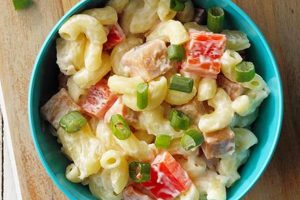
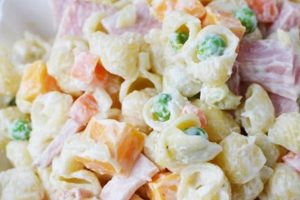
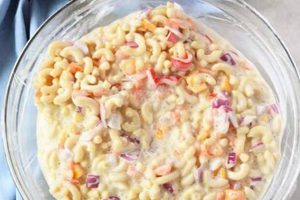
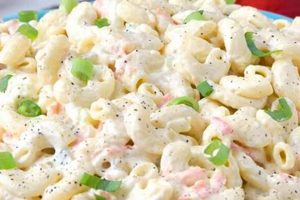
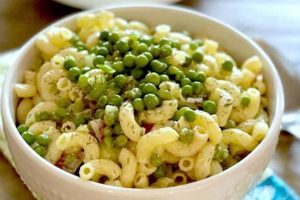
A chilled pasta salad typically features cooked elbow macaroni as its base, bound together with mayonnaise. Common additions include chopped celery, onion, and sweet pickle relish, often enhanced with mustard, vinegar, salt, and pepper. Variations may incorporate hard-boiled eggs, shredded carrots, bell peppers, cheeses, or meats like tuna or ham. This dish is a popular side for picnics, barbecues, and potlucks due to its ease of preparation and transportability.
This type of dish offers a versatile and convenient way to enjoy a combination of carbohydrates, vegetables, and protein. Its adaptability allows for countless variations to suit individual preferences and dietary needs. As a cold dish, it’s particularly well-suited for warm weather gatherings. The historical roots likely trace back to the increasing popularity of mayonnaise-based salads in the early 20th century, alongside the growing accessibility of refrigerated storage.
This exploration will delve into various aspects of creating this culinary staple, encompassing ingredient selection, preparation techniques, variations, and optimal storage practices.
Tips for Crafting Exceptional Macaroni Salad
Achieving a well-balanced and flavorful macaroni salad requires attention to detail throughout the preparation process. The following tips offer guidance for optimal results.
Tip 1: Pasta Perfection: Cook pasta al dente for optimal texture. Overcooked pasta can result in a mushy salad. Rinsing the cooked pasta under cold water helps stop the cooking process and cools it quickly.
Tip 2: Mayonnaise Matters: High-quality mayonnaise forms the foundation of a good salad. Experimenting with different brands or types, such as olive oil mayonnaise, can influence the final flavor profile.
Tip 3: Vegetable Vibrancy: Fresh, crisp vegetables contribute both flavor and texture. Finely chopping vegetables ensures even distribution throughout the salad.
Tip 4: Seasoning Symphony: Careful seasoning is essential. A balanced blend of salt, pepper, mustard, and vinegar enhances the other ingredients. Tasting and adjusting seasonings throughout the process is recommended.
Tip 5: Chill Out: Chilling the salad for at least an hour allows the flavors to meld and the salad to reach the ideal serving temperature. This also firms the pasta and vegetables, improving texture.
Tip 6: Ingredient Innovation: Explore variations by incorporating additional ingredients. Hard-boiled eggs, chopped pickles, shredded cheese, or cooked meats can add depth and complexity.
Tip 7: Proportionality Precision: Balance is key. Avoid overwhelming the salad with too much of any single ingredient. A harmonious blend of pasta, vegetables, and dressing creates the best result.
By following these tips, one can consistently create a delicious and satisfying macaroni salad suitable for any occasion.
These practical insights provide a solid foundation for preparing macaroni salad. The following section will offer variations and serving suggestions.
1. Ingredients
Ingredient selection significantly impacts the final quality and flavor profile of macaroni salad. Careful consideration of each component contributes to a well-balanced and enjoyable dish. The following facets highlight the crucial role ingredients play in this classic recipe.
- Pasta:
Elbow macaroni is the traditional choice, its shape holding the dressing effectively. Alternative pasta shapes, such as rotini or shells, can be used, but their impact on texture and dressing adherence should be considered. Gluten-free pasta offers an inclusive option.
- Vegetables:
Common additions include celery, onion, and sweet pickles, offering a contrasting crunch and tang. Other vegetables, such as bell peppers, shredded carrots, or chopped red onion, introduce varied flavors and textures. Freshness and proper chopping techniques are essential for optimal quality.
- Mayonnaise:
Mayonnaise serves as the binding agent and primary flavor component. Quality and type significantly influence the overall taste. Standard mayonnaise, light mayonnaise, or variations like olive oil mayonnaise offer distinct flavor profiles. Homemade mayonnaise allows for complete control over ingredients and flavor.
- Seasonings and Flavor Enhancers:
Salt, pepper, mustard, and vinegar are fundamental seasonings. Other additions, such as garlic powder, onion powder, or paprika, can add complexity. Prepared mustard blends, like Dijon or stone-ground, contribute distinct flavors. Sweet pickle relish or chopped fresh dill offer contrasting tangy and herbal notes.
The interplay of these ingredient categories defines the character of the macaroni salad. Harmonious balance among the pasta, vegetables, mayonnaise, and seasonings creates a cohesive and flavorful final product. Ingredient quality and thoughtful selection remain paramount to achieving a successful outcome.
2. Preparation
Preparation methods significantly influence the final quality and texture of macaroni salad. Careful attention to each step, from cooking the pasta to incorporating the ingredients, ensures a successful outcome. The following facets highlight key aspects of the preparation process.
- Pasta Cooking:
Cooking pasta al dente is crucial for achieving the desired texture. Overcooked pasta becomes mushy and absorbs less dressing, resulting in a less flavorful salad. Following package directions and testing for doneness ensures optimal results. Rinsing the cooked pasta under cold water stops the cooking process and helps cool the pasta quickly, preventing it from becoming gummy.
- Vegetable Preparation:
Proper vegetable preparation enhances both flavor and texture. Evenly chopping vegetables ensures consistent distribution throughout the salad and prevents large pieces from overwhelming the other ingredients. Fresh, crisp vegetables contribute a desirable crunch, while wilted or overripe vegetables can detract from the overall quality.
- Ingredient Incorporation:
The order in which ingredients are incorporated can impact the final result. Adding the dressing to the cooled pasta and vegetables while they are still slightly warm allows for better absorption. Gently folding the ingredients together prevents the pasta from breaking and ensures even distribution of the dressing and other components.
- Chilling Time:
Chilling the prepared salad allows the flavors to meld and develop fully. A minimum of one hour in the refrigerator is recommended, but longer chilling times can further enhance the flavor profile. Chilling also firms the pasta and vegetables, contributing to a more desirable texture.
Adhering to these preparation guidelines contributes significantly to the overall success of the macaroni salad. Careful attention to each step, from pasta cooking to chilling time, results in a dish with optimal texture, flavor, and presentation.
3. Mayonnaise Choice
Mayonnaise serves as the foundation of macaroni salad, binding the ingredients and significantly influencing the overall flavor profile. Selecting the appropriate mayonnaise is crucial for achieving the desired taste and texture. The following facets explore the nuances of mayonnaise selection and its impact on the final dish.
- Type of Mayonnaise:
Various mayonnaise types offer distinct flavor profiles and textures. Traditional mayonnaise provides a rich, creamy base, while light mayonnaise offers a lower-fat alternative with a slightly tangier flavor. Olive oil mayonnaise imparts a subtle fruity note and a smoother texture. The choice depends on personal preference and desired flavor outcome. For example, a classic macaroni salad might benefit from traditional mayonnaise, while a lighter, brighter flavor profile might be achieved with olive oil mayonnaise.
- Quality of Mayonnaise:
Mayonnaise quality directly impacts the overall quality of the salad. Higher-quality mayonnaise typically contains better ingredients, resulting in a richer, more nuanced flavor. Lower-quality mayonnaise may contain additives or fillers that can negatively affect the taste and texture. Investing in a good quality mayonnaise can significantly elevate the final product. Comparing different brands through taste tests can help discern quality differences.
- Homemade vs. Store-Bought:
Homemade mayonnaise offers complete control over ingredients and allows for customization of flavor profiles. Store-bought mayonnaise provides convenience and consistency. The choice depends on available time and resources. Homemade mayonnaise allows for incorporating specific oils or flavorings, while store-bought mayonnaise offers a reliable and readily available option.
- Flavor Combinations:
Mayonnaise interacts with other ingredients, influencing the overall flavor balance. The mayonnaise choice should complement the other components, such as vegetables and seasonings. For example, a bolder, spicier mayonnaise may pair well with robust vegetables like bell peppers, while a milder mayonnaise might be preferred with delicate herbs like dill. Careful consideration of flavor pairings ensures a harmonious final product.
The selection of mayonnaise plays a pivotal role in defining the character of macaroni salad. Careful consideration of mayonnaise type, quality, and its interaction with other ingredients is essential for achieving a balanced and flavorful dish. Mayonnaise choice, therefore, is not merely a functional decision but a critical element in crafting a successful macaroni salad.
4. Flavor Balance

Flavor balance is paramount in a successful macaroni salad. It represents the harmonious interplay of salty, sweet, acidic, and savory elements, preventing any single flavor from dominating. This balance elevates the dish beyond a simple combination of ingredients, creating a complex and satisfying culinary experience. A well-balanced macaroni salad engages the palate with a nuanced interplay of tastes, enhancing enjoyment.
Consider the interplay of mayonnaise, vegetables, and seasonings. Mayonnaise provides richness and a creamy texture, serving as a base for other flavors. The acidity in vinegar or pickle relish cuts through the richness, adding brightness. Sweetness, from sweet pickle relish or a touch of sugar, balances the acidity. Vegetables like celery and onion contribute savory notes and textural contrast. Seasonings like salt, pepper, and mustard amplify and unify the flavors. An excess of any one element, such as too much vinegar or an overwhelming amount of onion, can disrupt this delicate balance. For instance, a macaroni salad overly reliant on sweet pickle relish might taste cloyingly sweet, while insufficient seasoning can result in a bland, uninspired dish. Conversely, a well-balanced macaroni salad features a nuanced interplay of flavors, where each ingredient contributes to the overall harmony.
Achieving flavor balance requires careful consideration of ingredient proportions and the interplay of different flavor profiles. Tasting and adjusting throughout the preparation process is crucial. This iterative approach allows for fine-tuning and ensures the desired balance is achieved. Understanding the role of each ingredient and its contribution to the overall flavor profile is essential for creating a truly exceptional macaroni salad. The pursuit of flavor balance elevates this seemingly simple dish, transforming it into a culinary expression of nuanced taste and texture.
5. Serving Suggestions

Serving suggestions enhance the enjoyment of macaroni salad by presenting it in ways that complement its flavors and textures while considering various occasions and accompanying dishes. Thoughtful presentation elevates the dining experience, transforming a simple side dish into a more appealing and satisfying component of a meal.
- Standalone Dish:
Macaroni salad can be served as a light lunch or a refreshing standalone dish. A simple garnish of chopped fresh parsley or paprika adds visual appeal. Serving it chilled in a bowl or on individual plates enhances its refreshing qualities. This approach emphasizes the salad’s versatility and suitability for casual meals.
- Barbecue Side Dish:
Macaroni salad is a classic barbecue accompaniment. Its creamy texture and cool temperature contrast well with grilled meats and hot side dishes. Serving it in a large bowl or on a platter allows guests to easily serve themselves. This traditional pairing highlights the salad’s role in balancing richer, heavier barbecue fare.
- Picnic Staple:
The portability and ease of transport make macaroni salad ideal for picnics. Packing it in airtight containers ensures freshness and prevents spills. Individual portions can be pre-packed for convenience. Its suitability for outdoor dining contributes to its popularity in picnic settings.
- Complementary Pairings:
Macaroni salad pairs well with a variety of dishes. Grilled chicken or fish, sandwiches, and other salads create balanced and satisfying meals. Consider flavor profiles when choosing accompanying dishes; for example, a tangy macaroni salad complements grilled chicken, while a creamy version might pair well with a lighter fish dish. The versatility of macaroni salad allows it to enhance a wide range of culinary combinations.
Serving suggestions, therefore, extend beyond mere presentation; they represent a conscious effort to optimize the dining experience surrounding macaroni salad. By considering the context of the meal and the accompanying dishes, one can elevate this versatile salad from a simple side to a more integral and enjoyable component of the dining experience. These suggestions underscore the adaptability of macaroni salad, solidifying its place as a versatile and satisfying culinary staple.
Frequently Asked Questions
This section addresses common inquiries regarding macaroni salad preparation, storage, and variations. The responses aim to provide clear and concise information for achieving optimal results and addressing potential concerns.
Question 1: How long can macaroni salad be stored in the refrigerator?
Macaroni salad, when properly stored in an airtight container, typically remains safe to consume for three to five days in the refrigerator. However, quality and flavor may begin to deteriorate after the first two days. Discarding any salad left at room temperature for more than two hours is recommended to prevent bacterial growth.
Question 2: Can macaroni salad be frozen?
Freezing macaroni salad is generally not recommended. Mayonnaise-based dressings often separate and become watery upon thawing, resulting in an undesirable texture. Vegetables may also lose their crispness and become mushy. It’s preferable to prepare fresh macaroni salad rather than attempting to freeze it.
Question 3: How can one prevent macaroni salad from becoming watery?
Several factors contribute to watery macaroni salad. Overcooking the pasta can lead to excess starch release, which thickens the dressing. Adding too much dressing initially can also cause the salad to become watery as the vegetables release moisture. Ensuring the pasta is cooked al dente, using the correct amount of dressing, and chilling the salad thoroughly can help minimize wateriness.
Question 4: What are some healthier alternatives for traditional macaroni salad ingredients?
Healthier variations can be achieved through ingredient substitutions. Whole wheat or gluten-free pasta offer increased nutritional value. Greek yogurt can replace a portion of the mayonnaise, reducing fat content while maintaining creaminess. Incorporating additional vegetables, such as chopped bell peppers or cucumbers, boosts nutritional content. Reducing the amount of added sugar or using a sugar substitute also contributes to a healthier profile.
Question 5: Can other types of pasta be used in macaroni salad?
While elbow macaroni is traditional, other pasta shapes can be substituted. Rotini, shells, or farfalle offer interesting textural variations. However, the chosen pasta shape’s impact on dressing adherence and overall texture should be considered. Smaller pasta shapes tend to hold the dressing better, while larger shapes may require adjustments to the dressing amount.
Question 6: How can one adjust the flavor of macaroni salad to personal preference?
Flavor customization can be readily achieved through ingredient adjustments. Different types of mayonnaise, such as olive oil or Dijon, introduce varied flavor profiles. Experimenting with different vinegars, mustards, or herbs allows for personalized flavor combinations. Additional ingredients like chopped pickles, hard-boiled eggs, or different cheeses further expand customization options.
Understanding these common concerns and their solutions empowers individuals to prepare, store, and adapt macaroni salad effectively. The provided information offers a foundation for successful preparation and enjoyment of this versatile dish.
This FAQ section offers solutions to common challenges and clarifies misconceptions. The following section will explore different variations and adaptations of classic macaroni salad recipes.
Macaroni Salad Recipe with Mayonnaise
This exploration has provided a comprehensive overview of macaroni salad preparation, encompassing ingredient selection, techniques, variations, and best practices. Emphasis has been placed on the critical role of mayonnaise in binding the ingredients and influencing the overall flavor profile. From understanding the importance of al dente pasta and fresh vegetables to achieving a delicate flavor balance, the nuances of crafting a successful macaroni salad have been thoroughly examined. Practical tips for storage and addressing common preparation challenges further equip individuals to confidently create this versatile dish. Furthermore, the adaptability of macaroni salad has been highlighted through explorations of ingredient variations and serving suggestions, demonstrating its suitability for various occasions and culinary pairings.
Macaroni salad, while seemingly simple, offers a canvas for culinary creativity. Its adaptability allows for endless interpretations, limited only by imagination and available ingredients. Further exploration of regional variations and innovative ingredient combinations promises to unveil new dimensions of this classic dish, ensuring its continued presence in culinary traditions for generations to come. Mastery of the fundamental principles outlined herein provides a solid foundation for embarking on such culinary explorations, empowering individuals to elevate this humble dish to new heights of flavor and enjoyment.