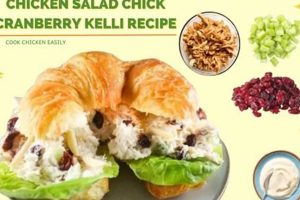
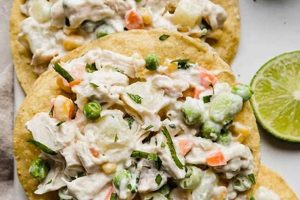
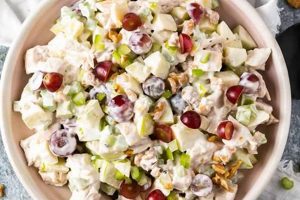
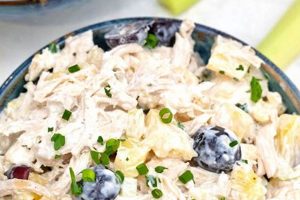
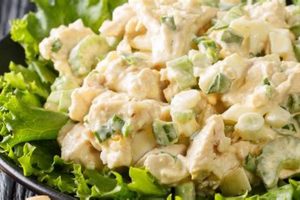
A classic avian-based salad, typically composed of shredded cooked chicken, mayonnaise, and seasonings, intentionally omits fruits like grapes or apples. Common additions include celery, onion, and sometimes nuts. An example would be a simple blend of shredded chicken breast, mayonnaise, diced celery, minced onion, salt, and pepper.
This variation offers a savory and straightforward flavor profile, appealing to those who prefer the traditional essence of this dish. Excluding fruit allows the inherent flavors of the chicken and seasonings to shine. Historically, fruit was not a standard component of chicken salad, becoming a popular addition later. This exclusion caters to those seeking a more authentic or less sweet culinary experience. The simplicity of this preparation also streamlines the process, often making it a quicker and more convenient meal option.
From variations incorporating different herbs and spices to exploring the use of diverse mayonnaise types or adding crunchy elements like water chestnuts, a world of possibilities exists within this seemingly simple dish. This foundational concept provides a versatile canvas for culinary creativity.
Tips for a Superior Fruit-Free Chicken Salad
Elevating a simple chicken salad devoid of fruit involves careful consideration of ingredients and techniques. These tips offer guidance for crafting a truly exceptional dish.
Tip 1: Chicken Selection is Key: Opting for high-quality chicken, either freshly roasted or poached, significantly impacts the final flavor. Dark meat contributes richness, while white meat offers a cleaner taste.
Tip 2: Proper Chicken Preparation: Ensure the chicken is cooked thoroughly but remains moist. Allow it to cool completely before shredding to prevent a mushy texture.
Tip 3: Mayonnaise Matters: The mayonnaise serves as the foundation of the salad’s flavor and texture. Experiment with different brands or consider making homemade mayonnaise for a truly unique taste.
Tip 4: Seasoning with Finesse: Freshly ground black pepper, sea salt, and a touch of paprika are excellent starting points. Consider incorporating herbs like dill, chives, or tarragon for added complexity.
Tip 5: The Art of the Chop: Uniformly dicing ingredients like celery and onion ensures even flavor distribution and a pleasant texture. Avoid overly large or small pieces.
Tip 6: Balancing Texture: Adding textural contrast enhances the eating experience. Consider incorporating toasted nuts, finely chopped water chestnuts, or crispy fried onions.
Tip 7: Chill Out: Allowing the salad to chill in the refrigerator for at least an hour allows the flavors to meld and deepens the overall taste.
By following these guidelines, one can achieve a chicken salad that is both simple and sophisticated, showcasing the inherent deliciousness of its core ingredients. A well-executed, fruit-free chicken salad offers a satisfying and versatile culinary experience.
From classic pairings to innovative combinations, the possibilities for enjoying this versatile dish are extensive.
1. High-Quality Chicken

Within the realm of fruit-free chicken salad, the quality of the chicken itself stands as a paramount consideration. It directly influences the overall flavor, texture, and satisfaction derived from the final product. Subpar chicken can result in a bland or even unpleasant experience, while high-quality chicken elevates the dish to a new level.
- Flavor Impact
High-quality chicken possesses a richer, more pronounced flavor that contributes significantly to the overall taste of the salad. Chicken sourced from thoughtfully raised birds, whether free-range or organic, often exhibits a depth of flavor absent in conventionally raised poultry. This inherent flavor requires less reliance on heavy seasonings, allowing the natural taste of the chicken to shine through.
- Texture and Moisture
The texture of the chicken plays a crucial role in the final salad’s appeal. High-quality chicken tends to be more tender and moist, even after cooking and shredding. This desirable texture contrasts pleasantly with the other ingredients, creating a more enjoyable eating experience. Conversely, lower-quality chicken can be dry and stringy, detracting from the overall quality of the salad.
- Visual Appeal
While flavor and texture are primary considerations, the visual appeal of the chicken also contributes to the overall impression. High-quality chicken typically exhibits a healthy, vibrant color and a firm yet tender consistency. This visual appeal enhances the presentation of the finished salad, making it more appetizing.
- Overall Culinary Experience
Ultimately, the choice of chicken significantly impacts the overall culinary experience. Investing in high-quality chicken elevates the enjoyment of a fruit-free chicken salad, transforming a simple dish into a truly satisfying meal. The enhanced flavor, texture, and visual appeal combine to create a more memorable and enjoyable dining experience.
The emphasis on high-quality chicken within a fruit-free chicken salad recipe underscores the importance of ingredient selection in achieving culinary excellence. By prioritizing the quality of the core ingredient, one ensures a more flavorful, texturally satisfying, and visually appealing final product. This principle extends beyond chicken salad, highlighting the importance of sourcing the best possible ingredients in any culinary endeavor.
2. Balanced Seasonings

Within the context of a fruit-free chicken salad, balanced seasoning plays a crucial role in defining the final product’s character. The absence of fruit’s sweetness necessitates a careful approach to seasoning, ensuring the savory aspects are well-defined and harmonized without overpowering the palate. Achieving this balance elevates the chicken salad from simple to sophisticated.
- Salt and Pepper Foundation
Salt and freshly ground black pepper serve as the foundational elements of seasoning in virtually any savory dish, and chicken salad is no exception. The proper balance of these two fundamental seasonings enhances the inherent flavors of the chicken and other ingredients. Too much salt can overpower the delicate flavors, while too little can leave the salad tasting bland. Similarly, the right amount of black pepper adds a subtle bite and complexity without being overwhelming.
- Herbaceous Enhancements
Fresh herbs offer a powerful tool for adding depth and complexity to a fruit-free chicken salad. Dill, chives, parsley, and tarragon are excellent choices, each contributing a unique flavor profile. Dill provides a bright, slightly tangy note, while chives offer a subtle onion flavor. Parsley adds a fresh, clean taste, and tarragon lends a hint of anise. The key is to use herbs judiciously, allowing their flavors to complement the chicken and other ingredients without dominating the overall taste.
- Spice Integration
While herbs offer fresh, green notes, spices contribute warmth and complexity. A pinch of paprika adds a subtle smokiness, while a dash of cayenne pepper introduces a touch of heat. Onion powder and garlic powder can enhance the savory notes, adding depth to the flavor profile. As with herbs, spices should be used sparingly, allowing their nuances to enhance the overall flavor composition without overwhelming the palate.
- Acidic Balance
A touch of acidity can brighten the flavors of a chicken salad, balancing the richness of the mayonnaise and creating a more vibrant taste. A squeeze of lemon juice or a splash of apple cider vinegar can achieve this balance. The acidity also helps to cut through the richness of the chicken and mayonnaise, creating a more refreshing and palatable experience.
The interplay of these seasoning elementssalt, pepper, herbs, spices, and aciditydefines the character of a fruit-free chicken salad. Achieving a harmonious balance within these elements allows the natural flavors of the chicken and other ingredients to shine, resulting in a more complex and satisfying culinary experience. The absence of fruit necessitates a more nuanced approach to seasoning, ensuring the savory notes are well-defined and balanced, elevating the chicken salad to its full potential.
3. Optimal Mayonnaise
Optimal mayonnaise selection significantly impacts the success of a fruit-free chicken salad. Mayonnaise functions as the unifying element, binding the ingredients and contributing significantly to the overall flavor and textural profile. Its quality and characteristics directly influence the final dish’s richness, creaminess, tanginess, and overall palatability. In the absence of fruit, which often provides sweetness and moisture, the mayonnaise assumes an even more critical role.
Consider the cause-and-effect relationship between mayonnaise choice and the final product. A full-fat mayonnaise, for example, creates a richer, more luxurious chicken salad. Conversely, a low-fat or light mayonnaise might result in a thinner, less satisfying texture. Similarly, the mayonnaise’s flavor profile influences the overall taste. Some brands offer a tangier mayonnaise, while others emphasize a sweeter or more neutral flavor. A tangier mayonnaise might complement savory seasonings and herbs, while a sweeter mayonnaise might clash with them. For example, a chicken salad featuring Dijon mustard and tarragon benefits from a neutral or slightly tangy mayonnaise, while a simpler preparation with celery and onion might tolerate a slightly sweeter mayonnaise. Understanding these nuances allows for informed decisions tailored to specific flavor goals.
Mayonnaise choice also presents practical considerations. Homemade mayonnaise offers maximum control over ingredients and flavor profiles but requires more time and effort. Store-bought options provide convenience, with a wide variety of brands and styles available. Ultimately, the optimal mayonnaise for a fruit-free chicken salad depends on individual preferences and the desired flavor profile. However, recognizing the crucial role mayonnaise plays in binding the ingredients, contributing to the texture, and influencing the overall taste is essential for creating a successful dish. Careful consideration of mayonnaise selection elevates the chicken salad from merely acceptable to truly exceptional, ensuring a harmonious blend of flavors and textures.
4. Textural Variety

Textural variety elevates a fruit-free chicken salad from a simple mixture to a multi-dimensional culinary experience. The absence of fruit, often contributing a degree of textural contrast, necessitates a more deliberate approach to incorporating textural elements. A monotonous texture can result in a bland and uninspiring dish, regardless of how well-seasoned the chicken salad might be. Consider the cause-and-effect relationship between textural variety and enjoyment. A salad consisting solely of shredded chicken and mayonnaise, while palatable, lacks the dynamism provided by contrasting textures.
Several ingredients enhance textural complexity within a fruit-free chicken salad. Finely diced celery provides a crisp, refreshing counterpoint to the soft chicken and creamy mayonnaise. Toasted nuts, such as almonds, walnuts, or pecans, introduce a satisfying crunch. Water chestnuts offer a delicate crispness. Even incorporating finely chopped red onion contributes a subtle sharpness both in flavor and texture. These elements, when combined thoughtfully, create a symphony of textures that elevate each bite. For example, a chicken salad featuring celery, toasted pecans, and finely diced red onion offers a more engaging experience than one with only celery. The interplay of crispness, crunch, and subtle sharpness adds depth and complexity.
Understanding the significance of textural variety allows for strategic ingredient selection. One might choose to emphasize crunch by incorporating a combination of nuts and water chestnuts. Alternatively, a focus on crispness might involve using celery, red onion, and chopped bell peppers. The practical application of this knowledge empowers culinary creativity, allowing for customization tailored to individual preferences. The absence of fruit in a chicken salad underscores the importance of considering textural variety. It offers an opportunity to explore different ingredients and combinations, resulting in a more satisfying and dynamic dining experience.
5. Proper Chilling

Proper chilling is essential for a high-quality, fruit-free chicken salad. It allows flavors to meld and enhances food safety, particularly relevant given the absence of fruit’s preserving acidity. Chilling impacts both the immediate and long-term quality of the salad. Insufficient chilling can lead to a bland, less cohesive flavor profile and potential bacterial growth, while proper chilling results in a more flavorful, safer, and ultimately more enjoyable culinary experience.
- Flavor Development
Chilling allows the individual flavors of the ingredientschicken, mayonnaise, seasonings, and vegetablesto meld and harmonize. This integration creates a more complex and nuanced flavor profile than immediately after preparation. The absence of fruit, which often contributes its own distinct flavor, makes this melding process even more critical for developing a well-rounded taste.
- Texture Enhancement
Chilling firms the chicken and other ingredients, enhancing the overall textural experience. This is particularly important for maintaining the desirable texture of elements like celery or water chestnuts, which can become soggy if not adequately chilled. The cooling process also allows the mayonnaise to thicken slightly, contributing to a more desirable consistency.
- Food Safety
Chilling is crucial for inhibiting bacterial growth, a significant concern with any dish containing mayonnaise and cooked chicken. Without the added acidity of fruits, which can act as a natural preservative, proper chilling becomes even more critical for ensuring food safety. Maintaining a refrigerator temperature of 40F (4C) or below significantly slows bacterial growth, reducing the risk of foodborne illness.
- Extended Shelf Life
Proper chilling extends the shelf life of chicken salad. While the exact duration depends on the specific ingredients and storage conditions, well-chilled chicken salad typically remains safe and palatable for several days. This allows for meal prepping and reduces food waste, offering practical benefits alongside enhanced flavor and texture.
Chilling a fruit-free chicken salad is not merely a final step but an integral part of the preparation process. It directly impacts flavor development, texture, food safety, and shelf life. Understanding the importance of proper chilling and implementing it effectively ensures a more satisfying and safer culinary experience, showcasing the full potential of a well-crafted, fruit-free chicken salad.
Frequently Asked Questions
This section addresses common inquiries regarding chicken salad recipes that exclude fruit, providing concise and informative responses.
Question 1: What are the primary advantages of omitting fruit from chicken salad?
Excluding fruit allows the savory flavors of the chicken and seasonings to take center stage. This approach often appeals to those who prefer a more traditional, less sweet flavor profile.
Question 2: How can one enhance the flavor of a fruit-free chicken salad?
Fresh herbs, such as dill, chives, or tarragon, contribute complexity. Spices like paprika or cayenne pepper add depth. A touch of acidity from lemon juice or vinegar brightens the overall taste.
Question 3: What are suitable textural additions to compensate for the lack of fruit?
Chopped celery, nuts (almonds, pecans, walnuts), water chestnuts, and red onion offer varying degrees of crunch and crispness. These additions create a more dynamic and satisfying mouthfeel.
Question 4: What type of mayonnaise is recommended for optimal results?
Full-fat mayonnaise generally yields a richer, creamier result. However, the specific choice depends on individual preference and the desired flavor profile. Homemade mayonnaise allows for complete control over ingredients and flavor.
Question 5: How long can fruit-free chicken salad be stored safely?
Properly stored in an airtight container at 40F (4C) or below, it typically remains safe for three to five days. However, always prioritize using good judgment and discarding any salad with questionable odor or appearance.
Question 6: Can rotisserie chicken be used in a fruit-free chicken salad?
Rotisserie chicken offers a convenient and flavorful option. Ensure any skin and bones are removed before shredding. Its existing seasoning can influence the overall flavor profile, requiring adjustments to other seasonings as needed.
Careful consideration of these frequently asked questions ensures successful preparation and enjoyment of a delicious and satisfying fruit-free chicken salad.
This concludes the FAQ section. Further exploration of specific recipe variations and serving suggestions follows.
Chicken Salad Recipe No Fruit
Exploration of chicken salad recipes omitting fruit reveals a focus on enhancing savory flavors and achieving textural complexity. Careful selection of chicken, balanced seasoning incorporating herbs and spices, optimal mayonnaise choice, and the strategic inclusion of ingredients like celery, nuts, or water chestnuts contribute to a nuanced and satisfying culinary experience. Proper chilling is essential for both flavor development and food safety, ensuring the final product reaches its full potential. This approach caters to palates that prefer the unadulterated essence of savory chicken salad, offering a refreshing alternative to fruit-laden variations.
The absence of fruit necessitates a more thoughtful approach to ingredient selection and preparation. Emphasis shifts to maximizing the inherent flavors of the chicken and achieving a harmonious balance of seasonings and textures. This culinary exploration underscores the versatility of chicken salad and the potential for crafting delicious and satisfying dishes by focusing on core ingredients and fundamental culinary principles. Further experimentation within this framework promises continued culinary discovery and enjoyment.