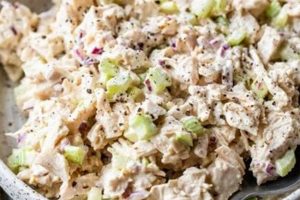
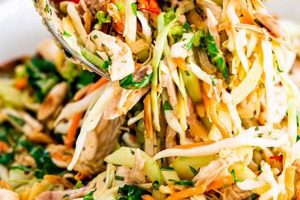
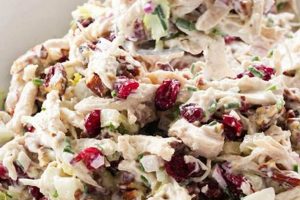
A combination of cooked chicken, potatoes, and other ingredients bound together by a mayonnaise-based dressing typically constitutes this dish. Common additions include celery, onion, hard-boiled eggs, and various seasonings. Variations can range from simple, everyday meals to more elaborate presentations featuring grapes, nuts, or specialized herbs.
This type of salad offers a versatile and nutritious meal option. The protein from chicken, carbohydrates from potatoes, and potential additions of vegetables create a balanced nutritional profile. Its adaptability to diverse flavor profiles through seasonings and add-ins makes it a popular choice for picnics, potlucks, and quick lunches or dinners. Historically, such combinations represent resourceful utilization of readily available ingredients, evolving over time with culinary trends and regional preferences.
This exploration will delve into various aspects of creating these salads, including ingredient selection, preparation techniques, dressing variations, and tips for achieving optimal flavor and texture. Further discussion will address nutritional considerations and offer suggestions for creative adaptations.
Tips for a Superior Chicken and Potato Salad
Achieving a flavorful and well-balanced salad requires attention to several key factors, from ingredient selection to preparation methods.
Tip 1: Utilize high-quality ingredients. Selecting fresh, flavorful chicken and potatoes forms the foundation of a successful salad. Opting for free-range chicken and waxy potatoes, such as Yukon Gold or red potatoes, enhances both taste and texture.
Tip 2: Employ proper cooking techniques. Overcooked chicken can become dry and stringy, while undercooked potatoes offer unpleasant textures. Roasting or grilling chicken infuses deeper flavor compared to boiling. Potatoes should be cooked until tender but not mushy.
Tip 3: Consider the dressing carefully. The dressing binds the salad and significantly influences the overall flavor profile. While mayonnaise-based dressings are traditional, variations incorporating yogurt, sour cream, or vinaigrettes offer lighter alternatives. Freshly prepared dressings generally provide superior flavor compared to pre-made options.
Tip 4: Balance flavors and textures. A harmonious blend of flavors and textures elevates the salad. Incorporating crisp elements like celery or onion adds a refreshing contrast to the softer potatoes and chicken. Balancing savory elements with acidic or sweet components creates a more complex flavor profile.
Tip 5: Season thoughtfully. Seasoning plays a crucial role in enhancing the overall taste. Fresh herbs, such as dill, parsley, or chives, add brightness and complexity. Appropriate use of salt and pepper complements the other ingredients without overpowering them.
Tip 6: Chill adequately before serving. Chilling the salad allows the flavors to meld and enhances the overall experience. Allowing sufficient chilling time, ideally at least an hour, results in a more cohesive and flavorful dish.
Tip 7: Present attractively. Visual appeal contributes to the dining experience. Garnishing with fresh herbs or strategically arranging the salad on a platter enhances its presentation.
Adhering to these tips ensures a flavorful, texturally satisfying, and visually appealing salad. Proper ingredient selection, thoughtful preparation, and attention to detail elevate this classic dish from simple fare to a culinary highlight.
These guidelines provide a solid framework for creating a delightful culinary experience, leading naturally to a deeper exploration of specific recipe variations and adaptations.
1. Ingredient Quality

Ingredient quality significantly impacts the overall success of a potato and chicken salad. Superior ingredients elevate this seemingly simple dish, transforming it from ordinary fare into a culinary delight. Subpar ingredients, conversely, can result in a bland and unappetizing experience. Understanding the nuances of ingredient selection is therefore crucial.
- Chicken Selection
Chicken contributes protein and significantly influences the salad’s flavor and texture. Using freshly roasted or grilled chicken, preferably free-range, yields superior results compared to pre-cooked or processed options. The chosen cooking method also impacts the final result; roasting or grilling imparts deeper flavor than boiling. Selecting appropriate cuts, such as boneless, skinless breasts or thighs, further enhances the salad’s quality.
- Potato Variety
Potatoes provide the foundational carbohydrate element. Waxy potatoes, like Yukon Gold or red potatoes, hold their shape well after cooking and offer a creamy texture, making them ideal for salads. Russet potatoes, while commonly used for mashed potatoes, tend to become crumbly when boiled, potentially resulting in a less desirable texture in a salad.
- Freshness of Produce
Other produce, such as celery, onions, and herbs, contribute flavor, texture, and visual appeal. Using fresh, crisp produce enhances the overall sensory experience. Wilted or bruised produce detracts from both the flavor and presentation. Opting for seasonal ingredients often results in the most vibrant flavors.
- Mayonnaise and Other Condiments
Mayonnaise typically serves as the binding agent and contributes richness and flavor. High-quality mayonnaise, ideally made with fresh ingredients, enhances the salad’s overall taste. Other condiments, such as mustard, vinegar, or spices, play supporting roles in balancing flavors and adding complexity. Using fresh herbs and spices, rather than dried counterparts, often yields brighter, more nuanced flavors.
Careful attention to ingredient quality ensures a flavorful and texturally satisfying salad. The synergy between high-quality chicken, appropriate potato varieties, fresh produce, and superior condiments elevates the dish, demonstrating that even simple recipes benefit significantly from thoughtful ingredient selection. This foundational understanding of ingredient quality paves the way for exploring variations and adaptations that cater to individual preferences and dietary needs.
2. Precise Cooking Methods
Precise cooking methods are essential for achieving optimal texture and flavor in a potato and chicken salad. Improperly cooked ingredients can detract significantly from the final product. Overcooked chicken becomes dry and stringy, while undercooked potatoes present an unpleasant, firm texture. Mastering the cooking process for each component ensures a harmonious blend of flavors and textures, elevating the salad from ordinary to exceptional.
- Chicken Preparation
Chicken can be cooked using various methods, including boiling, poaching, roasting, and grilling. For salad applications, roasting or grilling generally yields superior results, imparting deeper flavor and promoting a desirable texture. Boiling, while efficient, can result in blander chicken. Regardless of the chosen method, ensuring the chicken reaches an internal temperature of 165F (74C) guarantees food safety. Overcooking should be avoided to prevent dryness.
- Potato Cooking Techniques
Potatoes should be cooked until tender but not mushy. Boiling or steaming are common methods. Cubing potatoes before cooking ensures even cooking and facilitates uniform incorporation into the salad. Adding potatoes to already boiling water helps maintain their structure and prevents overcooking. Draining the potatoes immediately after cooking and allowing them to cool prevents excess moisture, which can dilute the dressing.
- Cooling and Chilling
Allowing both the chicken and potatoes to cool completely before combining them with other ingredients and the dressing prevents the dressing from breaking down and becoming watery. Chilling the salad for at least an hour before serving allows the flavors to meld and enhances the overall dining experience.
- Timing Considerations
Proper timing ensures that all components reach their optimal state simultaneously. Coordinating the cooking times for the chicken and potatoes, considering their respective cooking durations, streamlines the overall preparation process. This prevents one component from becoming overcooked while waiting for another to finish.
Precise cooking methods are fundamental to a successful potato and chicken salad. The careful application of these techniques results in a dish where each component contributes its optimal flavor and texture, creating a harmonious and enjoyable culinary experience. Mastery of these techniques allows for greater control over the final product, enabling culinary creativity and customization based on individual preferences.
3. Flavorful Dressing Choices

Flavorful dressing choices are integral to a successful potato and chicken salad recipe, acting as the unifying element that binds the ingredients and significantly influences the overall taste experience. The dressing not only provides moisture and richness but also contributes essential flavor notes that complement and enhance the chicken and potatoes. The interplay between the dressing and other components creates a balanced and harmonious flavor profile. A bland or poorly chosen dressing can result in a lackluster salad, even with high-quality chicken and perfectly cooked potatoes. Conversely, a well-crafted dressing elevates the dish, transforming it into a memorable culinary experience. For instance, a classic mayonnaise-based dressing provides a creamy, tangy backdrop that highlights the savory chicken and subtly sweet potatoes. The addition of Dijon mustard adds a sharp note, while fresh herbs like dill or chives introduce brightness and complexity.
Variations in dressing choices allow for customization based on personal preferences and dietary needs. A lighter vinaigrette, for example, offers a refreshing alternative to a richer mayonnaise-based dressing. Yogurt or sour cream-based dressings provide a tangy twist while reducing overall fat content. Incorporating ingredients like roasted red peppers, pesto, or curry powder introduces unique flavor dimensions, expanding the culinary possibilities. Understanding the impact of different dressing ingredients on the final flavor profile allows for informed choices that cater to specific tastes. The delicate balance of acidity, sweetness, and savory notes within the dressing determines the overall taste experience. For example, a dressing with excessive vinegar can overpower the other flavors, while insufficient seasoning can result in a bland salad.
Mastering the art of dressing selection and preparation is therefore crucial for creating a truly exceptional potato and chicken salad. This involves not only understanding the interplay of different flavors but also considering the texture and consistency of the dressing. A dressing that is too thin may not adequately coat the ingredients, while one that is too thick can become heavy and overwhelming. Successfully balancing these elements ensures a harmonious and satisfying culinary experience, demonstrating that the dressing is not merely a supporting element but rather a critical component that elevates the dish to its full potential.
4. Textural Balance
Textural balance is a critical aspect of a successful potato and chicken salad recipe, contributing significantly to the overall enjoyment of the dish. A harmonious interplay of textures creates a more engaging and satisfying culinary experience. The inherent softness of potatoes and chicken necessitates the incorporation of contrasting textural elements to prevent a monotonous mouthfeel. This balance prevents the salad from feeling overly mushy or dense, adding complexity and interest to each bite. Consider the contrast between creamy potatoes, tender chicken, and crisp celery; the interplay of these textures creates a dynamic and enjoyable sensory experience. Without such textural variation, the salad could become bland and unappealing.
Achieving textural balance requires careful consideration of ingredient selection and preparation methods. The choice of potato variety, for example, plays a crucial role. Waxy potatoes, such as Yukon Gold, offer a firm yet creamy texture that holds its shape well, providing a suitable base for the salad. Conversely, starchy potatoes like Russets tend to break down more easily, potentially leading to a mushy consistency. Similarly, the cooking method for the chicken influences its texture. Overcooked chicken becomes dry and stringy, disrupting the desired textural balance. Incorporating ingredients like chopped nuts, crumbled bacon, or toasted croutons introduces contrasting crunchy elements that further enhance the textural complexity. Even the choice of herbs can contribute to textural variation; the delicate fronds of dill, for instance, offer a subtle textural contrast to the other ingredients.
The practical significance of understanding textural balance extends beyond mere enjoyment. A well-balanced salad is not only more palatable but also more visually appealing. The variety of textures creates visual interest, making the salad more inviting. Furthermore, textural balance can influence perceived satiety. A salad with a variety of textures can feel more substantial and satisfying than one with a uniform texture, potentially contributing to portion control and mindful eating. Mastering textural balance elevates the potato and chicken salad from a simple combination of ingredients to a carefully crafted culinary creation that engages multiple senses, enhancing the overall dining experience. This principle applies broadly to culinary arts, demonstrating the importance of considering texture alongside flavor when creating any dish.
5. Seasoning Expertise

Seasoning expertise plays a crucial role in elevating a potato and chicken salad recipe from simple to exceptional. The careful application of seasonings enhances the inherent flavors of the chicken, potatoes, and other ingredients, creating a balanced and harmonious flavor profile. A nuanced understanding of seasoning principles allows for the creation of a dish that is not merely palatable but truly delightful. This expertise involves not only knowing which seasonings to use but also understanding their interplay and how they impact the overall taste experience.
- Balancing Basic Flavors
The foundation of seasoning expertise lies in balancing the basic tastes: salty, sweet, sour, bitter, and umami. In a potato and chicken salad, salt enhances the savory notes of the chicken, while a touch of sweetness can balance the acidity of the dressing. A hint of bitterness from ingredients like celery or onion adds complexity, while the umami notes of ingredients like Dijon mustard or Worcestershire sauce contribute depth. For example, a pinch of sugar can subtly enhance the sweetness of the potatoes and balance the tanginess of mayonnaise. The interplay of these basic tastes creates a more complex and nuanced flavor profile.
- The Role of Herbs and Spices
Fresh herbs and spices contribute significantly to the overall flavor profile. Dill, parsley, chives, and tarragon are classic choices that add brightness and freshness to the salad. Spices like paprika, cayenne pepper, or curry powder introduce warmth and complexity. The choice of herbs and spices should complement the other ingredients and the chosen dressing. For instance, dill pairs well with a creamy dressing, while chives complement a vinaigrette. Using fresh herbs whenever possible maximizes their flavor impact.
- Layering Flavors Through Technique
Seasoning expertise extends beyond simply adding herbs and spices. Layering flavors through various cooking techniques further enhances the overall taste. Roasting the chicken with herbs and spices before adding it to the salad infuses deeper flavor. Similarly, toasting nuts or seeds before incorporating them adds a nutty complexity. Even the order in which seasonings are added can impact the final flavor profile. Adding salt towards the end of the cooking process, for instance, allows for more precise control over the saltiness of the dish.
- Seasoning Adjustments and Taste Testing
Seasoning is not a one-size-fits-all process. Taste testing and adjusting seasonings throughout the preparation process is crucial. Factors such as the specific ingredients used, personal preferences, and even the ambient temperature can influence the final flavor. A seasoned cook continually tastes and adjusts, adding more salt, acid, or herbs as needed to achieve the desired balance. This iterative process ensures that the final dish is perfectly seasoned to individual preferences.
Seasoning expertise, therefore, is not merely a matter of following a recipe but rather a nuanced understanding of how different flavors interact and how to achieve a harmonious balance. This skill, when applied to a potato and chicken salad recipe, elevates the dish from a simple combination of ingredients to a carefully crafted culinary creation. The thoughtful application of seasonings transforms the salad into a more complex and satisfying experience, demonstrating the power of seasoning expertise in culinary arts.
Frequently Asked Questions
This section addresses common inquiries regarding the preparation and enjoyment of potato and chicken salad.
Question 1: What is the best way to prevent potato salad from becoming watery?
Watery potato salad often results from excess moisture in the potatoes or dressing. Thoroughly draining the cooked potatoes and allowing them to cool completely before combining them with other ingredients minimizes moisture. Using a thicker dressing or adding a small amount of cornstarch can also help absorb excess liquid. Additionally, ensuring the potatoes are not overcooked helps maintain their structure and prevents them from releasing too much water.
Question 2: Can different types of potatoes be used?
While various potato varieties can be used, waxy potatoes like Yukon Gold or red potatoes are generally preferred for potato salad. These varieties hold their shape well after cooking and offer a creamy texture. Russet potatoes, while commonly used for other applications, tend to become crumbly when boiled, potentially leading to a less desirable texture in a salad.
Question 3: How long can potato and chicken salad be stored safely?
Potato and chicken salad should be stored in an airtight container in the refrigerator at or below 40F (4C). It is generally safe to consume for up to three to five days, provided it has been stored properly. However, the quality may deteriorate after the first two days. Discard any salad that shows signs of spoilage, such as an off odor or discoloration.
Question 4: What are some healthy alternatives to traditional mayonnaise-based dressings?
Healthier alternatives to traditional mayonnaise-based dressings include plain Greek yogurt, low-fat sour cream, or a vinaigrette made with olive oil and vinegar. These options offer lower fat and calorie content while still providing flavor and moisture. Experimenting with different herbs, spices, and citrus juices can further enhance the flavor of these lighter dressings.
Question 5: Can this salad be made ahead of time for events like picnics or potlucks?
Potato and chicken salad is well-suited for making ahead of time, making it an ideal choice for picnics or potlucks. Prepare the salad the day before and store it properly in the refrigerator. Transporting the salad in a cooler with ice packs ensures food safety, particularly during warmer weather.
Question 6: How can one adapt the recipe to accommodate dietary restrictions, such as gluten-free or dairy-free diets?
Adapting the recipe for dietary restrictions is relatively straightforward. For gluten-free diets, ensure all ingredients, including seasonings and condiments, are certified gluten-free. For dairy-free diets, substitute the mayonnaise with a dairy-free alternative, such as vegan mayonnaise or a cashew-based cream. Careful ingredient selection ensures that the adapted recipe remains both flavorful and safe for consumption.
Understanding these common questions and their answers allows for greater confidence and success in preparing and enjoying potato and chicken salad. Proper storage, ingredient selection, and awareness of dietary adaptations contribute to a safe and satisfying culinary experience.
This FAQ section provides a foundation for informed decision-making when preparing this versatile dish. The following section will offer a collection of recipe variations to further inspire culinary exploration.
Potato and Chicken Salad Recipe
This exploration has provided a comprehensive overview of creating a successful potato and chicken salad. Key factors highlighted include the importance of ingredient quality, precise cooking methods, flavorful dressing choices, textural balance, and seasoning expertise. Understanding the interplay of these elements allows for the creation of a dish that is not merely a simple combination of ingredients, but a carefully constructed culinary experience. From selecting the appropriate potato variety to mastering the art of seasoning, each step contributes to the overall quality and enjoyment of the final product. The versatility of this dish, adaptable to various tastes and dietary needs, further solidifies its place as a culinary staple.
Culinary traditions, while rooted in historical practices, continuously evolve. The potato and chicken salad, a testament to this evolution, offers a platform for culinary creativity and personal expression. Continued exploration of flavor profiles, ingredient combinations, and presentation styles ensures that this classic dish remains a vibrant and engaging element of culinary heritage, adaptable to the ever-changing landscape of gastronomic trends.