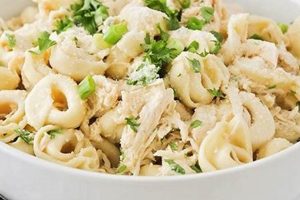
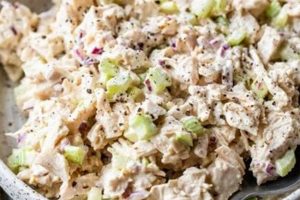
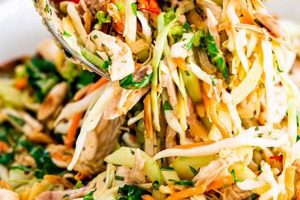
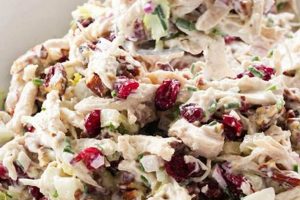
A basic preparation of this dish typically involves cooked, shredded chicken combined with mayonnaise, celery, and onion. Variations can include grapes, apples, nuts, or dried cranberries. Easily customizable, it can be served on bread, crackers, lettuce cups, or as a filling for croissants.
Quick to assemble and requiring readily available ingredients, this type of dish offers a convenient and nutritious meal option. Its adaptability makes it suitable for picnics, potlucks, quick lunches, or light dinners. Historically, chicken salad emerged as a way to utilize leftover cooked chicken, reflecting a resourceful approach to cooking. Its continued popularity speaks to its enduring appeal as a versatile and satisfying dish.
The following sections will delve into specific variations, offering detailed instructions and tips for creating both classic and innovative versions of this culinary staple. Nutritional information and suggested serving accompaniments will also be provided.
Tips for a Simple Chicken Salad
Optimizing a straightforward chicken salad recipe involves attention to detail and ingredient selection. The following tips offer guidance for achieving optimal flavor and texture.
Tip 1: Chicken Selection: Using pre-cooked rotisserie chicken offers convenience. Alternatively, poaching or baking chicken breasts specifically for the salad ensures optimal control over flavor and texture.
Tip 2: Mayonnaise Matters: The quality of mayonnaise significantly impacts the final product. Consider using full-fat mayonnaise for a richer flavor. Greek yogurt can be incorporated to lighten the texture and reduce fat content.
Tip 3: Chop Consistency: Uniformly chopping ingredients ensures even distribution of flavors and a pleasant texture. Dice celery and onions finely to avoid overwhelming the other components.
Tip 4: Seasoning Strategies: Salt and pepper are essential seasonings. Experiment with fresh herbs like dill, parsley, or chives for added depth of flavor. A dash of paprika or curry powder can introduce a subtle complexity.
Tip 5: Chill Factor: Chilling the prepared salad for at least 30 minutes allows the flavors to meld and enhances the overall experience. This step also firms the texture, making it ideal for sandwiches or wraps.
Tip 6: Serving Suggestions: Consider serving the salad on various breads, crackers, or greens. It also pairs well with fruit slices or a side of potato chips.
Tip 7: Storage Solutions: Store leftover chicken salad in an airtight container in the refrigerator for up to three days.
By adhering to these guidelines, one can elevate a basic chicken salad from simple to exceptional. Flavorful ingredients, proper chilling, and attention to texture contribute to a satisfying and enjoyable culinary experience.
The following section will provide a complete recipe incorporating these tips, allowing for practical application and culinary exploration.
1. Cooked Chicken (Shredded)

Cooked, shredded chicken forms the cornerstone of a simple chicken salad recipe. Its preparation and characteristics significantly influence the final dish’s overall quality, texture, and flavor profile. Understanding these aspects is crucial for a successful outcome.
- Cooking Methods
Several methods yield suitable cooked chicken. Rotisserie chicken offers convenience, while poaching or baking boneless, skinless chicken breasts allows for greater control over seasoning and moisture content. Boiling, though less common, can also be employed, but careful attention to cooking time prevents dryness. The chosen cooking method impacts the chicken’s texture and how it absorbs the other salad ingredients’ flavors.
- Shredding Techniques
Shredding the chicken creates the desired texture for the salad. Two forks can effectively shred the meat, achieving a coarser, more rustic texture. Alternatively, a stand mixer fitted with a paddle attachment provides a finer shred, resulting in a smoother consistency. The chosen technique contributes to the salad’s final mouthfeel.
- Flavor Absorption
Cooked chicken readily absorbs flavors from other salad ingredients. This characteristic allows for customization based on personal preferences. Using flavorful cooking liquids or marinades when preparing the chicken can further enhance the overall taste profile of the finished salad.
- Food Safety
Ensuring the chicken is cooked thoroughly to an internal temperature of 165F (74C) is paramount for food safety. Proper handling and storage of cooked chicken are crucial to prevent bacterial growth and maintain quality. Promptly refrigerating any leftover chicken intended for later use in the salad is essential.
The proper preparation and handling of cooked, shredded chicken directly impact the simplicity, flavor, and safety of the final chicken salad. Consideration of these factors contributes to a successful and enjoyable culinary experience.
2. Mayonnaise (quality matters)

Mayonnaise serves as a crucial binding agent and flavor enhancer in a simple chicken salad recipe. Its quality significantly influences the final product’s overall taste, texture, and richness. Careful selection is essential for achieving a desirable outcome.
- Emulsification and Texture
Mayonnaise is an emulsion of oil, egg yolks, and acid (typically vinegar or lemon juice). High-quality mayonnaise contains a higher proportion of oil, resulting in a richer, creamier texture. This contributes to a smoother, more luxurious mouthfeel in the chicken salad. Lower-quality mayonnaises often substitute a portion of the oil with water or other fillers, leading to a thinner consistency that can make the salad watery.
- Flavor Profile
The flavor profile of mayonnaise is influenced by the quality of its ingredients. High-quality mayonnaise utilizes fresh eggs and flavorful oils, resulting in a clean, tangy taste that complements the chicken and other salad components. Lower-quality mayonnaises may incorporate artificial flavors or preservatives that can detract from the overall flavor profile.
- Binding Properties
Mayonnaise acts as the glue that holds the chicken salad together. A high-quality mayonnaise, due to its higher oil content and stable emulsion, binds the ingredients effectively, preventing the salad from becoming dry or crumbly. Lower-quality mayonnaises may have weaker binding properties, leading to a salad that falls apart easily.
- Overall Impact on Simplicity
While a simple chicken salad recipe prioritizes ease of preparation, opting for high-quality mayonnaise requires minimal extra effort and significantly elevates the final product. The enhanced flavor and texture achieved by using a superior mayonnaise outweigh any marginal increase in cost or preparation time. This contributes directly to a more satisfying and enjoyable culinary experience without compromising the recipe’s simplicity.
The quality of mayonnaise directly impacts the success of a simple chicken salad. A superior mayonnaise contributes to a richer, more flavorful, and texturally satisfying dish. This seemingly small detail elevates the entire experience, proving that simplicity does not necessitate sacrificing quality.
3. Celery (finely diced)
Celery, when finely diced, contributes a crucial textural and flavor dimension to a simple chicken salad recipe. Its characteristic crispness and subtle, vegetal notes complement the richness of the mayonnaise and chicken, creating a balanced and refreshing culinary experience. Understanding celery’s role and proper preparation enhances the overall quality of the final dish.
- Texture and Mouthfeel
Finely diced celery provides a pleasant, subtle crunch that contrasts with the softer textures of the chicken and mayonnaise. This textural contrast prevents the salad from becoming monotonous and adds to the overall enjoyment. Larger celery pieces can disrupt the salad’s consistency and create an uneven mouthfeel, highlighting the importance of proper dicing.
- Flavor Enhancement
Celery’s mild, slightly bitter flavor balances the richness of the mayonnaise and the savory notes of the chicken. This subtle vegetal flavor adds depth and complexity to the overall flavor profile, preventing the salad from tasting overly heavy or rich. Overpowering the celery flavor with other strong ingredients can diminish this balancing effect, emphasizing the importance of measured inclusion.
- Visual Appeal
Finely diced celery adds visual interest to the chicken salad. Its bright green color creates a subtle contrast against the lighter tones of the chicken and mayonnaise, making the salad more visually appealing. Uniform dicing ensures even distribution of the celery throughout the salad, enhancing its aesthetic presentation.
- Preparation and Incorporation
The simplicity of a chicken salad recipe is maintained by the ease with which celery can be prepared and incorporated. Washing, trimming, and finely dicing the celery requires minimal effort. Even distribution of the diced celery throughout the salad ensures consistent flavor and texture in each bite.
The inclusion of finely diced celery elevates a simple chicken salad from basic to nuanced. The interplay of texture, flavor, and visual appeal demonstrates the significant contribution of this seemingly simple ingredient. Proper preparation and mindful incorporation maximize celery’s benefits, enhancing the overall culinary experience.
4. Onion (finely diced)
Finely diced onion plays a pivotal role in a simple chicken salad recipe, contributing a nuanced layer of flavor and texture that elevates the dish beyond its basic components. Its sharp, pungent notes balance the richness of the mayonnaise and the savory character of the chicken, creating a more complex and satisfying culinary experience. Understanding the onion’s contribution and proper preparation enhances the overall quality and enjoyment of the salad.
- Flavor Complexity
The sharp, pungent flavor of onion, when finely diced and incorporated into the salad, provides a counterpoint to the richness of the mayonnaise and the savory notes of the chicken. This complexity prevents the salad from tasting bland or one-dimensional. Different onion varieties, such as red onion or sweet onion, can offer subtly different flavor profiles, allowing for customization based on preference.
- Texture Enhancement
Finely diced onion contributes a subtle textural element to the chicken salad. While not as pronounced as the crunch of celery, the small pieces of onion provide a slight sharpness that contrasts with the smoother textures of the chicken and mayonnaise. Larger pieces can overpower the salad, highlighting the importance of fine dicing for even distribution and a balanced mouthfeel.
- Balancing Act
The onion’s pungent flavor balances the richness of the mayonnaise, preventing the salad from becoming overly heavy or cloying. This balancing act is crucial in a simple recipe where a few key ingredients must complement each other harmoniously. The quantity of onion used can be adjusted to achieve the desired level of pungency, catering to individual preferences.
- Aromatic Contribution
Even when finely diced, onion contributes an aromatic dimension to the chicken salad. Its characteristic aroma enhances the overall sensory experience, stimulating the appetite and adding to the enjoyment of the dish. This aromatic contribution underscores the importance of fresh, high-quality onions for optimal flavor and aroma.
The inclusion of finely diced onion in a simple chicken salad recipe demonstrates that complexity can be achieved through careful selection and preparation of even basic ingredients. The onion’s contributions to flavor, texture, and aroma elevate the dish, transforming it from simple to sophisticated without sacrificing ease of preparation.
5. Seasoning (salt and pepper)
Seasoning, even in its simplest form with salt and pepper, plays a critical role in a basic chicken salad recipe. It elevates the dish beyond the inherent flavors of its individual components, creating a cohesive and balanced flavor profile. Careful consideration of seasoning elevates the final product from palatable to exceptional.
- Salt’s Impact on Flavor Enhancement
Salt amplifies the existing flavors of the chicken, celery, and onion, creating a more pronounced and enjoyable taste experience. It draws out the natural sweetness of the chicken and balances any bitterness from the celery or onion. Insufficient salting results in a bland salad, while excessive salting can overpower the other flavors. Proper salting enhances the overall impact of each ingredient, creating a synergistic flavor profile.
- Pepper’s Role in Adding Depth and Complexity
Pepper introduces a subtle layer of complexity to the chicken salad, providing a gentle warmth and a subtle bite. Freshly ground black pepper offers a more robust flavor than pre-ground pepper. White pepper provides a similar heat level but lacks the visible black specks. The choice between black and white pepper depends on aesthetic preference and desired intensity.
- Balancing Act: The Interplay Between Salt and Pepper
The interplay between salt and pepper is crucial for achieving a balanced flavor profile. Salt enhances the savory notes, while pepper adds depth and complexity. The ratio of salt to pepper can be adjusted based on personal preference, but a balanced approach typically yields the most satisfying results.
- Timing of Seasoning for Optimal Flavor Development
Seasoning the chicken salad after all ingredients are combined ensures even distribution of flavor. Tasting and adjusting seasoning throughout the preparation process allows for precise control over the final flavor profile. Adding salt too early can draw out moisture from the ingredients, affecting the salad’s texture.
The seemingly simple act of seasoning with salt and pepper significantly impacts the final quality of a chicken salad. Understanding the nuances of each seasoning’s contribution and their interaction allows for precise control over the flavor profile, transforming a basic recipe into a culinary delight. This attention to detail elevates the entire experience, demonstrating that simplicity and sophistication are not mutually exclusive.
6. Bread/crackers (for serving)

The choice of bread or crackers significantly influences the overall experience of a simple chicken salad. Serving vessels provide not only a convenient method of consumption but also contribute textural and flavor elements that complement or contrast with the salad itself. This seemingly simple decision can elevate a basic chicken salad from a casual meal to a more considered culinary experience.
Various bread types offer distinct textural and flavor profiles. A crusty baguette provides a robust counterpoint to the creamy salad, while a soft croissant offers a delicate, buttery contrast. Whole-wheat bread adds a nutty nuance, while sourdough introduces a tangy complexity. Crackers, with their diverse shapes, textures, and flavors, provide another dimension. Water crackers offer a neutral base that allows the chicken salad’s flavors to shine, while seeded crackers add a textural and flavorful complexity. The selection should consider the specific ingredients within the chicken salad to create a harmonious pairing. For example, a chicken salad with grapes and walnuts might pair well with a multigrain cracker, while a classic chicken salad might be best served on a simple white bread.
The practical significance of this understanding lies in the ability to tailor the serving vessel to individual preferences and the specific characteristics of the chicken salad. Choosing complementary breads or crackers enhances the overall dining experience. Careful consideration of these factors transforms a simple chicken salad from a basic meal into a more thoughtful and enjoyable culinary creation. The appropriate serving vessel can elevate the presentation and overall perception of the dish, contributing to a more satisfying sensory experience.
7. Optional additions (grapes, nuts)

While a simple chicken salad thrives on its core ingredients, optional additions such as grapes and nuts introduce complexity and textural variation, elevating the dish from basic to nuanced. These additions, though not essential, offer opportunities for customization and enhanced sensory experiences.
- Textural Contrast
Grapes, with their smooth, juicy texture, provide a counterpoint to the creaminess of the mayonnaise and the shredded chicken. Nuts, whether chopped or whole, introduce a satisfying crunch. These contrasting textures create a more dynamic and engaging mouthfeel, preventing the salad from becoming monotonous.
- Flavor Dimensions
The sweetness of grapes complements the savory notes of the chicken and the tanginess of the mayonnaise. Nuts, depending on the variety, contribute earthy, buttery, or slightly bitter flavors, adding depth and complexity to the overall flavor profile. The interplay of these flavors creates a more balanced and nuanced taste experience.
- Nutritional Value
Grapes and nuts offer nutritional benefits, adding vitamins, minerals, and healthy fats to the chicken salad. Grapes contribute antioxidants and potassium, while nuts provide protein, fiber, and essential fatty acids. These additions enhance the nutritional density of the dish, making it a more wholesome meal option.
- Visual Appeal
The vibrant colors of grapes, whether green, red, or a combination, add visual interest to the chicken salad. The varied shapes and colors of nuts, from the pale ivory of almonds to the rich browns of walnuts, further enhance the aesthetic presentation. These visual elements make the salad more appealing and appetizing.
The judicious inclusion of optional additions like grapes and nuts demonstrates that simplicity in a chicken salad recipe does not preclude complexity in flavor and texture. These additions enhance the sensory experience, nutritional value, and visual appeal, transforming a basic dish into a more refined and satisfying culinary creation. The adaptability of the simple chicken salad allows for personalized variations, catering to individual preferences and dietary needs.
Frequently Asked Questions
This section addresses common inquiries regarding the preparation and enjoyment of simple chicken salad.
Question 1: What type of chicken is best suited for simple chicken salad?
While rotisserie chicken offers convenience, poached or baked chicken breasts provide greater control over flavor and moisture content. Canned chicken, though less common, can be used in a pinch.
Question 2: Can mayonnaise be substituted with a healthier alternative?
Greek yogurt can replace a portion of the mayonnaise, reducing fat content while maintaining a creamy texture. Avocado can also be used for a richer, healthier alternative.
Question 3: How finely should the vegetables be chopped?
Finely dicing vegetables ensures even distribution of flavor and a pleasant texture. Larger pieces can overpower the salad or create an uneven mouthfeel.
Question 4: How long can chicken salad be stored in the refrigerator?
Properly stored in an airtight container, chicken salad can be refrigerated for up to three days. Ensure the salad is thoroughly chilled before consumption.
Question 5: Can simple chicken salad be frozen?
Freezing is not recommended, as it can negatively impact the texture and consistency of the mayonnaise, resulting in a watery salad upon thawing.
Question 6: How can one prevent the salad from becoming too watery?
Using high-quality mayonnaise, ensuring the chicken is not overcooked, and properly draining any canned or pre-cooked chicken helps prevent excess moisture. Adding a small amount of finely chopped celery or onion can absorb excess liquid.
Understanding these frequently asked questions empowers individuals to create and enjoy simple chicken salad with confidence, ensuring a successful and satisfying culinary outcome.
The next section will offer a selection of recipe variations to inspire culinary creativity.
Simple Chicken Salad Recipe
Exploration of the simple chicken salad recipe reveals that achieving culinary excellence, even in simplicity, requires attention to detail. Careful selection of ingredients, from the chicken and mayonnaise to the optional additions of grapes and nuts, significantly impacts the final product. Proper preparation techniques, such as fine dicing of vegetables and appropriate seasoning, further enhance flavor and texture. The choice of serving vessel, whether bread or crackers, contributes another dimension to the overall dining experience. Understanding these elements allows for informed choices that elevate this seemingly basic dish.
The enduring appeal of the simple chicken salad recipe lies in its adaptability and potential for personalized variations. While adhering to fundamental principles ensures a successful outcome, culinary creativity allows for exploration and customization based on individual preferences. This versatility ensures the simple chicken salad remains a timeless and satisfying culinary staple, adaptable to diverse tastes and occasions. Continued experimentation with flavors and textures promises further evolution and enjoyment of this classic dish.