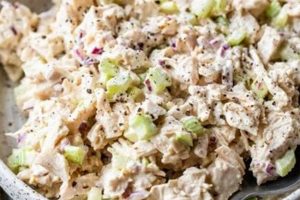
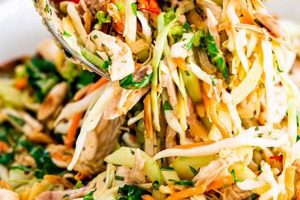
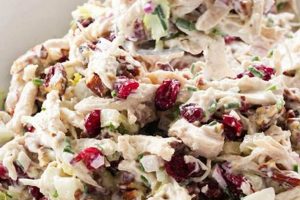
A combination of cooked chicken, mayonnaise, and dried cranberries creates a flavorful and textured salad. Often, celery, onion, and seasonings like salt, pepper, and perhaps a touch of Dijon mustard are included. Variations can incorporate grapes, nuts, apples, or curry powder for unique flavor profiles. This dish is commonly served cold as a sandwich filling, on crackers, lettuce cups, or as part of a larger meal.
This particular salad offers a balance of sweet and savory flavors. The cranberries provide a burst of sweetness and chewiness that complements the savory chicken and creamy mayonnaise. It’s a versatile dish suitable for picnics, potlucks, quick lunches, or light dinners. Its adaptability makes it a popular choice for both casual and slightly more formal occasions. The relative ease of preparation further contributes to its widespread appeal.
The following sections will explore specific ingredient choices, step-by-step preparation instructions, nutritional information, serving suggestions, and variations on this classic combination.
Tips for Chicken Salad with Dried Cranberries
Optimizing ingredient selection and preparation techniques enhances the overall quality and flavor profile of chicken salad with dried cranberries. Attention to detail ensures a satisfying culinary experience.
Tip 1: Chicken Selection: Utilizing pre-cooked rotisserie chicken offers convenience. Alternatively, poaching or roasting chicken breasts specifically for the salad allows for greater control over seasoning and texture. Dark meat can be incorporated for a richer flavor.
Tip 2: Cranberry Preparation: Rehydrating dried cranberries by soaking them briefly in warm water or juice (orange or apple) plumps them and enhances their sweetness.
Tip 3: Mayonnaise Choice: High-quality mayonnaise contributes significantly to the overall flavor. Consider using mayonnaise made with olive oil or avocado oil for a healthier profile.
Tip 4: Enhancing Flavor Complexity: Incorporating finely diced celery and red onion adds textural and flavor complexity. Experimenting with different herbs and spices, such as fresh dill, tarragon, or a pinch of curry powder, can elevate the flavor profile.
Tip 5: Balancing Sweetness and Acidity: A touch of lemon juice or apple cider vinegar can balance the sweetness of the cranberries and brighten the overall flavor.
Tip 6: Texture Considerations: Toasting nuts before adding them to the salad provides a satisfying crunch. Consider the size of cranberry pieces; larger pieces provide more texture, while smaller pieces blend more seamlessly.
Tip 7: Chilling and Serving: Chilling the salad for at least 30 minutes allows the flavors to meld. Serve the salad on a bed of lettuce, in a sandwich, or with crackers.
By following these tips, one can achieve a chicken salad with dried cranberries that is both flavorful and texturally appealing. Careful consideration of ingredients and preparation techniques elevates the dish from simple to exceptional.
The following section concludes with a summary of key takeaways and encourages further exploration of variations and serving suggestions.
1. Ingredients

Ingredient selection significantly impacts the final flavor profile and overall quality of chicken salad with dried cranberries. Careful consideration of each component ensures a balanced and satisfying culinary outcome.
- Chicken:
The primary protein source provides the base flavor. Cooked chicken breast offers a lean and neutral canvas, allowing other ingredients to shine. Rotisserie chicken offers convenience, while freshly poached or roasted chicken allows for greater control over seasoning. Dark meat, such as chicken thighs, can be incorporated for a richer flavor.
- Dried Cranberries:
These contribute sweetness, tartness, and a chewy texture. The quality and moisture content of the cranberries influence the final product. Rehydrating dried cranberries before incorporating them can enhance their plumpness and flavor.
- Mayonnaise:
This emulsified sauce binds the ingredients and adds creaminess. The type of mayonnaise used impacts the overall richness and flavor. Options include traditional mayonnaise, light mayonnaise, or those made with different oils like olive oil or avocado oil. The amount used influences the salad’s consistency.
- Aromatics and Seasonings:
These elements provide depth and complexity. Common additions include diced celery and red onion for texture and flavor. Fresh herbs like dill or parsley, and spices like black pepper or curry powder, further enhance the flavor profile. A touch of acidity from lemon juice or apple cider vinegar balances sweetness.
The interplay of these core ingredients defines the character of the chicken salad. Harmonizing flavors and textures through thoughtful ingredient selection elevates the dish from simple to exceptional.
2. Preparation
Proper preparation techniques are essential for achieving optimal texture, flavor, and overall quality in chicken salad with dried cranberries. Methodical execution of each step ensures a cohesive and enjoyable final product.
- Ingredient Preprocessing:
This stage involves preparing individual ingredients before combining them. Chicken should be cooked thoroughly and then cooled completely before shredding or dicing. Dried cranberries can be rehydrated in warm water or juice to plump them and enhance their sweetness. Celery and onions should be finely diced for uniform texture and flavor distribution. Nuts can be toasted to enhance their crunch.
- Combining Ingredients:
Once individual components are prepared, they must be combined in the correct order and manner. Mayonnaise should be added gradually to the chicken mixture to achieve the desired consistency. Overmixing can result in a mushy texture, while undermixing can lead to uneven flavor distribution. Gentle folding ensures that ingredients are incorporated thoroughly without compromising texture.
- Chilling and Resting:
After combining ingredients, the salad benefits from a period of chilling. Chilling allows the flavors to meld and the salad to firm up, improving its overall texture and taste. A minimum of 30 minutes is recommended, but longer chilling times can further enhance flavor development.
- Final Adjustments:
Before serving, the salad may require final adjustments. Additional seasoning, a touch of acid (lemon juice or vinegar), or fresh herbs can be added to fine-tune the flavor profile. The consistency can also be adjusted with a small amount of mayonnaise or plain yogurt if needed.
Precise execution of these preparatory steps ensures that the final chicken salad exhibits a balanced flavor profile, pleasing texture, and overall appeal. Attention to detail in each stage contributes significantly to the success of the dish.
3. Flavor Balance

Flavor balance is paramount in a successful chicken salad with dried cranberries. The interplay of sweet, savory, tangy, and creamy elements creates a harmonious and enjoyable culinary experience. Understanding these flavor components and their interactions is crucial for crafting a well-balanced salad.
- Sweetness from Dried Cranberries:
Dried cranberries provide the dominant sweetness in the salad. The intensity of their sweetness can vary based on the specific cranberries used. Balancing this sweetness with other flavor components prevents the salad from becoming cloying. The natural sugars in cranberries contribute to this sweetness, offering a distinct fruity note.
- Savory Notes from the Chicken:
The chicken provides the foundational savory element. The cooking method and any added seasonings influence the chicken’s flavor contribution. Rotisserie chicken imparts a subtly smoky flavor, while poached chicken offers a cleaner taste. Seasoning the chicken with herbs and spices enhances its savory profile and complements the other ingredients.
- Tanginess and Acidity:
Acidity plays a crucial role in balancing the sweetness and richness of the salad. Lemon juice, apple cider vinegar, or even a touch of Dijon mustard provide the necessary tartness. This acidity brightens the overall flavor profile, preventing the salad from becoming overly heavy or sweet. The right balance of acid enhances the other flavors.
- Creaminess from Mayonnaise:
Mayonnaise contributes the creamy element, binding the ingredients and adding richness. The type of mayonnaise used influences the overall flavor. Full-fat mayonnaise provides a classic richness, while lighter versions offer a less intense creaminess. The amount of mayonnaise used affects the final texture and can impact the balance of flavors.
The careful interplay of these flavor components defines the overall character of the chicken salad. Achieving a harmonious balance between sweetness, savoriness, tanginess, and creaminess results in a complex and satisfying dish. Overemphasis on any single element can detract from the overall enjoyment.
4. Texture
Textural complexity contributes significantly to the overall enjoyment of chicken salad with dried cranberries. A balance of textures creates a more engaging and satisfying sensory experience. Understanding the various textural elements and how they interact is crucial for crafting a well-balanced and appealing salad.
- Chicken Texture:
The texture of the chicken establishes a foundational element. Shredded chicken provides a finer, more delicate texture, while diced chicken offers a more substantial, chewier presence. The choice between these options influences the overall mouthfeel and can be adjusted based on personal preference.
- Cranberry Texture:
Dried cranberries contribute a chewy texture that contrasts with the softer elements of the salad. The size of the cranberry pieces also affects the textural experience. Larger pieces offer a more pronounced chew, while smaller pieces integrate more seamlessly with the other ingredients.
- Added Crunch:
Incorporating crunchy elements adds another dimension to the salad’s texture. Common choices include chopped celery, toasted nuts (such as walnuts, pecans, or almonds), or water chestnuts. These elements provide a satisfying contrast to the softer textures of the chicken and mayonnaise.
- Mayonnaise Influence:
Mayonnaise contributes to the overall creaminess and cohesiveness of the salad. The amount of mayonnaise used influences the final texture. Too much mayonnaise can result in a salad that is overly smooth and lacks textural variation. Too little mayonnaise can lead to a dry and crumbly salad.
The interplay of these textural components creates a dynamic and enjoyable eating experience. A well-executed chicken salad with dried cranberries balances the smooth, creamy elements with the chewiness of the cranberries and the potential crunch of added ingredients. Careful consideration of these textural nuances elevates the dish beyond a simple combination of ingredients to a more sophisticated and satisfying culinary creation.
5. Serving
Serving chicken salad with dried cranberries effectively elevates the dish beyond its individual components. Presentation and accompanying elements contribute significantly to the overall dining experience. Thoughtful consideration of serving options enhances both visual appeal and complements the salad’s flavor profile.
- Bread and Sandwiches:
Serving the salad on bread transforms it into a classic sandwich. Various bread types, including croissants, whole wheat, sourdough, and rye, offer different textural and flavor dimensions. The bread’s neutrality allows the salad’s flavors to take center stage. Adding lettuce, tomato, or other sandwich accoutrements provides additional layers of flavor and texture. Sandwiches offer a convenient and portable meal option.
- Crackers and Wraps:
Crackers or wraps provide a lighter alternative to bread. The crispness of crackers contrasts with the creamy salad, offering a textural counterpoint. Wraps, whether made from tortillas, lavash, or lettuce leaves, provide a more substantial base and can be customized with additional fillings. These options cater to different dietary preferences and offer versatility in presentation.
- Salads and Bowls:
Incorporating the chicken salad into a larger salad creates a more substantial and nutritious meal. A bed of mixed greens, topped with the chicken salad, provides a refreshing and balanced option. Adding other vegetables, fruits, or nuts further enhances the nutritional value and flavor complexity. This serving style highlights the salad’s versatility and adaptability.
- Presentation and Garnishes:
Visual presentation enhances the dining experience. Serving the salad in attractive bowls or on platters adds an element of elegance. Garnishing with fresh herbs (such as parsley, dill, or chives), a sprinkle of paprika, or a few whole cranberries elevates the dish’s visual appeal. Attention to detail in presentation demonstrates care and enhances overall enjoyment.
The chosen serving method significantly impacts the overall perception and enjoyment of chicken salad with dried cranberries. Selecting a method that complements the salad’s flavor profile and caters to the specific occasion enhances the dining experience. From simple sandwiches to elegant presentations, thoughtful serving elevates this versatile dish.
Frequently Asked Questions
This section addresses common inquiries regarding chicken salad prepared with dried cranberries, offering concise and informative responses.
Question 1: How long can chicken salad with dried cranberries be stored?
Properly stored in an airtight container in the refrigerator, this salad typically remains safe to consume for up to three to five days. Beyond this timeframe, quality and safety may be compromised.
Question 2: Can frozen chicken be used in this recipe?
While frozen chicken can be used, thawing it thoroughly and ensuring it is cooked to a safe internal temperature is crucial. Freshly cooked or rotisserie chicken generally yields superior texture and flavor.
Question 3: What can be substituted for mayonnaise?
Plain Greek yogurt or avocado can be substituted for mayonnaise, offering a lighter and potentially healthier alternative. These substitutions will alter the flavor and texture of the final product.
Question 4: How can the sweetness of the salad be adjusted?
The sweetness can be reduced by using fewer dried cranberries or by incorporating a tangy element like lemon juice or apple cider vinegar. Conversely, adding a touch of honey or maple syrup can enhance sweetness.
Question 5: Can this salad be frozen?
Freezing is not generally recommended, as it can negatively impact the texture of the mayonnaise and other ingredients, resulting in a less desirable consistency upon thawing.
Question 6: What are some alternative ingredients that complement dried cranberries in chicken salad?
Ingredients such as pecans, walnuts, apples, grapes, celery, red onion, and various fresh herbs (dill, tarragon, chives) pair well with dried cranberries, offering diverse flavor and texture combinations.
Addressing these frequently asked questions provides a comprehensive understanding of key aspects related to preparing and enjoying chicken salad with dried cranberries. This knowledge equips individuals to confidently create and serve this versatile dish.
The following section offers concluding remarks and summarizes the essential information presented throughout this exploration of chicken salad with dried cranberries.
Conclusion
Exploration of chicken salad incorporating dried cranberries reveals a dish offering nuanced flavor profiles and adaptable preparation methods. Key elements include the balance between the sweetness of cranberries and savory chicken, enhanced by the creamy texture of mayonnaise. Careful ingredient selection, precise preparation techniques, and attention to textural details contribute significantly to the final product’s quality. Serving options range from simple to elegant, further demonstrating the dish’s versatility.
Chicken salad with dried cranberries represents a culinary intersection of convenience, flavor, and adaptability. Its continued popularity underscores the enduring appeal of classic combinations reimagined through thoughtful preparation and presentation. Further culinary exploration promises ongoing discovery within this seemingly simple yet remarkably versatile dish.