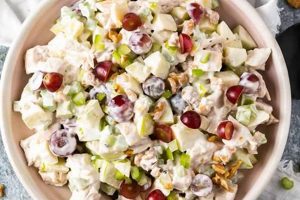
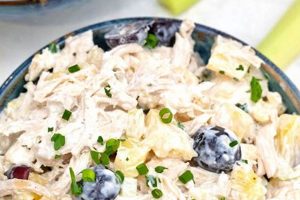
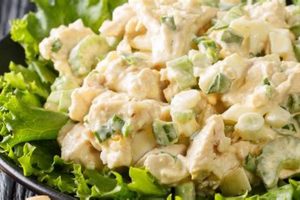
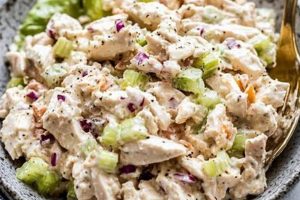
Dishes featuring mixtures of cooked chicken, mayonnaise, and various seasonings encompass a broad culinary category. These combinations can range from simple blends of chicken, mayonnaise, and celery to more complex incorporations of fruits, nuts, herbs, and spices. Examples include classic versions with grapes and walnuts, or those with a Southwestern flair using cilantro, lime, and jalapenos.
Such dishes offer versatility, serving as a quick lunch, a light dinner, or a component in sandwiches, wraps, or salads. Their adaptability to diverse flavor profiles makes them a popular choice for picnics, potlucks, and everyday meals. Historically, chicken salad gained prominence as refrigeration became more commonplace, allowing for safe storage and consumption of mayonnaise-based dishes. This accessibility contributed to its widespread adoption as a staple in many cuisines.
This exploration will delve into the nuances of creating these flavorful combinations, covering variations in ingredients, preparation techniques, and presentation suggestions. From classic renditions to innovative interpretations, the following sections will provide a comprehensive guide to crafting delicious and satisfying chicken-based salads.
Tips for Crafting Exceptional Chicken Salads
Achieving optimal flavor and texture in chicken salad involves careful consideration of ingredients and techniques. The following tips provide guidance for elevating these dishes from simple to extraordinary.
Tip 1: Chicken Selection and Preparation: Opt for high-quality chicken, either roasted, poached, or grilled. Avoid pre-cooked or processed chicken for best results. Ensure the chicken is cooled completely before combining with other ingredients to prevent mayonnaise from separating.
Tip 2: Mayonnaise Matters: Utilize good quality mayonnaise as the foundation. Experiment with different types, such as olive oil-based or avocado oil mayonnaise, for flavor variations. Greek yogurt can also be incorporated for a lighter, tangier twist.
Tip 3: Balancing Flavors: Achieve a harmonious blend of flavors by incorporating acidic elements like lemon juice or vinegar. These brighten the overall taste and complement the richness of the mayonnaise.
Tip 4: Textural Variety: Introduce textural contrast through additions like chopped celery, grapes, walnuts, or apples. Consider toasting nuts for enhanced flavor and crunch.
Tip 5: Seasoning Strategically: Seasoning plays a crucial role. Freshly ground black pepper, salt, and herbs like dill, tarragon, or chives can significantly enhance the overall profile. Experiment with spices like paprika or curry powder for unique flavor dimensions.
Tip 6: Chilling for Optimal Flavor: Allow the mixture to chill for at least 30 minutes before serving. This allows the flavors to meld and the salad to develop a more cohesive texture.
Tip 7: Creative Serving Suggestions: Beyond traditional bread, explore serving options like croissants, lettuce wraps, or atop a bed of greens. Consider incorporating the salad into stuffed tomatoes or avocados for an elegant presentation.
By employing these tips, one can consistently produce chicken salads that are both flavorful and satisfying. Attention to detail, from ingredient selection to presentation, elevates this versatile dish to a culinary centerpiece.
These insights provide a solid foundation for creating exceptional chicken salads. The following section will offer a collection of curated recipes showcasing these principles in practice.
1. High-quality Chicken

The foundation of any exceptional chicken salad lies in the quality of its primary ingredient: the chicken itself. Utilizing high-quality chicken significantly impacts the overall flavor, texture, and enjoyment of the final dish. This section explores the multifaceted aspects of chicken selection and preparation, crucial for crafting truly savory salads.
- Freshness and Sourcing:
Chicken that is fresh, ideally sourced from reputable butchers or markets known for quality, yields superior results. Freshly butchered chicken possesses a more vibrant flavor and tender texture compared to pre-packaged or processed alternatives. This translates to a more flavorful and enjoyable salad experience. Sourcing considerations might include locally raised poultry or those raised with specific feeding practices.
- Cooking Methods:
The method employed for cooking the chicken significantly influences its flavor and texture profile within the salad. Roasting enhances the chicken’s natural flavors, creating a depth that complements the other ingredients. Poaching results in a moist, tender texture ideal for salads. Grilling imparts a smoky char that adds another layer of complexity. The choice depends on the desired flavor profile of the final dish.
- Bone-in vs. Boneless:
While boneless, skinless chicken breasts offer convenience, opting for bone-in, skin-on chicken during cooking can impart additional flavor and moisture. The bones and skin release flavor compounds during the cooking process, enriching the chicken’s overall taste. The meat also retains more moisture. Once cooked, the meat is easily removed from the bones and skin for use in the salad.
- Proper Handling and Storage:
Proper handling and storage are crucial for maintaining the chicken’s quality. Refrigerating the cooked chicken promptly and ensuring it is cooled completely before incorporating it into the salad prevents bacterial growth and helps the mayonnaise bind effectively, preventing a watery consistency. Attention to food safety protocols ensures a safe and enjoyable culinary experience.
By prioritizing high-quality chicken through careful selection, appropriate cooking methods, and proper handling, one elevates the overall culinary experience of a chicken salad. The nuances of flavor and texture derived from superior chicken contribute significantly to the dish’s savory appeal, transforming it from a simple meal to a delightful culinary creation.
2. Flavorful Mayonnaise Base

Mayonnaise serves as the unifying element in chicken salad, binding ingredients and contributing significantly to the overall flavor profile. The quality and flavor of the mayonnaise base directly impact the final dish’s savory appeal. Exploring the nuances of mayonnaise selection and enhancement is essential for crafting exceptional chicken salads.
- Mayonnaise Types and Quality:
Different mayonnaise varieties offer distinct flavor profiles. Standard mayonnaise provides a creamy, tangy base, while olive oil-based mayonnaise lends a richer, more nuanced flavor. Avocado oil mayonnaise offers a lighter, subtly flavored option. Selecting high-quality mayonnaise, preferably made with real ingredients, significantly elevates the overall taste compared to lower-quality alternatives.
- Flavor Enhancements:
Enhancing the mayonnaise base with additional ingredients expands the flavor dimensions of the chicken salad. Incorporating Dijon mustard adds a sharp, tangy kick, while a touch of honey introduces subtle sweetness. Freshly squeezed lemon or lime juice brightens the flavor, balancing the richness of the mayonnaise. Experimenting with different flavor combinations allows for customized flavor profiles.
- Texture and Consistency:
The texture and consistency of the mayonnaise base influence the final salad’s mouthfeel. A thicker mayonnaise creates a creamier, more substantial salad, while a thinner consistency results in a lighter, more delicate texture. Adjusting the amount of mayonnaise or incorporating additional ingredients like Greek yogurt can modify the final texture to achieve the desired consistency.
- Balancing Flavors:
Achieving a harmonious flavor balance within the mayonnaise base is crucial. Balancing the richness of the mayonnaise with acidic elements prevents the salad from becoming overly heavy or cloying. The interplay of creamy, tangy, and savory notes creates a complex and satisfying flavor profile. Careful consideration of flavor pairings ensures a well-balanced final product.
The mayonnaise base acts as more than just a binding agent; it serves as the flavor foundation of the chicken salad. Selecting the right mayonnaise and enhancing its flavor profile with complementary ingredients transforms the dish from a simple mixture into a complex and satisfying culinary creation. A thoughtfully crafted mayonnaise base significantly contributes to the savory appeal of any chicken salad.
3. Balancing Acidity

Acidity plays a crucial role in savory chicken salad recipes, providing a necessary counterpoint to the richness of mayonnaise and other ingredients. This balance prevents the salad from tasting overly heavy or bland, enhancing the overall flavor profile. The incorporation of acidic elements brightens the palate, creating a more complex and satisfying culinary experience. Without sufficient acidity, the flavors can become muted and the texture may feel overly creamy. This balance is essential for achieving a truly savory and well-rounded flavor profile.
The most common method for introducing acidity is through the use of lemon juice or vinegar. Lemon juice offers a bright, citrusy note that complements the chicken and other ingredients. Vinegar, depending on the type, can provide a sharper, more tangy flavor. Apple cider vinegar offers a milder acidity with a subtle sweetness, while white wine vinegar delivers a crisper, cleaner acidity. The choice depends on the desired flavor profile and the other ingredients in the salad. For example, a chicken salad with grapes and walnuts might benefit from the brightness of lemon juice, while a salad with bolder flavors, such as Dijon mustard or herbs, might pair well with the sharper notes of white wine vinegar. Other acidic ingredients, such as chopped pickles or capers, can also contribute to the overall balance.
Understanding the importance of balancing acidity allows for greater control over the final flavor profile of a chicken salad. It empowers culinary exploration and customization, enabling the creation of unique and well-balanced flavor combinations. The interplay of acidity with the other ingredients is a defining characteristic of a truly exceptional chicken salad. By carefully considering the level and type of acidity, one can elevate a simple chicken salad to a complex and satisfying culinary creation. This careful attention to detail is what separates a mediocre chicken salad from a truly memorable one.
4. Textural Complexity

Textural complexity contributes significantly to the enjoyment of savory chicken salad recipes. A harmonious blend of textures elevates the sensory experience, transforming a simple mixture into a more engaging and satisfying dish. The interplay of contrasting textures creates a dynamic mouthfeel that enhances the overall appeal. Without textural variation, chicken salad can become monotonous and lack the depth that elevates it from basic to exceptional.
Several ingredients introduce textural contrast. Crunchy elements, such as chopped celery, diced apples, or toasted nuts, provide a satisfying counterpoint to the creamy mayonnaise base and tender chicken. The addition of grapes introduces a burst of juicy sweetness, while dried cranberries offer a chewy texture. Toasted nuts, like pecans or walnuts, not only contribute crunch but also enhance the savory notes of the salad. Consider the interplay of creamy avocado, crisp water chestnuts, and the subtle crunch of toasted sesame seeds in an Asian-inspired chicken salad. Alternatively, a classic chicken salad might benefit from the textural contrast provided by crisp celery and crunchy walnuts. These variations demonstrate how textural complexity enhances the overall dining experience.
Understanding the role of textural complexity empowers culinary creativity. It allows for the intentional incorporation of ingredients that not only contribute flavor but also enhance the mouthfeel of the dish. Achieving a balance of textures is key. Too much crunch can be overwhelming, while a complete lack of textural contrast can result in a bland experience. A well-executed chicken salad balances the creamy, tender, and crunchy elements, creating a dynamic and satisfying culinary experience. This understanding translates to greater control over the final product and the ability to craft chicken salads that are both flavorful and texturally engaging.
5. Strategic Seasoning
Strategic seasoning significantly influences the savory profile of chicken salad. It elevates the dish beyond a simple combination of ingredients, creating depth and complexity. A thoughtful approach to seasoning transforms the flavor profile, balancing the richness of the mayonnaise, the subtleness of the chicken, and any other incorporated elements. The absence of strategic seasoning can result in a bland, one-dimensional salad, lacking the nuanced flavors that characterize a truly exceptional dish.
Salt and freshly ground black pepper are foundational seasonings, enhancing the inherent flavors of the chicken and other ingredients. However, a truly savory chicken salad extends beyond these basics. The judicious use of herbs and spices unlocks a spectrum of flavor possibilities. Fresh herbs, such as dill, tarragon, chives, or parsley, introduce bright, aromatic notes. Dried herbs, when used sparingly, can also contribute depth. Spices, like paprika, curry powder, or cumin, add warmth and complexity. For example, a Southwestern-inspired chicken salad might incorporate cumin, chili powder, and smoked paprika, while a classic rendition might benefit from the subtle anise notes of tarragon. The selection of seasonings should complement the other ingredients, creating a harmonious and balanced flavor profile.
The practical significance of strategic seasoning lies in its ability to transform a basic chicken salad into a culinary masterpiece. It empowers experimentation and customization, enabling the creation of unique flavor combinations tailored to individual preferences. A deep understanding of how different seasonings interact with each other and with the other ingredients in the salad allows for precise flavor control. This knowledge is crucial for consistently producing chicken salads that are not only savory but also complex and memorable. Successfully navigating the nuances of seasoning is a hallmark of culinary expertise, elevating chicken salad from a simple dish to a sophisticated culinary creation.
6. Proper Chilling

Proper chilling is integral to the development of flavorful and safe savory chicken salad recipes. Chilling allows the flavors of the various ingredientschicken, mayonnaise, seasonings, vegetables, fruits, or nutsto meld and mature. This process intensifies the overall savory profile, creating a more cohesive and balanced flavor experience. Furthermore, chilling solidifies the mayonnaise base, contributing to a desirable texture. A properly chilled salad maintains its structural integrity, preventing a watery consistency often associated with salads left at room temperature. From a food safety perspective, chilling inhibits bacterial growth, ensuring the salad remains safe for consumption.
The impact of chilling becomes particularly evident when comparing a freshly made chicken salad to one that has been chilled for several hours. The flavors of the freshly made salad are often distinct and somewhat disjointed. The individual componentsthe tang of the mayonnaise, the savory notes of the chicken, the crunch of the celerystand apart. However, after chilling, these individual flavors harmonize, creating a more unified and complex flavor profile. The mayonnaise base also benefits from chilling, becoming firmer and better able to bind the ingredients together. This results in a more appealing texture and prevents the salad from becoming watery or separating. The practical application of this understanding is crucial for potlucks, picnics, and meal prepping, where salads might be prepared in advance.
Chilling, therefore, is not merely a final step but a crucial element that influences both the flavor and safety of savory chicken salad recipes. Neglecting proper chilling compromises both the culinary experience and the safety of the dish. A well-chilled chicken salad offers a superior sensory experience with a more developed flavor profile and a desirable texture. Adhering to safe chilling practices also mitigates the risk of foodborne illnesses, ensuring the dish remains enjoyable and safe to consume. This understanding underscores the importance of incorporating chilling as an integral component of chicken salad preparation, contributing to both culinary excellence and food safety best practices.
7. Creative Presentation

Creative presentation elevates savory chicken salad recipes from simple meals to visually appealing culinary experiences. Presentation impacts perception, influencing how diners engage with the dish before the first bite. A thoughtfully presented salad entices the appetite and enhances the overall dining experience, transforming a familiar dish into something special. This connection between visual appeal and culinary satisfaction underscores the importance of presentation as a key component of savory chicken salad recipes. A visually unappealing presentation, conversely, can diminish the perceived value and enjoyment, even if the salad itself is flavorful.
Numerous techniques transform a basic scoop of chicken salad into a culinary presentation. Serving the salad on a bed of crisp lettuce adds color and textural contrast. Utilizing endive leaves, avocado halves, or hollowed-out tomatoes as vessels provides an elegant and edible serving option. Incorporating garnishes, such as fresh herbs, a sprinkle of paprika, or a drizzle of olive oil, enhances visual appeal and introduces complementary flavors. For example, a classic chicken salad served in a croissant with a side of fresh fruit presents a more appealing and satisfying meal than the same salad simply scooped onto a plate. Similarly, using cookie cutters to shape the salad adds a touch of whimsy and visual interest, particularly for festive occasions or children’s meals. These examples illustrate the practical application of creative presentation in enhancing the dining experience.
The practical significance of creative presentation lies in its ability to enhance the perceived value and enjoyment of savory chicken salad recipes. It demonstrates attention to detail and elevates the dining experience, transforming a simple meal into a more memorable occasion. While flavor remains paramount, presentation contributes significantly to the overall satisfaction derived from the dish. Challenges may include the time and effort required for elaborate presentations, particularly for larger gatherings. However, even simple presentation techniques, such as using attractive serving dishes or adding a few well-placed garnishes, can significantly enhance the appeal of savory chicken salad recipes. This understanding emphasizes the integral role of presentation in maximizing the enjoyment of these versatile dishes.
Frequently Asked Questions
The following addresses common inquiries regarding the preparation and enjoyment of flavorful chicken salads.
Question 1: What is the best way to prevent chicken salad from becoming watery?
Excess moisture often results from using chicken that has not been adequately drained or from adding too much mayonnaise. Ensure the chicken is thoroughly drained before combining it with other ingredients. Begin with a smaller amount of mayonnaise and add more as needed to achieve the desired consistency. Proper chilling also helps the mayonnaise solidify, further preventing a watery texture.
Question 2: How long can chicken salad be stored safely?
Chicken salad should be stored in an airtight container in the refrigerator at 40F (4C) or below. Consume within 3-5 days for optimal quality and safety.
Question 3: Can frozen chicken be used for chicken salad?
While frozen chicken can be used, it often results in a less desirable texture. Thawing and then cooking the chicken fresh yields optimal results in terms of flavor and texture.
Question 4: How can one reduce the fat content in chicken salad?
Substituting Greek yogurt for a portion of the mayonnaise reduces fat and calories while adding a tangy flavor. Using light mayonnaise is another option, although it can sometimes compromise flavor. Prioritizing flavorful additions, such as fresh herbs and spices, enhances the overall taste and reduces reliance on mayonnaise.
Question 5: What are some suitable alternatives to grapes and nuts in chicken salad?
Numerous ingredients can complement or replace grapes and nuts. Chopped apples, dried cranberries, or chopped celery offer textural and flavor variations. Consider adding water chestnuts for a crisp, refreshing element, or incorporate chopped bell peppers for added color and sweetness.
Question 6: Can chicken salad be frozen?
Freezing chicken salad is not recommended. Mayonnaise-based dressings tend to separate upon thawing, resulting in an undesirable texture. The texture of other ingredients, such as grapes or celery, can also be negatively affected by freezing.
Addressing these common questions provides a deeper understanding of the nuances of chicken salad preparation and storage. This knowledge empowers informed culinary choices, leading to more successful and enjoyable outcomes.
This concludes the exploration of savory chicken salad recipes. Experimentation with ingredients and techniques is encouraged to discover personalized flavor profiles and presentation styles.
Savory Chicken Salad Recipes
This exploration has examined the multifaceted aspects of crafting exceptional chicken salads. From the selection of high-quality chicken and the nuances of mayonnaise bases to the strategic use of seasonings and the importance of proper chilling, each element contributes significantly to the final product. Textural complexity, achieved through the incorporation of crunchy vegetables, fruits, or nuts, elevates the sensory experience. Creative presentation further enhances the appeal, transforming a simple dish into a visually engaging culinary creation. Addressing common questions provides practical guidance for achieving optimal results and ensuring food safety.
Culinary exploration thrives on experimentation and adaptation. The principles discussed herein provide a foundation for crafting personalized variations of savory chicken salad recipes. Continued experimentation with ingredients, flavor combinations, and presentation techniques promises a journey of culinary discovery, ensuring chicken salad remains a versatile and satisfying staple for any occasion.