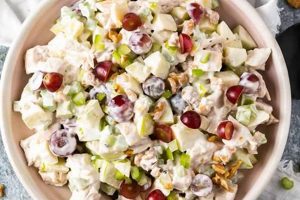
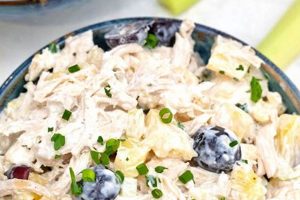
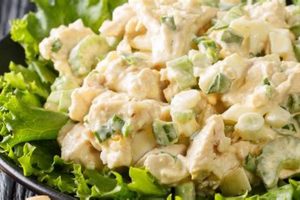
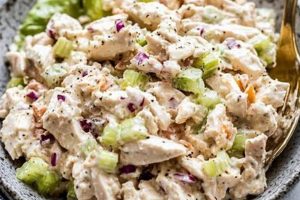
This delightful dish typically combines shredded chicken, dried cranberries, mayonnaise, and often celery and pecans for a sweet and savory flavor profile. Variations may include grapes, apples, or different nuts, offering a range of textural and taste experiences. Often enjoyed as a sandwich filling, it can also serve as a salad topping or be enjoyed as a standalone light meal.
The combination of lean protein from the chicken, the sweetness of cranberries, and the healthful fats from nuts makes this salad a nutritionally balanced option. The versatility of this dish contributes to its popularity, as it caters to diverse palates and can be adapted to various dietary needs. Its simple preparation also makes it a convenient and appealing choice for busy individuals or larger gatherings. Historically, chicken salad has been a popular dish, and the addition of cranberries adds a modern, festive twist, particularly appreciated during holidays and special occasions.
Further exploration could delve into specific ingredient selections, preparation techniques, variations for different dietary requirements, and creative presentation ideas. An analysis of nutritional information and potential health benefits could also prove valuable to readers seeking a well-rounded understanding of this appealing dish.
Tips for a Superior Cranberry Chicken Salad
Elevating this classic dish requires attention to detail and an understanding of flavor balancing. The following tips provide guidance for crafting a truly exceptional cranberry chicken salad.
Tip 1: Chicken Selection: Opting for high-quality, cooked chicken breast ensures optimal flavor and texture. Rotisserie chicken offers a convenient shortcut, while poaching or grilling chicken breasts allows for greater control over seasoning.
Tip 2: Cranberry Preparation: Dried cranberries contribute sweetness and chewiness. Consider rehydrating them briefly in warm water or juice to plump them and enhance their flavor.
Tip 3: Mayonnaise Matters: The quality of mayonnaise significantly impacts the overall flavor. Choose a mayonnaise with a balanced flavor profile, avoiding overly tangy or sweet varieties.
Tip 4: Celery Enhancement: Finely diced celery adds a refreshing crunch. Using the inner, more tender stalks ensures a pleasant texture.
Tip 5: Nutty Additions: Toasted pecans or walnuts provide a satisfying crunch and complementary flavor. Toasting intensifies their nutty notes, elevating the overall taste.
Tip 6: Seasoning Secrets: A touch of salt and freshly ground black pepper enhances the other flavors. A hint of onion powder or garlic powder can add depth.
Tip 7: Chilling Time: Allowing the salad to chill for at least 30 minutes allows the flavors to meld and develop a more cohesive taste.
By following these tips, one can create a cranberry chicken salad that surpasses expectations, offering a delightful balance of flavors and textures.
These insights provide a foundation for culinary exploration, encouraging creativity and personalization in preparing this versatile dish. The following section will offer concluding thoughts and suggestions for serving.
1. Chicken (quality, preparation)

Chicken serves as the foundational ingredient, significantly influencing the overall quality and flavor profile. Careful consideration of both the chicken’s quality and its preparation method is essential for a successful outcome.
- Sourcing and Type
Selecting high-quality chicken contributes significantly to the final dish. Freshly cooked chicken breast offers optimal control over flavor and texture. While store-bought rotisserie chicken provides convenience, it can sometimes lack the nuanced flavor achieved through individual preparation. Opting for free-range or organic chicken may further enhance the flavor profile.
- Cooking Methods
Various cooking methods impact the chicken’s texture and how it absorbs flavors within the salad. Poaching results in a moist and tender chicken, ideal for absorbing the dressing’s flavors. Grilling imparts a smoky char, adding a depth of flavor. Baking or roasting offer a balance between moisture and subtle browning. The chosen cooking method should complement the desired final flavor profile.
- Seasoning and Flavoring
While the chicken salad’s overall seasoning is crucial, pre-seasoning the chicken itself can elevate the dish further. Simple seasonings like salt, pepper, and herbs can infuse the chicken with subtle flavors that enhance the overall complexity of the salad. This pre-seasoning step ensures that the chicken itself contributes to the overall flavor balance.
- Shredding and Texture
The size and texture of the shredded chicken affect the final salad’s mouthfeel. Larger, chunkier pieces provide a more substantial bite, while finely shredded chicken creates a smoother, more delicate texture. The desired texture should be considered in relation to the other ingredients and the overall desired consistency of the salad.
The interplay of these factorssourcing, cooking method, seasoning, and shreddingultimately determines the chicken’s contribution to the overall dish. Careful attention to each element ensures a harmonious blend of flavors and textures, resulting in a well-balanced and enjoyable cranberry chicken salad experience. Overlooking these details can compromise the final product, highlighting the critical role of chicken in achieving a successful outcome.
2. Cranberries (dried, rehydrated)

Dried cranberries play a pivotal role, contributing sweetness, tartness, and textural complexity. Their preparation significantly influences the overall sensory experience. While dried cranberries offer convenience, rehydration enhances their attributes. Rehydrating plumps the berries, intensifying their natural sweetness and tartness while creating a more tender texture. This process also allows the cranberries to absorb surrounding flavors, fostering a more cohesive blend within the salad.
The choice between using dried cranberries as-is or rehydrating them depends on the desired outcome. Unhydrated cranberries contribute a chewier texture and more concentrated bursts of tartness. Rehydrated cranberries offer a softer texture and a more evenly distributed sweetness throughout the salad. Consider a salad featuring toasted pecans and a slightly tangy mayonnaise dressing. Unhydrated cranberries would provide a contrasting chewiness, balancing the pecans’ crunch. Rehydrated cranberries, however, would meld more seamlessly with the creamy dressing, offering a softer counterpoint to the pecans.
Effective rehydration involves brief soaking in warm water or, alternatively, a complementary liquid such as orange juice or apple cider. The liquid choice can further enhance the cranberries’ flavor profile, adding subtle notes that complement the overall composition. Over-soaking, however, can lead to a mushy texture, diminishing their contribution to the salad. The strategic use of dried cranberries, whether rehydrated or not, demonstrates a nuanced understanding of flavor and texture interplay, crucial for crafting a well-balanced and enjoyable cranberry chicken salad.
3. Mayonnaise (type, amount)
Mayonnaise serves as the unifying element, binding the ingredients and contributing significantly to the overall flavor and texture. Careful consideration of both the type and amount of mayonnaise is crucial for achieving the desired balance and consistency. The wrong choice can result in a salad that is too dry, too rich, or lacks the desired creamy texture. Understanding the nuances of mayonnaise selection is therefore essential for a successful outcome.
- Mayonnaise Types
Mayonnaise varieties range from classic to flavored, each impacting the final flavor profile. Traditional mayonnaise provides a neutral base, allowing other ingredients to shine. Flavored mayonnaises, such as olive oil or herb-infused varieties, can add complexity but should be chosen carefully to complement the other ingredients. For example, a lemon-dill mayonnaise might enhance the brightness of the cranberries, while a roasted garlic mayonnaise might clash with the delicate sweetness. The specific type of mayonnaise should align with the overall flavor profile envisioned for the salad.
- Quantity Considerations
The amount of mayonnaise directly affects the salad’s consistency and mouthfeel. Too little mayonnaise results in a dry, crumbly texture, while too much can create an overly rich and heavy salad. The ideal amount depends on the other ingredients’ moisture content and the desired final texture. A slightly drier salad allows individual ingredient flavors to stand out, while a creamier salad provides a more cohesive, blended flavor experience.
- Balancing Flavors
Mayonnaise interacts with the other ingredients, impacting the overall balance of flavors. A sweeter mayonnaise may require adjustments to other ingredients, such as reducing added sugar or increasing the amount of tart cranberries. The mayonnaise’s flavor profile should be considered in relation to the other components to ensure a harmonious blend.
- Dietary Adaptations
Mayonnaise choices can accommodate dietary restrictions. Reduced-fat or vegan mayonnaise options allow for lighter or plant-based versions of the salad, broadening its accessibility. These alternatives, however, may possess different textural and flavor characteristics, requiring adjustments to other ingredients or the overall quantity used to maintain the desired consistency and flavor balance.
Mayonnaise selection represents a critical step in crafting a successful cranberry chicken salad. By carefully considering the type and amount, one can achieve the desired balance of flavors, textures, and overall consistency. This attention to detail elevates the dish from simple to exceptional, demonstrating a nuanced understanding of ingredient interaction and its impact on the final product. The interplay of these factors ultimately determines the mayonnaise’s contribution, showcasing its pivotal role in achieving a well-balanced and enjoyable culinary experience.
4. Seasoning (balance, complexity)
Seasoning represents a critical factor in a successful cranberry chicken salad, significantly influencing the overall flavor profile. Achieving a harmonious balance between sweet, savory, and acidic notes is essential. Complexity, derived from layering complementary flavors, elevates the dish beyond the ordinary. The interplay of these elements transforms individual components into a cohesive and flavorful whole. Neglecting proper seasoning can result in a bland or unbalanced salad, failing to showcase the potential of the combined ingredients.
Consider the foundational sweetness derived from dried cranberries. This sweetness necessitates a balancing savory element, often achieved through the addition of salt and the inherent savory notes of the chicken itself. A touch of black pepper introduces a subtle spice, further enhancing the complexity. The potential for complexity extends beyond basic seasonings. Incorporating herbs, such as fresh dill or chives, adds a fresh, herbaceous dimension. A hint of onion or garlic powder introduces deeper savory notes. Even a small amount of lemon zest can brighten the flavors, playing off the cranberries’ tartness. These seemingly minor additions contribute significantly to the overall depth and balance of the salad.
The practical significance of understanding seasoning lies in the ability to adjust and adapt based on individual preferences and ingredient variations. If using sweeter cranberries, a touch more salt or a squeeze of lemon juice may be required to balance the sweetness. If incorporating a flavored mayonnaise, such as a dill-infused variety, adjustments to the added herbs may be necessary to prevent overpowering the overall flavor profile. Mastering the art of seasoning involves a nuanced understanding of flavor interactions and the ability to create a cohesive and balanced final product. This expertise transforms a simple cranberry chicken salad into a culinary expression of balanced and complex flavors.
5. Texture (creamy, crunchy)

Textural contrast forms a crucial element of a well-executed cranberry chicken salad, elevating it from merely palatable to genuinely enjoyable. The interplay of creamy and crunchy elements adds a dynamic dimension, engaging multiple senses and enhancing the overall eating experience. A successful recipe balances these contrasting textures, creating a harmonious interplay that keeps each bite interesting. This balance prevents the salad from becoming monotonous, whether overly creamy or excessively crunchy. Understanding the elements that contribute to these textural components allows for informed choices regarding ingredient selection and preparation.
- Creamy Base
The creamy foundation typically comes from mayonnaise, which binds the ingredients and provides a smooth, velvety mouthfeel. The quality and quantity of mayonnaise significantly impact this creaminess. A richer mayonnaise contributes a denser creaminess, while a lighter version offers a more delicate texture. Greek yogurt can also contribute creaminess while adding a tangy complexity. The interplay between the creamy base and other ingredients creates a balanced textural profile. For instance, a generous amount of creamy dressing offsets the sharpness of crunchy components, preventing an overly dry or abrasive sensation.
- Crunchy Additions
Crunchy elements provide textural contrast, preventing the salad from becoming overly homogenous. Common sources of crunch include chopped celery, nuts (such as pecans, walnuts, or almonds), and seeds. These ingredients introduce a satisfying counterpoint to the creamy base, creating a dynamic eating experience. The size and type of crunchy additions influence the overall perception of texture. Finely diced celery offers a delicate crunch, while coarsely chopped nuts provide a more robust contrast. The choice of crunchy elements depends on personal preference and the desired level of textural contrast.
- Balancing the Elements
The key to a successful textural experience lies in achieving balance. An excess of creamy elements can result in a heavy, cloying salad, while an overabundance of crunch can make the salad feel dry and disjointed. Careful consideration of ingredient proportions ensures a harmonious interplay between creamy and crunchy components. For example, a salad with a generous amount of mayonnaise might benefit from a larger quantity of chopped nuts to provide sufficient textural contrast. Conversely, a salad with a lighter dressing might require a smaller amount of crunchy additions to maintain balance.
- Other Textural Considerations
Beyond the core creamy and crunchy components, other ingredients can introduce additional textural nuances. The texture of the chicken itself contributes to the overall mouthfeel. Shredded chicken offers a more delicate texture, while diced chicken provides a more substantial bite. The addition of ingredients like grapes or apples introduces a burst of juiciness, further diversifying the textural experience. These subtle textural variations add depth and complexity to the salad, engaging the palate on multiple levels.
The strategic combination of creamy and crunchy elements is essential for a well-rounded and enjoyable cranberry chicken salad. Achieving the optimal balance between these textures elevates the dish, transforming it from a simple combination of ingredients into a delightful sensory experience. This interplay of textures, carefully considered and balanced, is crucial for maximizing enjoyment and showcasing the culinary potential of this versatile dish.
Frequently Asked Questions
This section addresses common inquiries regarding the preparation and enjoyment of cranberry chicken salad, offering practical guidance and clarifying potential points of confusion.
Question 1: What type of chicken is best suited for this salad?
While rotisserie chicken offers convenience, using freshly cooked chicken breast allows for greater control over seasoning and ensures optimal texture. Poaching or grilling chicken breasts are recommended methods.
Question 2: Can dried cranberries be substituted with fresh cranberries?
Fresh cranberries possess a significantly different tartness and texture compared to dried cranberries. While substitution is possible, it requires adjustments to the recipe, particularly regarding the amount of added sweetener and the overall balance of flavors.
Question 3: What can be used as an alternative to mayonnaise?
Greek yogurt or a combination of Greek yogurt and mayonnaise can be used as a lighter alternative, potentially impacting the overall flavor and texture. Avocado can also provide creaminess and contribute healthy fats.
Question 4: How long can cranberry chicken salad be stored?
Properly stored in an airtight container in the refrigerator, this salad can typically last for three to five days. Always check for signs of spoilage before consumption.
Question 5: Can this salad be frozen?
Freezing is generally not recommended, as the mayonnaise-based dressing can separate upon thawing, resulting in an undesirable texture. The textural integrity of other ingredients may also be compromised.
Question 6: How can one adapt the recipe for specific dietary needs?
Dietary adaptations can be implemented through ingredient substitutions. Gluten-free bread or lettuce wraps can be used for sandwiches. Vegan mayonnaise and ensuring all other ingredients are plant-based creates a vegan version. Adjustments to the sweetness can accommodate those following low-sugar diets.
Understanding these aspects allows for informed choices and ensures a positive culinary experience. Careful consideration of ingredients and preparation techniques optimizes the flavor and texture of the final product.
The following section will provide concluding thoughts and serving suggestions.
Cranberry Chicken Salad
This exploration has delved into the multifaceted nature of cranberry chicken salad, emphasizing the importance of ingredient selection, preparation techniques, and the interplay of flavors and textures. From the quality of the chicken to the nuanced role of mayonnaise, each component contributes significantly to the final product. The balance between sweet and savory, creamy and crunchy, defines this dish’s appeal, offering a versatile culinary canvas for both classic interpretations and creative adaptations.
Culinary success hinges on a thorough understanding of these elements. Strategic ingredient choices and meticulous preparation techniques unlock the full potential of this dish, transforming it from a simple combination of components into a harmonious blend of flavors and textures. This knowledge empowers culinary exploration, encouraging experimentation and the development of personalized variations that cater to individual preferences and dietary needs. The enduring popularity of cranberry chicken salad underscores its adaptability and its capacity to satisfy a diverse range of palates.