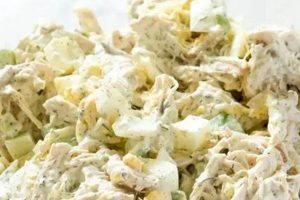
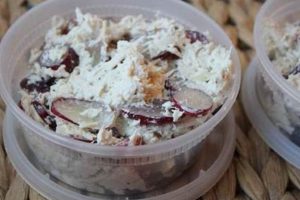
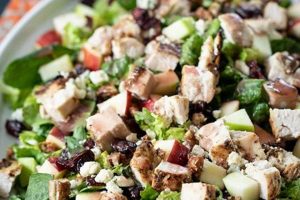
A refreshing and flavorful dish typically combines cooked chicken, grapes, pecans, and a creamy dressing, often mayonnaise-based. Variations may include additional ingredients such as celery, red onion, or apples, and the dressing can be customized with herbs, spices, or a touch of sweetness. An exemplary version might feature roasted chicken breast, red grapes halved, toasted pecans, celery, and a dressing of mayonnaise, Greek yogurt, Dijon mustard, and a hint of honey.
This type of salad offers a balanced combination of protein, healthy fats, and natural sweetness. The chicken provides protein, while the pecans contribute healthy fats and fiber. Grapes offer antioxidants and natural sweetness, creating a pleasing contrast to the savory elements. Such salads are versatile, suitable for light lunches, picnics, potlucks, or as a side dish at larger gatherings. Its origins likely trace back to the mid-20th century with the rise in popularity of combining fruits and nuts in savory dishes.
The following sections will explore various aspects of preparing and enjoying this salad, including selecting ingredients, creating flavorful dressings, and offering suggestions for variations and serving.
Tips for a Superior Chicken Grape Pecan Salad
Optimizing ingredient selection and preparation techniques elevates this classic dish. Attention to detail ensures a balanced flavor profile and a pleasant textural experience.
Tip 1: Roasting the chicken enhances flavor. Roasting, as opposed to boiling or poaching, develops a richer, more complex chicken flavor that complements the other ingredients. Bone-in, skin-on chicken pieces are recommended for optimal moisture retention and flavor development during roasting.
Tip 2: Toasting pecans intensifies their nutty character. Briefly toasting pecans in a dry pan over medium heat deepens their flavor and adds a satisfying crunch. Watch carefully to prevent burning.
Tip 3: Selecting grapes requires consideration of sweetness and texture. Seedless red grapes offer a pleasant sweetness and firm texture that holds up well in the salad. Green grapes can provide a slightly tart counterpoint if desired.
Tip 4: Fresh herbs elevate the dressing. Incorporating fresh herbs such as dill, chives, or tarragon into the dressing adds a layer of complexity and freshness. Finely chop the herbs to ensure even distribution.
Tip 5: Balancing sweetness and acidity is crucial. A touch of honey or maple syrup in the dressing can complement the grapes’ sweetness, while a splash of lemon juice or apple cider vinegar provides a necessary acidic balance.
Tip 6: Chilling enhances the salad’s flavors. Allowing the salad to chill for at least 30 minutes before serving allows the flavors to meld and enhances the refreshing quality of the dish. Avoid chilling for extended periods, as this can dry out the ingredients.
Tip 7: Consider textural variation. Adding diced celery or apple provides a contrasting crispness to the other ingredients. Chopped walnuts or candied pecans offer additional textural complexity.
By following these tips, one can achieve a harmonious balance of flavors and textures, resulting in a truly satisfying culinary experience.
These guidelines offer a pathway to crafting a exceptional salad, highlighting the versatility and appeal of this combination of ingredients.
1. Ingredient Quality

Ingredient quality significantly impacts the overall flavor, texture, and nutritional value of a chicken grape pecan salad. Selecting superior ingredients elevates this simple dish from ordinary to exceptional. Attention to quality ensures a more satisfying and healthful culinary experience.
- Chicken Selection
Choosing high-quality chicken is paramount. Fresh, free-range, or organic chicken breasts offer superior flavor and texture compared to conventionally raised chicken. Opting for bone-in, skin-on chicken for roasting enhances flavor and moisture retention. The quality of the chicken directly influences the salad’s overall taste and protein content.
- Grape Variety and Freshness
The variety and freshness of grapes contribute significantly to the salad’s flavor and textural profile. Firm, plump grapes with vibrant color indicate optimal ripeness and sweetness. While red grapes are commonly used, other varieties like green grapes or a combination can offer a nuanced flavor profile. Freshness ensures the grapes provide a juicy burst of flavor and a pleasant textural contrast to the other ingredients.
- Pecan Quality and Preparation
Pecan quality and preparation directly affect the salad’s overall taste and texture. Fresh, high-quality pecans possess a rich, buttery flavor and a satisfying crunch. Toasting the pecans enhances their flavor profile and intensifies their crispness. Avoid using stale or rancid pecans, which can negatively impact the salad’s flavor and overall quality.
- Freshness of Produce and Herbs
Using fresh produce and herbs, such as crisp celery or vibrant chives, elevates the salad’s flavor and nutritional value. Fresh ingredients contribute brighter flavors and a more appealing aroma compared to their wilted or aged counterparts. Incorporating fresh herbs into the dressing enhances the salad’s complexity and overall sensory appeal.
The cumulative effect of selecting high-quality ingredients transforms the chicken grape pecan salad from a basic dish into a truly delightful culinary experience. Prioritizing ingredient quality contributes to a more flavorful, nutritious, and visually appealing salad, highlighting the importance of thoughtful ingredient selection in achieving culinary excellence.
2. Flavor Balance

Flavor balance is paramount in a successful chicken grape pecan salad recipe. The inherent sweetness of grapes, the rich nuttiness of pecans, and the savory character of chicken require careful consideration to create a harmonious blend. An imbalance can lead to a dish that is overly sweet, excessively nutty, or bland. The interplay of these distinct flavors defines the salad’s overall character and enjoyment.
Achieving this balance involves strategic ingredient selection and preparation. For example, roasting the chicken enhances its savory notes, providing a robust counterpoint to the sweetness of the grapes. Toasting the pecans intensifies their nutty flavor, preventing them from being overshadowed by other ingredients. The dressing plays a crucial role in unifying these elements. A vinaigrette with a balanced acidity cuts through the richness of the pecans and complements the sweetness of the grapes, while a creamy dressing provides a smoother, more cohesive flavor profile. The quantity of each ingredient also contributes to the overall balance. Too many grapes can make the salad overly sweet, while an excess of pecans can result in an overpowering nutty flavor. Careful proportioning ensures each ingredient contributes its unique character without dominating the others.
Understanding the interplay of these flavors allows for informed adjustments and personalized variations. Substituting different grape varieties, such as tart green grapes for sweeter red grapes, can shift the flavor profile. Incorporating other ingredients, like crisp celery or tart apple, introduces additional layers of flavor and texture, further enhancing complexity and balance. Mastering flavor balance elevates the chicken grape pecan salad from a simple combination of ingredients to a nuanced and satisfying culinary creation.
3. Textural Contrast

Textural contrast significantly contributes to the enjoyment of a chicken grape pecan salad. The interplay of textures creates a dynamic sensory experience, elevating the dish beyond a simple combination of ingredients. This contrast arises from the juxtaposition of tender chicken, crisp grapes, and crunchy pecans. A successful recipe balances these textures, ensuring no single element dominates the others.
The tender, shredded or diced chicken provides a soft foundation, contrasting with the firmness of the grapes. The grapes, whether red or green, offer a juicy burst and a slight resistance when bitten. The pecans, ideally toasted, contribute a satisfying crunch and a brittle texture that complements the smoother elements. This interplay of soft, firm, and crunchy elements creates a multi-dimensional eating experience. For example, a salad with overly soft chicken and mushy grapes would lack the desired textural dynamism, while excessively hard pecans could detract from the overall enjoyment. Incorporating additional ingredients, such as crisp celery or crunchy croutons, can further enhance the textural complexity.
Careful preparation techniques enhance textural contrast. Roasting the chicken instead of boiling preserves its tender yet substantial texture. Toasting the pecans intensifies their crunch. Properly storing the grapes maintains their firmness and prevents them from becoming mushy. The dressing, whether creamy or vinaigrette-based, also influences the overall textural experience. A creamy dressing coats the ingredients, adding a smooth element, while a vinaigrette offers a lighter touch that allows the individual textures to shine. Achieving optimal textural contrast elevates the chicken grape pecan salad from a basic dish to a more engaging and satisfying culinary experience.
4. Dressing Choice
Dressing choice significantly impacts the overall flavor profile and enjoyment of a chicken grape pecan salad. The dressing acts as a unifying element, binding the individual ingredients and creating a cohesive culinary experience. The wrong dressing can mask the delicate flavors of the chicken, grapes, and pecans, while the right dressing enhances and complements these flavors, creating a harmonious balance.
Several factors influence dressing selection. The desired flavor profile plays a crucial role. A creamy dressing, such as mayonnaise-based dressing with a touch of honey or Dijon mustard, provides a rich, smooth backdrop that complements the sweetness of the grapes and the nuttiness of the pecans. Conversely, a vinaigrette, perhaps with a base of apple cider vinegar or white wine vinegar, offers a brighter, more acidic counterpoint, cutting through the richness of the ingredients and providing a refreshing contrast. The intensity of the dressing also requires consideration. A heavily flavored dressing can overpower the subtle flavors of the chicken and grapes, while a lightly flavored dressing allows these flavors to shine. For example, a creamy dressing with strong herbs might mask the delicate sweetness of the grapes, while a light vinaigrette with a hint of lemon zest could enhance their flavor.
The practical application of this understanding lies in the ability to tailor the dressing to individual preferences and specific recipe variations. Consider the other ingredients in the salad. If the salad includes strong-flavored additions, such as blue cheese or red onion, a more robust dressing might be appropriate. Conversely, a simpler salad with fewer ingredients might benefit from a lighter, more delicate dressing. Ultimately, the dressing choice determines the overall character of the chicken grape pecan salad, impacting its flavor, texture, and overall enjoyment. Careful consideration of dressing options ensures a balanced and satisfying culinary experience.
5. Presentation

Presentation plays a crucial role in the overall enjoyment of a chicken grape pecan salad. While flavor and texture are paramount, visual appeal enhances the dining experience, stimulating appetite and creating a sense of anticipation. Thoughtful presentation elevates the salad from a simple dish to a more refined and appealing culinary creation. Effective presentation considers various elements, including plating, color contrast, and garnish selection.
- Plating Techniques
Plating techniques significantly influence the visual appeal. A simple yet effective approach involves arranging the salad on a bed of crisp lettuce leaves. This provides a fresh, green backdrop that contrasts with the other ingredients. Alternatively, the salad can be mounded on a plate, creating a sense of abundance. Avoid overcrowding the plate, as this can make the salad appear cluttered and less appealing. Leaving some negative space allows the individual components to stand out and enhances the overall visual appeal. For example, a neatly arranged salad on a bed of lettuce with a light vinaigrette drizzled over the top presents a more appealing image than a haphazardly piled salad.
- Color Contrast
Color contrast enhances visual interest. The natural colors of the ingredientsthe green of the grapes, the white of the chicken, and the browns of the pecansprovide a pleasing contrast. Incorporating other colorful ingredients, such as red grapes, cranberries, or slivered red onion, further enhances visual appeal. The dressing choice also influences color. A creamy dressing provides a smooth, white backdrop, while a vibrant vinaigrette adds a splash of color. A salad with a variety of colors appears more appetizing than a monochromatic one.
- Garnish Selection
Garnishes provide a finishing touch that elevates the presentation. Fresh herbs, such as sprigs of parsley, dill, or chives, add a touch of green and a subtle aroma. A sprinkle of chopped pecans or crumbled blue cheese adds textural and visual interest. A few strategically placed grape halves or a light dusting of paprika can enhance color contrast. Garnishes should complement the salad’s flavors and not overpower the overall presentation. A simple, elegant garnish enhances the dish without distracting from its core components.
- Serving Considerations
Serving considerations extend beyond individual plating. For larger gatherings, consider presenting the salad in a large bowl or platter, garnished appropriately. Individual portions can be served with a slotted spoon or tongs to maintain the salad’s arrangement. For individual servings, a chilled plate enhances the salad’s freshness. Appropriate serving utensils, such as salad forks and spoons, contribute to a more enjoyable dining experience. Thoughtful serving practices demonstrate attention to detail and enhance the overall presentation.
The combined effect of these presentation techniques transforms the chicken grape pecan salad from a simple dish into a visually appealing culinary creation. Careful attention to plating, color contrast, garnish selection, and serving considerations enhances the dining experience, demonstrating the important role presentation plays in the overall enjoyment of this classic salad.
Frequently Asked Questions
This section addresses common inquiries regarding chicken grape pecan salad preparation and variations.
Question 1: Can other nuts be substituted for pecans?
Walnuts, almonds, or cashews can be substituted for pecans. However, this will alter the flavor profile. Walnuts offer a more robust, earthy flavor, while almonds provide a milder, sweeter taste. Cashews have a creamy texture and a delicate flavor.
Question 2: What type of chicken is best suited for this salad?
Roasted chicken breast provides optimal flavor and texture. Rotisserie chicken offers a convenient alternative. Avoid using boiled or poached chicken, as these methods can result in a drier, less flavorful salad.
Question 3: How can the sweetness of the salad be adjusted?
Adjusting grape variety or incorporating a touch of honey or maple syrup into the dressing can modify sweetness levels. Using green grapes instead of red grapes introduces a tartness that balances the sweetness. Conversely, a small amount of honey or maple syrup in the dressing enhances the overall sweetness.
Question 4: How long can the salad be stored in the refrigerator?
The salad can be stored in an airtight container in the refrigerator for up to three days. However, the texture of the ingredients, particularly the grapes and pecans, may soften over time.
Question 5: Can this salad be served as a main course?
While often served as a side dish, the salad can function as a light main course. Adding ingredients such as quinoa, couscous, or orzo increases its heartiness and nutritional value. Serving it on a bed of mixed greens further enhances its presentation and nutritional content.
Question 6: How can the salad be adapted for dietary restrictions?
Adapting the salad for various dietary needs is straightforward. Substituting a dairy-free mayonnaise or yogurt creates a vegan version. Gluten-free bread or crackers can accompany the salad for those with gluten sensitivities. Adjustments to the dressing ingredients, such as using a sugar substitute or omitting certain spices, can accommodate other dietary restrictions.
Understanding these frequently asked questions provides a foundation for preparing and adapting chicken grape pecan salad. These insights offer guidance for maximizing flavor, texture, and enjoyment while accommodating individual preferences and dietary needs.
The following section will delve deeper into recipe variations and serving suggestions.
Chicken Grape Pecan Salad Recipe
This exploration of chicken grape pecan salad recipes has highlighted the multifaceted nature of this seemingly simple dish. From the careful selection of ingredients to the nuanced balance of flavors and textures, each component contributes to the overall culinary experience. The importance of ingredient quality, the interplay of sweet, savory, and crunchy elements, and the strategic choice of dressing have been thoroughly examined. Presentation, too, plays a vital role, elevating the dish through visual appeal and thoughtful serving practices. Adaptability and variations further broaden the appeal of this salad, offering options for diverse palates and dietary needs.
The chicken grape pecan salad recipe stands as a testament to the potential for culinary creativity within the realm of seemingly simple dishes. Its enduring popularity speaks to the inherent appeal of its balanced flavors, contrasting textures, and refreshing qualities. Further exploration and experimentation with ingredient variations, dressing choices, and presentation styles promise continued enjoyment and culinary discovery. Ultimately, the recipe serves as a canvas for individual expression, inviting culinary enthusiasts to explore and refine their own interpretations of this classic combination.