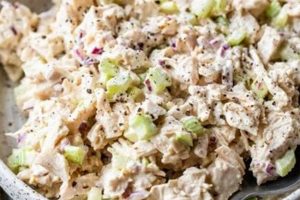
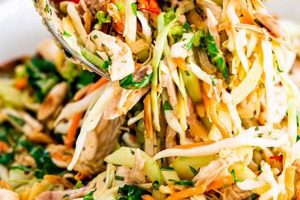
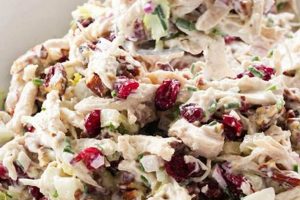
This dish typically combines cooked chicken, apples, pecans, and a variety of other ingredients, often including celery, grapes, and dried cranberries. Mayonnaise or a vinaigrette-based dressing binds the components together, creating a flavorful and texturally diverse salad. Variations may include different apple varieties, cheeses like blue cheese or cheddar, and additions such as red onion or herbs. A simple example consists of diced chicken breast, chopped Granny Smith apples, toasted pecans, celery, and a mayonnaise-based dressing seasoned with salt, pepper, and a touch of Dijon mustard.
The combination of sweet, savory, and crunchy elements makes this type of salad a popular choice. The lean protein from the chicken provides satiety, while the fruit and nuts contribute essential vitamins, minerals, and healthy fats. Its versatility allows it to be enjoyed as a light lunch, a side dish at a picnic or potluck, or even as a filling for sandwiches or wraps. While the precise origin is difficult to pinpoint, the increasing popularity of salads incorporating fruits and nuts in the 20th century likely contributed to this combination’s emergence.
Further exploration could include specific recipes, variations using different ingredients and dressings, nutritional information, tips for preparation and storage, and serving suggestions for different occasions.
Tips for a Successful Chicken Apple Pecan Salad
Optimizing ingredient selection and preparation techniques elevates this salad from simple to exceptional. Attention to detail ensures a balanced flavor profile and desirable texture.
Tip 1: Select Crisp Apples. Varieties like Honeycrisp, Granny Smith, or Fuji maintain their texture and provide a pleasant contrast to the other ingredients. Avoid overly ripe or mealy apples.
Tip 2: Toast the Pecans. Toasting enhances the nuts’ natural flavor and adds a satisfying crunch. Spread pecans in a single layer on a baking sheet and toast at 350F (175C) for 5-7 minutes, or until fragrant.
Tip 3: Use High-Quality Chicken. Rotisserie chicken offers a convenient shortcut, but home-cooked chicken breast or leftover grilled chicken also work well. Ensure the chicken is cooked thoroughly and cooled completely before adding it to the salad.
Tip 4: Balance Sweetness and Acidity. The sweetness of the apples and the richness of the pecans benefit from a touch of acidity. A squeeze of lemon juice in the dressing or the addition of dried cranberries can achieve this balance.
Tip 5: Consider Texture. Adding celery or chopped grapes introduces textural variety. For a smoother salad, finely dice the ingredients. For a chunkier salad, use larger pieces.
Tip 6: Dress Lightly. Too much dressing can overwhelm the delicate flavors of the salad. Start with a small amount of dressing and add more as needed. A light coating ensures that each ingredient’s flavor shines through.
Tip 7: Chill Before Serving. Chilling allows the flavors to meld and enhances the salad’s refreshing quality. Cover and refrigerate for at least 30 minutes before serving.
By following these tips, one can create a chicken apple pecan salad that offers a delightful balance of flavors and textures. This attention to detail elevates a simple combination of ingredients into a truly satisfying culinary experience.
This foundation of knowledge prepares one to explore specific recipe variations and adapt them to individual preferences.
1. Ingredients

Ingredient selection significantly impacts the overall flavor profile and nutritional value of a chicken apple pecan salad. Careful consideration of each component ensures a balanced and satisfying culinary experience. The following facets explore key ingredient categories and their contributions to the final dish.
- Protein: Chicken
Chicken provides the primary protein source, contributing to satiety and overall nutritional value. Choices range from pre-cooked rotisserie chicken for convenience to freshly grilled or pan-fried chicken for enhanced flavor control. The chicken’s preparation method influences the salad’s final taste and texture.
- Fruit: Apples
Apples introduce sweetness, texture, and essential vitamins. Variety selection influences both flavor and texture; tart apples like Granny Smith offer a crisp, tangy counterpoint to sweeter varieties like Honeycrisp. The apple’s texture provides a refreshing contrast to the other ingredients.
- Nuts: Pecans
Pecans provide healthy fats, protein, and a satisfying crunch. Toasting pecans enhances their inherent buttery flavor and creates a desirable textural element. The pecan’s richness complements the other ingredients and contributes to the salad’s overall complexity.
- Base and Dressing
The base typically includes leafy greens or a combination of vegetables like celery and grapes, adding further nutrients and textural variety. The dressing ties the ingredients together, creating a cohesive flavor profile. Options range from creamy mayonnaise-based dressings to lighter vinaigrettes, each imparting a distinct character to the salad.
The interplay of these ingredient categories defines the chicken apple pecan salad’s character. Harmonizing these elements through thoughtful selection and preparation elevates the dish beyond a simple combination of components, resulting in a well-balanced and flavorful culinary creation. The quality and freshness of each ingredient directly correlate to the final product’s overall quality and enjoyment.
2. Preparation
Preparation techniques significantly influence the final quality and enjoyment of a chicken apple pecan salad. Proper handling of ingredients optimizes texture, flavor, and overall presentation. Each step, from ingredient selection to final assembly, contributes to a cohesive and satisfying culinary experience.
- Ingredient Handling
Proper ingredient handling ensures optimal flavor and texture. Washing and drying produce thoroughly removes contaminants and maintains crispness. Specific techniques, such as toasting pecans, enhance flavor profiles and add desirable textural elements. Careful handling preserves ingredient integrity and prevents premature spoilage.
- Chicken Preparation
Chicken preparation methods significantly impact the salad’s overall flavor profile. Options include using pre-cooked rotisserie chicken for convenience, grilling or pan-frying for enhanced flavor, or poaching for a more delicate texture. The chosen method influences the chicken’s contribution to the finished dish. Ensuring the chicken is cooked to a safe internal temperature and cooled completely before incorporating it into the salad is crucial for food safety and optimal texture.
- Apple Preparation
Apple preparation focuses on preserving texture and preventing oxidation. Dicing or slicing apples uniformly ensures even distribution throughout the salad and consistent bite size. Techniques like coating cut apples with a small amount of lemon juice prevent browning and maintain their fresh appearance and flavor. The chosen apple variety influences sweetness and texture, contributing to the salad’s overall balance.
- Assembly and Timing
Proper assembly and timing are critical for maintaining ingredient integrity and preventing the salad from becoming soggy. Adding the dressing just before serving prevents the delicate greens and other components from wilting. Chilling the salad allows flavors to meld, but avoid excessive chilling, which can negatively impact texture. Strategic assembly ensures a visually appealing presentation and enhances the dining experience.
Careful attention to each preparation step elevates the chicken apple pecan salad from a simple assemblage of ingredients to a carefully constructed culinary creation. Precise execution of these techniques optimizes flavor, texture, and presentation, contributing to a more satisfying and enjoyable dining experience. These preparatory steps directly influence the salad’s final quality and highlight the importance of proper technique in achieving culinary excellence.
3. Dressing
Dressing serves as a unifying element in a chicken apple pecan salad recipe, binding individual components into a cohesive whole. Its influence extends beyond simply adding moisture; dressing contributes significantly to the overall flavor profile, texture, and visual appeal. The careful selection and preparation of a dressing are crucial for balancing the inherent sweetness of apples, the richness of pecans, and the savory notes of chicken. A creamy, mayonnaise-based dressing, for example, provides a smooth, tangy counterpoint to the crunch of pecans and apples, while a lighter vinaigrette offers a brighter, more acidic contrast. The viscosity of the dressing also affects the salad’s texture; a thicker dressing clings more readily to ingredients, while a thinner dressing allows for a lighter, more delicate experience.
The choice of dressing should complement and enhance, not overpower, the existing flavors. A classic vinaigrette with a touch of Dijon mustard, for instance, adds a subtle tang that accentuates the sweetness of the apples without masking the flavor of the chicken or pecans. Alternatively, a creamy dressing infused with herbs or spices, such as tarragon or chives, can introduce complexity and depth. Overly sweet or heavy dressings can mask the delicate balance of flavors, while dressings with strong competing flavors can detract from the salad’s inherent character. Consideration must also be given to the dressing’s impact on the salad’s overall presentation. A glossy dressing adds visual appeal, while a matte dressing offers a more rustic aesthetic.
Understanding the role of dressing in a chicken apple pecan salad recipe is essential for achieving a balanced and harmonious final product. A well-chosen dressing elevates the salad beyond a simple combination of ingredients, transforming it into a complex and satisfying culinary experience. The interplay between dressing and ingredients creates a symphony of flavors and textures, demonstrating the practical significance of dressing selection in culinary artistry. Further exploration could delve into specific dressing recipes, exploring the nuances of ingredient ratios and their impact on the overall salad composition.
4. Balance

Balance constitutes a critical element within a successful chicken apple pecan salad recipe. This balance manifests in several dimensions, encompassing flavor profiles, textures, and nutritional composition. A harmonious interplay of sweet, savory, acidic, and crunchy elements distinguishes a well-executed salad. The sweetness of apples, typically balanced by the tartness of a vinaigrette or the addition of dried cranberries, provides a foundation. Savory notes, derived from the chicken and potentially amplified by ingredients like blue cheese or bacon, offer a counterpoint. Textural balance, achieved through the combination of crunchy pecans, crisp apples, and tender chicken, further enhances the sensory experience. Ignoring these factors can lead to a one-dimensional salad, overly sweet or lacking textural variation. For example, an excess of sweet apples without a balancing acidic component can result in a cloying flavor profile. Similarly, neglecting the textural element by omitting pecans or using excessively soft apples compromises the intended contrast.
Achieving balance necessitates careful consideration of ingredient proportions and their inherent characteristics. The intensity of different apple varieties, the richness of pecans, and the choice of dressing all contribute to the final equilibrium. A tart Granny Smith apple necessitates a less acidic dressing than a sweeter Honeycrisp, while the quantity of pecans influences the overall richness and crunch. The dressing, serving as a unifying element, further contributes to the balance, its acidity and richness playing a pivotal role. Consider a vinaigrette made with apple cider vinegar and Dijon mustard; the vinegar provides acidity to balance the apple’s sweetness, while the mustard adds a nuanced savory dimension that complements the chicken and pecans. This interplay of flavors and textures, meticulously orchestrated, transforms a collection of individual ingredients into a cohesive and satisfying whole.
Understanding the concept of balance within this specific culinary context provides a framework for recipe development and adaptation. Recognizing the interplay of flavors and textures allows for informed ingredient selection and proportional adjustments. This knowledge empowers one to create a chicken apple pecan salad that transcends a mere combination of components, offering a complex and nuanced culinary experience. Mastering this principle not only enhances the immediate enjoyment of the dish but also fosters a deeper appreciation for the art of culinary composition. It underscores the importance of thoughtful ingredient selection and preparation, highlighting how seemingly simple dishes can achieve culinary excellence through the application of fundamental principles like balance.
5. Presentation

Presentation elevates the chicken apple pecan salad experience beyond mere sustenance, transforming it into a visually appealing culinary creation. Strategic arrangement and thoughtful garnishing enhance the perceived value and enjoyment of the dish. Consider the impact of a salad artfully arranged on a platter, contrasted with the same ingredients haphazardly tossed in a bowl. The former invites appreciation; the latter suggests a lack of care. Visual appeal stimulates appetite and enhances the dining experience, influencing perception of flavor and freshness. A simple garnish of fresh herbs, a sprinkle of paprika, or strategically placed pecan halves can significantly elevate the presentation. Even the choice of serving vessel contributes; a rustic wooden bowl imparts a different aesthetic than a sleek white plate.
Practical applications of presentation principles extend to various contexts. For individual servings, consider layering ingredients to create visual depth and texture. In a buffet setting, arranging the salad on a bed of lettuce or using a decorative serving spoon enhances its attractiveness. For packed lunches, choosing a container that showcases the salad’s components, rather than compressing them, maintains its appeal. These seemingly minor details contribute significantly to the overall dining experience, impacting enjoyment and perceived value. A thoughtfully presented salad communicates attention to detail and elevates a simple meal into a more refined culinary offering.
Effective presentation enhances the enjoyment of a chicken apple pecan salad. Visual appeal stimulates appetite and elevates perceived quality. Understanding the impact of presentation allows for conscious choices in plating, garnishing, and serving, transforming a simple salad into a visually engaging culinary experience. This principle applies not only to formal settings but also to everyday meals, enhancing individual enjoyment and fostering a greater appreciation for the art of food presentation. Ultimately, presentation acts as a bridge between culinary creation and sensory appreciation, enriching the entire dining experience.
6. Variations
Variations within the chicken apple pecan salad recipe framework demonstrate the inherent adaptability of this culinary concept. Modifying ingredients or preparation techniques expands the potential flavor profiles and caters to diverse palates and dietary needs. Consider the substitution of walnuts for pecans, introducing a subtly different flavor profile and texture. Similarly, incorporating dried cranberries or golden raisins adds sweetness and chewiness, contrasting with the apple’s crispness. Swapping the chicken for grilled tofu caters to vegetarian preferences while maintaining the salad’s protein content. These variations are not merely superficial alterations; they represent opportunities to explore new flavor combinations and tailor the recipe to specific preferences or dietary restrictions. Understanding the interplay of ingredients within this framework allows for informed substitutions without compromising the core balance of flavors and textures.
The practical significance of variations extends beyond simple customization. Seasonal ingredient availability influences adaptation. In autumn, substituting roasted butternut squash for apples provides a seasonal twist. Similarly, incorporating fresh herbs like tarragon or chives during their peak seasons enhances flavor complexity. Variations also accommodate dietary restrictions. Using a dairy-free mayonnaise or omitting cheese caters to lactose intolerance, while opting for gluten-free bread crumbs ensures inclusivity for those with gluten sensitivities. These examples demonstrate how understanding variations allows for adaptation to circumstance and preference without sacrificing the fundamental appeal of the chicken apple pecan salad. The core concept remains consistent, a testament to its versatility.
Successful variations necessitate an understanding of the underlying principles that govern flavor and texture balance. While creativity is encouraged, informed substitutions ensure the integrity of the dish. Recognizing the role of each ingredientthe sweetness of apples, the richness of pecans, the savory element of chickenguides adaptation, preventing unbalanced outcomes. Ultimately, variations within the chicken apple pecan salad recipe represent not deviations from a fixed standard, but rather expressions of culinary creativity within established parameters. This adaptability ensures its continued relevance across diverse culinary landscapes and individual preferences, demonstrating its enduring appeal and versatility.
Frequently Asked Questions
This section addresses common inquiries regarding chicken apple pecan salad recipes, offering practical guidance and clarifying potential uncertainties. These responses aim to provide comprehensive information for optimizing preparation and achieving desired culinary outcomes.
Question 1: What type of apple is best suited for this salad?
Crisp, tart apples such as Granny Smith, Braeburn, or Honeycrisp offer optimal flavor and textural contrast. Sweeter varieties may become overly soft and lack the desired acidity.
Question 2: Can the pecans be substituted with other nuts?
Walnuts, almonds, or even pistachios can substitute for pecans, though the flavor profile will be altered. Consider the nut’s inherent flavor and texture when substituting.
Question 3: What is the best way to prevent apples from browning?
Coating cut apples with a small amount of lemon juice or ascorbic acid (vitamin C powder) inhibits enzymatic browning and preserves their fresh appearance.
Question 4: How long can this salad be stored in the refrigerator?
Properly stored in an airtight container, the salad typically remains fresh for up to three days in the refrigerator. However, optimal quality is observed within the first 24 hours.
Question 5: Can this salad be made ahead of time for a large gathering?
Preparing components in advance is recommended for larger gatherings. Store ingredients separately and combine just before serving to prevent the salad from becoming soggy. Dress the salad immediately before serving.
Question 6: What are some healthy dressing alternatives to mayonnaise-based options?
Vinaigrettes based on olive oil, apple cider vinegar, or lemon juice provide lighter, healthier alternatives. Greek yogurt can also serve as a base for creamy dressings with reduced fat content.
Understanding these frequently asked questions facilitates successful preparation and enjoyment. Attention to detail, from ingredient selection to storage practices, ensures optimal results.
Further exploration might include recipe variations and detailed nutritional information.
Chicken Apple Pecan Salad Recipe
Exploration of this recipe reveals a dish greater than the sum of its parts. Careful ingredient selection, precise preparation techniques, and attention to flavor balance elevate this seemingly simple salad to a culinary experience. From the crisp tartness of apples to the rich crunch of pecans and the savory protein of chicken, each element contributes to a harmonious whole. Understanding the interplay of these components allows for informed adaptations, accommodating diverse palates and dietary needs. The versatility of this recipe, evidenced by the numerous variations possible, solidifies its position as a culinary staple.
This exploration serves as a foundation for further culinary endeavors. Encouraging experimentation with ingredients and dressings allows for personalized interpretations. Ultimately, the chicken apple pecan salad recipe provides a canvas for culinary creativity, offering a balance of flavor, texture, and nutritional value. Its adaptability ensures continued relevance in the ever-evolving culinary landscape.