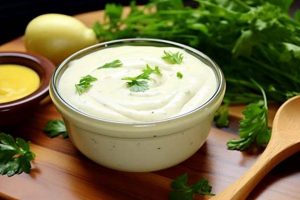
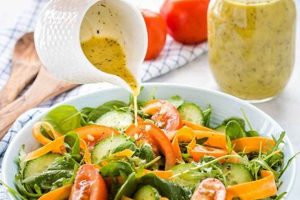
A superior Caesar salad dressing elevates this classic dish from simple to extraordinary. It typically features a creamy emulsion, often using raw or coddled eggs, along with Parmesan cheese, garlic, lemon juice, anchovies (or Worcestershire sauce as a substitute), and olive oil. Variations exist, but these core ingredients are essential for achieving a balanced flavor profile characterized by savory umami notes, tangy acidity, and richness.
Achieving excellence in this culinary staple relies on careful ingredient selection and precise emulsion technique. Freshly grated Parmesan cheese adds a depth of flavor unmatched by pre-grated alternatives. High-quality olive oil contributes a smooth texture and fruity undertones. Proper emulsification creates a luxurious, creamy consistency that clings beautifully to romaine lettuce leaves. Historically, the Caesar salad’s origins trace back to Tijuana, Mexico, in the 1920s, and while its original preparation differed slightly from modern interpretations, the pursuit of a perfect dressing has remained constant.
This exploration will delve into various approaches to crafting exceptional Caesar dressings, considering both classic techniques and innovative adaptations, with guidance on ingredient selection, preparation methods, and achieving perfect balance.
Tips for an Exceptional Caesar Dressing
Elevating a Caesar salad to new heights hinges on the quality of its dressing. These tips offer guidance on crafting a truly remarkable emulsion.
Tip 1: Prioritize Fresh Ingredients. Freshly grated Parmesan cheese offers a nuanced flavor profile unavailable in pre-grated versions. Similarly, freshly squeezed lemon juice provides a brighter, more vibrant acidity compared to bottled alternatives.
Tip 2: Master the Emulsion. A stable emulsion is crucial for a creamy, luxurious texture. Add the oil drop by drop initially, whisking constantly to create a strong base. As the emulsion builds, the oil can be added in a slow, steady stream.
Tip 3: Use High-Quality Olive Oil. Extra virgin olive oil contributes a smooth, rich flavor and texture. Opt for a variety with a balanced flavor profile that won’t overpower other ingredients.
Tip 4: Balance Flavors Carefully. The interplay of umami, acidity, and richness defines a great Caesar dressing. Adjust ingredients like lemon juice, anchovies (or Worcestershire sauce), and garlic to achieve perfect harmony.
Tip 5: Consider Egg Preparation. Raw or coddled eggs bring richness and emulsifying properties. Coddling the eggs mitigates any concerns about consuming raw eggs while retaining the desired creaminess.
Tip 6: Explore Flavor Variations. While classic Caesar dressing boasts a distinct character, variations can enhance complexity. Consider additions like Dijon mustard, black pepper, or a dash of hot sauce for a nuanced profile.
Tip 7: Taste and Adjust. Palate calibration is essential. Taste the dressing throughout the preparation process and adjust seasonings as needed to achieve the desired balance.
By adhering to these guidelines, one can create a Caesar dressing that transforms a simple salad into a memorable culinary experience.
These insights provide a strong foundation for crafting a superior Caesar salad dressing. The following section will explore specific recipes and variations for practical application.
1. Quality Ingredients

The pursuit of a superlative Caesar salad dressing begins with sourcing superior ingredients. The quality of each component directly impacts the final flavor profile, texture, and overall dining experience. Subpar ingredients yield mediocre results, while premium components elevate the dish to new heights. This section explores the crucial role of quality ingredients in crafting an exceptional Caesar dressing.
- Olive Oil
Extra virgin olive oil provides the foundation of the emulsion. Its flavor and texture significantly influence the dressing’s character. A high-quality, cold-pressed extra virgin olive oil offers a nuanced fruitiness and a smooth mouthfeel, unlike generic or refined oils, which can introduce undesirable flavors. The oil’s quality directly correlates with the dressing’s richness and overall palatability.
- Parmesan Cheese
Authentic Parmesan cheese, aged for the appropriate duration, imparts a complex umami richness unmatched by pre-grated or inferior substitutes. Freshly grated Parmesan melts seamlessly into the dressing, contributing a depth of flavor that enhances the other components. The cheese’s quality is pivotal for achieving the desired savory notes.
- Eggs
Whether using raw, coddled, or pasteurized eggs, freshness is paramount. Eggs contribute to the dressing’s emulsification and richness. Fresh, high-quality eggs create a stable, creamy emulsion and add a subtle richness, while older eggs can negatively impact both texture and flavor.
- Lemons
Freshly squeezed lemon juice provides a vibrant acidity that balances the richness of the other ingredients. Bottled lemon juice often lacks the bright, zesty character of fresh lemons. This fresh acidity is crucial for cutting through the richness and creating a balanced flavor profile.
The interplay of these high-quality ingredients forms the bedrock of an exceptional Caesar dressing. Investing in premium components ensures a harmonious blend of flavors and textures, transforming a simple salad into a culinary masterpiece. Compromising on ingredient quality diminishes the potential for excellence, underscoring the significance of sourcing the best possible components.
2. Emulsification Technique

Emulsification forms the cornerstone of a successful Caesar salad dressing, directly impacting its texture, stability, and overall palatability. A proper emulsion binds the disparate ingredientsoil, egg, lemon juiceinto a cohesive, creamy whole. Without effective emulsification, the dressing separates, resulting in an oily, unappetizing consistency. This breakdown explores the crucial relationship between emulsification technique and achieving a superior Caesar dressing.
The classic Caesar dressing relies on egg yolks as the emulsifying agent. Lecithin within the yolk acts as a bridge, binding the oil and water-based ingredients. The process involves slowly incorporating the oil into the egg yolk, whisking vigorously to create tiny droplets of oil suspended within the aqueous phase. This continuous whisking action disrupts the oil’s natural tendency to separate, resulting in a homogenous, creamy emulsion. A broken emulsion, characterized by separation and oil slicks, indicates insufficient whisking or the addition of oil too quickly. A well-executed emulsion results in a dressing that clings beautifully to the romaine lettuce, enhancing the overall sensory experience. Examples of dressings that often rely on emulsification for their texture include mayonnaise, vinaigrette, and hollandaise sauce. Their success hinges on a stable, homogenous emulsion.
Understanding the principles of emulsification allows for greater control over the final product. Challenges like a broken emulsion can be addressed by slowly whisking in additional egg yolk or a teaspoon of warm water to help re-establish the emulsion. Achieving a stable emulsion is essential not only for aesthetic appeal but also for delivering a balanced distribution of flavors. A well-emulsified dressing ensures that each bite contains the harmonious blend of umami, acidity, and richness characteristic of a classic Caesar. This principle applies not only to classic preparations but also to variations using alternative emulsifiers, such as mayonnaise or avocado, where understanding the underlying principles of emulsion remains crucial for success.
3. Flavor Balance
Flavor balance distinguishes a truly exceptional Caesar salad dressing from a mediocre one. This balance hinges on the harmonious interplay of umami, acidity, saltiness, and richness. Umami, derived from ingredients like Parmesan cheese and anchovies (or Worcestershire sauce), provides a savory depth. Acidity, from lemon juice, cuts through the richness and brightens the palate. Salt enhances the other flavors and provides seasoning. The richness, contributed by olive oil and egg yolks, creates a luxurious mouthfeel. A successful Caesar dressing carefully calibrates these elements, ensuring no single flavor dominates.
Consider the consequences of flavor imbalance. An excess of lemon juice can result in a dressing that is overly tart and sharp. Too much Parmesan cheese can make the dressing overly salty and dense. Insufficient olive oil can lead to a thin, watery consistency. Real-life examples abound: a restaurant Caesar salad that tastes primarily of lemon, or a homemade version overwhelmed by the saltiness of anchovies. These scenarios underscore the critical nature of flavor balance. A well-balanced dressing, on the other hand, offers a complex flavor profile where each element complements the others, creating a symphony of taste.
Understanding the interplay of these flavors provides practical tools for recipe adjustment. If a dressing tastes too acidic, a pinch of sugar can help balance the tartness. If it lacks umami, a touch more Parmesan or a small amount of anchovy paste can deepen the savory notes. This knowledge empowers individuals to tailor recipes to their preferences, consistently achieving a delicious and balanced Caesar salad dressing. Mastery of flavor balance is not merely a culinary nicety; it is the defining characteristic of a truly “best” Caesar salad dressing recipe.
4. Freshness
Freshness plays a pivotal role in achieving a truly exceptional Caesar salad dressing. The vibrancy and overall quality of the dressing are directly linked to the freshness of its components. Cause and effect are readily apparent: fresh ingredients contribute to a brighter, more nuanced flavor profile, while stale or aged ingredients can impart off-flavors and diminish the dressing’s overall appeal. Freshly squeezed lemon juice, for instance, offers a zesty brightness that bottled lemon juice cannot replicate. Similarly, freshly grated Parmesan cheese exhibits a complex, nutty flavor that pre-grated alternatives lack. The use of fresh, high-quality eggs further enhances the emulsification process and contributes to a richer, more luxurious texture. These factors underscore the importance of freshness as a non-negotiable component of a top-tier Caesar dressing.
Real-life examples illustrate this principle effectively. Consider a Caesar salad made with wilted romaine lettuce and a dressing prepared with day-old ingredients. The lettuce will lack crispness and the dressing may exhibit a dull, muted flavor profile. Conversely, a salad composed of crisp, fresh romaine and a dressing made with freshly squeezed lemon juice, freshly grated Parmesan, and high-quality olive oil offers a vibrant, flavorful experience. The difference is palpable, highlighting the practical significance of prioritizing freshness. The impact extends beyond mere flavor; freshness also affects the textural integrity of the dressing. A dressing made with fresh ingredients is more likely to emulsify properly and maintain its desired creamy consistency.
In conclusion, freshness is not merely a desirable attribute but a foundational element of any “best” Caesar salad dressing recipe. It directly influences the flavor, texture, and overall quality of the dressing. Prioritizing fresh, high-quality ingredients is paramount for achieving a truly exceptional culinary outcome. Neglecting this principle risks compromising the dressing’s potential, resulting in a less vibrant and satisfying experience. Challenges such as sourcing high-quality ingredients may arise, yet the pursuit of freshness remains a worthwhile endeavor for those seeking to elevate their Caesar salad to its fullest potential. This principle aligns seamlessly with the broader theme of quality and attention to detail that define exceptional cuisine.
5. Authenticity
Authenticity, within the context of a “best” Caesar salad dressing recipe, refers to adherence to the fundamental principles and ingredients that define the dish’s origins and character. While variations exist, a truly exceptional Caesar dressing respects the core elements that distinguish it from other salads. This exploration delves into the facets of authenticity that contribute to a superior Caesar salad experience.
- Traditional Ingredients
Authentic Caesar dressings prioritize traditional ingredients. These include romaine lettuce, Parmesan cheese, olive oil, lemon juice, garlic, egg (raw, coddled, or pasteurized), and anchovies (or Worcestershire sauce). Deviations, such as substituting other cheeses or greens, compromise the authenticity and often the intended flavor profile. A classic example is the use of kale instead of romaine; while potentially healthy, this substitution fundamentally alters the salad’s identity. Adherence to traditional ingredients ensures the preservation of the Caesar’s distinctive character.
- Preparation Methods
Traditional Caesar salad preparation involves specific techniques. The dressing is often emulsified tableside, creating a theatrical and engaging experience. Romaine leaves are left whole or lightly torn, rather than chopped. Croutons, if included, are typically made from crusty bread and seasoned simply. These methods contribute to the salad’s textural and visual appeal. Modern shortcuts, such as pre-made bottled dressings or bagged croutons, sacrifice the authenticity and often the quality of the final product. A restaurant preparing the dressing tableside exemplifies the commitment to authentic preparation.
- Flavor Profile
An authentic Caesar dressing exhibits a distinct flavor profile characterized by a balance of umami, acidity, saltiness, and richness. The umami derives from the Parmesan and anchovies, the acidity from lemon juice, the saltiness from the cheese and anchovies, and the richness from the olive oil and egg. This balanced interplay of flavors distinguishes the Caesar from other salads. Dressings that skew too heavily toward any one flavor element, such as an overly acidic or excessively salty dressing, betray the authentic flavor profile. A dressing that harmoniously blends these elements embodies the essence of a true Caesar.
- Evolution and Adaptation
While authenticity emphasizes tradition, it does not preclude thoughtful evolution. Culinary traditions adapt over time, and the Caesar salad is no exception. Variations, such as adding grilled chicken or fish, have become commonplace. However, these adaptations should enhance, not detract from, the core principles of the dish. A Caesar salad featuring grilled shrimp, for instance, can represent a successful adaptation, while a version with a creamy, mayonnaise-based dressing strays too far from the original. Discerning authentic adaptations from deviations requires careful consideration of the salad’s defining characteristics.
These facets of authenticity contribute to a “best” Caesar salad dressing recipe by preserving the historical and culinary integrity of the dish. While individual preferences and creative interpretations have their place, a deep understanding and respect for the Caesar salad’s origins elevate the dining experience. Authenticity provides a benchmark against which variations can be judged and ensures the continued appreciation of this classic dish.
6. Adaptability

Adaptability, in the context of a “best” Caesar salad dressing recipe, signifies the capacity to modify and personalize the dressing while respecting its core characteristics. While adherence to classic principles ensures authenticity, adaptability allows for customization based on dietary restrictions, ingredient availability, or personal preferences. This exploration examines the facets of adaptability that contribute to a superior and personalized Caesar salad experience.
- Dietary Accommodations
Adaptability allows for modifications catering to specific dietary needs. Vegan Caesar dressings, for example, might substitute traditional anchovies and egg yolks with ingredients like capers, nutritional yeast, or tahini to achieve a similar umami and creamy texture. Gluten-free versions utilize gluten-free croutons or omit them entirely. These adaptations expand accessibility without compromising the fundamental essence of the Caesar salad. A restaurant offering both traditional and vegan Caesar options demonstrates this principle in practice.
- Ingredient Availability
Adaptability proves invaluable when certain ingredients are unavailable. Fresh lemons might be substituted with bottled lemon juice or white wine vinegar in situations where fresh produce is scarce. Imported Parmesan cheese can be replaced with a high-quality domestic alternative when access to specific ingredients is limited. These substitutions, while not ideal, allow for the creation of a satisfying Caesar dressing even with constraints. A home cook utilizing available pantry staples to approximate a classic Caesar exemplifies resourcefulness through adaptation.
- Flavor Exploration
Adaptability enables exploration of flavor variations. Adding Dijon mustard introduces a subtle tang, while a dash of hot sauce provides a spicy kick. Incorporating roasted garlic imparts a mellow sweetness. These variations, when executed judiciously, can enhance complexity while preserving the foundational Caesar profile. A chef experimenting with smoked paprika in their Caesar dressing demonstrates a creative approach to flavor adaptation.
- Cultural Influences
Adaptability allows for the integration of cultural influences. A Japanese-inspired Caesar might feature miso paste for added umami, while a Mediterranean version could incorporate olives and feta cheese. These adaptations offer unique perspectives while respecting the Caesar’s core identity. A fusion restaurant offering a Caesar salad with a Korean gochujang dressing exemplifies cross-cultural adaptation.
These facets of adaptability contribute to the concept of a “best” Caesar salad dressing recipe by demonstrating that excellence can manifest in diverse forms. Adaptability allows for personalized interpretations tailored to individual circumstances and preferences without sacrificing the fundamental elements that define a Caesar salad. It underscores the dynamic nature of culinary traditions and the potential for creative expression within established frameworks. Ultimately, the “best” Caesar salad dressing is not a fixed entity but a concept open to evolution and personalization through thoughtful adaptation.
Frequently Asked Questions
This section addresses common inquiries regarding the preparation and nuances of Caesar salad dressing.
Question 1: What is the role of anchovies in Caesar dressing?
Anchovies contribute a savory, umami depth to the dressing. They are a traditional ingredient, though Worcestershire sauce can serve as a substitute. The amount used should be carefully balanced to avoid overpowering other flavors.
Question 2: Can Caesar dressing be made without raw eggs?
Yes, concerns about raw eggs can be addressed by using coddled or pasteurized eggs. Coddling involves briefly cooking the eggs in simmering water to partially cook the yolks while retaining their emulsifying properties. Pasteurized eggs are readily available and eliminate the risk of salmonella.
Question 3: Why does my Caesar dressing separate?
Separation often indicates a broken emulsion. This typically occurs when oil is added too quickly or the mixture is not whisked vigorously enough during preparation. Re-emulsifying can sometimes be achieved by slowly whisking in an additional egg yolk or a small amount of warm water.
Question 4: What type of olive oil is best for Caesar dressing?
Extra virgin olive oil is generally preferred for its flavor and texture. Select an extra virgin olive oil with a balanced flavor profile that complements, rather than overwhelms, the other ingredients. Avoid overly strong or peppery olive oils.
Question 5: How long can Caesar dressing be stored?
Homemade Caesar dressing, particularly if made with raw eggs, should be refrigerated and consumed within a few days. Dressings made without raw eggs generally have a slightly longer shelf life, but prompt consumption is always recommended for optimal flavor and quality. Discard any dressing that exhibits signs of spoilage, such as an off odor or discoloration.
Question 6: Can I make Caesar dressing ahead of time?
While the dressing can be prepared ahead, the emulsion is sometimes more stable when made just prior to serving. If making ahead, store the dressing in an airtight container in the refrigerator and whisk vigorously before serving to ensure a homogenous texture.
Understanding these nuances empowers one to create and enjoy a superior Caesar salad experience. Careful attention to ingredients, technique, and storage ensures optimal flavor and quality.
This FAQ section provides a foundation for understanding common challenges and best practices related to Caesar salad dressing preparation. The following sections will delve into specific recipe variations and offer further culinary guidance.
Crafting the Best Caesar Salad Dressing
Exploration of optimal Caesar salad dressing formulation reveals that “best” embodies not a single recipe but a spectrum of approaches informed by history, technique, and ingredient selection. Emphasis on fresh, high-quality components, proper emulsification, and balanced flavor profiles consistently yields superior results. Authenticity, grounded in traditional methods and ingredients, provides a foundation for exploration while adaptability allows for personalized interpretations catering to dietary preferences and ingredient availability. Understanding these elements empowers culinary practitioners to consistently achieve exceptional results.
The pursuit of the “best” Caesar salad dressing represents an ongoing culinary conversation. Continued exploration of techniques, ingredients, and flavor combinations promises to further refine and elevate this classic dish. Careful attention to detail and a commitment to quality ingredients remain paramount in this enduring quest for culinary excellence.