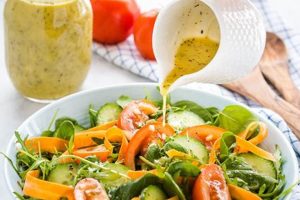
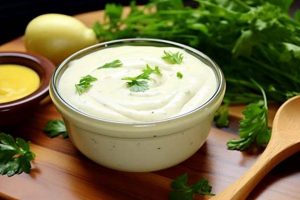
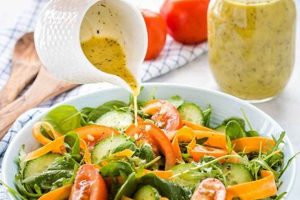
This vibrant, creamy dressing, typically associated with a popular Southwestern restaurant chain, combines the tangy flavor of tomatillos with cilantro, lime, and often jalapeo or other chili peppers. Variations exist, incorporating ingredients like cumin, garlic, or even avocado for a richer texture. It is frequently used to dress salads, but also serves as a marinade for meats or a flavorful topping for tacos and other dishes.
The appeal of this style of dressing lies in its balanced flavor profile. The acidity of tomatillos provides a refreshing counterpoint to richer elements, while the cilantro and chili peppers offer a bright, herbaceous complexity. Its popularity has grown beyond the restaurant setting, with numerous homemade versions adapted to individual preferences. This dressing reflects a broader trend toward fresh, vibrant flavors inspired by Southwestern cuisine. It offers a versatile alternative to traditional dressings, appealing to those seeking bolder tastes.
Further exploration will delve into the specifics of creating this dressing, including ingredient selection, preparation techniques, and variations to suit diverse palates. Guidance on achieving the perfect balance of flavors and textures will also be provided, allowing readers to recreate this popular dressing at home.
Tips for Crafting an Excellent Tomatillo Salad Dressing
Achieving the ideal balance of flavors and textures in a tomatillo-based salad dressing requires attention to detail. The following tips offer guidance for creating a dressing comparable to popular restaurant versions.
Tip 1: Tomatillo Selection and Preparation: Opt for firm, bright green tomatillos. Roasting or broiling tomatillos intensifies their flavor, adding a subtle smokiness. Alternatively, boiling or blending raw tomatillos offers a fresher, tangier taste.
Tip 2: Balancing Acidity: Lime juice is essential for balancing the tomatillo’s inherent tartness. Start with a moderate amount and adjust to taste, ensuring a harmonious flavor profile.
Tip 3: Cilantro Incorporation: Fresh cilantro is crucial for the characteristic flavor. Finely chop the cilantro to ensure even distribution throughout the dressing.
Tip 4: Heat Level Adjustment: Jalapeos or serrano peppers provide heat. Adjust the amount or remove seeds and membranes to control spiciness. Consider incorporating other chilies for nuanced flavor variations.
Tip 5: Enhancing Flavor Complexity: Garlic, cumin, and onion powder can add depth and complexity. Experiment with small amounts to find preferred flavor combinations.
Tip 6: Texture Considerations: A smooth, emulsified dressing is often preferred. Blending thoroughly achieves this consistency. For a chunkier texture, pulse the ingredients briefly or finely chop them by hand.
Tip 7: Avocado Inclusion (Optional): Adding avocado creates a creamier, richer dressing. Incorporate ripe avocado during blending for optimal texture and flavor.
By following these tips, one can create a flavorful and well-balanced tomatillo salad dressing that complements a variety of dishes. Attention to ingredient selection and preparation techniques yields optimal results.
The following section will explore specific recipe variations and serving suggestions.
1. Fresh Tomatillos

Fresh tomatillos form the foundation of the Cafe Rio-style tomatillo salad dressing, contributing the distinct tart, bright flavor that characterizes this popular condiment. Their selection and preparation significantly influence the final dressing’s quality and taste. Understanding the nuances of using fresh tomatillos is essential for replicating this recipe successfully.
- Flavor Profile
Tomatillos offer a unique flavor profile described as tangy, bright, and slightly citrusy with herbal undertones. This characteristic tartness balances the richness of other ingredients in the dressing, such as avocado or sour cream, creating a complex and refreshing flavor experience. The intensity of the tartness can vary slightly depending on the ripeness of the tomatillo.
- Ripeness and Selection
Selecting the right tomatillos is crucial. Ripe tomatillos are firm, bright green, and have a taut, papery husk that is easily removed. Avoid tomatillos that are soft, bruised, or have a yellowish hue, as these may indicate overripeness or spoilage. The husk should be dry and papery, not sticky or moist.
- Preparation Methods
Several preparation methods can enhance the tomatillo’s flavor and texture in the dressing. Roasting or broiling intensifies their inherent sweetness and imparts a smoky depth. Boiling or steaming softens the tomatillos and allows for easier blending. Alternatively, using raw tomatillos contributes a brighter, more assertive tartness to the final dressing.
- Impact on Overall Quality
The quality of the fresh tomatillos directly impacts the final dressing’s flavor and overall balance. Using fresh, high-quality tomatillos ensures a vibrant, flavorful dressing. Conversely, using subpar tomatillos can result in a bland or off-flavored dressing, diminishing the intended culinary experience. Proper storage of fresh tomatillos is also important to maintain their quality before use.
The careful selection and preparation of fresh tomatillos are paramount in achieving an authentic and flavorful Cafe Rio-style tomatillo salad dressing. Their inherent tartness, combined with appropriate cooking techniques, establishes the flavor foundation upon which other ingredients build, ultimately contributing to the dressing’s signature taste and appeal.
2. Zesty Lime Juice

Lime juice plays a crucial role in a Cafe Rio-style tomatillo salad dressing, providing a necessary acidic counterpoint to the tomatillo’s inherent earthiness and potential sweetness. This acidity brightens the overall flavor profile, preventing the dressing from becoming overly heavy or cloying. The sharpness of the lime also enhances the other herbaceous elements, such as cilantro, allowing their flavors to stand out. Without sufficient lime juice, the dressing risks tasting flat or unbalanced. In essence, the lime juice acts as a critical balancing agent, ensuring the diverse flavors harmonize effectively. One can observe this principle in other culinary applications, such as ceviche, where citrus juice “cooks” the seafood while simultaneously contributing a vibrant flavor dimension.
Furthermore, the specific type of lime used can subtly influence the dressing’s flavor. Key limes offer a more concentrated, aromatic tartness compared to the more common Persian limes. This intensity can further elevate the dressing’s complexity, adding another layer of flavor. The amount of lime juice used also requires careful consideration. Too little results in a muted flavor profile, while too much can make the dressing excessively tart. Experienced cooks often recommend adding lime juice gradually, tasting and adjusting until the desired balance is achieved. This iterative approach allows for nuanced flavor control, crucial for replicating the signature Cafe Rio taste.
In conclusion, the inclusion of zesty lime juice is not merely an optional ingredient but rather a fundamental component of a successful Cafe Rio-style tomatillo salad dressing. Its acidity provides essential balance, enhances other flavors, and contributes to the dressing’s overall brightness and complexity. Understanding the role and impact of lime juice empowers one to create a truly authentic and flavorful culinary experience.
3. Aromatic Cilantro

Aromatic cilantro forms an integral part of the Cafe Rio-style tomatillo salad dressing recipe, contributing a distinctive herbaceous, citrusy, and slightly peppery flavor dimension. This herb’s presence elevates the dressing beyond a simple tomatillo and lime base, adding complexity and freshness. Omitting cilantro significantly alters the flavor profile, resulting in a less vibrant and nuanced experience. Cilantro’s characteristic aroma and taste complement the tomatillo’s tartness and the lime’s acidity, creating a synergistic flavor combination often found in Southwestern cuisine. One can observe a similar dynamic in salsa verde, where cilantro plays a crucial role in establishing the sauce’s signature flavor profile. The quantity of cilantro used influences the dressing’s overall intensity; a greater amount yields a more pronounced herbaceous character, while a smaller amount allows other flavors to take center stage.
The freshness of the cilantro also plays a vital role. Freshly chopped cilantro offers the most vibrant flavor and aroma. Dried cilantro, while sometimes used as a substitute, lacks the same intensity and can impart a slightly different flavor. Therefore, utilizing fresh cilantro is generally preferred for achieving an authentic Cafe Rio-style dressing. Furthermore, proper handling of cilantro contributes to the final product’s quality. Washing and gently drying the cilantro before chopping helps preserve its delicate leaves and prevent bruising, maximizing its aromatic contribution to the dressing.
In summary, aromatic cilantro functions as more than just a garnish in the Cafe Rio tomatillo salad dressing recipe. It contributes a crucial layer of flavor, balancing the other ingredients and adding depth and complexity. Understanding the importance of using fresh, high-quality cilantro, and incorporating it appropriately, ensures a more authentic and flavorful outcome. This principle of balancing flavors with fresh herbs extends beyond this specific recipe, offering a valuable lesson for various culinary endeavors.
4. Spicy Jalapeo
Jalapeo peppers contribute a crucial element of heat and complexity to Cafe Rio-style tomatillo salad dressing. Their inclusion provides a counterpoint to the tomatillo’s tartness and the cilantro’s herbaceous notes, creating a more balanced and dynamic flavor profile. The level of heat introduced by jalapeos can be adjusted based on individual preferences and the desired intensity of the final dressing. Incorporating jalapeos without seeds and membranes yields a milder heat, while including these components significantly increases the spiciness. This allows for customization and caters to a wider range of palates. Authentic Cafe Rio dressing often incorporates a moderate level of heat, providing a pleasant warmth without overpowering the other flavors.
The specific type of jalapeo used can also influence the final flavor profile. Fresher jalapeos generally offer a brighter, more vegetal flavor, while pickled jalapeos introduce a tangy, slightly fermented note. This choice depends on the desired flavor nuances and overall balance. Some variations of the dressing incorporate other chili peppers, such as serranos or habaneros, for a different type of heat and flavor profile. However, jalapeos remain the most common choice, aligning with the traditional flavor profile associated with Cafe Rio-style cuisine. The interaction between the jalapeo’s heat and the other ingredients creates a complex interplay of flavors, essential for replicating the authentic taste.
Understanding the role of jalapeos in Cafe Rio-style tomatillo salad dressing allows for informed ingredient selection and preparation. Careful consideration of the jalapeo’s heat level and its interaction with other components contributes significantly to the dressing’s overall quality and authenticity. This principle of balancing heat with other flavor elements extends beyond this particular recipe, offering a valuable lesson applicable to various culinary applications.
5. Smooth Emulsification

Smooth emulsification is critical for the texture and flavor delivery of Cafe Rio-style tomatillo salad dressing. A properly emulsified dressing exhibits a cohesive, creamy texture, ensuring uniform distribution of flavors across each bite. This contrasts with a separated dressing where oil and water-based ingredients remain distinct, leading to an inconsistent and less palatable experience. Emulsification suspends the smaller flavor particles throughout the dressing, preventing them from pooling and ensuring a balanced flavor in every mouthful. This uniform texture also contributes to the dressing’s ability to cling to salad ingredients, further enhancing flavor delivery. A broken emulsion, conversely, results in a watery consistency and uneven flavor distribution, detracting from the overall culinary experience.
The process of emulsification involves combining the oil-based components (typically oil or avocado) with the water-based ingredients (tomatillo, lime juice, etc.) in a way that creates a stable mixture. High-speed blending facilitates this process by breaking down the oil into smaller droplets and dispersing them evenly throughout the water-based phase. The addition of emulsifying agents, such as avocado or a small amount of mayonnaise, further stabilizes the emulsion, preventing separation over time. The choice of emulsifying agent can also influence the dressing’s final flavor and richness. For instance, using avocado contributes a creamy texture and subtle flavor, whereas mayonnaise adds a richer, tangier element. Careful consideration of these factors ensures a stable, flavorful, and aesthetically pleasing dressing.
Achieving a smooth emulsion is essential for replicating the authentic Cafe Rio experience. This textural element, often overlooked, plays a crucial role in the dressing’s appeal and effectiveness. The smooth, creamy consistency allows the complex flavors of tomatillo, lime, cilantro, and jalapeo to meld harmoniously, delivering a balanced and satisfying sensory experience. Failure to achieve proper emulsification compromises the dressing’s integrity and diminishes the overall quality of the dish. Therefore, understanding and implementing the principles of emulsification is paramount for crafting a successful Cafe Rio-style tomatillo salad dressing.
Frequently Asked Questions
This section addresses common inquiries regarding the preparation and characteristics of tomatillo-based salad dressings inspired by the popular restaurant chain.
Question 1: What distinguishes this style of dressing from other tomatillo dressings?
The signature flavor profile typically combines roasted tomatillos, cilantro, lime juice, and jalapeo, creating a balance of tangy, spicy, and herbaceous notes. Variations exist, but this core combination sets it apart.
Question 2: Can the dressing be made ahead of time?
Yes, the dressing can be prepared in advance and stored in an airtight container in the refrigerator for up to three days. The flavors often meld and intensify over time.
Question 3: What are suitable substitutes for cilantro?
While cilantro is essential for the authentic flavor, parsley or papalo can be considered as substitutes, though they will impart different flavor nuances.
Question 4: How can the dressing’s spiciness be adjusted?
Adjusting the amount of jalapeo, removing seeds and membranes, or substituting milder peppers like poblanos allows for control over the heat level.
Question 5: Beyond salads, what other applications exist for this dressing?
This dressing serves as a versatile marinade for chicken, fish, or pork, and functions well as a sauce for tacos, enchiladas, or grilled vegetables.
Question 6: What causes the dressing to separate, and how can this be prevented?
Separation occurs when the emulsion breaks. Thorough blending and the inclusion of an emulsifying agent, such as avocado, helps maintain a stable, creamy texture.
Understanding these frequently asked questions provides a foundation for successfully creating and utilizing this versatile dressing.
The following section will offer a selection of recipe variations to explore.
Cafe Rio Tomatillo Salad Dressing Recipe
This exploration has delved into the components that contribute to a successful tomatillo salad dressing reminiscent of the popular restaurant chain. From the foundational ingredient of fresh tomatillos to the balancing acidity of lime juice, the aromatic cilantro, the nuanced heat of jalapeo, and the importance of achieving a smooth emulsion, each element plays a crucial role in the final product. Understanding the selection, preparation, and interaction of these components allows for a deeper appreciation of the dressing’s complex flavor profile. Furthermore, addressing common inquiries and offering variations empowers culinary enthusiasts to adapt and refine the recipe to suit individual preferences.
The seemingly simple combination of ingredients yields a remarkably versatile and flavorful dressing. Continued experimentation with variations and applications promises further culinary discoveries, highlighting the enduring appeal of fresh, vibrant flavors inspired by Southwestern cuisine. Mastery of this dressing provides a foundation for exploring broader culinary horizons, encouraging creativity and innovation in the kitchen.