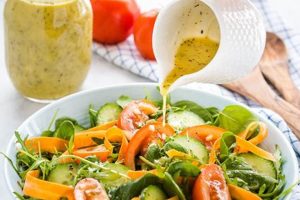
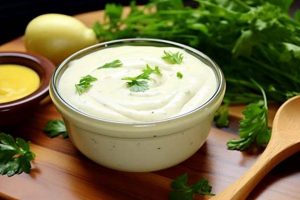
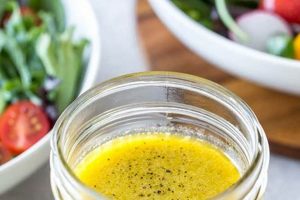
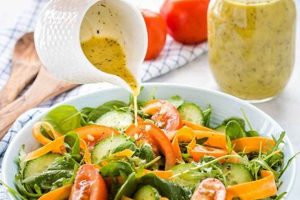
A blend of sesame oil, often toasted, with acidic components like rice vinegar or lemon juice forms the foundation of this condiment. Additional ingredients, such as soy sauce, ginger, garlic, honey, or chili flakes, contribute complexity and adjust the balance of sweet, salty, savory, and spicy flavors. Variations range from creamy emulsions, thickened with mayonnaise or tahini, to light and tangy vinaigrettes.
The rich, nutty flavor of sesame enhances the freshness of salads and other dishes. Its versatility allows for pairing with diverse cuisines, from East Asian-inspired salads with shredded vegetables and noodles to Mediterranean-style combinations featuring greens, feta, and olives. Historically, sesame oil has been valued not only for its culinary applications but also for its purported health benefits, some of which include antioxidant properties and potential positive effects on cardiovascular health. This nutritional aspect further contributes to the appeal of dressings featuring this ingredient.
Further exploration will delve into specific formulation options, ranging from classic preparations to innovative twists on this versatile dressing, alongside guidance on ingredient selection and preparation techniques.
Tips for Crafting Exceptional Sesame Dressings
Optimizing flavor and texture requires attention to detail. The following tips offer guidance for creating a superior culinary experience.
Tip 1: Toast the Sesame Seeds: Toasting sesame seeds in a dry pan over medium heat enhances their nutty aroma and flavor. Watch carefully to prevent burning.
Tip 2: Explore Oil Variations: Both toasted and untoasted sesame oils offer distinct flavor profiles. Toasted oil imparts a deeper, more intense flavor, while untoasted oil provides a milder option.
Tip 3: Balance Acidity: Achieve the desired balance by using rice vinegar, lemon juice, or lime juice. Taste and adjust accordingly.
Tip 4: Sweeten Thoughtfully: Honey, maple syrup, or agave nectar add subtle sweetness. Start with a small amount and adjust based on preference.
Tip 5: Incorporate Umami: Soy sauce, tamari, or fish sauce contributes a savory depth. Consider a small amount of miso paste for a richer umami flavor.
Tip 6: Enhance with Aromatics: Freshly grated ginger, minced garlic, or finely chopped shallots elevate the flavor profile.
Tip 7: Emulsify for Creaminess: For a creamier dressing, whisk in mayonnaise, tahini, or a small amount of Dijon mustard.
Tip 8: Season Carefully: A pinch of salt and freshly ground black pepper enhances the overall flavor composition.
Attention to these details ensures a well-balanced and flavorful dressing that complements a variety of dishes. The resulting creation will elevate salads and other culinary creations.
By following these tips, culinary enthusiasts can confidently create exceptional sesame-based dressings that enhance any meal.
1. Sesame Seeds
Sesame seeds constitute a foundational element in sesame seed salad dressings, contributing significantly to the characteristic flavor and texture. Understanding their various facets provides insight into their culinary role.
- Flavor Profile
Sesame seeds offer a distinctive nutty taste, amplified by toasting. This inherent flavor becomes a cornerstone of the dressing’s overall profile, complementing other ingredients and providing a pleasant baseline. The intensity of the nutty notes can be adjusted through the degree of toasting.
- Texture and Mouthfeel
The small, delicate seeds contribute a subtle crunch to the dressing. Their presence adds textural interest, especially in otherwise smooth dressings. The amount of seeds incorporated directly impacts the final textural experience. Ground sesame seeds, on the other hand, contribute to a smoother consistency.
- Nutritional Value
Beyond flavor and texture, sesame seeds offer nutritional benefits. They contain healthy fats, fiber, and minerals. Incorporating them into a salad dressing enhances not only the taste but also the nutritional profile. This nutritional contribution aligns with the growing interest in health-conscious food choices.
- Variety and Forms
Sesame seeds exist in various colors, including white, black, and brown, each offering subtle flavor nuances. They can be used whole, toasted, or ground into a paste (tahini). This versatility allows for nuanced flavor adjustments within the dressing, offering opportunities for customization and experimentation.
Careful consideration of these facets, from flavor and texture to nutritional value and available forms, allows for the creation of a sesame seed salad dressing tailored to specific preferences. The interplay of these elements determines the overall sensory and nutritional experience.
2. Oil (Sesame, Toasted)

Sesame oil stands as a defining component in sesame seed salad dressings, contributing significantly to both flavor and aroma. The distinction between toasted and untoasted sesame oil offers distinct nuances, allowing for tailored flavor profiles. Toasting sesame seeds prior to pressing intensifies the nutty aroma and imparts a richer, deeper flavor to the oil. This process creates a complex flavor profile that complements the other ingredients in the dressing. Untoasted sesame oil, while still possessing a nutty flavor, presents a lighter and more delicate profile, suitable for dressings intended for milder flavor pairings. The choice between toasted and untoasted oil significantly influences the final taste of the dressing.
The quantity of sesame oil utilized also impacts the overall sensory experience. A higher proportion of sesame oil results in a more pronounced sesame flavor, while a smaller amount allows other ingredients to take a more prominent role. For example, a dressing designed to complement a delicate green salad might benefit from a smaller quantity of toasted sesame oil to avoid overpowering the subtle flavors of the greens. Conversely, a dressing intended for a robust noodle salad or a heartier dish could incorporate a greater quantity of toasted sesame oil to provide a richer flavor that complements the other ingredients.
Understanding the role of toasted sesame oil within the larger context of a sesame seed salad dressing recipe allows for precise flavor manipulation and customization. Careful consideration of the type and quantity of sesame oil, combined with a thoughtful selection of complementary ingredients, ensures a well-balanced and flavorful dressing suitable for a diverse range of culinary applications. Balancing the intensity of the sesame oil with other components, such as acidity and sweetness, creates a harmonious and flavorful final product.
3. Acidic Component

Acidity plays a crucial role in sesame seed salad dressings, providing balance and enhancing the overall flavor profile. The acidic component counteracts the richness of the sesame oil, creating a more harmonious and palatable experience. Without sufficient acidity, the dressing can taste overly heavy and cloying. Furthermore, the acidic element brightens the other flavors, allowing the nuances of the sesame, aromatics, and any additional ingredients to shine through. Common acidic components include rice vinegar, which offers a mild and slightly sweet acidity, lemon juice, which contributes a fresh and citrusy note, and lime juice, which provides a tangy and vibrant flavor. The choice of acidic component depends on the desired flavor profile and the other ingredients in the dressing. For instance, a dressing featuring ginger and garlic might benefit from the complementary brightness of lime juice, while a dressing with a focus on sweetness might be balanced by the subtle acidity of rice vinegar.
The concentration of the acidic component requires careful consideration. Too much acidity can make the dressing overly sharp and unpleasant, while too little fails to provide the necessary balance. Achieving the correct balance requires careful tasting and adjustment. Starting with a smaller amount of acid and gradually increasing it allows for precise control over the final flavor profile. The interaction of the acidic component with other ingredients, particularly sweeteners, influences the final result. The interplay between sweet and sour elements adds depth and complexity to the dressing. For example, a dressing featuring honey and rice vinegar creates a balanced sweet and sour flavor profile characteristic of many Asian-inspired cuisines. Alternatively, a dressing featuring agave nectar and lime juice might create a brighter, more tropical flavor combination.
The careful selection and precise application of the acidic component constitute essential steps in creating a well-balanced and flavorful sesame seed salad dressing. The interplay of acidity with other flavor elements, such as the richness of the sesame oil and the sweetness of any added sugars, defines the overall sensory experience. Understanding this interplay allows for the creation of dressings tailored to specific flavor preferences and culinary applications, showcasing the versatility of this foundational condiment. Challenges may arise in balancing the acidity with other strong flavors, but thoughtful experimentation and attention to detail will yield a harmonious and delicious result.
4. Sweetener (Optional)

Sweeteners, while optional, contribute significantly to the complexity and balance of a sesame seed salad dressing recipe. Their presence tempers the acidity and richness of other components, creating a more rounded flavor profile. The judicious use of sweeteners enhances the savory and nutty notes of the sesame, preventing the dressing from becoming overly sharp or heavy. This balancing act is crucial, especially when using intensely flavored ingredients like toasted sesame oil or strongly acidic components like lime juice. For example, a touch of honey can mellow the assertive tang of rice vinegar, allowing the nutty undertones of the sesame to emerge more prominently. Alternatively, a small amount of maple syrup can complement the robust flavor of toasted sesame oil, creating a richer, more nuanced dressing. The choice of sweetener depends on the desired outcome and the other ingredients employed. Honey imparts a floral sweetness, while maple syrup offers a subtle caramel note. Agave nectar provides a neutral sweetness, allowing other flavors to shine through.
The quantity of sweetener used requires careful consideration. Over-sweetening can mask the delicate flavors of the sesame and other ingredients, resulting in an unbalanced dressing. Starting with a small amount and gradually increasing, while tasting frequently, allows for precise control over the final sweetness level. The interaction of the sweetener with the acidic component is particularly important. The balance between sweet and sour elements creates a dynamic tension that enhances the overall flavor profile. For instance, a dressing featuring honey and rice vinegar achieves a classic sweet and sour balance reminiscent of Asian-inspired cuisine. This balance allows the natural sweetness of the honey to shine through without being cloying, while the rice vinegar provides a refreshing counterpoint. The interplay of these elements contributes to the complexity and depth of flavor in the finished dressing.
Understanding the role and impact of sweeteners in a sesame seed salad dressing recipe allows for precise flavor manipulation and customization. While not strictly necessary, sweeteners offer an opportunity to enhance the complexity and balance of the dressing, creating a more nuanced and satisfying culinary experience. Careful consideration of the type and quantity of sweetener, in conjunction with the other ingredients, allows for the creation of a dressing tailored to specific palates and culinary applications. Successfully integrating a sweetener necessitates attention to its interaction with other components, particularly the acidic element, to achieve a harmonious and balanced final product.
5. Umami Element

Umami, often described as the fifth taste, plays a crucial role in elevating sesame seed salad dressings beyond simple flavor combinations. Incorporating umami-rich ingredients adds depth and complexity, transforming a basic dressing into a nuanced culinary experience. Umami enhances the inherent nuttiness of sesame, creating a savory foundation that complements a wide range of salad ingredients.
- Soy Sauce
Soy sauce, a staple in many Asian cuisines, provides a readily available source of umami. Its salty, fermented flavor profile complements the nutty sesame, creating a balanced and savory base for the dressing. The variety of soy sauces available, from light to dark, allows for nuanced flavor adjustments. For example, a lighter soy sauce might be preferred for delicate green salads, while a darker soy sauce could enhance the robustness of a noodle salad.
- Miso Paste
Miso paste, a fermented soybean product, offers a more intense umami flavor than soy sauce. Its complex flavor profile, ranging from sweet and nutty to savory and earthy, adds depth and complexity to the dressing. Different types of miso, such as white, yellow, or red, provide varying levels of intensity and sweetness. White miso, with its milder flavor, might complement a delicate vinaigrette, while red miso, with its stronger, more pungent taste, could enhance a heartier dressing.
- Fish Sauce
Fish sauce, a pungent liquid made from fermented fish, contributes a unique umami dimension. While its strong aroma might not suit all palates, its savory depth adds complexity and richness to the dressing. Used sparingly, fish sauce can enhance the other flavors without overpowering them. Its inclusion might be particularly suitable for dressings intended for Southeast Asian-inspired salads or dishes featuring seafood.
- Dried Mushrooms
Dried mushrooms, particularly shiitake or porcini, offer a concentrated source of umami. Rehydrating them in hot water creates a flavorful broth that can be incorporated into the dressing. This infusion imparts an earthy, savory depth, complementing the nuttiness of the sesame. The rehydrated mushrooms can also be finely chopped and added to the dressing for added texture and flavor.
Strategic incorporation of umami elements elevates sesame seed salad dressings from simple condiments to complex flavor experiences. The careful selection and balancing of these ingredients, in conjunction with the other components of the recipe, allow for customized flavor profiles tailored to specific culinary applications. The synergy between umami and sesame creates a foundation that enhances the overall enjoyment of the salad, providing a depth of flavor that complements a diverse array of ingredients.
6. Aromatics/Spices

Aromatics and spices constitute critical elements within sesame seed salad dressing recipes, contributing complexity and depth beyond the foundational sesame flavor. Their judicious application elevates the dressing from a simple condiment to a nuanced culinary creation. Specific aromatics and spices interact synergistically with sesame, creating a balanced and harmonious flavor profile. For example, the pungent warmth of ginger complements sesame’s nutty richness, while the sharp bite of garlic adds a savory dimension. The interplay of these flavors creates a multi-layered sensory experience that enhances the overall enjoyment of the salad. Freshly grated ginger, minced garlic, and finely chopped shallots represent frequently employed aromatics, each contributing distinct yet complementary notes. Subtle additions of chili flakes introduce a gentle heat, adding another layer of complexity. These additions, even in small quantities, significantly impact the final flavor profile.
The selection and quantity of aromatics and spices depend on the desired flavor profile and the other ingredients in the dressing. A dressing intended for a light and refreshing salad might benefit from a delicate hint of ginger and a touch of garlic, while a dressing designed for a more robust salad could incorporate a greater quantity of these aromatics, along with a subtle hint of chili flakes for added warmth. Fresh aromatics generally offer a brighter, more vibrant flavor, while dried spices provide a more concentrated and often earthier taste. Achieving the desired flavor balance requires careful consideration of these nuances. Overuse of strong aromatics, such as garlic or chili flakes, can easily overpower the delicate flavor of the sesame, creating an unbalanced dressing. Conversely, insufficient incorporation fails to enhance the complexity of the flavor profile, leaving the dressing tasting one-dimensional.
Understanding the interplay between aromatics, spices, and sesame seeds enables the creation of dressings tailored to specific palates and culinary applications. The careful selection and precise application of these elements constitute critical steps in crafting a well-balanced and flavorful sesame seed salad dressing. Achieving a harmonious flavor profile requires attention to detail and a willingness to experiment, ultimately transforming a simple mixture of ingredients into a complex and satisfying culinary creation. Challenges may arise in balancing the intensity of individual aromatics and spices with the subtler notes of the sesame, but thoughtful experimentation and precise measurement lead to a harmonious and delightful result.
7. Emulsifier (Optional)
Emulsifiers, while optional, play a significant role in influencing the texture and stability of sesame seed salad dressings. Their presence allows for the creation of creamy, homogenous dressings where the oil and aqueous components remain unified, preventing separation. This stability enhances both the visual appeal and the mouthfeel of the dressing. Without an emulsifier, sesame oil, being less dense than water-based ingredients like vinegar or citrus juice, tends to separate, requiring vigorous shaking or whisking before each use. Incorporating an emulsifier mitigates this issue, ensuring a consistently smooth and well-combined dressing.
Common emulsifiers suitable for sesame seed salad dressings include tahini (sesame seed paste), mayonnaise, and Dijon mustard. Tahini, due to its sesame base, seamlessly integrates into the flavor profile, enhancing the nutty notes while contributing to a creamy texture. Mayonnaise, while not traditionally associated with Asian cuisine, offers a neutral flavor profile and excellent emulsifying properties, making it a versatile option for creating creamy dressings. Dijon mustard, with its sharp tang and emulsifying capabilities, adds a subtle complexity to the dressing while promoting stability. The choice of emulsifier depends on the desired flavor profile and the overall composition of the dressing. A dressing emphasizing the sesame flavor might benefit from the complementary nature of tahini, while a dressing seeking a more neutral base might utilize mayonnaise. The quantity of emulsifier employed directly impacts the final texture, ranging from a light creaminess to a thicker, more viscous consistency.
Understanding the role of emulsifiers allows for precise control over the texture and stability of sesame seed salad dressings. While not essential, their incorporation offers practical benefits, creating a more visually appealing and palatable condiment. Careful selection of the appropriate emulsifier, considering its flavor profile and emulsifying properties, contributes to a well-balanced and harmonious final product. Balancing the emulsifier with other ingredients prevents the dressing from becoming overly thick or heavy, ensuring a pleasant mouthfeel and enhancing the overall sensory experience. Potential challenges include selecting an emulsifier that complements rather than clashes with the other flavors, and using the correct amount to achieve the desired consistency without compromising the balance of the dressing. Addressing these considerations allows for the creation of a stable and flavorful sesame seed salad dressing tailored to specific preferences and culinary applications.
Frequently Asked Questions
This section addresses common inquiries regarding the preparation and utilization of sesame seed salad dressings.
Question 1: How can one prevent toasted sesame seeds from burning?
Constant stirring over medium heat ensures even toasting. Seeds are sufficiently toasted when they become fragrant and lightly golden.
Question 2: What distinguishes toasted sesame oil from untoasted sesame oil in dressings?
Toasted sesame oil possesses a more intense, nutty flavor due to the roasting process, while untoasted oil offers a milder taste.
Question 3: Can alternative acidic components be used besides rice vinegar?
Lemon juice, lime juice, or other mild vinegars, such as apple cider vinegar, provide suitable alternatives to rice vinegar. Selection depends on the desired flavor profile.
Question 4: How does one achieve the correct balance of sweetness in the dressing?
Start with a small amount of sweetener and gradually increase while tasting. The desired level of sweetness depends on personal preference and the other ingredients present.
Question 5: What can be used as an emulsifier if tahini is unavailable?
Mayonnaise or a small amount of Dijon mustard serves as effective emulsifiers if tahini is not readily available.
Question 6: How should sesame seed salad dressing be stored?
Refrigeration in an airtight container preserves the dressing’s quality for up to one week. Separation may occur; shaking or whisking before use restores the emulsion.
Careful consideration of these points facilitates successful preparation and utilization of sesame seed salad dressings, contributing to a satisfying culinary experience.
Exploration of specific recipe variations follows in the next section.
Sesame Seed Salad Dressing Recipe
Exploration of sesame seed salad dressing recipes reveals a versatile condiment adaptable to diverse culinary applications. Careful consideration of core componentssesame seeds, oil, acid, sweetener, umami element, aromatics, and emulsifierallows for precise flavor manipulation and customization. Balancing these elements creates a harmonious blend of nutty, savory, sweet, and acidic notes, enhancing the overall sensory experience of any salad or dish. Understanding the interplay of these ingredients empowers culinary creativity and ensures a well-balanced final product. Proper storage preserves the dressing’s quality, maximizing its culinary potential.
Mastery of sesame seed salad dressing recipes offers a pathway to culinary excellence. This foundational knowledge provides a springboard for further exploration and experimentation, enabling the creation of unique and flavorful dressings tailored to individual preferences. The versatility of this condiment allows for seamless integration into diverse cuisines and dietary needs, promising a continued presence in culinary traditions worldwide.