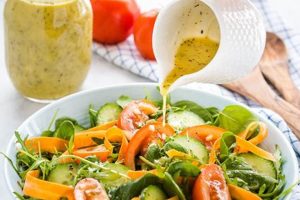
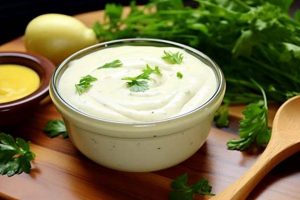
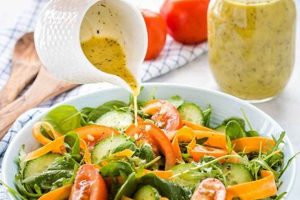
Olive oil-based salad dressings offer a healthy and flavorful way to enhance fresh greens and vegetables. These dressings typically involve a simple emulsion of oil, an acidic element like vinegar or citrus juice, and seasonings. For example, a classic vinaigrette combines olive oil with red wine vinegar, Dijon mustard, salt, and pepper. Variations can include herbs, spices, garlic, or shallots.
From a nutritional standpoint, olive oil provides heart-healthy monounsaturated fats and antioxidants. Its distinct flavor profile complements a wide range of ingredients, making it a versatile base for both everyday and more elaborate dressings. The historical use of olive oil in culinary applications, particularly in Mediterranean cuisine, demonstrates its enduring appeal and recognized contribution to both flavor and well-being.
The following sections will explore specific recipes for easy-to-prepare olive oil-based dressings, ranging from basic vinaigrettes to creamy emulsions, along with tips for customization and ingredient selection.
Tips for Crafting Exceptional Olive Oil-Based Dressings
Achieving a well-balanced and flavorful salad dressing relies on a few key principles. The following tips offer guidance for creating delicious olive oil-based dressings at home.
Tip 1: Emulsification is Key: A stable emulsion prevents the oil and vinegar from separating. Whisk the vinegar and seasonings together vigorously before slowly drizzling in the olive oil while continuing to whisk. This creates a cohesive dressing with a pleasing texture.
Tip 2: Balance Flavors: The ratio of oil to acid significantly impacts the dressing’s taste. A general guideline is a 3:1 ratio of oil to vinegar, but this can be adjusted to personal preference. Taste and adjust as needed, adding more vinegar for sharpness or more oil for richness.
Tip 3: Fresh Ingredients Matter: High-quality olive oil contributes significantly to the overall flavor. Opt for extra virgin olive oil for its robust flavor and health benefits. Freshly squeezed citrus juice and herbs elevate the dressing’s brightness and complexity.
Tip 4: Seasoning is Crucial: Salt and freshly ground black pepper are essential seasonings. A pinch of sugar or a touch of honey can balance acidity and enhance other flavors. Experiment with different herbs, spices, and aromatics like garlic or shallots.
Tip 5: Consider the Salad: The type of salad influences the choice of dressing. A light vinaigrette complements delicate greens, while a creamy dressing pairs well with heartier vegetables or grains.
Tip 6: Storage: Store homemade dressings in an airtight container in the refrigerator for up to a week. Shake well before serving, as some separation may occur.
Tip 7: Experiment with Flavor Combinations: Don’t be afraid to explore different flavor profiles. Try adding Dijon mustard, maple syrup, roasted garlic, or different types of vinegar to create unique and delicious dressings.
By following these tips, one can create delicious and healthy olive oil-based dressings that elevate any salad. Mastering the art of emulsification, balancing flavors, and selecting quality ingredients ensures a consistently satisfying culinary experience.
This exploration of tips provides a strong foundation for crafting exceptional dressings. The following conclusion will summarize the core principles and encourage further experimentation in the kitchen.
1. Fresh, High-Quality Olive Oil

Fresh, high-quality olive oil stands as a cornerstone of simple salad dressing recipes. The quality of olive oil directly impacts the final flavor profile of the dressing. Subtle nuances present in superior oils, such as grassy, peppery, or fruity notes, become prominent flavor components. Conversely, lower-quality oils, often characterized by bland or even rancid tastes, can detract significantly from the overall sensory experience. A simple vinaigrette, composed of little more than olive oil, vinegar, and seasonings, exemplifies this impact. The olive oil’s character becomes a defining feature, showcasing the importance of selecting a high-quality product. For instance, a Tuscan extra virgin olive oil, known for its peppery finish, adds a distinct dimension to a basic vinaigrette, elevating it beyond a simple mixture of ingredients.
The freshness of olive oil further contributes to the overall quality of the dressing. Olive oil, like any other agricultural product, degrades over time. Exposure to light, heat, and air accelerates this process, leading to a decline in flavor and nutritional value. Using fresh olive oil ensures optimal flavor and maximizes the health benefits associated with its consumption. Consider a lemon-herb vinaigrette: fresh olive oil allows the bright citrus and herbal notes to shine, while oxidized oil might introduce unwanted off-flavors, masking the delicate balance of the dressing. Choosing an oil with a recent harvest date and storing it properly in a cool, dark place helps preserve its freshness and enhances the final result.
In summary, the emphasis on fresh, high-quality olive oil in simple salad dressing recipes stems from its profound impact on the final product. The inherent flavors of the oil, coupled with its susceptibility to degradation, underscore the need for careful selection and proper storage. Recognizing this connection allows for the creation of dressings that not only taste exceptional but also offer the full nutritional benefits of this valuable ingredient. By understanding the crucial role of olive oil, one can elevate simple recipes to new heights, transforming a basic salad into a culinary delight.
2. Variety of Acidic Components
The interplay between olive oil and acidity forms the foundation of countless simple salad dressing recipes. The acidic component not only balances the richness of the oil but also plays a crucial role in flavor development, texture, and overall palate appeal. Exploring the variety of acidic options available expands the potential for creating diverse and exciting dressings.
- Vinegars:
Vinegars, ranging from classic red wine and white wine vinegars to balsamic, apple cider, and sherry vinegars, offer a wide spectrum of flavor profiles. Red wine vinegar contributes a robust, fruity tartness, while white wine vinegar provides a lighter, sharper bite. Balsamic vinegar, with its sweet and tangy notes, adds depth and complexity. The choice of vinegar significantly influences the final character of the dressing. For example, a champagne vinaigrette benefits from the delicate acidity of champagne vinegar, allowing the subtle flavors of the wine to shine through.
- Citrus Juices:
Citrus juices, particularly lemon and lime, offer a vibrant and refreshing acidity. Lemon juice provides a clean, zesty brightness, while lime juice introduces a more tropical, aromatic tang. These juices are particularly well-suited for lighter dressings and pair exceptionally well with fresh herbs and delicate greens. A simple lemon-herb vinaigrette exemplifies this, where the lemon juice enhances the herbaceous notes and creates a light and refreshing dressing ideal for summer salads.
- Other Fruit Juices:
Beyond citrus, other fruit juices, such as orange, grapefruit, and pomegranate, can contribute unique acidic notes to salad dressings. Orange juice adds a touch of sweetness alongside its acidity, while grapefruit juice offers a slightly bitter edge. Pomegranate juice introduces a complex, tart-sweet flavor profile with intriguing floral undertones. These juices can be particularly effective in creating dressings for fruit salads or salads featuring roasted vegetables.
- Yogurt and Buttermilk:
While not strictly acidic in the same way as vinegars or citrus juices, yogurt and buttermilk contribute a tangy element that can balance the richness of olive oil in creamy dressings. These dairy-based components add a creamy texture and a subtle lactic acidity, creating dressings that are both flavorful and satisfying. A Greek yogurt-based dressing, for instance, can be blended with olive oil, herbs, and spices to create a thick and creamy dressing ideal for heartier salads or as a dip for vegetables.
The variety of acidic components available for crafting simple olive oil-based dressings provides a vast landscape for culinary exploration. Each option imparts unique characteristics, allowing for the creation of dressings that perfectly complement a wide array of salads and ingredients. Understanding the interplay of these acidic elements with the rich, nuanced flavors of olive oil unlocks the potential for crafting exceptional dressings tailored to individual preferences and culinary creations.
3. Complementary Seasonings

Complementary seasonings play a vital role in elevating simple salad dressing recipes with olive oil from basic to exceptional. These seasonings, ranging from herbs and spices to alliums and other aromatics, add depth, complexity, and intrigue to the fundamental emulsion of oil and acid. Their careful selection and balanced incorporation significantly influence the final flavor profile of the dressing and its suitability for various salad ingredients.
- Herbs:
Fresh herbs provide brightness and aromatic complexity to olive oil-based dressings. Common choices include parsley, chives, dill, mint, oregano, and thyme. Each herb offers a distinct flavor profile, allowing for a wide range of flavor combinations. For example, a lemon-herb dressing might feature the bright citrus notes of lemon juice complemented by the fresh, grassy flavors of parsley and chives. Conversely, a Mediterranean-inspired dressing could utilize oregano and thyme to evoke the region’s characteristic herbal profile. The selection of herbs should complement both the other dressing ingredients and the salad’s components.
- Spices:
Ground or whole spices contribute warmth, depth, and subtle heat to olive oil dressings. Black pepper provides a universal touch of pungency, while paprika introduces a smoky sweetness. Cumin, coriander, and chili flakes offer varying levels of heat and complexity. A simple cumin-lime vinaigrette, for example, highlights the earthy, warm notes of cumin balanced by the bright acidity of lime juice. The judicious use of spices can create intriguing flavor combinations that enhance the overall sensory experience of the salad.
- Alliums:
Alliums, such as garlic and shallots, offer a pungent and savory dimension to olive oil dressings. Minced garlic provides a robust, assertive flavor, while finely chopped shallots contribute a milder, sweeter allium note. Roasting these alliums mellows their intensity and adds a subtle sweetness. A roasted garlic vinaigrette, for instance, showcases the mellowed sweetness and rich depth of roasted garlic, complementing the smooth texture of the olive oil. The intensity of the allium flavor can be adjusted based on personal preference and the overall flavor profile of the dressing.
- Other Aromatics:
Beyond herbs, spices, and alliums, other aromatics can further enhance the complexity of olive oil dressings. Ginger adds a spicy warmth, while grated citrus zest contributes a burst of citrus aroma. A touch of Dijon mustard provides a subtle tang and helps emulsify the dressing. Incorporating these additional aromatics allows for further customization and refinement of the dressing’s flavor profile. For example, a ginger-soy vinaigrette might feature the warm spice of ginger combined with the savory umami of soy sauce, creating a dressing ideal for Asian-inspired salads.
The careful selection and balanced incorporation of complementary seasonings are essential for crafting truly exceptional simple salad dressings with olive oil. These seasonings, whether fresh herbs, warm spices, pungent alliums, or other aromatics, elevate the basic emulsion of oil and acid, transforming it into a complex and flavorful culinary creation. By understanding the interplay of these various flavor components, one can create dressings that not only enhance the taste of the salad but also reflect individual culinary preferences and creativity.
4. Proper Emulsification Technique

Proper emulsification is crucial for creating successful simple salad dressing recipes with olive oil. It transforms the individual componentsoil, acid, and seasoningsinto a homogenous, cohesive mixture rather than a separated, oily layer floating atop a watery one. This process not only enhances the dressing’s visual appeal and textural consistency but also ensures a balanced distribution of flavors in every bite.
- Temporary vs. Permanent Emulsions:
Salad dressings typically exemplify temporary emulsions, meaning the mixture eventually separates back into its constituent parts. While permanent emulsions, like mayonnaise, achieve long-term stability through specific emulsifying agents, temporary emulsions rely on techniques like whisking or blending to create a homogenous mixture that lasts for a reasonable serving duration. Understanding this distinction informs the preparation and serving of olive oil-based dressings. A classic vinaigrette, for instance, requires a vigorous whisk before serving to re-emulsify the separated layers, ensuring a balanced flavor experience.
- The Role of Whisking:
Whisking vigorously is the most common method for creating temporary emulsions in simple salad dressings. The rapid movement of the whisk disperses the oil into tiny droplets within the vinegar, creating a homogenous appearance and texture. The continuous agitation disrupts the natural tendency of oil and water to separate, albeit temporarily. The size of the droplets and the viscosity of the vinegar influence the stability of the emulsion. For example, a vinaigrette made with a thicker balsamic vinegar tends to hold its emulsion longer than one made with a thinner white wine vinegar.
- Utilizing Blenders:
Blenders offer a more powerful approach to emulsification, particularly useful for dressings incorporating thicker ingredients like yogurt or tahini. The high-speed rotation of the blender blades creates an even finer dispersion of oil droplets, resulting in a smoother, creamier texture and a more stable emulsion. This method is particularly effective for creating dressings with a thicker consistency, like a creamy cilantro-lime dressing, where the blender helps incorporate the herbs and create a smooth, emulsified texture.
- The Importance of Gradual Addition:
Whether whisking or blending, the gradual addition of olive oil to the acidic component is critical for achieving a stable emulsion. Slowly drizzling the oil into the vinegar while continuously whisking or blending allows the emulsifying process to occur effectively. Adding the oil too quickly overwhelms the vinegar’s ability to disperse the oil droplets, leading to a separated and unevenly textured dressing. This principle applies to both simple vinaigrettes and more complex dressings, emphasizing the importance of controlled ingredient incorporation.
Mastering proper emulsification techniques is fundamental to crafting successful simple salad dressings with olive oil. It ensures a harmonious blend of flavors, a pleasing texture, and a visually appealing presentation. Whether through the rhythmic motion of a whisk or the powerful force of a blender, the creation of a stable emulsion transforms individual ingredients into a cohesive and delicious dressing, enhancing the overall culinary experience.
5. Balanced Flavor Profiles
Balanced flavor profiles are essential for creating successful simple salad dressing recipes with olive oil. A harmonious blend of tastes ensures that no single element overpowers the others, resulting in a dressing that complements the salad ingredients rather than masking them. Achieving this balance involves careful consideration of the interplay between primary tastessweet, sour, salty, bitter, and umamiand adjusting their proportions to create a cohesive and delicious whole.
- The Interplay of Oil and Acid:
The foundation of most simple salad dressings lies in the balance between the richness of olive oil and the sharpness of an acidic component. This balance forms the core upon which other flavors are built. The ratio of oil to acid significantly influences the overall taste. A 3:1 ratio of oil to vinegar is a common starting point, but adjustments are often necessary based on the specific ingredients and desired flavor profile. For instance, a dressing featuring a robust, aged balsamic vinegar might require less vinegar to balance the oil’s richness compared to a dressing using a lighter white wine vinegar. A proper balance ensures that neither the oil nor the acid dominates, creating a harmonious foundation for the dressing.
- The Role of Sweetness:
Sweetness, often introduced through a touch of honey, maple syrup, or even a pinch of sugar, plays a crucial role in modulating the acidity and rounding out the flavor profile. It counteracts excessive tartness and adds a subtle complexity to the dressing. For example, a lemon-herb vinaigrette might benefit from a small amount of honey to temper the lemon’s sharpness and create a more balanced, nuanced flavor. The level of sweetness should be subtle, enhancing the other flavors rather than becoming a dominant characteristic.
- Enhancing with Salt and Umami:
Salt is essential for enhancing the other flavors in the dressing and bringing them into focus. It acts as a flavor amplifier, making the other tastes more pronounced. Umami, the savory fifth taste, adds depth and complexity. Ingredients like soy sauce, fish sauce, or Worcestershire sauce can contribute umami notes to the dressing, creating a more nuanced and satisfying flavor profile. For example, a simple Asian-inspired vinaigrette might utilize a touch of soy sauce to add umami and saltiness, balancing the sweetness of rice vinegar and the richness of sesame oil.
- Considering the Salad Ingredients:
The balance of flavors in the dressing should also consider the salad’s components. A delicate salad with light greens might require a lighter, brighter dressing with less assertive flavors. A heartier salad with roasted vegetables or grilled protein can handle a more robust dressing with bolder flavors. For instance, a salad with bitter greens like arugula might benefit from a slightly sweeter dressing to balance the bitterness, while a salad with fresh berries might require a dressing with more pronounced acidity to cut through the sweetness of the fruit. The interplay between the dressing and the salad ingredients is crucial for a balanced and harmonious overall flavor experience.
Achieving balanced flavor profiles in simple salad dressings with olive oil requires careful consideration of the interplay between the various taste components. A harmonious balance of oil and acid, complemented by appropriate levels of sweetness, saltiness, and umami, creates a dressing that enhances the overall dining experience. By understanding these principles and adjusting the proportions of ingredients based on individual preferences and the specific salad components, one can elevate simple dressings to new heights of culinary delight.
6. Versatile Ingredient Pairings
The versatility of olive oil-based dressings stems from the inherent ability of olive oil to harmonize with a wide array of ingredients. This adaptability allows for the creation of simple salad dressing recipes suitable for diverse culinary applications, ranging from light and refreshing vinaigrettes to rich and creamy emulsions. Exploring these versatile ingredient pairings unlocks the potential for customizing dressings to complement specific salad components and individual flavor preferences.
- Fruits and Vegetables:
Olive oil readily complements the sweetness and acidity of various fruits and vegetables. Citrus fruits, berries, stone fruits, and tomatoes all contribute distinct flavor profiles that pair well with olive oil’s richness. Consider a strawberry-balsamic vinaigrette, where the sweetness of strawberries balances the tang of balsamic vinegar, all while harmonizing with the olive oil’s smooth texture. Similarly, roasted vegetables, such as bell peppers or zucchini, benefit from the addition of a simple herb-infused olive oil dressing.
- Herbs and Spices:
The inherent versatility of olive oil extends to its compatibility with a wide spectrum of herbs and spices. From fresh basil and mint to earthy cumin and coriander, these seasonings enhance the flavor profile of olive oil-based dressings. A classic Greek salad dressing, for example, showcases the harmonious blend of olive oil, oregano, and lemon juice. Similarly, a Moroccan-inspired dressing might feature cumin, paprika, and cilantro, creating a complex and aromatic flavor profile.
- Nuts and Seeds:
Incorporating nuts and seeds into olive oil dressings adds textural complexity and nuanced flavors. Toasted nuts, like almonds or walnuts, provide a satisfying crunch and nutty depth. Seeds, such as sunflower or pumpkin seeds, offer a subtle earthiness and contribute valuable nutrients. A simple lemon-tahini dressing, for example, uses tahini, a sesame seed paste, to create a creamy texture and nutty flavor that complements the bright citrus notes.
- Dairy and Cheeses:
Dairy products, such as yogurt, buttermilk, and various cheeses, contribute creamy textures and tangy or savory notes to olive oil dressings. Greek yogurt provides a thick base for dressings, while crumbled feta or goat cheese adds a salty, tangy complexity. A simple feta-dill dressing, for example, combines crumbled feta cheese with fresh dill and olive oil to create a creamy and flavorful dressing ideal for salads featuring cucumbers and tomatoes. The interplay of creamy dairy and robust olive oil expands the possibilities for creating rich and flavorful dressings.
The adaptability of olive oil to diverse ingredient pairings underscores its value in creating simple yet flavorful salad dressings. This versatility facilitates the development of dressings tailored to specific salads and individual palates, showcasing the potential of olive oil as a foundation for culinary creativity. From bright and herbaceous vinaigrettes to rich and creamy emulsions, the possibilities for combining olive oil with complementary ingredients are vast, making it a staple in kitchens worldwide.
7. Simple, Adaptable Recipes
The concept of “simple, adaptable recipes” finds a natural home in the realm of olive oil-based salad dressings. The inherent simplicity of these dressingsoften requiring only a few core ingredientsmakes them ideal for culinary adaptation and experimentation. This adaptability stems from the ability to easily modify basic recipes by substituting ingredients, adjusting proportions, and incorporating additional flavor components. A basic vinaigrette, for example, consisting of olive oil, vinegar, and seasonings, can be transformed into a myriad of variations by simply changing the type of vinegar, adding fresh herbs, or incorporating a touch of honey or mustard. This inherent flexibility empowers individuals to tailor dressings to specific tastes and dietary preferences, furthering the accessibility and appeal of these recipes.
The practical significance of this adaptability is evident in the ability to create dressings that cater to various culinary contexts. A simple lemon-herb vinaigrette, perfectly suited for a light summer salad, can be adapted into a more robust dressing for heartier fare by incorporating roasted garlic or crumbled cheese. This adaptability also extends to accommodating dietary restrictions. A vegan dressing can be easily achieved by substituting honey with maple syrup or agave nectar. The ability to modify recipes without sacrificing flavor or texture underscores the value of simple, adaptable recipes within the context of olive oil-based salad dressings. Furthermore, this characteristic promotes culinary creativity, encouraging experimentation and the development of personalized flavor profiles.
The connection between “simple, adaptable recipes” and olive oil-based salad dressings provides a pathway to both culinary efficiency and personalized flavor experiences. The ease with which these recipes can be modified allows for the creation of dressings tailored to specific needs and preferences. This inherent adaptability fosters culinary exploration while simultaneously simplifying the process of creating delicious and healthful additions to any meal. The reliance on a few core ingredients, coupled with the flexibility to incorporate diverse flavors, establishes olive oil-based dressings as a versatile and adaptable component of a balanced and enjoyable diet.
Frequently Asked Questions
This section addresses common inquiries regarding simple salad dressing recipes featuring olive oil.
Question 1: What is the ideal ratio of olive oil to vinegar in a basic vinaigrette?
A standard starting point is a 3:1 ratio of olive oil to vinegar. However, this ratio can be adjusted based on the specific type of vinegar used and personal preference. Stronger vinegars, like balsamic, may require less volume compared to milder vinegars, like white wine vinegar.
Question 2: Can other oils be substituted for olive oil in these recipes?
While other oils can be substituted, they will impart different flavor profiles. Avocado oil offers a neutral flavor and high smoke point, while grapeseed oil has a lighter, more delicate taste. The substitution may alter the overall character of the dressing.
Question 3: How long can homemade olive oil-based dressings be stored?
Homemade dressings can typically be stored in an airtight container in the refrigerator for up to one week. Separation may occur, so shaking well before use is recommended.
Question 4: How can one achieve a stable emulsion when making a vinaigrette?
A stable emulsion is best achieved by slowly drizzling the olive oil into the vinegar while whisking constantly. This gradual incorporation allows the oil to be properly dispersed into the vinegar, creating a cohesive mixture.
Question 5: What are some ways to add complexity to simple olive oil dressings?
Complexity can be introduced through various additions. Fresh herbs, spices, minced garlic or shallots, grated citrus zest, Dijon mustard, honey, or maple syrup can all contribute depth and nuance to the flavor profile.
Question 6: Are olive oil-based dressings suitable for all types of salads?
Olive oil-based dressings are generally versatile and can be adapted to suit various salads. Lighter vinaigrettes complement delicate greens, while creamy dressings pair well with heartier vegetables, grains, or protein-based salads. Adjusting the flavor profile of the dressing to complement the salad ingredients ensures a balanced and harmonious dish.
Understanding these fundamental aspects allows for the successful creation and adaptation of simple, flavorful salad dressings featuring the health benefits and culinary versatility of olive oil.
For further exploration, the following section provides specific recipe examples showcasing the versatility of olive oil in creating delicious and healthful salad dressings.
Conclusion
Simple salad dressing recipes with olive oil offer a versatile and healthful approach to enhancing culinary creations. Exploration of these recipes has revealed the importance of quality ingredients, proper emulsification techniques, and balanced flavor profiles. Fresh, high-quality olive oil provides a foundation of flavor, while the careful selection of acidic components, complementary seasonings, and other additions contributes depth and complexity. Understanding the interplay of these elements allows for the creation of dressings tailored to individual preferences and specific salad components.
The adaptability of olive oil-based dressings encourages culinary exploration and creativity. From classic vinaigrettes to creamy emulsions, the potential for customization is vast. Embracing these simple yet transformative recipes offers a pathway to not only enhancing the flavor of salads but also incorporating the nutritional benefits of olive oil into one’s diet. Continued exploration of flavor combinations and ingredient pairings promises a rewarding culinary journey.