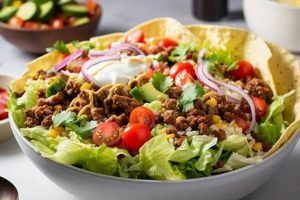
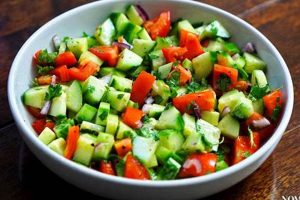
A taco salad featuring seasoned ground beef combines the familiar flavors of tacos with the freshness and texture of a salad. This dish typically involves a base of crisp lettuce topped with seasoned ground meat, tomatoes, onions, cheese, and often other ingredients like corn, black beans, or olives. A creamy dressing, frequently inspired by classic taco sauces or ranch dressing, completes the salad.
The popularity of this dish stems from its versatility and satisfying nature. It offers a customizable meal option, catering to various dietary preferences and ingredient availability. The use of ground beef provides a readily accessible and affordable protein source, while the salad format allows for a lighter, more refreshing take on traditional taco dishes. This adaptability has contributed to its presence in American cuisine, particularly as a quick and easy family meal.
This article will delve into various aspects of preparing a delicious taco salad centered around ground beef. Topics covered will include selecting and seasoning the meat, creating flavorful toppings and dressings, and providing tips for optimal salad assembly and presentation.
Tips for a Superior Taco Salad
Elevating a taco salad from simple to exceptional involves attention to detail in every step, from meat selection to final assembly. These tips offer guidance for creating a truly satisfying and flavorful experience.
Tip 1: Enhance Ground Beef Flavor: Beyond standard taco seasoning, consider incorporating ingredients like chili powder, cumin, smoked paprika, or even a touch of ground coffee for a deeper, more complex flavor profile.
Tip 2: Optimal Beef Browning: Achieve a rich, savory flavor by browning the ground beef thoroughly over medium-high heat. Avoid overcrowding the pan, which can lead to steaming instead of browning.
Tip 3: Crisp Lettuce Matters: Opt for sturdy lettuce varieties like romaine or iceberg to maintain texture and prevent a soggy salad. Thoroughly dry the lettuce after washing to further enhance crispness.
Tip 4: Strategic Ingredient Layering: Create a barrier between the warm meat and the lettuce by layering the salad strategically. Place the lettuce at the bottom, followed by heartier ingredients like beans or corn, then the seasoned ground beef. Top with lighter, more delicate elements like diced tomatoes, onions, and cheese.
Tip 5: Dressing Considerations: Consider offering a variety of dressings to cater to individual preferences. Classic options include ranch dressing, salsa-based dressings, or a creamy cilantro-lime dressing. Serve the dressing on the side to prevent the salad from becoming soggy.
Tip 6: Fresh Toppings Elevate: Elevate the salad with fresh toppings like chopped cilantro, diced avocado, or a squeeze of lime juice just before serving. These additions provide bursts of flavor and visual appeal.
Tip 7: Texture Variety: Incorporating a variety of textures enhances the overall dining experience. Consider adding crushed tortilla chips for crunch, or a dollop of sour cream or guacamole for creaminess.
By implementing these suggestions, one can achieve a taco salad that delivers on both flavor and texture, transforming a simple dish into a culinary delight.
The following section will provide a comprehensive guide to assembling the perfect taco salad, drawing upon the tips and techniques discussed above.
1. Quality Ground Beef

The quality of ground beef significantly impacts the overall success of a taco salad. Leaner ground beef, such as 90% lean or higher, results in a less greasy final product, allowing the other flavors and textures of the salad to shine. Higher fat content ground beef can overwhelm the delicate flavors of fresh vegetables and dressings, leading to a heavier, less satisfying experience. For instance, using 80% lean ground beef might result in excessive grease pooling at the bottom of the salad, making the lettuce soggy and impacting the overall enjoyment. Conversely, leaner ground beef allows the seasonings to penetrate the meat more effectively, resulting in a more flavorful and enjoyable salad. This choice also aligns with health-conscious preferences, offering a lighter take on a traditionally indulgent dish.
Beyond fat content, the sourcing and freshness of the ground beef also play a crucial role. Grass-fed beef often offers a richer, more complex flavor profile compared to conventionally raised beef. Purchasing ground beef from a reputable butcher or selecting high-quality options from the grocery store can further enhance the final dish. Freshly ground beef generally delivers a superior taste and texture compared to pre-packaged options that may have been sitting on shelves for extended periods. These considerations underscore the importance of prioritizing quality ingredients for the best possible outcome.
In summary, selecting quality ground beef, characterized by lower fat content and attention to sourcing and freshness, elevates the taco salad experience. This choice not only improves the taste and texture of the dish but also contributes to a healthier and more satisfying meal. Prioritizing quality in this foundational ingredient allows the other components of the salad to shine, resulting in a truly delicious and balanced culinary creation. This understanding empowers informed ingredient selection, laying the groundwork for a successful taco salad.
2. Flavorful Seasoning

Flavorful seasoning forms the cornerstone of a successful taco salad featuring ground beef. The seasoning blend not only enhances the inherent flavor of the beef but also contributes significantly to the overall taste profile of the dish. A well-balanced and thoughtfully selected seasoning blend elevates the taco salad beyond simply seasoned ground beef atop lettuce, transforming it into a cohesive and flavorful culinary experience.
- Essential Spices:
A foundational taco seasoning blend typically incorporates essential spices such as chili powder, cumin, paprika, and garlic powder. These spices provide the characteristic savory and slightly spicy flavor associated with traditional taco cuisine. Variations in the proportions of these spices can create unique flavor profiles, ranging from mild to intensely spicy. For example, increasing the chili powder content yields a spicier result, while emphasizing cumin adds an earthy depth. Within the context of a taco salad, these spices permeate the ground beef, infusing the entire dish with authentic taco flavor.
- Enhancing Flavors:
Beyond the foundational spices, additional ingredients can further enhance the seasoning blend. Smoked paprika introduces a smoky dimension, while oregano contributes a subtly earthy note. A touch of cayenne pepper adds an extra layer of heat, and a pinch of ground coriander provides a citrusy complexity. These nuanced additions contribute to a more sophisticated and well-rounded flavor profile in the finished taco salad. For instance, the smoky notes of smoked paprika complement the charred flavor of grilled onions, while the earthy oregano harmonizes with the fresh cilantro often used as a garnish.
- Balancing the Blend:
Balancing the seasoning blend is crucial for achieving optimal flavor. The goal is to create a harmonious combination of savory, spicy, and earthy notes that complement the other ingredients in the salad. Too much of one spice can overwhelm the others, while insufficient seasoning can result in a bland and uninspired dish. Careful consideration of the proportions of each spice ensures a well-balanced and flavorful outcome. For example, excessive chili powder can overshadow the subtle nuances of cumin and coriander, while insufficient garlic powder can diminish the overall savory impact.
- Salt and Other Flavor Enhancers:
Salt plays a vital role in enhancing the overall flavor of the seasoning blend and the final taco salad. It not only amplifies the taste of the spices but also helps to draw out the natural flavors of the ground beef. Other flavor enhancers, such as onion powder and granulated garlic, contribute additional savory notes. However, judicious use of salt is critical to avoid over-salting, which can detract from the overall enjoyment of the dish. Proper seasoning with salt allows the other spices to shine and ensures a balanced flavor profile.
The interplay of these facets of flavorful seasoning directly influences the final quality of the taco salad. A well-crafted seasoning blend elevates the ground beef, ensuring it contributes significantly to the overall flavor profile of the dish. The thoughtful combination of essential spices, enhancing flavors, and balanced proportions transforms a simple taco salad into a more complex and satisfying culinary creation.
3. Fresh, Crisp Vegetables
Fresh, crisp vegetables provide essential contrast to the richness of seasoned ground beef in a taco salad. Their inclusion offers textural variety, a refreshing counterpoint to the savory meat, and crucial nutrients. This element elevates the dish beyond a simple combination of meat and toppings, transforming it into a balanced and satisfying meal. The choice of vegetables significantly impacts the overall flavor profile and the perceived freshness of the salad. For example, crisp romaine lettuce offers a sturdy base and a slightly bitter flavor that complements the richness of the beef, while crunchy iceberg lettuce contributes a neutral, refreshing element. The inclusion of diced tomatoes introduces a juicy sweetness and acidity, further balancing the savory elements. Without these fresh components, the salad risks becoming heavy and monotonous, lacking the vibrancy and textural diversity that fresh vegetables provide.
Beyond lettuce and tomatoes, other crisp vegetables contribute to the complexity and appeal of a taco salad. Thinly sliced red onion adds a pungent bite, while chopped bell peppers introduce sweetness and a satisfying crunch. Shredded carrots provide a subtle sweetness and a vibrant color contrast. Even additions like chopped cucumbers or radishes can introduce unique flavors and textures, further enhancing the salad’s overall appeal. The careful selection and preparation of these vegetables are crucial. Limp lettuce or overly ripe tomatoes can detract from the desired freshness and crispness, negatively impacting the overall dining experience. Proper washing and drying of the vegetables are essential for maintaining their crispness and preventing a soggy salad.
In summary, the incorporation of fresh, crisp vegetables is integral to a successful taco salad featuring ground beef. These elements contribute not only essential nutrients but also textural and flavor complexity. Their presence elevates the dish from a simple combination of ingredients to a balanced and satisfying meal. Careful selection, proper preparation, and thoughtful combination of these vegetables ensure a vibrant, flavorful, and texturally appealing taco salad experience. This understanding allows for informed choices in vegetable selection and preparation, contributing significantly to the overall enjoyment of the dish.
4. Complementary Toppings
Complementary toppings represent a crucial element in a taco salad recipe featuring ground beef. These additions provide opportunities to personalize the dish, introduce varying textures and flavors, and elevate the overall dining experience. Strategic topping selection transforms a basic taco salad into a customized culinary creation, reflecting individual preferences and dietary considerations. The interplay between these toppings and the core ingredients contributes significantly to the final flavor profile and perceived complexity of the dish.
- Cheese Selection
Cheese serves as a fundamental topping in many taco salad variations. Shredded cheddar provides a classic, familiar flavor, while crumbled cotija offers a salty, tangy counterpoint. Monterey Jack contributes a mild, creamy texture, and pepper jack introduces a spicy kick. The choice of cheese influences not only the flavor profile but also the textural experience. For instance, a blend of shredded cheddar and Monterey Jack creates a combination of sharp and creamy notes, while crumbled cotija adds a distinct salty element. Consider the overall flavor balance when selecting cheese to ensure it complements the other ingredients without overpowering the salad.
- Textural Elements
Incorporating textural elements enhances the sensory experience of a taco salad. Crushed tortilla chips contribute a satisfying crunch, while toasted pepitas or sunflower seeds offer a nutty flavor and a different type of crispness. Even crumbled bacon can add a smoky, savory crunch. These additions create textural variety, preventing the salad from feeling monotonous. For example, the contrast between the crisp tortilla chips and the soft lettuce creates a dynamic interplay of textures, enhancing the overall enjoyment of the dish. Strategic placement of these elements within the salad can further maximize their impact.
- Fresh Herbs and Vegetables
Fresh herbs and vegetables introduce brightness and vibrancy to a taco salad. Chopped cilantro provides a refreshing, citrusy note, while diced avocado adds a creamy richness. Sliced black olives offer a salty, briny element, and pickled jalapeos introduce a spicy kick. These additions contribute not only flavor but also visual appeal, enhancing the overall presentation of the salad. For instance, the bright green of cilantro contrasts beautifully with the vibrant red of tomatoes, creating a visually appealing dish. These fresh elements should be added just before serving to maintain their optimal flavor and texture.
- Sauce and Dressing Options
The choice of sauce or dressing significantly impacts the final flavor profile of the taco salad. A classic ranch dressing provides a creamy, tangy element, while a salsa-based dressing introduces a fresh, spicy dimension. A creamy cilantro-lime dressing offers a bright, herbaceous flavor, while a chipotle ranch adds a smoky heat. The dressing choice should complement the other ingredients and tie the flavors together. Offering a variety of dressings allows for individual customization, catering to different taste preferences. For instance, a lighter vinaigrette might be preferred for a more health-conscious approach, while a richer, creamier dressing might be desired for a more indulgent experience. The amount of dressing should be carefully considered to avoid overwhelming the other flavors and textures of the salad.
The strategic incorporation of complementary toppings elevates a taco salad recipe featuring ground beef from a simple dish to a personalized culinary experience. The interplay of flavors and textures introduced by these additions contributes to the overall complexity and enjoyment of the salad. Thoughtful consideration of cheese selection, textural elements, fresh produce, and sauce options ensures a well-balanced and satisfying meal that caters to individual preferences and dietary needs. This understanding empowers informed choices in topping selection, transforming a basic taco salad into a customized culinary creation.
5. Crunchy Texture Elements

Crunchy texture elements play a vital role in the overall enjoyment of a taco salad featuring ground beef. Their presence offers a crucial textural counterpoint to the softer elements of the dish, such as lettuce, ground meat, and dressing. This contrast prevents the salad from becoming texturally monotonous, creating a more dynamic and satisfying sensory experience. The interplay of textures contributes significantly to the perceived complexity and enjoyment of the salad. Without these crunchy elements, the salad risks becoming one-dimensional in terms of texture, diminishing overall appeal. For example, imagine a taco salad composed solely of ground beef, lettuce, tomatoes, and dressing. While flavorful, the absence of a contrasting crunch would likely result in a less satisfying experience.
Several options exist for incorporating crunchy texture elements into a taco salad. Crushed tortilla chips represent a classic choice, offering a familiar corn flavor and a readily available, convenient option. Toasted pepitas (pumpkin seeds) or sunflower seeds provide a nuttier flavor and a slightly different type of crunch. These options introduce additional nutritional value as well. Crumbled bacon bits offer a smoky, savory crunch, while chopped nuts, such as peanuts or pecans, contribute a richer, more substantial textural element. Even something as simple as finely diced bell peppers or jicama can introduce a refreshing, vegetal crunch. The choice of crunchy element influences not only the texture but also the flavor profile of the salad, offering opportunities for customization and creativity. Consider the overall flavor balance when selecting crunchy toppings to ensure they complement the other ingredients without overpowering the salad. The quantity of crunchy elements should also be carefully considered to avoid overwhelming the other textures and flavors.
The strategic incorporation of crunchy texture elements represents a crucial step in crafting a well-balanced and satisfying taco salad with ground beef. This understanding allows for informed decisions regarding ingredient selection and preparation, contributing significantly to the overall enjoyment of the dish. The careful balance of textures transforms a simple salad into a more complex and engaging culinary experience. By acknowledging the significance of this element, one can elevate a basic taco salad into a truly delightful and memorable meal.
6. Flavorful Dressing Choice
Flavorful dressing choice represents a pivotal element in a successful taco salad recipe featuring ground beef. The dressing serves not only to moisten the salad but also to unify the diverse flavors and textures, creating a cohesive and satisfying culinary experience. The interplay between the dressing and the other components, including the seasoned ground beef, crisp vegetables, and chosen toppings, determines the overall flavor profile and balance of the dish. An appropriate dressing enhances the existing flavors, while a poorly chosen one can clash or overwhelm the other components. This understanding underscores the importance of selecting a dressing that complements and elevates the other ingredients, rather than masking or detracting from them.
Consider, for example, a taco salad featuring seasoned ground beef, crisp lettuce, diced tomatoes, shredded cheese, and crushed tortilla chips. A creamy cilantro-lime dressing, with its bright, herbaceous notes and tangy acidity, would complement the savory beef and fresh vegetables, creating a harmonious flavor profile. Conversely, a heavy, overly sweet dressing might clash with the savory elements, overpowering the delicate flavors of the vegetables. A vinaigrette, while light and refreshing, might lack the body needed to coat the ingredients and bind the flavors together effectively. Furthermore, the dressing’s consistency impacts the overall textural experience. A thin vinaigrette might leave the salad feeling dry, while an excessively thick dressing could overwhelm the crispness of the vegetables and the crunch of the tortilla chips. These considerations illustrate the practical significance of flavorful dressing choice in achieving a balanced and satisfying taco salad. The interplay of flavor and texture between the dressing and the other components ultimately determines the overall success of the dish.
In summary, the choice of dressing in a taco salad featuring ground beef extends beyond mere convenience; it represents a crucial decision that significantly impacts the overall flavor, texture, and enjoyment of the dish. Careful consideration of the interplay between the dressing and the other components allows for informed decision-making, ensuring a cohesive and satisfying culinary experience. Understanding the nuances of dressing selection empowers informed choices, elevating the taco salad from a simple assembly of ingredients to a truly balanced and delicious culinary creation.
Frequently Asked Questions
This section addresses common inquiries regarding taco salad preparation with ground beef, offering clarity and guidance for achieving optimal results.
Question 1: Can leaner ground beef be successfully used in taco salad?
Leaner ground beef, such as 90% lean or higher, is ideal for taco salad. It reduces greasiness, allowing other flavors to shine. While leaner beef may require slightly less cooking time to prevent dryness, proper seasoning and cooking techniques ensure a flavorful outcome.
Question 2: How can one prevent a soggy taco salad?
Sogginess can be prevented by ensuring all ingredients are dry before assembling the salad. Serving the dressing on the side allows individuals to add the desired amount, further mitigating sogginess. Layering ingredients strategically, with lettuce at the bottom and the seasoned beef on top of a barrier of other ingredients, helps prevent direct contact between the warm meat and the delicate lettuce.
Question 3: What alternatives exist to traditional taco seasoning mixes?
Homemade spice blends offer greater control over flavor profiles. Combining chili powder, cumin, paprika, garlic powder, onion powder, and oregano creates a customizable base. Smoked paprika, cayenne pepper, or chipotle powder can add depth and complexity.
Question 4: Beyond lettuce, what other vegetables complement a taco salad?
Diced tomatoes, onions, bell peppers, corn, black beans, and shredded carrots offer flavor and nutritional value. Chopped cilantro, avocado, and pickled jalapeos provide additional flavor dimensions. The choice of vegetables can be tailored to individual preferences and dietary needs.
Question 5: How can one make taco salad a more complete meal?
Adding beans, such as black beans or pinto beans, increases protein and fiber content. Incorporating quinoa or brown rice further enhances nutritional value. These additions transform the salad into a more substantial and satisfying meal.
Question 6: Can taco salad be prepared in advance?
While some components can be prepared in advance, assembling the salad just before serving is recommended to maintain optimal freshness and prevent sogginess. The ground beef can be cooked and seasoned ahead of time, and vegetables can be chopped and stored separately. Storing the dressing separately is crucial to prevent the salad from becoming soggy.
These responses offer practical guidance for navigating common challenges and maximizing the flavor and enjoyment of taco salad prepared with ground beef. Attention to these details ensures a successful and satisfying culinary experience.
The following section will offer a selection of variations on the classic taco salad recipe, providing inspiration for customization and exploration of diverse flavor profiles.
Conclusion
This exploration of taco salad featuring ground beef has provided a comprehensive overview of essential components and techniques for achieving a successful outcome. From the selection of quality ground beef and the development of flavorful seasoning blends to the incorporation of fresh, crisp vegetables and complementary toppings, each element contributes significantly to the final dish. The importance of crunchy texture elements and a well-chosen dressing has been highlighted, underscoring their role in creating a balanced and satisfying culinary experience. The frequently asked questions section addressed common concerns, offering practical guidance for navigating potential challenges and maximizing enjoyment.
Culinary creations, even seemingly simple ones like taco salad with ground beef, offer opportunities for creativity and personalization. Understanding the interplay of flavors, textures, and ingredients empowers informed choices, elevating everyday meals into truly enjoyable dining experiences. This knowledge encourages exploration beyond basic recipes, fostering culinary creativity and a deeper appreciation for the art of food preparation.